Public Land Crowding During Guided Hunts
It’s a feeling most of us know well: you’ve put in the time scouting, drawn a hard-earned tag, and you’re finally out in the Oregon backcountry, only to find another hunter’s truck parked where you planned to start, or worse, hear a bugle answer a little too close for comfort. This guide dives into the real dynamics of public land crowding, particularly how guided hunts fit into the picture, and offers practical strategies for navigating these busy landscapes to find the solitude and success you seek.
The Perception Versus Reality of Public Land Crowding
The idea of endless, untouched wilderness for hunting often clashes sharply with the reality on the ground, especially on Oregon's more accessible public lands. We all crave that feeling of being the only one out there, but with more people discovering the joys of hunting and outdoor recreation, our shared spaces are feeling the squeeze. It's easy to point fingers, but the truth is, many factors contribute to this increasing pressure.
The Growing Pressure on Oregon's Public Lands
Oregon offers an incredible diversity of hunting experiences, from the dense coastal rainforests to the vast, open sagebrush plains. This variety, combined with relatively accessible public land managed by the Forest Service, Bureau of Land Management (BLM), and Oregon Department of Fish and Wildlife (ODFW), naturally draws a crowd. High demand for certain species, like elk and mule deer, in popular Oregon's Wildlife Management Units and New Hunt Areas only intensifies this.
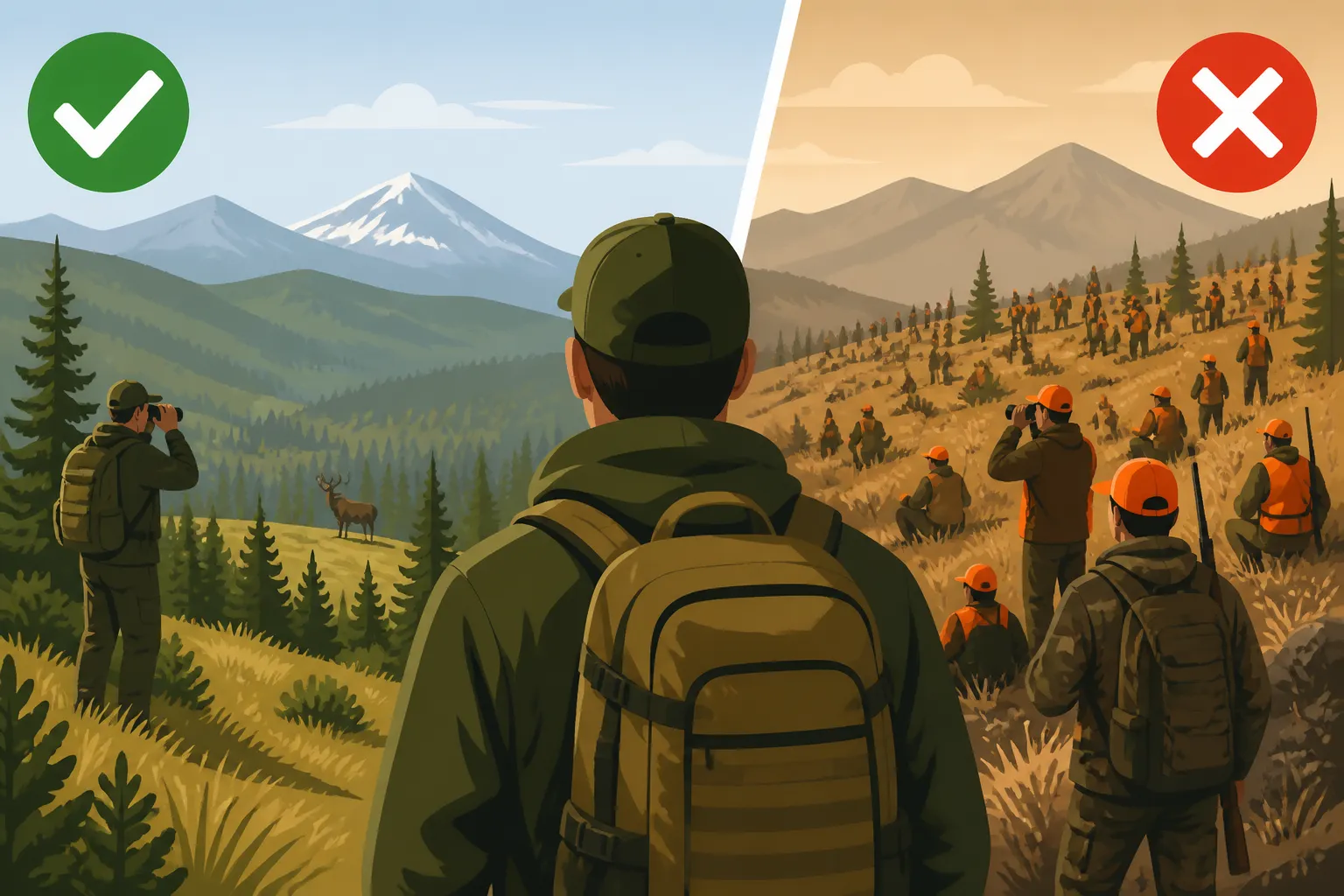
Consider a popular elk unit in the Blue Mountains during the general rifle season. You've got hunters coming from all over the state, and even out-of-state, converging on finite patches of good elk habitat. Factor in increased off-road vehicle use, shed hunters, hikers, and other recreationalists, and those "pristine" areas start to feel a lot smaller. We're all vying for a slice of the same pie, which means that while the land itself might be expansive, the huntable, accessible, and productive spots can become quite concentrated. It's not just about the sheer number of people, but where everyone decides to go, often funneling into areas known for historical success or easy access.
How Guided Hunts Fit into the Public Land Picture
When you encounter another group of hunters, especially one with a professional-looking setup, it's natural to wonder about their impact. Guided hunts are a legitimate part of the public land hunting landscape, operating under specific permits and regulations. Outfitters often bring clients into areas they've scouted extensively, focusing on zones that consistently hold game. While this can sometimes mean they're in the same "honey holes" a DIY hunter might target, it's important to remember they're operating legally and are often highly experienced in these areas.
Outfitters sometimes gain access to remote locations that many DIY hunters can't reach, or they have permits to operate in specific wilderness areas. However, there are also outfitters who focus on more accessible public land, offering services like comfortable camps, cooked meals, and game retrieval for those who prefer a less strenuous experience. Their presence on public land is part of the overall mosaic of users, and like any hunter, they're subject to the same regulations. They invest significant time and resources into scouting, just like a dedicated DIY hunter, to ensure their clients have a good chance at success. They're just another group utilizing the Public Land Hunting in Oregon: Forest, BLM and State resources.
Navigating High-Pressure Zones: Strategies for DIY Hunters
As a DIY hunter, feeling the pressure of other hunters can be incredibly frustrating. It can feel like your secret spots are no longer secret, or that you're constantly competing for space. But there are definitely strategies you can employ to increase your chances of finding solitude and success, even in popular units. It often comes down to putting in extra effort and thinking outside the box.
E-Scouting and Physical Reconnaissance to Find Solitude
The internet has revolutionized hunting, offering incredible tools for research and planning. Before you even set foot in the field, you can do a tremendous amount of "e-scouting." Use satellite imagery and topographic maps to identify potential bedding areas, feeding zones, water sources, and especially access points that might deter others. Look for natural barriers like steep ridges, thick timber, or areas with limited road access that might filter out less determined hunters. Websites and apps like GoHunt offer detailed mapping layers that can help you identify public land boundaries, wilderness areas, and even historical burn scars or clearcuts that can hold game and offer less pressure.
Once you have some areas identified through e-scouting, the next crucial step is physical reconnaissance. This means hitting the ground long before the season opens, ideally during spring or summer. Hike into those remote pockets, check out those less-traveled trails, and verify what you saw on the map. Look for fresh sign, identify escape routes, and get a feel for the terrain. The goal is to find areas that are just a little too far, a little too steep, or a little too brushy for the average hunter, including many guided groups who often prioritize accessible success for their clients. A good e-scouting session followed by a few boots-on-the-ground trips can reveal hidden gems. This kind of diligent Public Land Scouting in Oregon Before the Draw Results is often the key to finding unpressured animals.
Timing Your Hunt and Choosing Less Popular Areas
Another effective way to avoid crowds is to be strategic about when and where you hunt. If you have flexibility, consider hunting during weekdays rather than weekends, especially for general season hunts. The first few days of any season are typically the busiest, as everyone is eager to get out. Waiting a few days, or even planning your trip for the middle of the season, can significantly reduce hunter density. Animals will also be more pressured by then, often moving into thicker cover, which further discourages less persistent hunters.
Beyond timing, actively seek out less popular units or hunt areas. This might mean drawing a less-desirable controlled tag, or focusing on general units that historically have lower hunter success rates or more challenging terrain. Sometimes, the best hunting isn't in the units known for giant bulls, but in those quiet, overlooked corners where animals can live to an older age because they're not constantly being pursued. Consider areas with limited water access in Eastern Oregon, or extremely dense timber in the Coast Range; these natural barriers often thin out the crowds. Don't overlook the opportunity to scout areas that require longer hikes or special permissions for vehicle access. Learning to interpret Reading a Travel Management Area Map Before You Drive can reveal which roads are open and which might lead to walk-in only areas, providing a buffer from road hunters.
Outfitters and Public Land Ethics: What to Expect
The presence of outfitters on public land can sometimes be a source of tension, particularly if a DIY hunter feels an area they've invested in is being "taken over." However, it's important to understand the framework within which these businesses operate and the ethical considerations that guide reputable professionals.
Legalities and Permits for Guiding on Public Land
Outfitters and guides who operate on public lands, such as National Forests or BLM areas, are required to obtain special use permits from the managing agency. These permits dictate where they can operate, the number of clients they can bring in, and often the specific dates and activities allowed. This ensures that their operations are regulated and that they are held accountable for their impact on the land and other users. A legitimate Oregon hunting guide will be registered with the Oregon Marine Board, which oversees outfitter-guide licensing in the state. If you're ever curious about an outfitter's credentials, you can always check their registration. Knowing Oregon Guide Registration Through the Marine Board is a good step to ensure you're working with a legitimate business.
These permits are not easily acquired and often involve a rigorous application process, proof of insurance, and adherence to various rules and regulations. This system helps manage commercial use of public resources and ensures that outfitters are operating within acceptable parameters. When an outfitter sets up a camp or leads a hunt, they are doing so under specific authorization, just as a timber company might have a permit to log in a certain area or a rancher might have a grazing permit. It's part of the broader system of managed public land use. In some wilderness areas, specific Outfitter Permits in Oregon Wilderness are required, often limiting their activities to certain zones or types of trips.
The Outfitter's Approach to Client Success and Hunter Density
Reputable outfitters, just like seasoned DIY hunters, aim to provide a quality experience, and that often means avoiding areas saturated with other hunters. While an outfitter's primary goal is client success, they also understand that a crowded hunt can detract from the overall experience. Many good outfitters will have multiple hunting areas or strategies to spread out their clients, or they'll focus on less-pressured areas within a unit. They often use their extensive knowledge and resources to access places that are difficult for the average hunter, leveraging pack animals, long hikes, or private land access where applicable.
They are generally very attuned to hunter density. It's bad for business to have clients constantly bumping into other hunters or having their calls answered by another person. Therefore, many outfitters employ tactics similar to those a smart DIY hunter would use: hunting deeper, targeting difficult terrain, and moving around as needed. They're often out scouting year-round, looking for new pockets of game and observing hunter movement patterns. If you're considering a guided hunt, ask the outfitter about their strategy for managing hunter density and their plans for providing a quality, uncrowded experience. A good conversation upfront can set clear expectations for what your hunt will be like. Sites like BookYourHunt can be a great place to start researching outfitters and reading reviews to gauge their approach to client experience and managing hunter density.
Minimizing Hunter Encounters: Practical Steps for a Better Experience
Whether you're going guided or DIY, actively trying to minimize hunter encounters can significantly improve your experience. It’s not just about finding game, but about enjoying the peace and challenge of the hunt. A little proactive planning and adherence to common courtesy go a long way.
Planning Your Access and Exit Points Carefully
One of the most common reasons for crowding is simply funneling into the most obvious access points. Everyone drives to the same pull-off, parks at the same trailhead, and starts walking down the same well-worn path. To minimize encounters, think about less conventional access. This might mean hiking an extra mile or two from a lesser-used road, or even looking for creative ways to access public land that borders private property where you've secured permission. Sometimes, parking your vehicle a half-mile away from the obvious spot and walking in through thick timber rather than along a road can make a huge difference in avoiding other hunters at first light.
Also, consider what it takes to get an animal out. While you want to get deep, ensure your exit strategy is sound. Going in light but knowing how you'll get an animal packed out of a really remote spot is crucial. This is where options like Horse and Llama Packing Into Oregon Backcountry can open up entirely new, less-pressured areas. Don't underestimate the power of a few extra miles. Most hunters won't venture more than a mile or two from a road. By pushing deeper into areas that are challenging to access, you greatly increase your chances of finding unpressured game and enjoying true solitude.
Communication and Courtesy in the Field
Even with the best planning, you're going to encounter other hunters on public land. How you handle these encounters can make all the difference. The Golden Rule applies here: treat other hunters as you would want to be treated. A simple nod, a friendly wave, or a quick, polite conversation can prevent a lot of tension. If you see another hunter's vehicle, try to choose an alternate direction to hike if possible. If you must hunt in the same general area, give them plenty of space – a quarter to a half-mile is a good general rule, depending on terrain and visibility.
If you encounter another group calling for elk, for example, politely acknowledge them and move on. Don't try to get in front of them or cut off their stalk. We're all out there for the same reasons, and a little respect goes a long way. Good communication, even if it's just non-verbal, fosters a better environment for everyone. Share information if appropriate, like "Hey, saw a group of cows headed up that ridge, good luck!" This collaborative spirit can turn a potential conflict into a positive interaction. For safety and peace of mind, especially on Multi-Day Camps in Oregon's Roadless Country, it’s always wise to let someone at home know your general hunting area and expected return time. Leaving a Trip Plan With Someone at Home is a critical step for any remote hunting trip, providing a safety net regardless of hunter density.
Disclaimer
This article is for general informational purposes only and does not constitute professional advice. Laws, prices and regulations vary by location and change over time. Consult a qualified professional for guidance on your specific situation.