How Outfitters Rotate Camps
One common frustration many hunters face, especially when booking a guided trip, is the nagging worry that they might be hunting an area that's already been picked over, or that the outfitter simply reuses the same few spots all season long. It can feel like you're getting the leftovers. This guide is here to shed light on how experienced Oregon outfitters strategically rotate their camps and hunting areas to maintain quality experiences for their clients, ensuring you understand the methods and what to look for when planning your next adventure.
Why Camp Rotation is Crucial for Ethical and Successful Guiding
Imagine a bustling fishing hole: if everyone keeps casting into the same spot, eventually the fish will either be caught or wise up and move on. The same principle applies to hunting, especially with guided operations that run multiple trips throughout a season. Ethical and successful guiding in Oregon absolutely depends on a thoughtful approach to camp rotation. It's not just about getting a client an animal; it's about minimizing pressure, preserving the quality of the hunting experience for future clients, and respecting the wildlife itself.
Minimizing Pressure on Game Animals
Deer and elk, particularly, are incredibly sensitive to human presence. Constant hunting pressure in one specific area makes animals nocturnal, pushes them into thick cover, or causes them to move out of the area entirely. If an outfitter simply parked their main camp in the same draw week after week, those elk or deer would quickly learn to avoid it. By rotating camps and hunting units, guides can allow areas to "rest" and animals to settle back into their natural patterns. This means when you arrive, you're hunting animals that haven't been harassed for weeks, leading to more natural movement and better opportunities. This foresight is part of what separates a truly dedicated guide from someone just trying to fill tags. It's about ensuring sustainable hunting for everyone, season after season, rather than burning out an area in a single year. You want a guide who is thinking long-term about the resource and your success.
Adapting to Seasonal Wildlife Movement
Oregon's diverse landscapes mean game animals are constantly on the move, driven by forage, water, weather, and breeding cycles. A camp location perfect for early archery season might be utterly devoid of animals by the late rifle season. Elk, for example, will be in completely different habitat during the August bugle than they will be post-rut in November. Mule deer might be found high on summer ranges in September, but will have dropped to lower elevations as snow pushes them down in late fall. Mule Deer Winter Range in Eastern Oregon is a prime example of where animals shift. A good outfitter understands these migrations and habitat preferences intimately. They don't just rotate camps; they rotate areas to follow the game. This might involve setting up a spike camp high in the mountains for an early archery elk hunt, then relocating the entire operation to lower, timbered areas or even different units altogether for later deer or bear seasons. This adaptability is key to consistent success and offering prime opportunities throughout the entire hunting calendar.
Maintaining Ethical and Fair Chase Standards
Beyond just finding animals, camp rotation is deeply tied to ethical hunting and fair chase. Over-pressuring an area can force animals into vulnerable situations, making the hunt less about skill and more about persistence in a confined space. A professional outfitter wants clients to have a genuine hunting experience, one where the animal has a fair chance. This means giving the wildlife room to breathe and not concentrating pressure. It also means ensuring that every client, whether they're on the first hunt of the season or the last, has a reasonable chance at a quality animal. If the first few groups have hammered an area, it's not fair to the later clients. Thoughtful rotation ensures that each group gets to experience relatively fresh ground, upholding the integrity of the hunt. This commitment to ethics is often reflected in their business practices and how they interact with clients, ensuring transparency and managing expectations. A reputable guide, often found through platforms like BookYourHunt, will openly discuss their strategies for managing hunt pressure.
Practical Methods of Camp Rotation
So, how do outfitters actually implement this rotation? It's often a complex logistical dance, requiring intimate knowledge of the land, animal behavior, and a significant investment in equipment and scouting. There's no one-size-fits-all approach, but rather a combination of strategies tailored to the specific game, season, and terrain.
Unit-Specific and Seasonal Rotation
Many Oregon outfitters operate under permits for multiple hunting units or various sections within a large national forest or BLM district. This allows them to shift their focus as the season progresses or as game moves. For example, an outfitter might start their archery elk season in a high-elevation wilderness unit, then move their operation to a lower-elevation, timbered unit for the later rifle seasons, targeting different herds or even different subspecies like Roosevelt versus Rocky Mountain elk. Where Highway 97 Splits Oregon's Two Elk Subspecies illustrates how dramatically different areas can be.
They might also specialize in particular seasons. A spring bear guide might focus on green-up slopes in the Cascades, whereas a fall bear guide might concentrate on huckleberry patches in the Coast Range. This seasonal shift is a natural form of rotation, allowing areas to recover and ensuring hunters are always in the best possible habitat for the time of year. Outfitters often scout new areas or untouched corners within their permitted units to keep things fresh.
Staggering Groups and Utilizing Multiple Camps
Another common strategy is to simply stagger hunting groups across different areas within the same unit, or by using multiple camps simultaneously. An outfitter might have three or four potential camp locations. When one group is in Camp A, the next group might go into Camp B, allowing the area around Camp A to settle down for a week or two. This is particularly effective in larger, diverse units where different drainages or habitat types can hold animals.
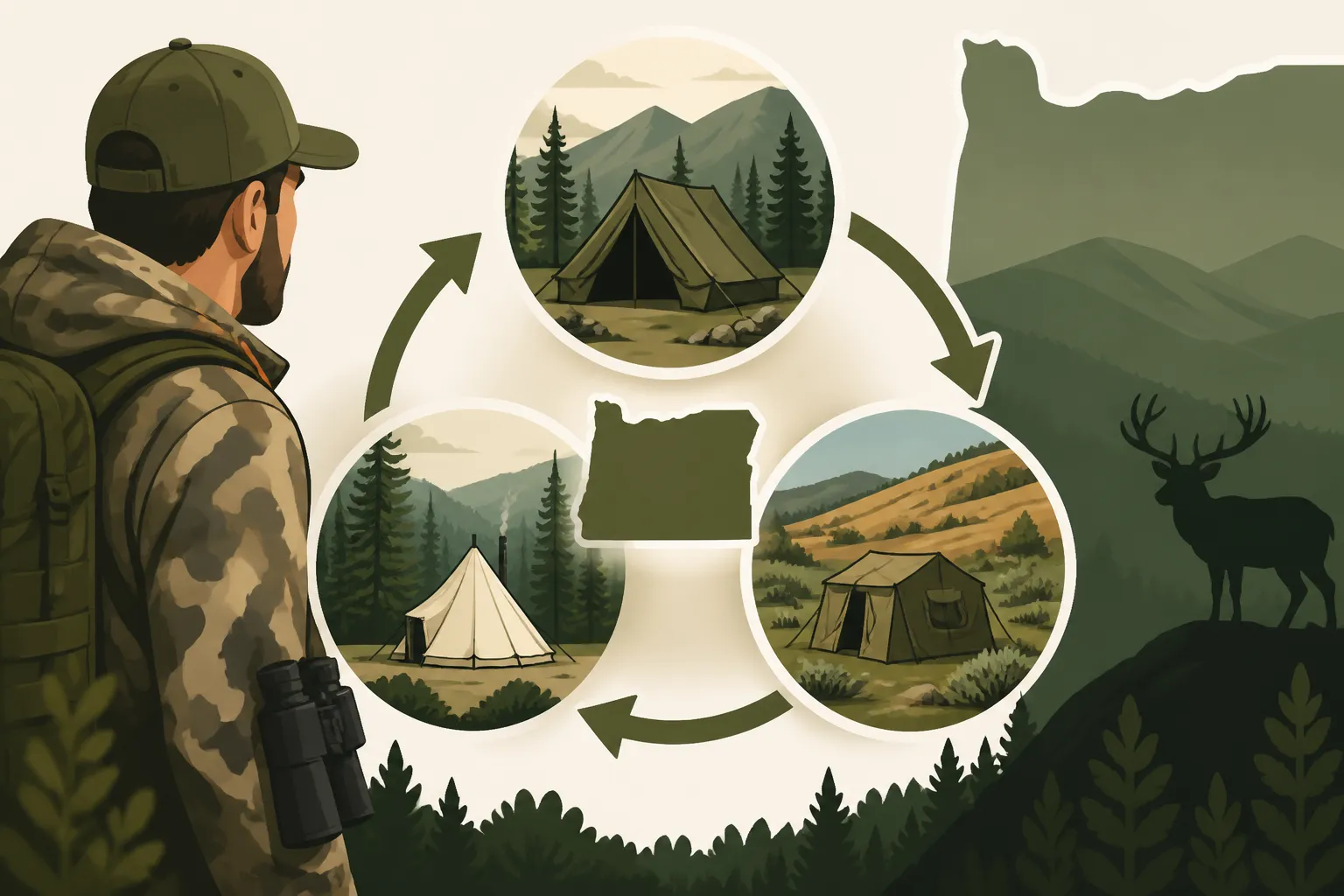
Some outfitters even employ a system of main camps, spike camps, and drop camps as part of their rotation.
- Main Camp: A comfortable, established base camp, often accessible by vehicle, used for longer hunts or larger groups. These are generally less mobile.
- Spike Camp: A lightweight, minimalist camp set up deep in the backcountry for short, intensive hunting forays, often requiring pack animals or significant hiking. These are highly mobile and are key to rotating pressure.
- Drop Camp: An arrangement where the outfitter packs in your gear and food to a remote location, and you hunt self-guided. This is essentially outsourcing the camp rotation to the clients. Drop Camp Services in Oregon Wilderness are a great option for experienced hunters.
This multi-tiered approach allows a guide to move hunters to truly unpressured areas, even if their main camp remains in a relatively fixed location.
| Camp Type | Primary Role in Rotation | Hunter Experience | Key Considerations for Hunters |
|---|---|---|---|
| Main Camp | Fixed base for multiple groups; pressure managed by sending hunters to different daily zones | More comforts (tent, cook, amenities), social | Less flexibility for rapid relocation; daily travel to hunt areas |
| Spike Camp | Temporary, mobile base for 1-3 days in remote areas | Rustic, intense, often direct hunt from camp | Minimal amenities, physical demands, weather exposure |
| Drop Camp | Provides access to remote areas for DIY hunters | Self-sufficient, secluded, requires planning | Guide provides transport only; no daily assistance; you manage the hunting |
| Outlying Cabin | Semi-permanent bases in different drainages/units | Private, comfortable, may serve as a spike camp alternative | Offers distinct, less pressured hunting zones |
Public Land Versus Private Land Dynamics
The type of land an outfitter primarily hunts also influences their rotation strategy. Outfitters with exclusive access to large tracts of private land might have an easier time managing pressure, as they control who hunts there. They can rotate pastures, timber blocks, or canyons, giving specific areas time to rest. However, many Oregon outfitters operate extensively on public lands managed by the Forest Service or BLM. This presents different challenges, as other public land hunters can also be in the same areas. For these guides, effective camp rotation becomes even more critical. They need to secure Special Use Permits for Forest Service Land or Outfitter Permits in Oregon Wilderness and meticulously plan their movements to avoid overcrowding and ensure their clients aren't bumping into unguided hunters at every turn. Public Land Crowding During Guided Hunts is a real concern, and a good outfitter works hard to mitigate it. This often means pushing deeper into less accessible areas or knowing obscure pockets of land that see less pressure.
What to Expect as a Hunter
Understanding camp rotation is great, but what does it actually mean for your experience on a guided hunt? It dictates everything from your physical demands to the comfort level of your sleeping arrangements, and ultimately, your chances of success.
Variety in Hunting Experiences
When an outfitter practices good camp rotation, you can expect a varied and dynamic hunting experience. This might mean that if you book an early season elk hunt one year and a late season hunt another, you could be hunting from completely different camps in entirely distinct areas, even with the same outfitter. It means the guide isn't just relying on "that one good ridge" they found years ago. Instead, they're actively working the landscape, adapting to current conditions and animal movements. This might also mean your particular group is the first one into a certain drainage that season, giving you an advantage. You might find yourself in a comfortable wall tent camp for part of the hunt, and then experience a rugged spike camp further back for a few days, depending on where the animals are and what the guide’s strategy demands. This variety isn't just for show; it's a direct outcome of their efforts to put you on unpressured game.
Impact on Camp Life and Logistics
The type of camp and the rotation strategy directly influence your daily camp life. A main camp, used as part of a rotation where groups are sent to different hunting zones daily, will typically offer more amenities: a dedicated cook, larger sleeping tents, and more creature comforts. If the outfitter uses spike camps as part of their rotation, your experience will be more minimalist. You might be sleeping in smaller tents, cooking over a backpacking stove, and have limited facilities. This isn't a negative, it's just a different style of hunting focused on maximizing time in prime habitat. When discussing your hunt, ask about the types of camps they utilize and how often clients might move between them. This helps manage expectations regarding comfort and physical exertion. Outfitters like those found on BookYourHunt often detail their camp setups, which is a good starting point for your research.
Managing Hunter Expectations
Transparency about camp rotation is a hallmark of a professional outfitter. They should be able to explain their strategy for managing pressure and how they decide where to hunt at any given time. This doesn't mean they'll reveal their secret spots, but they should be clear about their general approach. It's perfectly reasonable to ask during your vetting process: "How do you manage hunting pressure throughout the season? Do you rotate camps or hunting areas?" Their answer will tell you a lot about their dedication to providing a quality hunt. If they seem cagey or can't articulate a clear strategy, that might be a red flag. Remember, your goal is a fair chase hunt, and camp rotation plays a huge role in that. Understanding their process helps you align your expectations with what the outfitter can realistically deliver, leading to a more satisfying experience.
Choosing an Outfitter Based on Their Rotation Strategy
When you're investing in a guided hunt, you want to be confident that your outfitter is doing everything they can to put you in the best position. Their camp rotation strategy is a significant indicator of their professionalism and commitment.
Key Questions to Ask Potential Outfitters
Before you book, make sure you have a solid conversation with your prospective guide. Don't be shy about asking direct questions regarding their operational logistics. Here are a few essential ones:
- "How do you manage hunting pressure throughout the season, especially in frequently hunted areas?"
- "Do you use multiple camps, and will my group be moving between different camp locations or hunting zones during the trip?"
- "What is your strategy for allowing areas to rest and recover between groups?"
- "How often do you scout new areas, or expand into new zones to find fresh game?"
Pay attention to how they answer. A confident, detailed response indicates a well-thought-out plan. Vagueness might suggest they're not as organized as you'd like. This is where Questions to Ask an Oregon Outfitter really comes into play, as you're trying to get a complete picture of their operation.
The Value of Experienced, Permitted Guides
Choosing a guide who is experienced and holds all the necessary permits, whether for state lands or federal forests, is paramount. These are the outfitters who have often spent years, if not decades, learning the nuances of specific units and understanding animal movement patterns. They've also gone through the rigorous process of obtaining permits, which often requires demonstrating a sound operational plan, including how they manage environmental impact and hunter pressure. Hiring a Registered Oregon Hunting Guide is about ensuring professionalism and legality. A permitted guide is more likely to have access to a wider range of hunting grounds, allowing for more effective rotation. Furthermore, their experience means they've seen various conditions and animal behaviors, giving them the knowledge to adjust their rotation strategy on the fly. Services like GoHunt can help you research specific units and understand their characteristics, which will make your conversation with potential outfitters even more productive.
Understanding Booking Lead Times and Seasons
The timing of your hunt and when you book it can also play a role in the impact of camp rotation. If you're booking during a peak season, popular outfitters might have several groups going out simultaneously or back-to-back. This is where a robust rotation strategy is absolutely critical. Ask about Booking Lead Times for Oregon Hunts, as popular outfitters often book out years in advance, indicating their consistent demand and likely successful practices.
Also, consider the season itself. Early seasons, particularly archery, might have less pressure from other hunters (though not always), giving outfitters more flexibility. Late seasons, especially general rifle hunts, can see increased pressure, making an outfitter's rotation strategy even more vital to your success. A good Oregon Guide Ethical and Professional Standards includes being transparent about how they handle these variables. Ultimately, an outfitter committed to effective camp rotation is demonstrating a deep respect for the resource and a genuine desire to provide a high-quality, fair-chase hunting experience for every client. When you're looking over their contract, make sure that What an Oregon Guide Contract Should Say also reflects these discussions and agreements.
Disclaimer
This article is for general informational purposes only and does not constitute professional advice. Laws, prices and regulations vary by location and change over time. Consult a qualified professional for guidance on your specific situation.