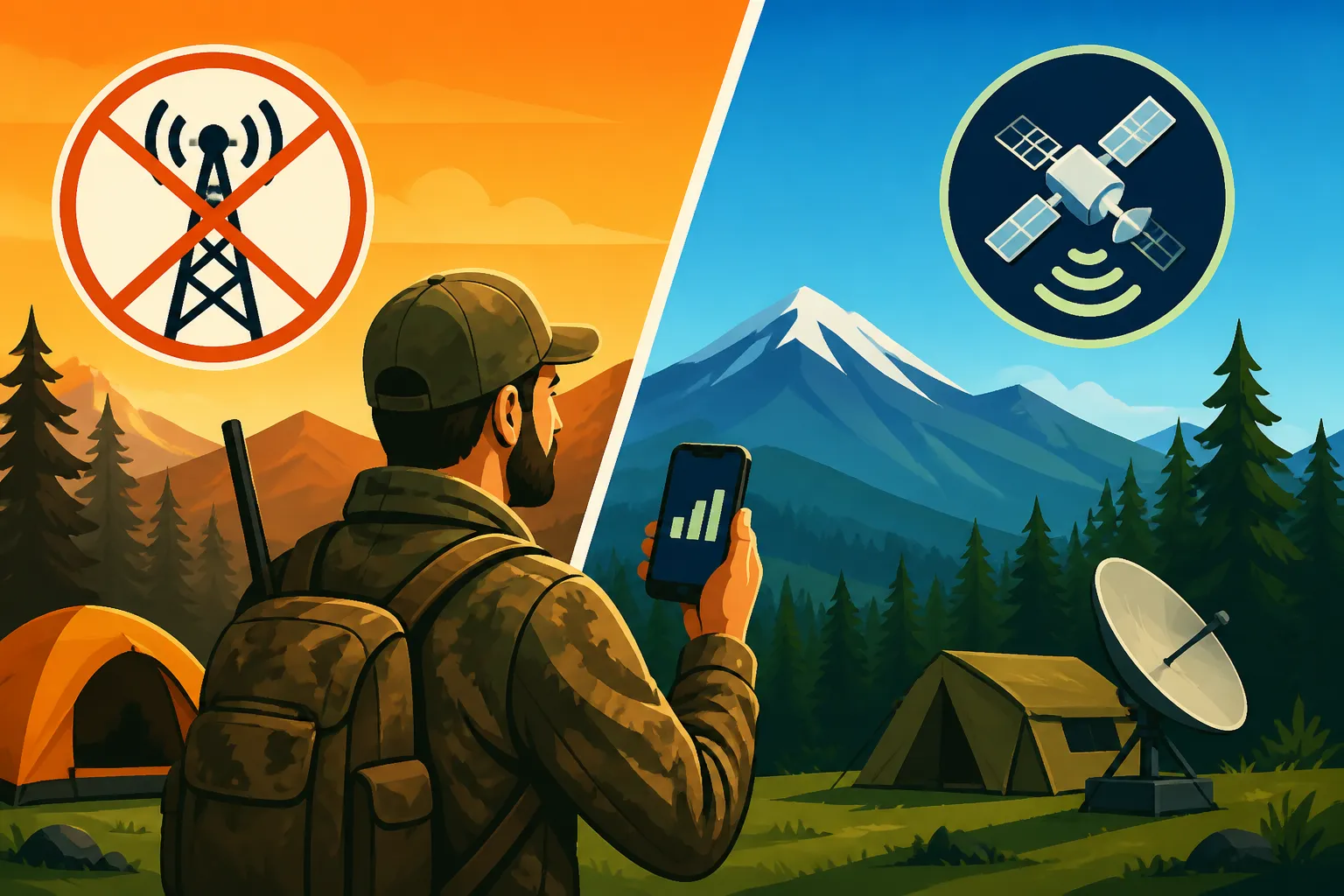
Cell and Satellite Coverage in Camp
There’s a unique kind of dread that sets in when you’re deep in Oregon’s wild country, far from any paved road, and you pull out your phone only to see those dreaded words: "No Service." It’s a frustrating reality for many hunters, balancing the need for safety and connection with the desire to immerse oneself in the wilderness. This guide will walk you through the often-patchy world of cell and satellite coverage in Oregon hunting camps, offering realistic expectations and actionable strategies to stay connected when it truly matters.
The Reality of Cell Service in Oregon's Hunting Units
Stepping into Oregon's vast hunting grounds means often stepping away from reliable cell service. It's a trade-off many of us are willing to make for the solitude and challenge of the hunt, but it doesn't make the communication blackouts any less nerve-wracking, especially when you need to check in with family or, God forbid, deal with an emergency.
The Frustrating Patchwork of Coverage
You've packed your gear, studied your maps, and you're finally out in the unit, ready for the hunt of a lifetime. Then you realize your phone, your supposed link to the outside world, is utterly useless. It’s a common, infuriating reality in Oregon's rugged landscapes, from the dense, misty timber of the Coast Range to the vast, canyon-slashed high desert of Eastern Oregon. This isn't just a minor inconvenience; it can quickly become a genuine safety concern if someone gets injured or lost.
The sheer ruggedness of Oregon's terrain plays a huge role in this communication lottery. Tower signals simply don't easily penetrate dense old-growth forests, nor do they reliably bounce around towering rimrock and into winding river canyons. Add to that the sparse population in many prime hunting units, and telecommunication companies often lack the economic incentive to build extensive infrastructure where only a few hunters or rural residents might benefit.
It's also worth noting that not all cell carriers are created equal in the backcountry. While one might boast a strong signal on a particular ridge, another might be completely dead, even just a few feet away. This often comes down to their specific tower placement, partnerships with smaller regional providers, and signal strengths. You might find that while your hunting buddy with "Carrier A" has two bars, your "Carrier B" phone is nothing more than an expensive paperweight.
Compounding this, even where you expect some semblance of service based on a faint signal from a past trip, it can vanish without warning. A slight shift in elevation, a dip into a shadowed draw, or even heavy overcast conditions can sometimes degrade an already weak signal. This inherent unpredictability means you can never solely rely on cell service for critical communication when you’re out in remote wilderness areas.
Proactive Steps to Assess Coverage
Don't just hope for the best; plan for the worst-case scenario. Before you ever leave the driveway, it's wise to do some thorough homework regarding potential cell coverage. Relying on past experience is a start, but conditions and tower maintenance can change, so always double-check. Start by looking at online coverage maps provided by the major carriers – though always take these with a grain of salt, as they often paint a rosier, generalized picture than what you’ll actually experience in remote, rugged areas.
A far more reliable method is to tap into local knowledge. Talk to forest service rangers, local deputies, or seasoned hunters who regularly frequent your chosen unit. These folks can offer invaluable insights into specific ridges, clearcuts, or draws where a signal might intermittently pop up. If you're considering booking a guided hunt, outfitters you might research through platforms like BookYourHunt often have intimate, on-the-ground knowledge of the cell service (or lack thereof) in their operating areas and can advise you truthfully on what to expect.
Modern hunting apps and digital scouting tools can also be incredibly helpful. Many now include features that display user-generated data points for cell service, showing where other hunters have reported a signal. Furthermore, when you're doing your E-Scouting Oregon Units With Satellite Imagery, you can visually identify high points, open areas, or south-facing slopes that might offer a better chance for a signal, although there's still no absolute guarantee until you're there. This kind of detailed scouting is a crucial part of your overall Public Land Scouting in Oregon Before the Draw Results.
The absolute best way to truly know is to physically scout the area beforehand, phone in hand. Make notes or drop waypoints where you get even a bar or two. Sometimes, simply walking an extra 50 yards up a slope, out of a dense stand of timber, or around a bend can make all the difference. Knowing these specific "hot spots" can be crucial, not just for an emergency call, but also for checking in with loved ones or downloading updated weather forecasts.
Essential Backcountry Communication: Satellite Options
When cell service is a distant dream and safety is paramount, satellite communication devices become your most reliable lifeline. This isn't just about the convenience of sending a text; it's about the critical ability to call for help when you're far from any road or human contact. These tools are no longer just for extreme adventurers; they're becoming standard gear for any serious hunter venturing into Oregon's expansive backcountry.
Understanding Your Satellite Device Choices
When cell service goes completely dark, satellite communication steps in as your essential lifeline. This isn't just about convenience; it's profoundly about safety. There are several categories of devices, each with its own capabilities and price point, all designed to keep you connected, or at least capable of sending an SOS, from even the most remote corners of Oregon's hunting country.
Satellite messengers are increasingly popular among hunters, hikers, and other backcountry users. These compact devices typically offer two-way text messaging, allowing you to send and receive messages with any cell phone number or email address. They also feature GPS tracking, letting loved ones follow your progress, and most importantly, a dedicated SOS button that connects you directly to a 24/7 emergency response center. They’re generally lighter and more affordable than satellite phones, making them a good compromise for many who need communication without the bulk.
For those who need full voice communication from anywhere on Earth, satellite phones are the answer. They allow you to make and receive calls just like a regular cell phone, but by connecting to orbiting satellites rather than ground-based towers. While more expensive to purchase and operate, and often bulkier, they offer the most direct and familiar form of real-time communication. They are often favored by professional guides, or groups venturing deep into extensive wilderness areas like the Eagle Cap Wilderness Hunting Access or other remote, roadless country where any kind of human interface is days away.
Finally, there are Personal Locator Beacons (PLBs). A PLB is a single-purpose device designed solely for emergencies. It transmits a distress signal to orbiting satellites, which then relay your precise GPS location to international search and rescue authorities. There’s no two-way communication, no text messages, just a pure, unadulterated SOS. They are typically compact, incredibly durable, and boast exceptionally long battery lives (often several years in standby mode), making them the ultimate "break glass in case of emergency" tool for those venturing into true wilderness.
How These Technologies Connect You
The magic of these devices lies in their ability to communicate with satellites orbiting Earth, rather than relying on terrestrial cell towers. These can be geostationary satellites, which stay in a fixed position relative to the Earth, or Low Earth Orbit (LEO) satellites, which are constantly moving. Understanding this helps explain why some devices need a clear view of the sky, and why messages might sometimes have a slight delay as they wait for a satellite to pass overhead.
For almost any satellite device to work reliably, it needs a clear, unobstructed view of the sky. This means dense timber, steep canyon walls, or even a heavy canopy can sometimes block the signal. When you’re setting up camp, or if you need to send a critical message, try to find an open area – like a ridge top, a large clearcut, or even a wide river bottom – to improve your chances of connecting. Patience is often a virtue when waiting for a signal in challenging terrain.
While satellite devices generally have better battery life than smartphones when actively transmitting, constant use, especially for features like GPS tracking or frequent messaging, will still drain them. Always carry backup power solutions, such as portable power banks or even small solar chargers, to ensure your device stays operational. Remember to keep devices and their batteries insulated from extreme cold, as low temperatures can significantly reduce battery performance, a crucial consideration for late-season or high-elevation hunts.
Don't wait until an emergency to figure out how your device works. Before your hunt, take the time to practice sending test messages from home, learn how to activate the SOS function, and understand any associated subscription fees or usage charges. Familiarity with your chosen device is just as important as having a well-stocked First Aid Kit Items for a Remote Hunt or knowing your way around a compass. Test your specific model in varied conditions near home if possible to get a feel for its performance.
| Feature | Cell Phone | Satellite Messenger | Satellite Phone | Personal Locator Beacon (PLB) |
|---|---|---|---|---|
| Reach | Limited, localized | Global (most models) | Global | Global |
| Functionality | Calls, text, data | 2-way text, tracking, SOS | Voice calls, text, data | SOS only |
| Primary Use | Everyday communication | Backcountry safety/updates | Remote full communication | Extreme emergency |
| Cost (Device) | Varies (often bundled) | Moderate | High | Moderate (one-time purchase) |
| Cost (Service) | Monthly plan | Monthly/annual subscription | Monthly/annual subscription | None (after purchase) |
| Speed | Real-time | Slower, delayed messages | Near real-time | Instant (SOS signal) |
| Battery Life | ~1 day (active use) | ~Several days (active use) | ~Several days (active use) | ~Several years (standby) |
| Size/Weight | Light, pocketable | Light to medium | Medium, bulky | Compact, very light |
| Line of Sight | Requires cell towers | Requires clear sky | Requires clear sky | Requires clear sky |
Strategies for Effective Communication and Safety
Effective communication in the backcountry isn't just about the device you carry; it's about the planning, habits, and mindset you adopt. When you venture into Oregon's vast hunting areas, you're responsible not only for your own safety but also for ensuring that someone knows where you are and how to reach you if things go sideways.
Building a Robust Communication Plan
One of the most critical aspects of backcountry safety, especially when communication is unreliable, is a solid plan that extends beyond your hunting party. Before you ever head out, make sure you share a detailed Leaving a Trip Plan With Someone at Home. This isn't just a courtesy; it's a vital safety net. Your plan should include your exact route, expected return time, descriptions of your vehicles, and contact information for your designated emergency contacts, outlining when and how they should escalate concern if you don't check in.
If you're carrying a satellite messenger, establishing clear check-in schedules with your emergency contact is essential. A simple "all good" text at 8 AM and 6 PM can provide immense peace of mind and establish a pattern. If you miss a scheduled check-in, your contact knows precisely when to initiate your emergency plan, whether that involves contacting an outfitter (who might have specialized emergency protocols as part of What an Oregon Guided Hunt Package Includes) or directly calling search and rescue authorities.
For communication within your hunting party or camp, don't overlook simpler, line-of-sight tools. Two-way radios are invaluable for coordinating pushes, checking in on separated partners, or simply knowing what’s happening back at camp. Familiarize yourself with the regulations regarding Two-Way Radios and Legal Use While Hunting specific to Oregon, as rules can vary. They offer immediate, short-range contact that cell or satellite devices can't always provide in dense cover.
In a group hunt, it can be incredibly helpful to designate one person as the primary communication point, especially for satellite devices. This individual is responsible for sending updates, managing the device's battery life, and ensuring messages are consistent and not duplicated. This streamlined approach prevents confusion and conserves critical power. Everyone in the party should still understand how the device works, but having one lead minimizes errors and maximizes efficiency.
Power Management in the Field
Modern devices are incredibly power-hungry, and nothing ruins a communication plan faster than a dead battery. While your phone might struggle for service, even satellite devices need careful power management, particularly during Multi-Day Camps in Oregon's Roadless Country or extended trips into wilderness areas. Being proactive about power is just as important as carrying enough food and water.
Portable power banks are non-negotiable for any extended backcountry trip. Carry a high-capacity power bank, or even two, to recharge your phone and satellite devices. Ensure they are fully charged before you leave home, and consider investing in rugged, waterproof models that can withstand the rigors of the backcountry. These reliable chargers can mean the difference between sending a critical text and being completely cut off.
Small, foldable solar panels have come a long way in efficiency and portability. While they won't fully recharge a large device quickly, they can be a fantastic way to top off batteries during the day, especially if you have sunny weather. They provide a sustainable way to extend the life of your critical communication tools significantly, making them a worthwhile investment for hunters who spend multiple days away from a power source.
Simple habits go a long way in conserving power. Turn off unnecessary apps, put your phone in airplane mode if there's no service (it constantly searches for a signal, draining battery), reduce screen brightness, and close background processes. For satellite messengers, reduce the frequency of tracking pings if not absolutely critical. Most importantly, keep batteries and devices insulated from extreme cold, as low temperatures rapidly drain power – tuck them into your sleeping bag at night or carry them close to your body.
Integrating Communication into Your Hunt Strategy
Thinking about communication should be as fundamental to your hunt planning as selecting the right Rifle Choice for Oregon Elk and Deer or studying your topographical maps. It's not just an afterthought; it fundamentally influences where you set up camp, your travel routes, and even your approach to hunting, especially if you're venturing into true wilderness like when on Backpack Camps in Oregon Wilderness.
When picking a backcountry camp, particularly in areas with very limited cell service, it's wise to consider its proximity to potential communication "hot spots" you might have identified during scouting. A slightly less ideal hunting location might be worth it if it offers a clearer satellite signal path or a hikeable distance to a reliable cell service ridge. Prioritizing safety through communication access can be a smart trade-off.
Perhaps the most important strategy is simply managing your own expectations and those of your loved ones. Make it explicitly clear that you might be out of touch for extended periods due to the remote nature of your hunt. This helps reduce anxiety at home and removes the internal pressure you might feel to constantly try to find a signal when you should be focused on the hunt, your surroundings, and most importantly, your safety. An Emergency Evacuation From a Backcountry Camp is far more complex without clear communication.
Ultimately, while safety is paramount, there’s also something truly liberating about truly disconnecting and immersing yourself in the hunt. With a reliable satellite device for emergencies, you can focus on the experience, the subtle signs of game, and the beauty of Oregon's wilderness, knowing that if a critical situation arises, you have a solid way to call for help. For serious hunt planning, tools like GoHunt can help you research units and identify remote areas where a satellite device will be absolutely essential.
Disclaimer
This article is for general informational purposes only and does not constitute professional advice. Laws, prices and regulations vary by location and change over time. Consult a qualified professional for guidance on your specific situation.