Ruffed Grouse in Oregon Forests
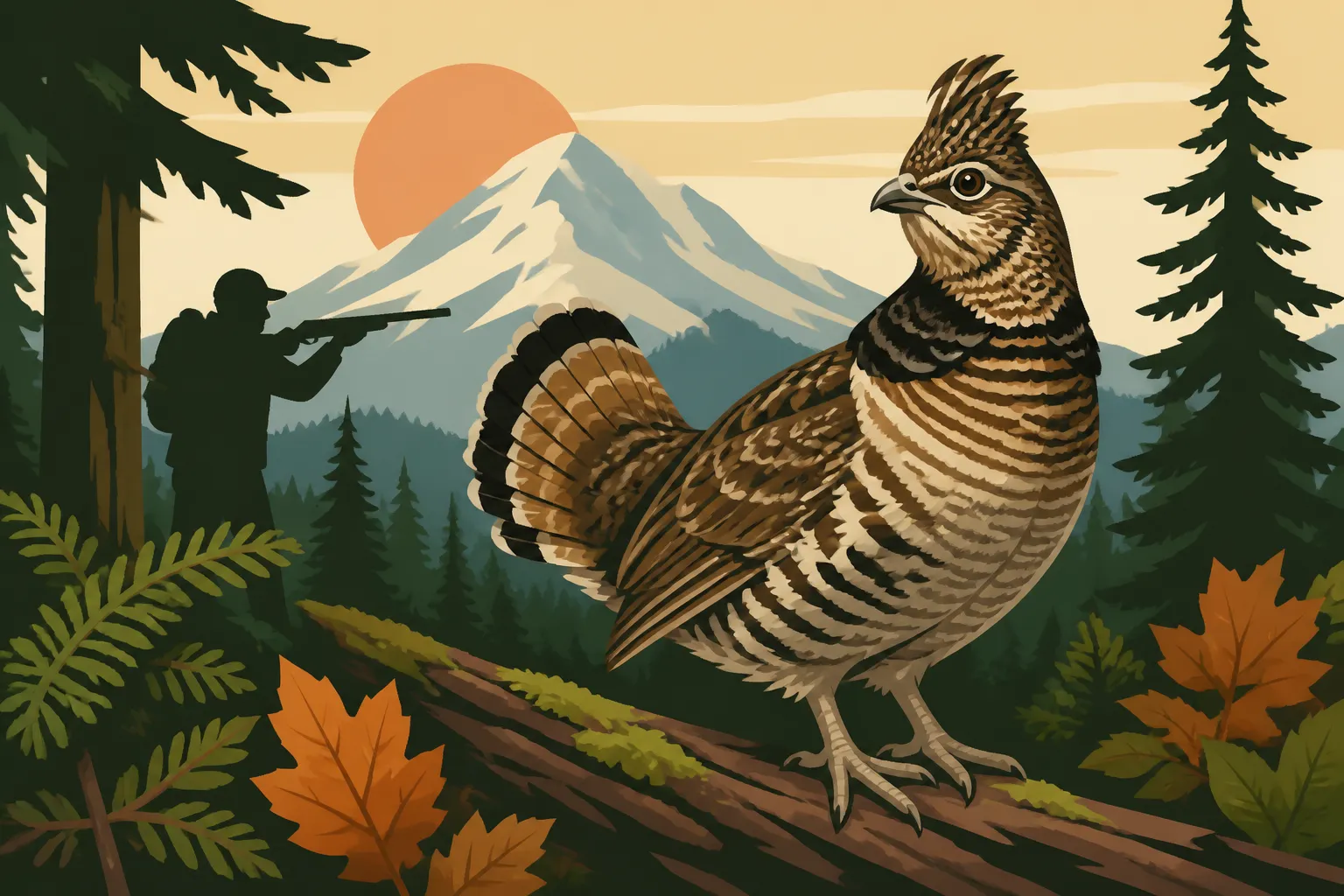
If you've ever tried to chase ruffed grouse in Oregon, you know it's not like strolling through open fields for pheasants or calling turkeys in a dry oak forest. These birds are masters of concealment, preferring the dense, often soggy, undergrowth of our vast forests, making for a challenging but incredibly rewarding pursuit. This guide is here to unravel the mysteries of finding and hunting ruffed grouse in Oregon, offering practical advice to help you connect with these elusive forest pheasants.
Understanding Ruffed Grouse Habitat in Oregon
Hunting ruffed grouse in Oregon means immersing yourself in the forest, often in places that feel wild and untamed. Unlike their cousins, the blue grouse, who prefer higher, more open conifer stands, ruffed grouse are creatures of the dense underbrush and mixed timber, making them notoriously hard to pin down. Knowing their preferred haunts is the first step to success.
Preferred Forest Types and Cover
Ruffed grouse thrive in forests that offer a mosaic of dense cover, food sources, and protection from predators. In Oregon, this often means areas with a strong component of deciduous trees mixed with conifers, especially near water. Think about those damp, shaded areas where you find red alder, bigleaf maple, or willow thickets, often interspersed with Douglas fir or western hemlock. The key is that dense, layered canopy and understory. They love sapling-sized trees, brushy edges, and downed timber that provides overhead cover and hides them from aerial predators. You'll often find them tucked into thickets of salal, sword fern, or huckleberry, especially where these plants form dense carpets on the forest floor. These spots offer both food in the form of buds and berries, and a near-impenetrable refuge where they can disappear in an instant. The more tangled and "birdy" a spot looks to you, the more likely a grouse is calling it home.
When you're out there, really pay attention to the transition zones – where a clearcut meets mature timber, or where a dense creek bottom spills out into a more open stand. These edges are gold for grouse, providing diverse food sources and quick escape routes. Don't forget those small seeps or spring areas; water is a magnet for all wildlife, including grouse, and the vegetation around them often provides ideal conditions.
The Importance of Early Successional Forests
This is where many hunters get it wrong. While mature timber provides some cover, ruffed grouse truly flourish in what we call "early successional" habitats. These are the younger, regenerating forests, often a result of logging, wildfires, or other disturbances that open up the canopy and allow new growth to explode. Think about clearcuts that are 5-20 years old, with dense stands of saplings, brambles, and shrubs. These areas are a buffet for grouse, offering abundant buds, catkins, and berries, plus the thick cover they need to hide from predators.
Logging roads and old skid trails within these clearcuts are excellent places to walk, as they provide access and often act as natural openings that attract the birds to their edges. The habitat around these areas can be incredibly productive, providing the perfect blend of food and shelter. As you're scouting, especially with tools like the GoHunt app and its satellite imagery, look for those recent timber harvests. They might look like a mess from above, but on the ground, they can be prime grouse country. The crucial thing is understanding that grouse don't want wide-open spaces; they want the edge of that chaos, where new growth is taking hold and creating an almost impenetrable fortress of vegetation. The more recent the disturbance, as long as there's decent cover emerging, the better.
Elevation and Seasonal Movements
Ruffed grouse in Oregon aren't known for dramatic migrations, but their presence can certainly shift with elevation and the changing seasons. In the early fall, when seasons typically open, you might find them anywhere from lower river bottoms up into moderate elevations, as long as the preferred habitat is present. They'll be feeding heavily on berries, seeds, and insects, often in more accessible areas.
As the weather cools and food sources like berries become scarce, grouse tend to gravitate towards areas where buds and catkins are abundant. This often means focusing on deciduous trees like alder and aspen, which can be found across various elevations. However, severe winter weather, especially heavy snow, might push them to slightly lower, more sheltered elevations or into denser conifer stands where they can find thermal cover. While they don't move vast distances, a slight shift in elevation or aspect (north-facing vs. south-facing slopes) can make a big difference in finding them. Understanding the seasonal availability of their food sources – from juicy berries in early fall to protein-rich buds in late season – will guide your efforts. Spring Bear Hunting Timing by Elevation offers a good perspective on how different elevations support game at different times of the year, which can be somewhat applied to understanding bird behavior, too.
Hunting Strategies for Oregon Ruffed Grouse
Hunting ruffed grouse is less about long-range shooting and more about stealth, patience, and quick reflexes. These birds are notorious for flushing explosively, often giving you only a split second for a shot. It's a true test of your forest hunting skills.
Still-Hunting the Thickets
Still-hunting is perhaps the most effective strategy for ruffed grouse, especially if you're hunting without a dog. This isn't about covering vast distances quickly; it's about moving at a snail's pace, stopping frequently, and listening intently. Think about how Still-Hunting Blacktails in Wet Oregon Coastal Brush works – it's a similar principle. You want to walk through those dense thickets, brushy creek bottoms, and regenerating clearcuts like a ghost. Take two steps, stop, scan, listen. Repeat. Grouse will often hold tight, relying on their camouflage, until you're almost on top of them. That pause, that moment of silence, often makes them nervous enough to flush.
When they do flush, it's typically a blur of wings and noise. Be ready! Keep your gun mounted and your eyes scanning for movement. These shots are almost always close-range and quick. Focus on safe gun handling, especially in dense cover, always knowing what's beyond your target. Remember, you're not trying to sneak up on them for a standing shot; you're trying to make them flush within range so you can react quickly. Walking old logging roads or trails that cut through prime habitat can be very productive. They provide quieter travel and allow you to focus on the dense edges where grouse prefer to hide.
Working With a Dog or Without
A good bird dog can dramatically increase your success rate and enjoyment when hunting ruffed grouse. Flush dogs, like a Springer Spaniel or a Labrador, excel at working the thick cover, pushing birds out into the open for a shot. Pointers, such as Brittanys or English Setters, can be equally effective, locking up on scent and giving you time to get into position for the flush. The advantage of a dog is that they can cover ground more thoroughly and locate birds that you might walk right past. They also help immensely with retrieving downed birds in dense vegetation, preventing lost game.
However, many successful grouse hunters don't use dogs, myself included sometimes. If you're hunting without a canine companion, you need to compensate with even slower, more deliberate still-hunting. Think of yourself as the "dog," working every bit of cover methodically. Pay extra attention to where a flushed bird might land, as they often don't fly far. Mark the spot mentally and approach it slowly, ready for a re-flush. Without a dog, it's also critical to spend more time visually searching the ground for fresh sign, like droppings or dusting bowls, which can indicate recent grouse activity. Whether you have a dog or not, the core principle remains: these birds demand a thorough, patient approach to their dense homes.
Best Times of Day and Weather Conditions
Ruffed grouse, like many game birds, have preferred activity times. Early morning, shortly after first light, and late afternoon, leading up to dusk, are generally the most productive. During these periods, grouse are often more active, moving to feed or dust, and might be a little less wary. Midday can be slower, especially on warm, sunny days, when they tend to hunker down in dense cover.
Weather plays a significant role too. Overcast, drizzly days, or those immediately following a light rain, can be excellent. The damp forest floor makes for quieter walking, reducing the rustle of dry leaves and twigs that can alert birds to your presence. The grouse might also be more inclined to move about when the sun isn't beating down. Avoid extremely windy days, as the wind masks sound, making it hard to hear flushing birds, and the birds themselves can be more skittish. Heavy rain, while dampening sound, often means the birds are hunkered down and less active. A light drizzle, on the other hand, can be your best friend. Remember, Hunting Blacktails in Fog and Drizzle proves that challenging weather can often lead to success if you understand how game reacts.
Essential Gear and Safety for Grouse Hunting
Hunting ruffed grouse in Oregon's dense forests means you need reliable gear that can stand up to the elements and help you navigate challenging terrain. Safety, as always, is paramount when you're deep in the woods.
Shotguns and Ammunition
For ruffed grouse, a fast-handling, open-choked shotgun is your best bet. These shots are often very close and incredibly quick, so a tight pattern isn't what you're looking for. A 20-gauge or 28-gauge is often ideal, lightweight and easy to swing in tight cover. A 12-gauge is certainly effective, but sometimes feels a bit heavy in the thick stuff. The important thing is an open choke, like improved cylinder or even skeet, to give you a wider pattern at close range.
As for ammunition, small shot sizes are the way to go. #7.5 or #8 lead shot is typical, delivering plenty of pellets for a clean kill without over-penetrating. Given the often damp conditions in Oregon, make sure your ammunition is stored appropriately to prevent moisture issues. Always carry enough shells for your hunt, but remember that grouse hunting is often more about opportunity than volume.
Footwear and Clothing for Oregon Forests
Oregon's grouse country can be wet, brushy, and steep. Your footwear and clothing are critical for both comfort and safety. Waterproof, briar-resistant boots are non-negotiable. Look for boots that offer good ankle support for uneven terrain and have aggressive treads for slippery conditions. Consider a pair designed for Boots for Wet Coastal Hunting, as those will serve you well in many grouse habitats.
For clothing, layers are key. You'll be moving through dense cover, which can be warm work, but temperatures can drop quickly, especially in shaded areas. A base layer that wicks moisture, an insulating mid-layer, and a durable, waterproof outer shell are essential. The outer layer should also be briar-resistant to protect against thorns and thick brush. Quiet fabrics are important too, as you'll be trying to move as stealthily as possible. Don't forget a blaze orange vest or hat for visibility, especially when hunting with others. Rain Gear That Actually Stays Dry is an investment that pays off immensely in Oregon's often damp forests.
Navigation and Communication
Getting lost in Oregon's dense forests can turn a fun hunt into a dangerous situation quickly. A reliable GPS device or a smartphone with a robust hunting app like GoHunt is absolutely essential. Download offline maps of your hunting area before you leave cell service. GoHunt, for example, allows you to mark your vehicle, trails, and any signs of game, providing invaluable assistance. Always carry a traditional map and compass as a backup, and know how to use them.
Beyond navigation, communication is vital. Cell service is often nonexistent in remote grouse habitat. Consider carrying a satellite messenger or a two-way radio if you're hunting with a partner. Even a simple whistle can be a lifesaver for signaling if you get separated or need help. And of course, a comprehensive First Aid Kit Items for a Remote Hunt is non-negotiable. Always let someone know your detailed hunting plan, including where you're going and when you expect to return. Being prepared means you can focus on the hunt itself, knowing you have the tools to handle unexpected challenges.
Regulations and Conservation Efforts
Understanding Oregon's hunting regulations for ruffed grouse is critical for a legal and ethical hunt. Furthermore, recognizing the importance of habitat conservation helps ensure these fantastic birds remain a part of our hunting heritage.
Oregon Grouse Season Dates and Limits
The Oregon ruffed grouse season typically opens in early fall and runs for several months, often coinciding with other upland bird seasons. It's crucial to consult the current Oregon Department of Fish and Wildlife (ODFW) game bird regulations pamphlet each year for the precise dates, daily bag limits, and possession limits. These can vary slightly, and staying informed is your responsibility. Generally, the daily bag limit allows for a reasonable number of birds, and the possession limit is usually twice the daily limit.
Unlike some big game species, ruffed grouse hunting is typically a general season, meaning you don't need a special tag or need to participate in a draw, beyond your standard hunting license and upland bird validation. However, understanding the overall structure of Oregon General Season Versus Controlled Hunt Tags can help contextualize how these general seasons fit into the broader hunting landscape. Always double-check specific unit regulations or special closures, especially if hunting near private lands or wildlife refuges. Knowing the rules before you go ensures a responsible and enjoyable outing. The ODFW typically releases the Oregon Regulation Pamphlet Release Date information well in advance of the seasons, so there's no excuse for not being current.
Conservation of Ruffed Grouse Habitat
Ruffed grouse populations are directly tied to the availability of suitable habitat. In Oregon, this means a consistent supply of early successional forests. Forest management practices, including timber harvesting (like clearcuts that regenerate), play a significant role in creating and maintaining these necessary environments. Without active management, many forests would eventually mature into dense, uniform stands that lack the diverse undergrowth and food sources grouse depend on. Wildfire, while destructive in the short term, can also create new early successional habitat over time, though it comes with its own set of ecological complexities.
Predation by species like cougars, coyotes, and various raptors is a natural part of the ecosystem, but healthy grouse populations can withstand it when habitat is abundant. Oregon's conservation efforts often focus on balancing timber production with wildlife habitat needs, ensuring that grouse have places to thrive. Supporting organizations that advocate for sound forest management and wildlife habitat preservation is one way hunters can contribute to the long-term health of ruffed grouse populations. It’s a delicate balance, but one where hunters play a vital role in being stewards of the land.
Ethical Hunting Practices
Ethical hunting goes beyond simply following the regulations; it encompasses respect for the land, wildlife, and other outdoor users. When hunting ruffed grouse in Oregon, this means several things. First, always confirm land ownership using maps, such as those provided by GoHunt or ODFW resources. Be aware of private timber lands that may require permits for access, as covered in Hunting Private Timber Land With a Permit. If you encounter private property, respect boundaries and seek permission if you wish to cross. Always leave gates as you found them, pack out all trash, and minimize your impact on the environment.
Second, practice safe gun handling at all times, especially in dense cover where visibility can be limited. Be absolutely certain of your target and what's beyond it before taking a shot. Third, make every effort to recover any bird you shoot. Grouse can be tough to find in thick cover, so mark where they fall and conduct a thorough search. Finally, consider the broader impact of your hunt. By being a responsible hunter, you contribute positively to the image of hunting and help ensure its future in Oregon.
| Grouse Hunting Consideration | Importance | Key Action Points |
|---|---|---|
| Habitat Identification | Critical | Seek dense, early successional forests; look for mixed deciduous/conifer near water. Use E-Scouting Oregon Units With Satellite Imagery to find clearcuts. |
| Hunting Strategy | High | Still-hunt slowly, pausing frequently; be ready for explosive flushes; consider a bird dog. |
| Gear Selection | High | Open-choked shotgun (20ga/28ga ideal), #7.5/#8 shot, waterproof/briar-resistant layers, reliable navigation. |
| Safety & Preparedness | Essential | Carry GPS/offline maps, inform others of your plan, pack a first-aid kit; dress for the elements. |
| Regulations | Mandatory | Check current ODFW game bird regulations annually for season dates, bag/possession limits. |
| Ethical Conduct | Fundamental | Respect private land, pack out trash, ensure clean kills, recover all downed birds. |
Disclaimer
This article is for general informational purposes only and does not constitute professional advice. Laws, prices and regulations vary by location and change over time. Consult a qualified professional for guidance on your specific situation.