Cougar Prey and Deer Herd Impact
For many of us who cherish Oregon's deer herds, the presence of cougars brings a complicated mix of awe and concern. We love seeing these apex predators thrive, a testament to healthy ecosystems, but we also worry about their impact on the deer populations we hunt and admire. This guide will delve deep into the intricate relationship between cougar predation and deer herds across Oregon, exploring their primary prey, the factors influencing their hunting success, and how their presence shapes the very dynamics of our beloved deer.
Understanding Oregon's Cougar Population and Behavior
Cougars, also known as mountain lions or pumas, are incredibly adaptable predators found throughout much of Oregon, from the dense coastal rainforests to the rugged high desert. Their elusive nature makes them difficult to count accurately, leading to much speculation among hunters and wildlife enthusiasts alike.
Current Population Estimates and Distribution
Estimating cougar populations is a tricky business, as these animals are masters of stealth. The Oregon Department of Fish and Wildlife (ODFW) uses various methods, including track counts, genetic sampling, and depredation reports, to try and get a handle on their numbers. While exact figures fluctuate, ODFW generally estimates a healthy, stable to increasing population across the state. We often hear anecdotal evidence of more sightings, more tracks, and sometimes, unfortunate livestock losses, all pointing to a robust cougar presence. They're not just limited to remote wilderness areas; cougars are increasingly found closer to human habitation, following prey animals like deer into suburban fringes or agricultural lands. Understanding the Oregon Cougar Population Estimates helps us grasp the scope of their influence.
These solitary animals are most prevalent where their primary food sources are abundant, which, in Oregon, often means areas with thriving deer and elk herds. The Coast Range, the Cascades, and many of the eastern Oregon units with good deer habitat support significant cougar numbers. While you might expect them to stick to dense cover, cougars are opportunistic and will range widely, making use of varied terrain as they patrol their territories.
Cougar Home Range Size and Movement Patterns
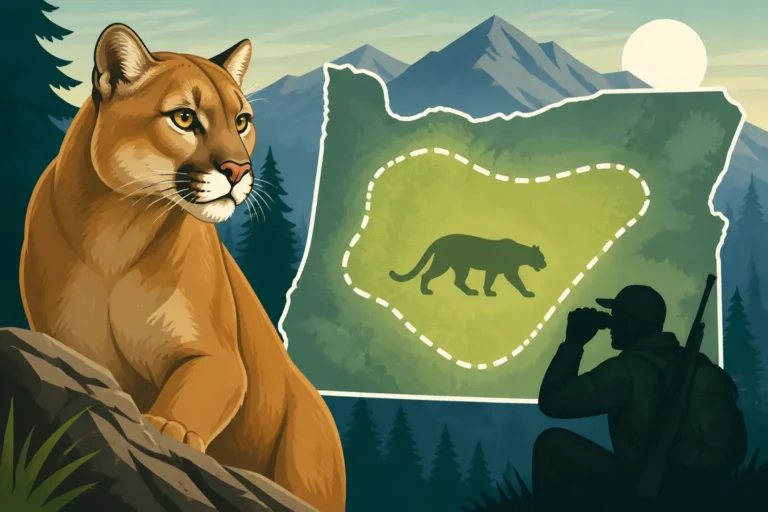
Cougars are territorial creatures, and their home range can be vast, especially for males, often spanning hundreds of square miles. The exact size of a cougar's territory is heavily influenced by prey density, habitat quality, and the presence of other cougars. Where deer are plentiful, a cougar might not need to travel as far to find a meal, leading to smaller, more concentrated territories. Conversely, in areas with sparse prey, a cou cougar will expand its range, moving more frequently and covering greater distances in search of food. You can dive deeper into Cougar Territory Size and Movement to understand the science behind these patterns.
Their movement patterns are typically dictated by the pursuit of prey. They often follow seasonal deer migrations, moving from high summer ranges to lower wintering grounds, or adjusting their patrols based on the availability of fawns in spring or vulnerable adults in harsh winter conditions. A cougar might spend several days on a single kill, particularly a larger animal like an elk, before moving on. These movements are often nocturnal or crepuscular, aligning with the activity patterns of their primary prey species. Hunters often observe these shifts, noticing changes in deer behavior or activity in areas where cougars are known to be present.
Primary Prey of Oregon Cougars
When you think of a cougar, the image of it stalking a deer is probably the first thing that comes to mind, and for good reason. Deer are undeniably the cornerstone of a cougar's diet in Oregon, but these adaptable predators will certainly diversify their menu when the opportunity arises.
Deer as the Staple Diet
In Oregon, both Blacktail Deer and Mule Deer constitute the bulk of a cougar's diet. These agile predators are incredibly efficient at hunting deer, using a combination of stealth, ambush tactics, and powerful bursts of speed. They are masters of using topography and cover to their advantage, often ambushing deer from above or by patiently waiting along well-used game trails or water sources.
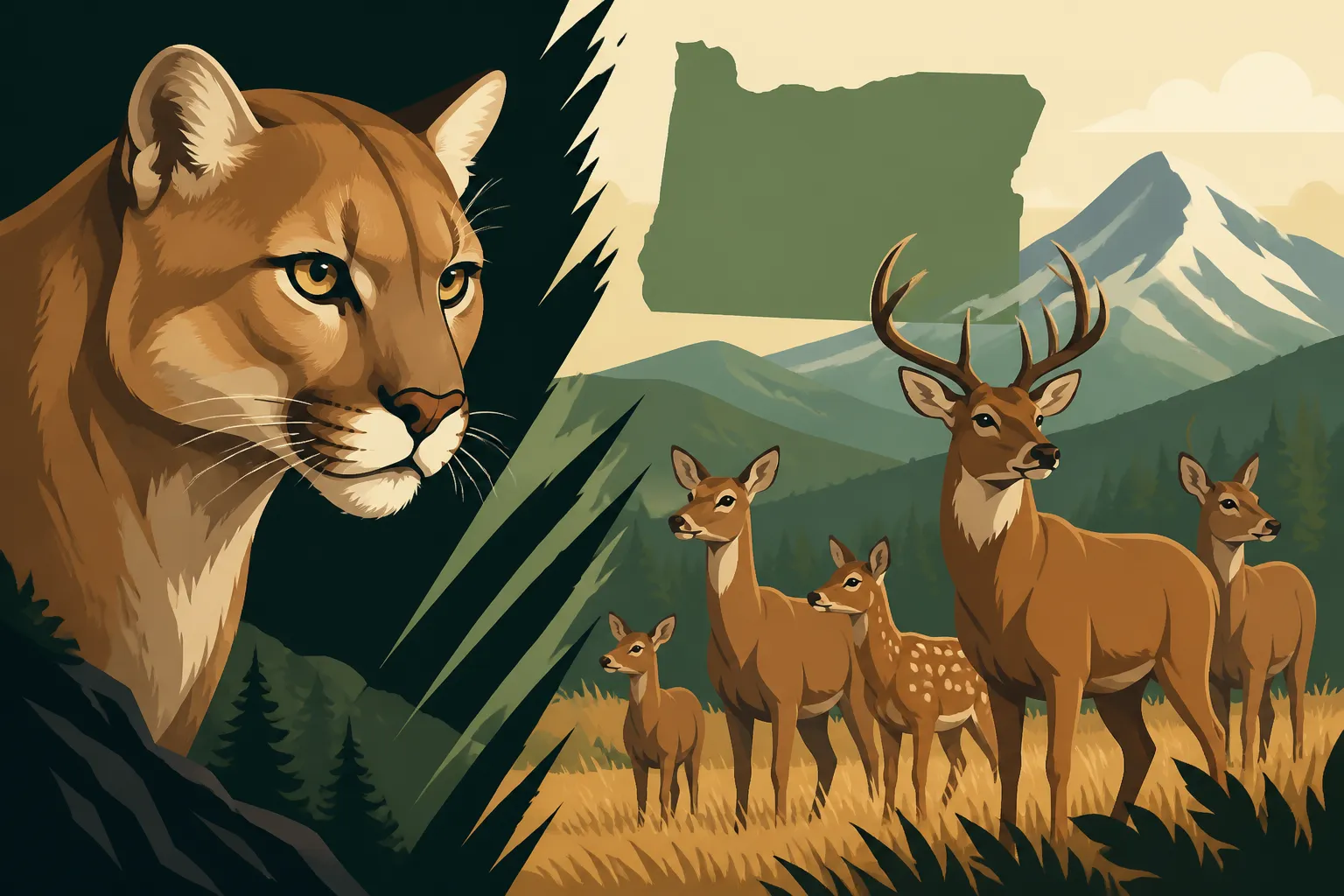
The impact on deer is significant. A single cougar can kill one deer per week on average, though this can vary greatly depending on the size of the cougar, the size of the deer, and the availability of other prey. For example, a large male cougar needs more calories and might kill more frequently, or take down larger prey like mature bucks. This constant pressure has a profound effect on deer behavior, making them more wary, forcing them to move more frequently, and often pushing them into less optimal habitats where they might find more cover but also less forage. This is a critical factor in understanding Why Oregon Mule Deer Numbers Are Falling in some areas.
Other Prey Species and Opportunistic Hunting
While deer are central, cougars are opportunistic predators and will exploit whatever food source is most readily available. This can include a wide array of other animals. For example, during the spring when elk calves are born, cougars will readily switch their focus to these vulnerable newborns. The same applies to fawns, making spring and early summer particularly high-mortality periods for young ungulates. We see similar trends with Elk Calf Survival and Predation in Oregon.
They also prey on smaller mammals like raccoons, porcupines, and even domestic animals if they're easy targets. In the eastern parts of the state, where bighorn sheep and pronghorn exist, cougars have been known to prey on them, although less frequently than deer due to the often open and exposed nature of their habitat. Even wild turkeys or grouse can fall victim if encountered during a hunt. This adaptability is key to their survival and allows them to persist even when deer populations might fluctuate locally.
Seasonal Shifts in Diet
A cougar's diet isn't static; it shifts with the seasons, reflecting the changing availability and vulnerability of different prey species.
- Spring: This is fawn and calf season. Newborn deer and elk are highly vulnerable, making them an easy meal. Cougars will actively seek out birthing grounds. This is a crucial time for herd recruitment, and heavy cougar predation can significantly impact the long-term health of a deer herd.
- Summer: As fawns grow older and stronger, cougars might shift back to adult deer, or target other available prey. Young animals, still inexperienced, remain somewhat vulnerable.
- Fall: Hunting season is also cougar hunting season. With deer and elk moving more due to human hunting pressure, they may become more vulnerable to cougar ambushes. Cougars are also building reserves for winter.
- Winter: This can be a challenging time for prey and predators alike. Deep snow or harsh conditions can make deer weaker and harder to escape, offering cougars opportunities. Conversely, severe weather can also make hunting difficult for the cougar itself.
These seasonal shifts highlight the dynamic nature of predator-prey relationships and the cougar's ability to adapt its hunting strategies to maximize its caloric intake throughout the year.
Impact of Cougar Predation on Deer Herds
The notion that cougars impact deer herds is hardly debatable, but the extent and nature of that impact are often subjects of intense discussion among hunters, wildlife managers, and conservationists. It's rarely a simple one-to-one equation.
Fawn Recruitment and Survival Rates
One of the most significant impacts of cougar predation is on fawn recruitment, which is the number of fawns that survive to adulthood and join the breeding population. Cougars are incredibly effective at hunting young deer. From the moment fawns are born until they are strong enough to evade predators, they are highly vulnerable. ODFW studies in various parts of Oregon consistently show that cougars are a primary cause of fawn mortality, often accounting for a substantial percentage of fawn deaths.
Imagine a doe dropping twins in a patch of Blacktail Deer Habitat in Oregon Clearcuts. For the first few weeks, those fawns rely heavily on camouflage and remaining still. A cruising cougar, however, with its keen senses, can often locate these hidden fawns. If too many fawns are lost to predation year after year, the deer herd can't replenish itself effectively, leading to declining populations. This is a major concern for units struggling with deer numbers, and it’s a constant management challenge to strike a balance where both predators and prey can thrive.
Adult Deer Mortality and Herd Dynamics
While fawns are particularly vulnerable, cougars don't exclusively target young animals. They are also adept at taking down adult deer, including mature bucks and does. Cougars often key in on older, weaker, or injured deer, but a healthy, fit adult can certainly become a meal. This predation on adults contributes to the overall mortality rate within a deer herd, which in turn influences herd density, age structure, and even sex ratios.
If cougar predation is consistently high on adult does, it directly impacts the reproductive potential of the herd. If they disproportionately take mature bucks, it can affect the overall antler quality and age structure of the buck population, which is often a concern for trophy hunters. The dynamics are complex, and it’s a constant balancing act for wildlife managers to understand how all these factors interact to shape the overall health of Oregon’s deer herds. This is why tools like GoHunt are valuable for researching specific unit data, giving hunters a clearer picture of herd dynamics.
Differences Between Mule Deer and Blacktail Impacts
Oregon is home to both Columbian Blacktail Deer in the western half and Mule Deer in the eastern half, and cougar predation can manifest differently in these two subspecies due to their distinct habitats and behaviors.
- Mule Deer: Often found in more open, sagebrush-steppe or rimrock country, Mule Deer tend to live in larger, more nomadic herds and often undertake significant migrations between summer and winter ranges. In these more open environments, cougars must be particularly stealthy, relying on draws, rocky outcrops, and juniper stands for cover. However, when snow depths are severe on winter range, Mule Deer can become concentrated and more vulnerable, leading to periods of intense cougar predation. This vulnerability is a contributing factor to the Oregon Mule Deer and the Herd Range Decline that many hunters have observed.
- Blacktail Deer: In the dense, often wet, timbered country of western Oregon, Blacktails live in smaller, more dispersed groups. Their habitat provides abundant cover, which helps them evade predators, but it also provides excellent ambush cover for cougars. Cougars here are incredibly effective at navigating the thick understory and surprising deer in close quarters. While Blacktails are naturally wary, the constant presence of cougars keeps them on edge, influencing their feeding patterns and movement through their home ranges.
These differences highlight how localized habitat and deer behavior dictate the specific interactions between cougars and their primary prey across Oregon.
Factors Influencing Predation Rates
Cougar predation isn't a static force; it's a dynamic interaction influenced by a multitude of environmental and ecological factors. Understanding these variables helps us appreciate the complexity of managing both predators and prey.
Habitat Quality and Cover Availability
The quality of the habitat plays a crucial role in shaping predation rates. Areas with a mosaic of dense cover and open feeding grounds can provide excellent hunting opportunities for cougars. The thick timber and undergrowth of western Oregon, for instance, offer perfect ambush sites for cougars hunting Blacktail Deer. These areas provide the concealment a cougar needs to stalk close to its prey undetected.
Conversely, in more open sagebrush country in eastern Oregon, cougars might have to work harder to find cover, using draws, rimrock, or juniper stands to get close. However, these same features can concentrate deer during certain times, creating predictable hunting grounds for a cougar. When cover is scarce, deer might be more exposed, but they also have a wider field of view to detect predators. A landscape altered by logging, wildfires, or human development can change the availability of both escape cover for deer and ambush cover for cougars, thus directly influencing hunting success for both.
Human Activity and Landscape Fragmentation
Human activity inevitably impacts cougar-prey dynamics. Roads, logging, and residential development can fragment habitats, changing how cougars and deer move through the landscape. Increased road density, for example, can sometimes give cougars easier access to certain areas, or conversely, it can increase human disturbance, pushing cougars into more remote zones.
Conversely, developments on the edge of wildlands can sometimes concentrate deer in agricultural fields or suburban green spaces, where they might feel safer from hunters, but potentially become easier targets for habituated cougars. Furthermore, the presence of people can alter natural predator-prey behaviors. Hunters, through their presence and harvest, can directly influence deer populations, which in turn affects the cougar's food supply. GoHunt mapping tools can help visualize these areas of human impact and how they might affect animal movements and concentrations.
Interplay with Other Predators
Cougars don't operate in a vacuum; they share the landscape with other predators like black bears, coyotes, and in some parts of eastern Oregon, wolves. These interactions add another layer of complexity to predation rates on deer.
- Coyotes: While primarily preying on fawns, coyotes are generally less effective against adult deer than cougars. However, their cumulative pressure, especially on young deer, can add to the overall mortality rate.
- Black Bears: Bears are significant fawn predators, particularly in the spring. They are opportunistic and will readily take fawns encountered while foraging. The presence of bears can mean more pressure on the youngest deer, especially in units where Oregon Black Bears in the Coast Range and Cascades are abundant.
- Wolves: In areas where wolves are established, particularly in northeast Oregon, they become significant predators of elk and deer. The dynamic between wolves and cougars can involve competition for prey, and sometimes even direct conflict. The presence of multiple apex predators can create complex, often difficult-to-predict, impacts on deer populations. Understanding this Predator Prey Balance in Oregon Units is crucial for holistic wildlife management.
The combined effect of these predators can be greater than the sum of their individual impacts, especially on vulnerable fawns. Each predator plays a role in shaping deer behavior and survival, creating a constant struggle for deer to avoid becoming a meal.
| Deer Subspecies | Typical Habitat | Primary Cougar Impact | Key Vulnerabilities |
|---|---|---|---|
| Columbian Blacktail Deer | Dense coastal timber, wet forests, clearcuts | Consistent fawn and adult mortality due to abundant ambush cover | Vulnerable in dense cover, especially fawns in hiding |
| Oregon Mule Deer | Open sagebrush, rimrock, juniper woodlands, high desert | High fawn mortality, adult mortality significant during harsh winters or migrations | Concentrated on winter range, exposed in open country, fawns in bedding areas |
Managing Cougar Populations in Oregon
Managing cougar populations in Oregon is a perpetual balancing act for ODFW, often navigating the desires of hunters, livestock producers, and conservation groups. It's a complex endeavor, aimed at maintaining healthy ecosystems while addressing human concerns.
ODFW's Management Objectives
ODFW's overarching goal for cougar management is to maintain a healthy, viable cougar population throughout their range in Oregon, while simultaneously minimizing conflicts with humans and livestock, and addressing impacts on other wildlife, particularly vulnerable big game populations like deer and elk. They strive for a science-based approach, relying on population modeling, harvest data, and research studies to inform their decisions.
Part of this management also involves understanding public perception. Many Oregonians value the presence of cougars as a symbol of wildness, while others are concerned about safety, particularly in areas where cougars are seen more frequently. ODFW attempts to balance these varied interests through regulated hunting seasons and by providing resources for living alongside cougars, such as recommendations for protecting pets and livestock.
Hunting Regulations and Harvest Quotas
Cougar hunting in Oregon is a regulated activity, playing a vital role in population management. The state issues a limited number of cougar tags each year, and the hunting season structure is designed to spread harvest out across the state. Hunters can purchase Oregon Cougar and Bear Tags over the counter, but specific zone quotas dictate when and where hunting can occur. These quotas are set to ensure sustainable harvest levels and prevent localized population declines.
Once a specific cougar zone reaches its harvest quota, that zone is closed to further cougar hunting for the remainder of the season. This system, while sometimes frustrating for hunters who miss out, is critical for dynamic management and ensuring that cougar numbers remain within acceptable parameters. Hunters are also required to report their harvest to ODFW promptly, allowing the agency to track harvest numbers and make real-time decisions about zone closures.
The Ongoing Debate on Hound Hunting
One of the most contentious aspects of cougar management in Oregon is the ban on using dogs (hounds) to hunt cougars, which was enacted by ballot measure in 1994. Prior to the ban, hound hunting was the primary method for taking cougars, allowing hunters to tree the animals and dispatch them. The ban shifted cougar hunting to spot-and-stalk or incidental encounters, making it significantly more challenging. This change is a key reason Why Oregon Cougar Hunters Cannot Use Hounds.
Many hunters argue that the ban has led to an increase in cougar populations and, consequently, greater predation on deer and elk, and more conflicts with livestock and humans. They advocate for the reintroduction of hound hunting as a more effective management tool. Conversely, animal welfare advocates defend the ban, citing ethical concerns about the practice. This ongoing debate highlights the deep divisions in philosophy regarding wildlife management and the role of hunting. For those who still pursue cougars, techniques like Spot-and-Stalk Cougar Hunting in Oregon Without Dogs and learning to identify Finding Cougar Tracks Without Hounds are essential skills.
Hunter's Perspective: Adapting to Cougar Presence
As hunters, our boots on the ground give us a unique perspective on the cougar-deer dynamic. We're often the first to see the subtle (or not-so-subtle) signs of cougar activity, and this knowledge can profoundly influence our hunting strategies and expectations.
Recognizing Cougar Sign and Activity
Successful hunters are keen observers, and learning to recognize cougar sign is an invaluable skill, particularly if you're hunting in deer-rich areas where cougars are likely present. This goes beyond just seeing the animal itself. Look for tracks – cougar tracks are typically rounder and larger than those of a coyote or domestic dog, lacking claw marks (claws are usually retracted). Finding them in mud or snow can tell you a lot about their recent movements.
Keep an eye out for scat, which can contain hair and bone fragments of their prey. Scratch marks on trees, particularly conifers, where they sharpen their claws or mark territory, are another indicator. Perhaps the most telling sign is a cached kill – a deer or elk carcass partially buried under leaves, sticks, or dirt. This is a cougar's way of saving its meal for later, and it's a clear indication you're in active cougar country. Noticing these details can make a huge difference in understanding deer distribution, especially when using resources like GoHunt to analyze unit-specific data.
How Cougar Presence Affects Deer Behavior
The constant threat of cougar predation fundamentally alters deer behavior. Deer in cougar country are perpetually more alert, more wary, and generally more nocturnal. They often move through dense cover more readily, seeking safety, even if it means less optimal foraging. You might notice deer exhibiting more "jumpiness" or frequently scanning their surroundings, even when no immediate threat is apparent.
They might avoid certain areas that offer good forage but poor escape routes, or avoid predictable travel corridors. This can make hunting deer more challenging, as they become less visible during daylight hours and more difficult to pattern. As hunters, we need to adapt our approach, focusing on transition zones, dense bedding areas, and understanding how deer use the terrain to avoid predators. For example, a deer might prefer to bed on a steep hillside with a clear view downhill, knowing a cougar is less likely to come from below.
Hunting Strategies in Cougar Country
Hunting in areas with a healthy cougar population requires a shift in mindset and strategy. First and foremost, patience and stealth become even more critical. Deer that are constantly on edge are less forgiving of mistakes.
- Focus on Cover: Instead of focusing solely on open feeding areas, spend more time still-hunting or glassing dense cover, knowing deer will gravitate towards security. This is particularly true for Still-Hunting Blacktails in Wet Oregon Coastal Brush.
- Scouting for Sign: Actively look for cougar sign. If you find fresh tracks or a kill, understand that deer in that immediate vicinity are likely even more on guard or have moved out.
- Hunt Transition Zones: Cougar activity can push deer into specific transition zones between heavy cover and open feeding areas. These can be productive spots.
- Vigilance: Always be aware of your surroundings. While cougar attacks on humans are extremely rare, knowing you're in their territory means exercising caution, especially when hunting alone or at dawn and dusk.
- Utilize E-Scouting: Before you even leave home, use tools like GoHunt to study satellite imagery and identify potential bedding areas, escape routes, and dense cover that both deer and cougars would utilize. This can help you anticipate animal movement patterns.
Ultimately, hunting in cougar country is about reading the landscape and the animals within it. It's about understanding the intricate dance between predator and prey and adapting your approach to increase your chances of success while also appreciating the wilderness around you.
Disclaimer
Please remember that hunting regulations and wildlife management strategies in Oregon can change. Always consult the most current Oregon Department of Fish and Wildlife (ODFW) regulations pamphlet before planning any hunt. This article provides general information and should not be considered a substitute for official ODFW guidelines.