Coyote Density in Eastern Oregon
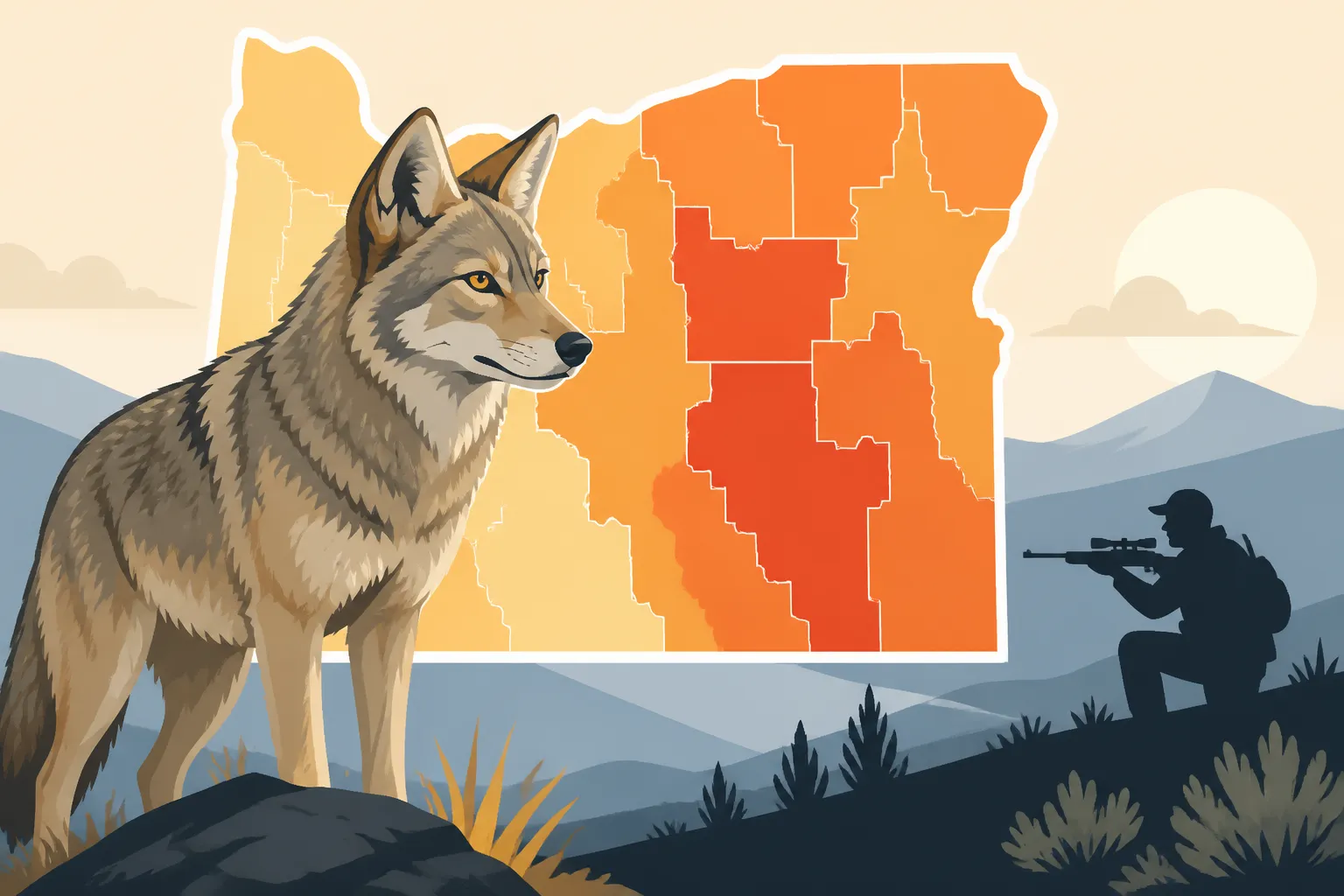
There's a common misconception that Eastern Oregon is just one big, homogenous expanse of sagebrush. While that imagery certainly holds true for vast areas, the reality is far more complex, and understanding this diversity is absolutely crucial when you're trying to figure out where the coyotes are. Hunters often get frustrated after driving for hours, seeing seemingly endless perfect coyote country, only to hear nothing or spot very few. This guide is here to unravel the nuances of coyote density in Eastern Oregon, helping you pinpoint the hotspots, understand what drives their populations, and ultimately increase your chances of success on the ground.
The Shifting Landscape of Coyote Populations in Eastern Oregon
Eastern Oregon is an enormous canvas, stretching from the Cascade foothills all the way to the Idaho border. This vastness encompasses everything from high desert to rolling sagebrush plains, agricultural fields, rimrock canyons, and even ponderosa pine forests. Because coyotes are incredibly adaptable predators, their populations and how densely they inhabit an area are directly tied to the specific characteristics of these varied landscapes. You're not going to find the same numbers or behavior in the desolate stretches of the Owyhee Breaks as you would on the edges of irrigated alfalfa fields near Burns. It's this regional variation that often stumps even experienced hunters new to Eastern Oregon.
Coyotes, much like other predators, are opportunistic. They set up shop where food is consistently available, and where they have adequate cover for denning, hunting, and raising pups. This means that areas with a high density of small mammals—like rabbits, ground squirrels, and voles—will generally support more coyotes. But it's not just about the small stuff; deer and antelope fawns, weak or injured adult ungulates, and even domestic livestock (unfortunately) can be significant food sources, especially at certain times of the year. The health of these prey populations directly influences how many coyotes an area can sustain.
Historically, coyote numbers have always fluctuated, but modern land use, habitat changes, and hunting pressure all play a significant role in their current distribution. A few decades ago, some areas might have held incredibly high numbers, only to see a decline as agricultural practices shifted, or as drought impacted prey species. Conversely, regions that were once marginal might now offer better forage for prey, leading to a boom in coyote numbers. Staying on top of these subtle shifts, often by using detailed mapping tools like those offered by GoHunt, can give you a real edge.
General Distribution Across the Region
When we talk about Eastern Oregon, we're really talking about several distinct regions, each with its own habitat characteristics and, consequently, its own coyote dynamics. The broad brushstrokes paint a picture of coyotes being present almost everywhere, but the density is what matters to a hunter.
- The High Desert Basins: Areas like the Alvord Desert, Warner Valley, and the larger expanses of Malheur County offer classic sagebrush steppe. Here, coyotes are often more spread out, covering vast distances to hunt jackrabbits, ground squirrels, and even young Pronghorn Range and Numbers. Water sources, even seasonal ones, become critical hubs. You'll find coyotes here, but they might require more patience and long-range glassing.
- Juniper and Rimrock Country: Places like the Ochoco National Forest Hunting Areas and the vast acreage of the Bureau of Land Management lands often feature juniper breaks, rimrock canyons, and pockets of ponderosa. These areas provide excellent cover for coyotes, especially for denning and ambush hunting. Prey here might include deer, elk calves, and a good variety of rodents. Glassing Sage and Juniper for Eastern Oregon Mule Deer techniques can also apply to spotting coyotes in these environments.
- Agricultural Interfaces: This is where things can get really interesting. Areas bordering croplands, irrigated pastures, and ranching operations often hold very high densities of coyotes. They're drawn to rodents in fields, leftover crops, and unfortunately, livestock. These zones, while sometimes private, can offer incredible opportunities on accessible public lands or by-permission parcels.
Understanding these distinctions helps temper expectations. If you're heading to the wide-open high desert, prepare for long-distance calling and lots of scanning. If you're near farmland, you might find more concentrated activity but also more wary animals.
Seasonal Movement and Concentration
Coyote density isn't a static number throughout the year; it fluctuates with the seasons. Just like other wildlife, coyotes respond to changes in weather, food availability, and breeding cycles. Being aware of these seasonal shifts can greatly influence your scouting efforts and hunting success.
During the late spring and early summer, when pups are born, coyotes tend to be more localized around their dens. While actual den locations are often well-hidden, the parents will be actively hunting nearby to feed their growing families. This period can see concentrated activity in specific drainages or draws. As summer progresses, and pups begin to venture out, you might find family groups moving together, often targeting easy prey like fawns or abundant rodent populations.
As fall approaches and young coyotes disperse, you'll see a broader distribution. This is often a time of increased activity as coyotes establish new territories or seek mates. In winter, especially during harsh conditions, coyotes may concentrate in areas offering thermal cover or where prey animals are yarded up due to snow. Deer and elk winter ranges, for instance, can become attractive, providing both food sources and shelter from the elements. Knowing the general patterns of Elk Behavior After a Wildfire or how deer use particular wintering grounds can indirectly lead you to coyote concentrations, as coyotes follow their food sources.
Key Factors Driving Coyote Density Across Eastern Oregon's Diverse Terrain
Several critical factors contribute to why coyote numbers are higher in some Eastern Oregon locales than others. It’s a complex interplay of environmental conditions, biological imperatives, and human influence. Thinking about these factors will help you predict where coyotes are most likely to thrive and, therefore, where your time will be best spent.
One of the primary drivers, as with almost any animal population, is food availability. Coyotes are incredibly adaptable and will consume almost anything, from insects and berries to small mammals, birds, and carrion. However, areas with abundant and reliable populations of their preferred prey—like jackrabbits, cottontails, and ground squirrels—will almost always support a higher density of coyotes. For instance, a healthy sagebrush flat brimming with burrowing rodents and hares is far more likely to host numerous coyotes than a featureless, barren landscape with scarce food. When you’re looking at your mapping apps, consider the vegetation types and their potential to support these prey species.
Beyond food, the availability of water, even in arid Eastern Oregon, plays a significant role. Coyotes, especially during hotter months, need access to water sources. These could be perennial streams, cattle troughs, seasonal ponds, or even dense vegetation that holds dew. Consequently, areas with reliable water sources often act as magnets, drawing coyotes (and their prey) from the surrounding drier country. It’s why glassing near a spring or a stock pond can sometimes be incredibly productive. These are often choke points where you'll see movement throughout the day.
Finally, cover and denning sites are non-negotiable for a healthy coyote population. While coyotes don't necessarily need dense forests, they do require broken terrain, rimrock, thick draws, or dense sagebrush to provide shelter from the elements, escape routes from predators (including humans), and safe places to raise their pups. You might find coyotes hunting in open areas, but their home base will usually be within striking distance of some form of protective cover. This is where Oregon High Desert Hunting Country with its varied terrain, including deep coulees and juniper patches, can be very productive.
Prey Abundance and Variety
The old saying "where there's food, there's life" rings especially true for coyotes. Their density is inextricably linked to the buffet of prey available in an area. Eastern Oregon's varied ecosystems offer different menus, which in turn influences coyote numbers.
In the vast sagebrush and grass regions, rabbits (both jackrabbits and cottontails) are often the cornerstone of a coyote's diet. Areas that experienced good moisture years, leading to lush vegetation, will often see a subsequent boom in rabbit populations. These thriving bunny communities then become prime hunting grounds for coyotes, naturally increasing their density. Ground squirrels and marmots also provide significant calories, especially during their active seasons. A hunter observing numerous squirrel mounds or rabbit signs can confidently assume coyotes are probably not far behind.
Beyond the smaller fare, coyotes are adept at preying on larger game, particularly the young or vulnerable. Newborn Mule Deer Fawn Recruitment Rates in the spring, or elk calves in their first few weeks, represent easily accessible, high-calorie meals. During harsh winters, weakened adult deer or elk also become targets or provide abundant carrion. This means that areas with healthy deer and elk populations will often support a robust coyote presence, as the coyotes capitalize on natural mortality or vulnerable young. Recognizing these seasonal opportunities for coyotes can guide your hunting efforts; for instance, hunting near fawning grounds in early summer can be very productive.
Agricultural lands, while sometimes presenting access challenges, offer another layer of prey abundance. Fields of alfalfa or grain become magnets for rodents, which then attract coyotes. The edges of these fields, drainage ditches, and fence lines often provide perfect travel corridors and hunting grounds for coyotes looking for easy meals. Farmers can attest to the sheer numbers of coyotes drawn to haystacks and crop fields, demonstrating how this variety of prey directly translates to higher local densities.
Habitat Features and Topography
Eastern Oregon's dramatic topography and diverse habitat features aren't just pretty to look at; they dictate where coyotes live, hunt, and reproduce. Understanding these features is like reading a map to their preferred neighborhoods.
The rolling, broken terrain common across much of the region, characterized by deep coulees, draws, and washes, provides invaluable thermal cover and ambush points. In the summer, these depressions offer shade and cooler temperatures, while in winter, they can shield coyotes from biting winds and snow. These natural features act as travel corridors, allowing coyotes to move undetected across otherwise open country. When you're glassing a vast basin, pay close attention to the subtle folds and ripples in the landscape; these are often the highways and hiding spots for coyotes. A good map tool, especially with topo lines, can highlight these features even before you step out of the truck.
Rimrock and juniper-studded slopes are also high-value habitat. The rocky outcroppings and dense juniper stands offer excellent denning sites, protective cover, and elevated vantage points for coyotes to survey their surroundings. Imagine a coyote perched on a rock bluff, scanning the valley below for movement. These areas can be incredibly productive for calling, as coyotes often feel secure approaching from the broken terrain. Hunting the Willamette Valley Open Fields Properties might present a different challenge, but in Eastern Oregon, these rougher areas are gold.
Furthermore, water sources, as mentioned, are critical. While often scarce, any reliable water—a spring, a creek, a stock pond, or even an overflowing irrigation ditch—will draw coyotes, particularly in dry periods. These spots not only provide drinking water but also attract other wildlife, creating a natural congregation point for predators. When e-scouting using a platform like GoHunt, marking potential water sources, especially during dry stretches, can be a game-changer for finding concentrated coyote activity.
Human Influence and Hunting Pressure
Human activity, whether intentional or not, always plays a significant role in shaping wildlife populations, and coyotes in Eastern Oregon are no exception. Our presence, our land management, and especially our hunting efforts directly impact coyote density and behavior.
Hunting pressure, in particular, can have a profound effect. In areas that see consistent and heavy coyote hunting, whether by organized calling contests or individual hunters, you'll often find that the coyotes become incredibly wary. They'll learn to associate vehicle sounds, human voices, and even certain calling sequences with danger. This doesn't necessarily mean the density drops to zero, but the coyotes that remain are often much harder to call in or spot. They become more nocturnal, more cautious, and quicker to abandon a stand if they sense anything is amiss. For this reason, targeting less-pressured areas or hunting during off-peak times can sometimes yield better results.
Conversely, areas with less human disturbance, perhaps on vast, remote public lands with limited road access like certain parts of the Malheur National Forest Access or the Owyhee country, might hold higher densities of more naive coyotes. These animals haven't been "educated" by constant hunting pressure and might respond more readily to calls. Finding these out-of-the-way spots requires good scouting and a willingness to get away from the easy access points. E-scouting tools are invaluable for identifying these remote pockets.
Land management practices also influence coyote density. Ranchers often implement predator control measures to protect livestock, which can temporarily reduce local coyote numbers. However, coyotes are incredibly resilient and often rebound quickly, especially if the underlying prey base remains strong. The presence of roads, fences, and human infrastructure also creates edge habitats that coyotes can exploit, often providing easy travel and hunting opportunities. So, while human presence can certainly reduce density in some areas, in others, it can inadvertently create conditions that favor coyotes.
Practical Strategies for Locating High-Density Coyote Areas
Finding those elusive coyote hotspots in Eastern Oregon isn't about pure luck; it's a methodical process that combines diligent scouting, understanding their behavior, and leveraging modern tools. Many hunters simply drive around hoping to spot one, but a more strategic approach will pay dividends in the long run.
Your best friend in this endeavor is preseason scouting, both digitally and on the ground. Digital tools are invaluable for narrowing down vast areas. Platforms like GoHunt, with their detailed satellite imagery and property boundary overlays, allow you to identify potential travel corridors, water sources, and likely denning areas (like rimrock or dense draws) from the comfort of your home. You can mark waypoints for potential stand locations, note areas of mixed public and private land, and even identify E-Scouting Oregon Units With Satellite Imagery that might indicate recent burns or clearcuts which could impact prey populations.
When you hit the field, focus on "reading the sign." This means looking for tracks in dusty roads or along dry creek beds, scat (which can often reveal their diet), and investigating potential kill sites (though these can be subtle). Pay close attention to areas where prey animals are abundant; if you're seeing a lot of rabbits, ground squirrels, or deer activity, chances are coyotes are working that same area. Remember, coyotes are always on the move, so fresh sign is more important than old sign.
Finally, talking to people can provide invaluable, up-to-the-minute intelligence. Local ranchers, farmers, and even other hunters in small towns often have a pulse on coyote activity in their immediate area. They can tell you about recent sightings, problem animals, or areas where coyotes have been particularly abundant. Just remember to be respectful of their time and knowledge, and always ask permission if you plan to hunt on private land they suggest.
Leveraging E-Scouting and Maps
In the vastness of Eastern Oregon, trying to find coyotes without a solid e-scouting strategy is like looking for a needle in a haystack. Digital maps are no longer just a luxury; they are an essential tool for any serious predator hunter.
Start by using high-resolution satellite imagery to get a bird's-eye view of your chosen hunt unit. Look for the "edges" where different habitats meet: the transition from sagebrush to juniper, the fringe of agricultural fields, or the start of rimrock country. These edges are often where coyotes hunt and travel, as they offer both cover and access to prey. Zoom in to identify subtle terrain features like small draws, coulees, and fingers of timber that might serve as travel corridors or den sites. GoHunt offers fantastic layers that highlight public versus private land, helping you identify accessible hunting grounds. This is especially useful for Eastern Oregon Hunting Units and Access where public and private parcels can be a checkerboard.
Beyond satellite imagery, pay attention to topographic maps. Contour lines reveal elevation changes, which translate to terrain features like steep slopes, hidden valleys, and ridges. Coyotes often use ridges as travel routes, especially in broken country, and will bed down in draws or on sheltered slopes. Identifying these features beforehand helps you plan your approach, predict where coyotes might come from when you call, and find good vantage points for glassing. Marking potential stand locations—places where you'll have good visibility and an advantageous wind—before you even leave home saves valuable time in the field.
Don't forget about marked water sources. As mentioned, water is a magnet in dry country. Many mapping apps will have springs, ponds, and even stock tanks marked. These are critical points to investigate, especially during dry late summer and fall, as coyotes will frequent them. Overlaying different map layers, such as vegetation types with topography and water, helps paint a comprehensive picture of potential high-density areas. This digital reconnaissance allows you to enter the field with a precise game plan, rather than simply wandering.
Reading Coyote Sign and Patterns
Once you're on the ground in Eastern Oregon, your eyes become your most important scouting tool. Learning to read the subtle clues coyotes leave behind is crucial for understanding their presence and patterns of movement.
The most obvious sign is tracks. Look for them in dusty roads, sandy washes, and along the edges of muddy puddles or snow patches. Coyote tracks are typically more oval than dog tracks, and you can often draw an "X" through the middle of the paw pad and the toe pads without crossing any lines. Fresh tracks indicate recent activity and can tell you about their travel routes. Pay attention to the direction of travel and if multiple sets of tracks converge, suggesting a family group or a common thoroughfare. The size of the track can also give you a hint about the size of the coyote.
Scat (feces) is another excellent indicator. Coyote scat often contains hair, bone fragments, or berries, reflecting their varied diet. The presence of numerous scat piles in an area suggests a regular presence. Look for scat on elevated objects like rocks or fence posts, as coyotes sometimes use these as territorial markers. The freshness of the scat also tells you how recently coyotes have been in the vicinity. Hard, dry scat is older, while moist, dark scat is very recent.
Beyond tracks and scat, keep an eye out for other indicators. Old kill sites, especially from larger prey like deer or antelope, will often attract coyotes for scavenging. You might find disturbed ground, scattered hair, or bone fragments. Also, listen for howls, especially at dawn and dusk. While a lone howl might be a coyote advertising its presence, a chorus of howls, particularly if they sound like multiple animals, is a strong indicator of a family group or a concentrated population. Using locator calls yourself, listening for responses, can also help gauge density, particularly at specific times of day.
Effective Hunting Tactics for Eastern Oregon's Coyote Hotspots
Once you've identified those promising Eastern Oregon hotspots, it's time to put boots on the ground and implement effective hunting tactics. Coyote hunting is a game of strategy, patience, and understanding your quarry's behavior. Simply showing up and blowing on a call rarely yields consistent results.
The single most critical factor in setting up a successful coyote stand is playing the wind. Coyotes have an incredible sense of smell, and if they catch your scent, the game is over. Always approach your stand and call with the wind in your face or quartering away from where you expect the coyotes to approach. This often means long walks and strategic routes to avoid contaminating the area with your scent. When glassing from a distance, determine the wind direction carefully before committing to an approach.
Next, camouflage and concealment are paramount. Coyotes are visually astute, especially in open country. Wear quality camouflage that breaks up your outline and blends with the Eastern Oregon landscape, whether it's the grays and tans of sagebrush or the darker greens of juniper. Use natural cover like sagebrush clumps, rimrock edges, or the shadows of juniper trees to break up your silhouette. Minimize movement at all times. Even a slight shift can spook a wary coyote.
Finally, calling techniques need to be adapted to the conditions. Coyote Calling in Open Sage Country might require loud, far-reaching sounds to get attention, while calling in broken juniper might involve more subtle, shorter sequences. Vary your calls—distress, howls, pup distress—to see what elicits a response. Don't be afraid to experiment, and remember that patience is key. A stand should often be at least 20-30 minutes, sometimes longer, as coyotes can take their time approaching cautiously.
Optimal Stand Selection and Wind Management
In Eastern Oregon, where the landscape can be vast and open, selecting the right stand location is absolutely critical, and it goes hand-in-hand with mastering wind management. A poorly chosen stand or a misjudged wind can ruin your hunt before it even begins.
When choosing a stand, look for a spot that offers a clear field of view in the direction you expect coyotes to approach, but also provides you with some form of concealment. This could be a large sagebrush clump, a juniper tree, or the edge of a small rise. You want to be able to see them before they see you. Consider the topography; a slight elevation gives you an advantage for spotting, but don't skyline yourself. Instead, position yourself just below the crest of a ridge, so you can peek over without exposing your full silhouette. Also, ensure you have a clear shooting lane or two, allowing for ethical shots when a coyote does appear.
Now, for the wind: it's not just about knowing the general direction. Microclimates and thermal currents can create localized wind shifts, especially in hilly or broken terrain. Always verify the wind with a wind checker at your stand location. As a general rule, you want your scent cone to drift away from where you anticipate the coyotes will approach. If you're calling across a canyon, the wind should be blowing from you, across the canyon, and then beyond the far ridge. If the wind is swirling or inconsistent, it's often better to move to a different location or wait for more stable conditions. A coyote's nose is its primary defense, and you absolutely cannot beat it.
Think about the sun as well. Position yourself so the sun isn't directly in your eyes, making it hard to see approaching coyotes, and ideally, have the sun at your back, shining into the coyote's eyes. This makes it harder for them to spot you against the bright glare. By combining proper wind management, strategic concealment, and thoughtful sun position, you stack the odds in your favor significantly.
Diverse Calling Techniques and Sequences
Coyotes in Eastern Oregon are exposed to a lot of calling, so relying on just one basic distress sound often won't cut it. You need a diverse arsenal of calls and a good understanding of how to use them to mimic real-world scenarios.
Start your stand with a call that matches the situation. If you're hunting vast, open country, a loud, attention-grabbing distress call like a jackrabbit in peril is a good opener to get distant coyotes to acknowledge your presence. After a minute or two, switch to a slightly softer, more frantic sequence. If you're in thicker juniper, a subtler cottontail distress might be more appropriate, as coyotes won't expect something incredibly loud up close. Predator Calling for Coyotes in Eastern Oregon often involves adapting on the fly.
Don't be afraid to incorporate howling into your sequences, especially during the breeding season (late winter/early spring) or if you want to locate coyotes. A lone female howl or a challenge howl can often elicit a response, letting you know there are coyotes in the vicinity and their general direction. Once you get a response, you can switch back to distress calls to try and lure them in. Some hunters also find success with pup distress calls, which can trigger an aggressive territorial response from adult coyotes, especially early in the season when pups are young. Best Bugle Sequence for Early September Elk shows that even for other species, varied calls are important.
Vary the volume and cadence of your calls throughout the stand. Start loud, then soften. Call for 30-60 seconds, then be silent for 2-3 minutes, scanning constantly. Coyotes often circle downwind, so keep your head on a swivel. If nothing shows up after 15-20 minutes, try a completely different call or sequence before packing up. Sometimes, a change from rabbit distress to bird distress, or adding some subtle mouse squeaks, can be just the ticket. Remember, electronic calls, as discussed in Electronic Calls and What Oregon Allows, offer an incredible range of sounds and can be particularly effective for variety.
Adapting to Different Eastern Oregon Terrains
The coyote hunting tactics that work in the high desert will often fall flat in the rimrock canyons or on the edge of agricultural fields. Successful Eastern Oregon coyote hunters are master adapters, adjusting their approach to the specific terrain.
In the wide-open sagebrush flats and high desert basins, your strategy needs to emphasize long-range visibility and calling. This means you'll spend a lot of time glassing with good binoculars, often from an elevated position. Your calls need to carry distance, so louder distress calls are often favored. Set up with long shooting lanes in mind, as coyotes might approach cautiously from hundreds of yards out. Patience is absolutely key here, as coyotes might take a long time to commit, circling for scent. This is where Coyote Calling in Open Sage Country tactics really shine.
When you're in juniper or rimrock country, like the Ochoco National Forest Hunting Areas, the game changes. Visibility is often limited, so your calls don't need to be as loud but should be more varied. Coyotes here will often use the broken terrain to sneak in close, so you need to be prepared for a close-range shot. Set up in an area that offers multiple shooting lanes through the trees and draws, and constantly scan your immediate surroundings. The wind can be tricky in these areas due to the topography, so pay extra attention to swirls. Consider placing your caller a short distance away from you, so the coyote's attention is drawn slightly away from your concealed position.
For areas bordering agricultural fields and ranchlands, access can be a primary concern, so always Asking Permission on Oregon By-Permission Land is paramount. Once you have access, these areas often have excellent coyote densities. Here, coyotes might be more habituated to human activity but also incredibly wary. Calls might need to be shorter, softer, and more subtle, mimicking rodents in crops. Focus your stands on field edges, drainage ditches, and fence lines, especially during times when farmers aren't actively working the land. These coyotes are often nocturnal due to human activity, so scouting during low-light hours and understanding Night Hunting Rules for Predators in Oregon could be beneficial.
Disclaimer
This article is for general informational purposes only and does not constitute professional advice. Laws, prices and regulations vary by location and change over time. Consult a qualified professional for guidance on your specific situation.