Ochoco National Forest Hunting Areas
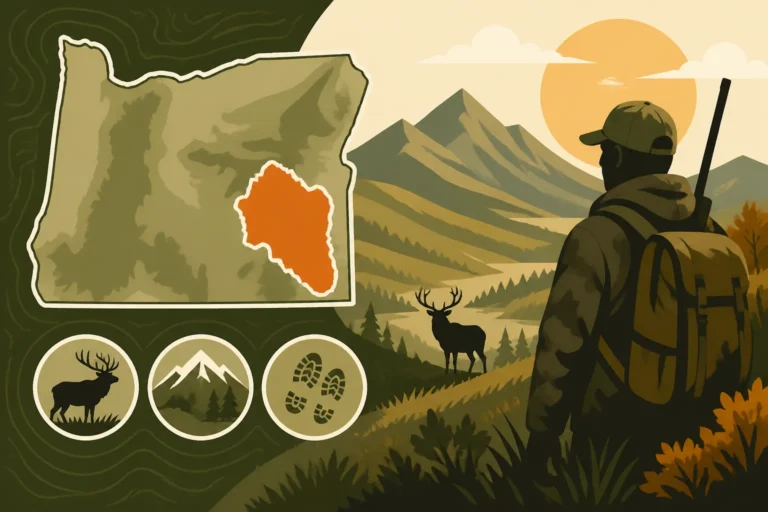
Hunting the vast and diverse landscapes of Central Oregon can feel like trying to solve a complex puzzle, especially when you're looking at an area as sprawling and varied as the Ochoco National Forest. It's easy to get overwhelmed by the sheer scale, the patchwork of public and private land, and the ever-changing access regulations. This guide is here to break down the ins and outs of hunting in the Ochoco National Forest, helping you understand its unique characteristics, navigate its terrain, and develop a solid strategy for a successful and rewarding hunt.
Understanding the Ochoco National Forest Landscape for Hunters
The Ochoco National Forest isn't just one type of hunting ground; it's a tapestry woven from various ecosystems, each presenting its own opportunities and challenges. If you picture a typical "Eastern Oregon" landscape, the Ochocos will likely surprise you with their diversity. This isn't just endless sagebrush flats or dense conifer stands, but a dynamic mix that demands a versatile approach from any hunter.
Diverse Terrain and Habitat Zones
Imagine driving through the Ochocos: one minute you're winding through groves of towering Ponderosa pine, their red bark glowing in the sun, the next you're cresting a ridge overlooking vast expanses of sagebrush and juniper-studded hills. This rich mosaic is precisely what makes the area so appealing to a variety of game. The lower elevations often feature those expansive sagebrush flats, punctuated by rocky outcrops and bitterbrush thickets. These areas provide crucial winter range for mule deer and excellent forage for elk when snow pushes them down from higher ground.
As you gain elevation, the landscape transitions into dense stands of Ponderosa pine, mixed conifer forests with Douglas fir and white fir, and pockets of aspen in riparian zones. These timbered areas offer essential cover, security, and bedding grounds for both deer and elk, especially during archery and early rifle seasons. You'll find animals here seeking refuge from summer heat and hunting pressure. The subtle changes in elevation, often dramatic and steep in places, also create natural thermal sanctuaries and travel corridors that big game rely on. Understanding these distinct habitat zones and how they connect is key to predicting animal movement and finding those less-pressured pockets.
Primary Game Species in the Ochocos
When most hunters think of the Ochoco National Forest, their minds immediately turn to two big game species: Rocky Mountain Elk and Mule Deer. This region is home to robust populations of both, making it a prime destination for many tag holders. The elk here are Rocky Mountain Elk, known for their larger body size and impressive antlers compared to their Roosevelt cousins out west. They thrive in the mixed conifer forests, often utilizing the timber for cover and moving into clearcuts or open meadows at dawn and dusk to feed. During the rut, the sound of a bugling bull echoing through the Ochoco canyons is an unforgettable experience. Rocky Mountain Elk in Eastern Oregon discusses more about these magnificent animals.
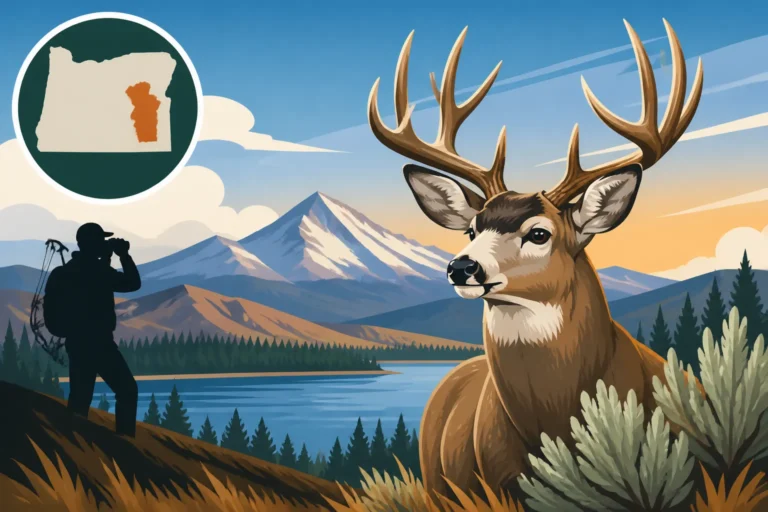
Mule deer, while facing some regional challenges, are still a significant draw to the Ochocos. They prefer the more open, broken country with pockets of juniper and sagebrush, often found at lower to mid-elevations. You'll find them using the bitterbrush and mountain mahogany for forage, especially in the fall as they prepare for winter. While the trophy potential might not be as consistent as some other units, the chance at a mature buck is always present. Beyond deer and elk, the Ochocos also hold a healthy population of black bears, often encountered during early season deer and elk hunts, especially near berry patches or water sources. Cougars also roam these forests, preying on deer and elk, though they are much more elusive. For those interested in smaller game, upland birds like grouse can be found, and coyotes are plentiful, offering additional hunting opportunities.
Navigating Access and Road Systems
One of the biggest hurdles for any hunter venturing into the Ochoco National Forest is figuring out where you can and cannot go, and how to get there. It's not a simple grid of roads; it's a complex network that can change from season to season, making careful planning absolutely essential.
Open and Closed Roads and Travel Management Areas
The Ochoco National Forest, like many public land systems in Oregon, utilizes a comprehensive system of Travel Management Areas (TMAs). These are designated areas where vehicle access is restricted to certain roads, or entirely closed, often to protect wildlife habitat, reduce road degradation, or provide a quality hunting experience. You'll encounter a mix of roads: some are open year-round to all vehicles, some are open seasonally, some are permanently closed with gates or barriers, and others are only open to administrative or permitted use. Missing a closed road sign, whether intentional or not, can lead to serious fines and penalties. This is where tools like onX Hunt become invaluable. I can't stress enough how much a good mapping app helps; it's not just a convenience, it's practically a necessity for understanding the constantly changing status of roads and staying on the right side of the law. You can toggle layers to see public land boundaries, road classifications, and often, specific TMA rules for a given area. It's like having a real-time forest ranger in your pocket, showing you exactly where you can and cannot drive. Always cross-reference with the latest ODFW hunting regulations pamphlet and forest service maps, as digital maps can have occasional delays in updates. For more on navigating these, check out Reading a Travel Management Area Map Before You Drive.
Identifying Public vs. Private Land Boundaries
The land ownership in and around the Ochoco National Forest is a classic example of the "checkerboard" pattern common in the West. You'll find large blocks of public National Forest and BLM land interspersed with private parcels, often owned by timber companies or individual ranchers. This can be incredibly frustrating if you're not prepared, as a promising elk trail might lead you directly onto private property without obvious fencing. Trespassing, even accidentally, is a serious offense. This is another area where onX Hunt truly shines, with its ability to display detailed land ownership layers. Before I even leave my house, I'm poring over these maps, identifying public land access points and noting any adjacent private parcels.
It's crucial to understand that many private timber companies do allow public access for hunting, sometimes for a fee or through a permit system. Companies like Weyerhaeuser or Hancock often have their own regulations and permit requirements, which can change annually. It's your responsibility to research these policies well in advance of your hunt. Don't assume open gates mean public access, and always respect posted signs. When in doubt, err on the side of caution. Even if you have permission to cross private land, make sure you know the exact boundaries so you don't inadvertently stray onto another landowner's property. The best practice is always to secure explicit permission if you intend to be on private ground.
Key Hunting Units Within the Ochoco National Forest
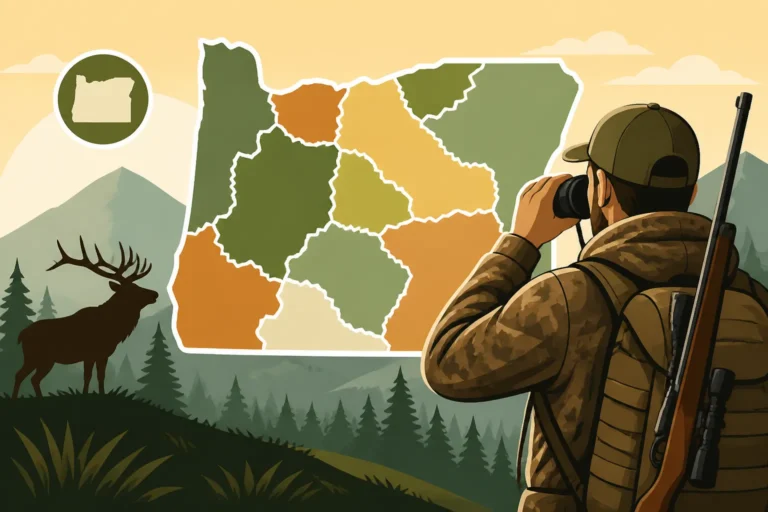
While the entire Ochoco National Forest offers hunting opportunities, it's divided into several distinct hunting units, each with its own characteristics, draw odds, and typical game densities. Understanding these specific units is critical for anyone planning a controlled hunt application or trying to maximize their chances with general season tags.
| Unit Name | Primary Game | Typical Terrain | General Access | Hunting Pressure |
|---|---|---|---|---|
| Ochoco | Elk, Mule Deer | Pine forests, juniper, sagebrush draws, open meadows, some steep canyons | Good road network, extensive TMAs | Moderate to High |
| Grizzly | Elk, Mule Deer | Rolling hills, juniper, bitterbrush, some ponderosa, agricultural edges | Mix of public/private, good road access to public | Moderate |
| Maury | Mule Deer, Elk | High desert plateaus, deep canyons, sagebrush, juniper | Accessible, but some remote areas | Moderate |
| Paulina | Mule Deer, Elk | Mixed forest, clearcuts, steep breaks, more rugged | Good, but more challenging in backcountry | Moderate |
Ochoco Unit Specifics
The Ochoco unit itself encompasses a large portion of the National Forest, and it's probably one of the most well-known and heavily hunted units in Central Oregon. It's a fantastic unit for both elk and mule deer, offering diverse habitat that caters to both species. Hunters can expect to find good numbers of Rocky Mountain Elk in the timbered draws and the deeper canyons, especially those with northern aspects offering cooler temperatures and denser cover. The mule deer are often found in the more open, transitional areas where the pine forests give way to juniper and sagebrush.
Accessibility in the Ochoco unit is generally good, with a decent network of forest roads. However, this also means it experiences significant hunting pressure, particularly during the general season for deer and the early controlled hunts. To find success here, you really need to be willing to get away from the roads. While you might see animals closer to vehicle access during quiet periods, they quickly learn to seek refuge in thicker cover and roadless areas once the orange army hits the woods. Knowing where these less-pressured pockets are, either through rigorous e-scouting or boots-on-the-ground recon, is paramount. Ochoco Unit Roads and Closures will give you a better idea of how to plan your travel.
Grizzly Unit and Maury Mountain Hunting Access
Adjacent to the main Ochoco unit, the Grizzly and Maury units offer slightly different hunting experiences, often characterized by more open landscapes, but still with significant pockets of prime habitat. The Grizzly unit, for example, is known for its rolling hills, abundant juniper, and expansive bitterbrush, which is prime mule deer country. While elk are present, the habitat often favors deer. Access can be a mix of public and private lands, so paying close attention to your maps and land ownership is even more critical here. You might find agricultural fields bordering public lands, which can concentrate animals, especially mule deer, near feeding areas. Grizzly Unit Access Points outlines specific access points.
The Maury unit is often characterized by its high desert plateaus and deep, rugged canyons, where animals can disappear surprisingly quickly. This unit is well-regarded for mule deer, with elk preferring the more timbered breaks. Access is generally good, but getting into the depths of some of those canyons can be a physical challenge. The remoteness in certain areas means less pressure, but it also means you need to be self-sufficient and prepared for packing out an animal from steep terrain. Both the Grizzly and Maury units offer excellent opportunities for glassing. Spending time with good optics, picking apart distant hillsides and canyon bottoms, is often a more effective strategy here than still-hunting through dense timber, though both have their place depending on the specific micro-habitat you're targeting. Maury Mountain Hunting Access provides further detail on this rugged unit.
Scouting and Planning Your Ochoco Hunt
Success in the Ochoco National Forest doesn't just happen; it's the result of diligent planning and thorough scouting. Whether you're a seasoned veteran or new to the area, a good strategy combines modern digital tools with traditional fieldcraft.
E-Scouting with Digital Tools
Before you ever set foot in the Ochocos, your scouting should begin behind a screen. E-scouting has revolutionized how hunters approach new areas, allowing you to cover vast amounts of ground from the comfort of your home. Start with satellite imagery on platforms like onX Hunt or GoHunt. Look for distinct features:
- Water Sources: Identify perennial streams, springs, seeps, and stock ponds. These are magnets for game, especially during dry years.
- Bedding Areas: Look for dense timber stands, north-facing slopes, and thickets that offer thermal cover and security. For mule deer, this might be a juniper stand on a ridge; for elk, it's often dark timber.
- Travel Corridors: Connect bedding areas to feeding grounds and water sources. Look for saddles, ridges, and distinct draws that animals would naturally use to move between these points.
- Feeding Areas: Identify old clearcuts, meadows, and areas with diverse forage. Newer clearcuts, especially those that are a few years old and growing back with brush and forbs, can be incredibly productive for both deer and elk.
- Topography: Use the topographic layers to understand elevation changes, identifying steep canyons, ridgelines, and benches. Animals often prefer to travel along contours or over saddles rather than straight up and down steep slopes. E-Scouting Oregon Units With Satellite Imagery offers a deep dive into these techniques.
Beyond satellite images, GoHunt can provide valuable insights into drawing odds, harvest statistics, and historical data for specific Ochoco units. This can help you refine your unit choices if you're applying for controlled hunts, giving you an idea of what point levels might be required to draw a tag.
Boots-on-the-Ground Scouting Strategies
While e-scouting is a powerful starting point, nothing beats putting boots on the ground. A pre-season scouting trip, or several if possible, is absolutely critical. This allows you to verify what you saw on the map, understand the scale of the landscape, and find fresh sign that indicates current animal patterns.
During your scouting trips:
- Look for Sign: Fresh tracks, droppings, rubs (especially for elk in late summer/early fall), beds, and feeding areas are all indicators of game presence. Pay attention to how fresh the sign is; old sign tells you animals were there, fresh sign tells you they are there.
- Identify Access: Confirm road conditions, gate closures, and trailheads. Walk into potential hunting areas to understand the terrain and identify natural funnels or pinch points.
- Glass from High Points: Use your binoculars and spotting scope from strategic vantage points at dawn and dusk. This is often the most effective way to locate animals and understand their movement patterns in the Ochocos. Glassing Sage and Juniper for Eastern Oregon Mule Deer provides some excellent tips here.
- Set up Trail Cameras: Deploying trail cameras in key areas like water sources, game trails, or mineral licks can give you invaluable intel on what animals are in the area, their size, and their movement timing. Just be sure to adhere to all rules regarding camera placement on public land. Scouting With Trail Cameras on Oregon Public Land details the best practices.
Remember, conditions can change. A recent timber cut might open up new forage, or a late-summer fire could alter habitat and animal behavior. Be adaptable and willing to adjust your plans based on what you find in the field.
Challenges and Considerations for Ochoco Hunters
Hunting in the Ochoco National Forest, while incredibly rewarding, comes with its own set of challenges that every hunter needs to be aware of and prepared for. From dealing with other hunters to navigating environmental factors, success often hinges on how well you adapt.
Hunting Pressure and Crowding
Let's be realistic: the Ochocos are popular, and for good reason. Both deer and elk controlled hunts are sought after, and general season opportunities draw a significant number of hunters, especially on opening weekends. This means you will likely encounter other people in the woods. The frustration of driving miles down a forest road only to find a camp already set up at your chosen spot is real, and it happens. This pressure can push animals into thicker cover, make them more nocturnal, and generally increase their wariness.
To mitigate the impact of crowding, consider these strategies:
- Hunt Mid-Week: If your schedule allows, hunting on weekdays significantly reduces competition.
- Get Away from Roads: The vast majority of hunters don't venture far from their vehicles. Being willing to hike a mile or more into roadless areas will dramatically increase your chances of finding unpressured game. These could be sections within a TMA or simply areas that require a good leg workout to reach. Multi-Day Camps in Oregon's Roadless Country can provide ideas for deeper penetration.
- Hunt Nasty Weather: While less comfortable, cold, wet, or windy conditions often deter other hunters and can get animals moving more freely during daylight hours.
- Target Less Popular Species: While deer and elk are the main draw, consider a black bear tag as well. Bears are often less impacted by general hunting pressure and can provide an exciting alternative.
Being flexible with your hunting plan and having multiple backup spots in mind can turn a potentially frustrating encounter with other hunters into a minor inconvenience.
Water Availability and Fire Season Impacts
The Ochoco National Forest, particularly during the early archery and rifle seasons in late summer and early fall, can be a very dry place. Water sources can be scarce and unreliable, making planning for both your hydration and potentially for game processing crucial. If you're planning a multi-day hunt, knowing exactly where you'll refill your water supply is non-negotiable. Always carry more water than you think you'll need, and have a reliable water filter or purification tablets. Remember, if you get an animal down, especially in warm early-season weather, having access to water for cleaning and cooling the carcass will be critical for meat care.
Furthermore, fire season is a perennial concern in Eastern Oregon. During dry summers, fire danger can be extreme, leading to various restrictions or even outright forest closures. These closures can happen suddenly and without much warning, potentially disrupting or even canceling your hunt.
- Stay Informed: Always check the latest fire restrictions and forest closures with the Ochoco National Forest Service and ODFW before and during your hunt. Websites and local ranger stations are your best resources.
- Understand Restrictions: Restrictions can range from campfire bans to restrictions on off-road vehicle use, or even complete area closures. Violating these can carry hefty fines and jeopardize future hunting access for everyone.
- Smoke and Visibility: Even without closures, smoke from distant wildfires can severely impact visibility, making glassing difficult and potentially affecting animal behavior. Always pack a quality N95 mask for personal protection if smoke is present.
Being prepared for dry conditions and understanding the realities of fire season will ensure your Ochoco hunting experience is as safe and successful as possible, even if it requires adapting to unexpected challenges.
Disclaimer
This article is for general informational purposes only and does not constitute professional advice. Laws, prices and regulations vary by location and change over time. Consult a qualified professional for guidance on your specific situation.