Why Highway 97 Is the Dividing Line
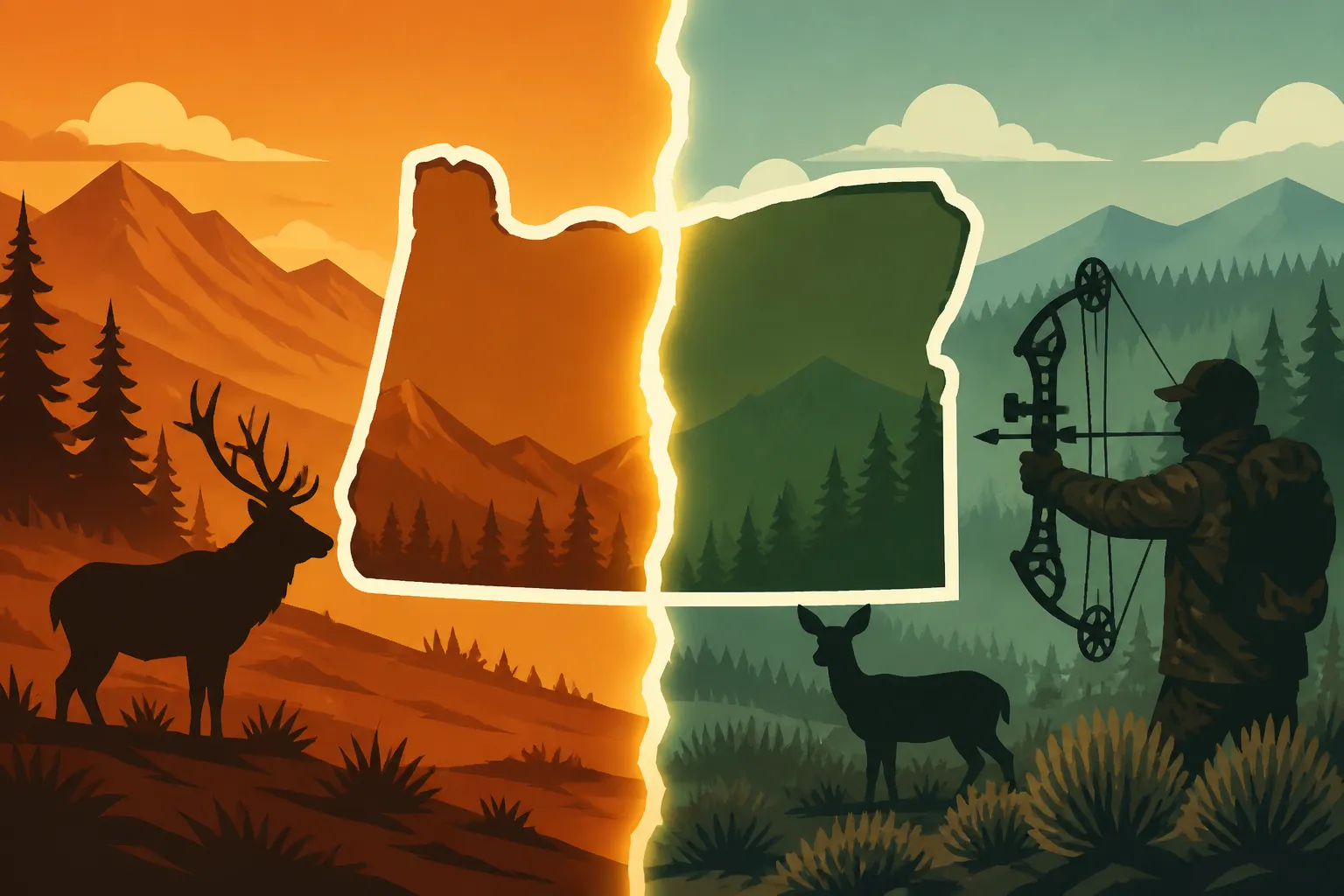
For many of us who hunt in Oregon, the thought of elk brings to mind two very distinct images: the massive Roosevelt bulls haunting the coastal rainforests and the wary Rocky Mountain elk roaming the high desert plateaus. But what if I told you there’s a literal line, a ribbon of asphalt cutting through our state, that generally marks the division between these two magnificent subspecies? Understanding why Highway 97 acts as this geographical and ecological boundary is crucial for any hunter looking to truly grasp Oregon’s diverse elk landscape. This guide will walk you through the reasons behind this divide and how it impacts your hunting strategy.
The Great Divide: Understanding Oregon's Elk Subspecies
Oregon is a unique state, boasting two distinct subspecies of elk, each perfectly adapted to its environment. If you've spent any time chasing elk here, you've undoubtedly encountered the distinct characteristics that set them apart. It's not just a subtle difference; these are animals shaped by millennia of adapting to dramatically different terrains and climates.
Roosevelt Elk: Kings of the Wet West
Ah, the Roosevelt elk. These are the giants of the Pacific Northwest, creatures perfectly at home in the dense, wet, often rain-soaked timber of western Oregon. When you hear about elk in the Coast Range or the western Cascades, you're almost certainly talking about these impressive animals.
They are, on average, larger bodied than their eastern counterparts, with a stockier build that helps them push through thick brush and navigate steep, heavily timbered slopes. Think about the sheer biomass needed to thrive in those dark, humid forests. Their antlers, while often heavy, tend to be more compact, featuring fewer, but thicker, tines. It's a design that works well when you're constantly weaving through tangled undergrowth and tight timber, minimizing snagging. A mature Roosevelt bull can be an absolutely breathtaking sight, a true testament to the abundance of the western forests. Their diet mainly consists of grasses, forbs, and a variety of woody browse, all plentiful in their lush environment. Knowing their typical behaviors and preferred feeding areas is key for success when Calling Roosevelt Elk in Oregon Rainforest Timber.
Rocky Mountain Elk: High Desert Adaptability
Then you have the Rocky Mountain elk, the iconic image many people have when they picture elk bugling across wide-open spaces. In Oregon, these elk inhabit the drier, more open country east of the Cascades, from the high desert sagebrush flats to the ponderosa pine forests of the Blue Mountains.
Rocky Mountain elk are generally lighter bodied and often have more expansive, symmetrical antlers with longer, thinner tines. This antler configuration is ideal for the more open terrain they frequent, where brushing against thick timber isn't as constant a concern. They are known for their incredible endurance and keen eyesight, necessary traits for survival in a landscape where cover can be sparse and predators can be spotted from a distance. Their diet is more varied, relying heavily on grasses and forbs found in meadows and clearings, but they also browse on juniper and sagebrush when other forage is scarce. Understanding the nuances of these animals is critical for anyone planning to hunt Rocky Mountain Elk in Eastern Oregon. The differences truly highlight How Roosevelt and Rocky Mountain Elk Differ.
Highway 97: More Than Just a Road
It might seem arbitrary to draw a line on a map and say, "Elk on this side are X, and on that side are Y," but Highway 97 truly represents a significant ecological boundary in Oregon. It’s not just a convenient human construct; it slices through a geological and climatic shift that has profound effects on the landscape and, consequently, the wildlife.
Geographic and Climatic Influences
Highway 97 largely follows the eastern foothills of the Cascade Mountain Range. The Cascades themselves are the primary reason for this division. They act as a massive rain shadow. West of the Cascades, the prevailing winds carry moisture from the Pacific Ocean, leading to abundant rainfall and lush, dense forests. This is prime habitat for the Roosevelt elk.
As you move east across the Cascades, past the crest and into the rain shadow, the climate dramatically changes. Rainfall diminishes significantly, leading to the arid and semi-arid landscapes characteristic of eastern Oregon. This region is dominated by ponderosa pine forests, juniper woodlands, and vast sagebrush steppe. It’s a completely different world, requiring a different kind of elk to thrive – the Rocky Mountain elk. This climatic difference creates distinct ecosystems, each with its own specific vegetation, water sources, and cover, which in turn dictate the success and characteristics of the elk herds inhabiting them. Even small details, like how much moisture is retained in the ground, can impact forage and elk behavior throughout the seasons.
Historical Distribution and Natural Barriers
The current distribution of Roosevelt and Rocky Mountain elk isn't just a recent phenomenon; it's the result of millennia of natural selection and historical movements. Before human intervention, these elk populations naturally expanded into habitats best suited for them. The dense, wet western forests provided ideal conditions for the larger-bodied, brush-dwelling Roosevelt elk. Their limited movement capabilities in such thick terrain likely kept them from easily crossing the high, snowy peaks of the Cascades.
Conversely, the more mobile and adaptable Rocky Mountain elk thrived in the open, drier country to the east. The high elevations, deep snowpacks, and volcanic features of the Cascade Range acted as a formidable natural barrier, preventing significant intermixing between the two subspecies for a very long time. While elk are certainly capable of crossing mountain passes, the vast, continuous nature of these geographical barriers, coupled with the distinct habitat preferences, solidified the separation. Hunters often use tools like GoHunt to visualize these geographical boundaries and understand historical herd movements when E-Scouting Oregon Units With Satellite Imagery. This historical context helps explain Where Highway 97 Splits Oregon's Two Elk Subspecies and why that division remains so clear today.
Overlap Zones and Management Challenges
While Highway 97 serves as a convenient dividing line, nature rarely adheres to perfectly straight boundaries. There are areas where the two worlds gently, or sometimes abruptly, collide, creating interesting dynamics for both hunters and wildlife managers.
Where the Two Worlds Meet
It's not a hard-and-fast fence right along the highway. Instead, there's a transition zone, particularly in the Cascade foothills and some of the lower passes, where you might find characteristics of both environments. In some units that straddle the Cascade crest, particularly those with mixed timber and more open benches, you might encounter elk with hybrid characteristics, or even populations where both subspecies have been introduced or have naturally dispersed.
These areas, often referred to as "overlap zones," present unique challenges. For example, some units might be managed for both Roosevelt and Rocky Mountain elk, requiring a nuanced understanding of local elk populations. Hunters in these zones might need to adapt their tactics, perhaps transitioning from skills learned for Archery Elk Hunting Oregon's August and September Seasons in thick timber to tactics more suited for open country. The very western edge of the Rocky Mountain range and the eastern edge of the Roosevelt range can be blurry, requiring careful observation and local knowledge. Understanding the specific habitat of your chosen unit, rather than just its general location relative to the highway, becomes even more important here.
Implications for Hunters and Wildlife Management
For hunters, understanding this division is paramount. It influences everything from the type of terrain you’ll encounter to the specific behaviors of the elk and even the regulations. Oregon's wildlife management often considers the subspecies when setting tag numbers and hunt boundaries.
Knowing which subspecies you're pursuing directly impacts your scouting, gear choices, and hunting methods. For example, glassing techniques are incredibly effective for Glassing Eastern Oregon Rimrock for Mule Deer, and similarly for Rocky Mountain elk in open areas, while close-quarters tracking and calling are more typical for Roosevelt elk in heavy timber. Your Rifle Choice for Oregon Elk and Deer might even be influenced by whether you expect long shots across sagebrush or quick, close-range encounters in dense woods. Wildlife managers constantly monitor Oregon Elk Herd Numbers by Region and factor in subspecies distribution when making decisions about habitat conservation and tag allocation. Resources like GoHunt are invaluable for analyzing unit data and understanding these management implications before applying for a tag.
Elk Subspecies Characteristics Comparison
To give you a clearer picture, here's a general comparison of the key traits between the two Oregon elk subspecies:
| Characteristic | Roosevelt Elk (Western Oregon) | Rocky Mountain Elk (Eastern Oregon) |
|---|---|---|
| Body Size | Larger, heavier, stockier | Lighter, more slender, agile |
| Antler Shape | More compact, heavier beams, fewer but thicker tines | More expansive, longer, thinner tines, often more points |
| Typical Habitat | Dense, wet, old-growth and regenerated timber, rainforests | Drier forests (ponderosa, juniper), sagebrush, open meadows |
| Primary Diet | Grasses, forbs, abundant woody browse (salal, huckleberry) | Grasses, forbs, some browse (sagebrush, juniper) |
| Typical Movement | Often more restricted to smaller ranges due to cover | Larger home ranges, more migratory, especially seasonally |
| Vocalization | Deeper, coarser bugle; more cow calling in thick cover | Higher-pitched, more distinct bugle, often in open areas |
How Hunters Use This Knowledge
Armed with the knowledge that Highway 97 essentially bisects Oregon's elk country, you can make much more informed decisions when planning your next adventure. It's about setting realistic expectations and tailoring your approach to the specific animals and environment you'll encounter.
Planning Your Oregon Elk Hunt
The first step in planning any successful elk hunt in Oregon is deciding which type of elk you want to pursue. Do you dream of wrestling a heavy Roosevelt bull out of a steep, wet canyon, or do you envision a bugling match with a Rocky Mountain bull across a vast, timbered ridge? Your answer will largely determine which side of Highway 97 you focus your efforts.
If you're drawn to the challenge of the dense western timber, you'll be looking at units in the Coast Range or the western slopes of the Cascades. These hunts are physically demanding, often involving still-hunting through thick cover and navigating steep terrain. Success here often comes down to patience, stealth, and knowing how to interpret subtle sign. For those whose hearts beat for the wide-open spaces and the thrill of a distant bugle, eastern Oregon will be your playground. Here, glassing expansive country and covering significant ground are often the keys to success. Checking regulations and drawing odds for specific units on a platform like GoHunt will confirm which subspecies is predominant and what kind of hunting experience to expect. Understanding these regional differences is the foundation of effective Oregon Elk Hunting Tactics for the November Rifle Seasons.
Field Identification Tips
When you’re actually out in the field, especially near those transition zones, being able to quickly identify whether you’re looking at a Roosevelt or a Rocky Mountain elk can be helpful. While regulations usually specify the subspecies for a given hunt unit, understanding the visual cues enhances your overall hunting experience and confirms your location's ecological identity.
Beyond the obvious habitat differences, pay close attention to body shape and antler characteristics. A Roosevelt will typically appear more robust, with a thicker neck and deeper chest, particularly in mature bulls. Their antlers, as mentioned, are generally shorter in beam length but can have impressive mass, with fewer, heavier points. Rocky Mountain elk, on the other hand, tend to look more athletic, with longer legs and a more refined appearance. Their antlers will often boast greater spread and longer, thinner tines, especially a long 4th and 5th point (the royal and bey) that sweep back. Of course, individual variation exists, but these general guidelines will serve you well. Even the color of their coats can vary slightly, with Rocky Mountain elk often appearing lighter, especially in summer, while Roosevelts can seem darker, blending into the deeper shadows of their forest homes.
Disclaimer
This article is for general informational purposes only and does not constitute professional advice. Laws, prices and regulations vary by location and change over time. Consult a qualified professional for guidance on your specific situation.