How Big Roosevelt Bulls Get
For any Oregon elk hunter, the image of a massive Roosevelt bull is the stuff of dreams – a monarch of the deep, dark timber. But actually judging the true size and potential of one of these magnificent animals when you're standing in their dense rainforest habitat, often with fleeting glimpses, can be incredibly challenging. This guide is here to unravel the mysteries behind how big Roosevelt bulls actually get, what factors contribute to their impressive stature, and what you should look for in the field.
Understanding Roosevelt Elk Size Potential in Oregon
Roosevelt elk are truly giants among North American cervids, especially here in Oregon's western forests. When you're out there, glassing a distant hillside or catching a fleeting glimpse through the fog-laden timber, it’s natural to wonder just how much bigger that shadow could be. Their sheer mass and the environment they call home make them a formidable quarry, and understanding their typical size can help you set realistic expectations for your next hunt.
Average Size Versus True Giants
Let's talk numbers, but remember, these are just averages, and a truly exceptional bull can blow them out of the water. A mature Roosevelt bull can easily weigh between 700 to 1,000 pounds live weight, with some absolute behemoths pushing past 1,100 pounds. Compare that to a Rocky Mountain elk, which typically ranges from 600 to 900 pounds, and you start to appreciate the bulk of these coastal titans. Their body is dense, muscular, and perfectly adapted to navigating the rugged, often steep terrain and thick undergrowth. When you’re focused on the antlers, don’t forget the sheer tonnage of meat and bone walking underneath them.
The antler spread on a mature Roosevelt can vary wildly, but a good bull often has antlers extending 40-50 inches wide. Tines are typically shorter and stouter than those of their Rocky Mountain cousins, but the mass — oh, the mass! — is where Roosevelts often shine. Seeing a bull with thick, heavy beams that carry their mass well out toward the tips is a sight to behold. For most hunters, a bull that hits the 300-inch mark on the Boone and Crockett scale is considered an exceptional trophy, and truly legendary animals can exceed 350 inches, though these are rare. It’s the dream of many to encounter one of these giants, and understanding what makes them tick is the first step.
Factors Influencing a Roosevelt Bull's Growth
Several key factors play into how big a Roosevelt bull ultimately gets, from its body weight to its antler development. It's a complex interplay of nature and environment that creates these magnificent animals.
Firstly, habitat and nutrition are paramount. Oregon's Coast Range and Cascade forests offer incredibly rich environments, particularly the lush rainforests of the western slopes. Areas with consistent rainfall, fertile soils, and a diverse mix of browse, forbs, and grasses provide the high-quality forage necessary for rapid growth. Think of those clearcuts a few years after logging – once the initial fern and salal take over, nutritious young growth starts popping up, which is a buffet for elk. However, not all habitat is created equal, and some units simply have better feed than others, leading to larger animals.
Secondly, genetics play a significant role. Just like in any species, some elk simply have the genetic potential to grow larger bodies and more impressive antlers. While we can't control genetics in wild populations, certain areas are known to consistently produce bigger bulls, suggesting a strong genetic lineage at play. Researching specific units, potentially with resources like GoHunt, which often provides unit breakdowns and harvest statistics, can give you insights into the genetic potential of a particular area.
Finally, age is arguably the most critical factor for antler development. A Roosevelt bull typically doesn't reach its prime antler potential until it's at least 6-8 years old, and some continue to add mass and length well into their double-digit years. Protecting these older bulls through conservative hunting regulations and good management practices allows them to reach their full potential, contributing to the overall impressive size of the herd. These older, wiser bulls have survived multiple hunting seasons and are often the most challenging to locate and harvest.
Roosevelt Antlers: Beyond Just the Inches
When we talk about how big a Roosevelt bull gets, the conversation inevitably turns to their antlers. They are a defining characteristic, a testament to the bull's age, health, and dominance. But judging them is more than just a quick glance; it’s about understanding their unique architecture.
Typical Antler Characteristics and Growth Patterns
Roosevelt elk antlers have a distinct character compared to their Rocky Mountain counterparts. While Rocky Mountain elk are renowned for their long, sweeping main beams and impressive tine length, Roosevelt antlers tend to be heavier, clubbier, and more compact. The main beams might not be as long, but they carry exceptional mass throughout their length. The tines are often shorter and thicker, and it's not uncommon to see "crowns" or "clubby" formations at the ends of the main beams, especially on older bulls. This unique look is a signature of the Roosevelt.
Antler growth is an annual cycle, starting anew each spring. Young bulls might have spindly spikes or small fork-horns. As they age, they typically add points, length, and mass. A truly mature bull will display deep grooves, often a darker color due to rubbing on vegetation, and a robust structure that shows years of growth. Looking for that deep, heavy main beam that doesn't taper too quickly is a key indicator of a mature Roosevelt. The weight of these antlers alone is impressive, often making them feel denser and more substantial than their visual length might suggest. This is why Roosevelt Bull Body Size and Antler Shape is so fascinating to study.
Scoring and Judging Antler Size in the Field
Field judging a Roosevelt bull's antlers is an art form that takes practice and experience. Unlike judging a mule deer where width is often the first thing you look for, with Roosevelts, you're paying close attention to mass and tine configuration, in addition to overall spread and length. The Boone and Crockett Club has specific minimums for Roosevelt Elk in their record book, recognizing animals that typically score 285 inches for the Awards book and 300 inches for All-Time. But don't get too caught up in numbers; a beautiful, heavy-antlered bull is a trophy regardless of its score.
When you spot a bull, try to compare its antlers to known references. Are the main beams wider than its ears? Do the tines appear long relative to the overall beam length, or are they shorter and thicker? Is there impressive mass near the bases and does that mass carry out well to the tips? One common technique is to estimate the length of the main beam and then add estimates for each tine and circumference measurements. For hunters serious about maximizing their chances for a trophy, understanding the specific characteristics of Oregon Record Book Roosevelt Bulls can be invaluable. Digital mapping tools and historical harvest data from resources like GoHunt can provide insights into the typical antler sizes taken from specific hunting units, helping you calibrate your expectations and hone your eye.
Roosevelt Versus Rocky Mountain Antler Score
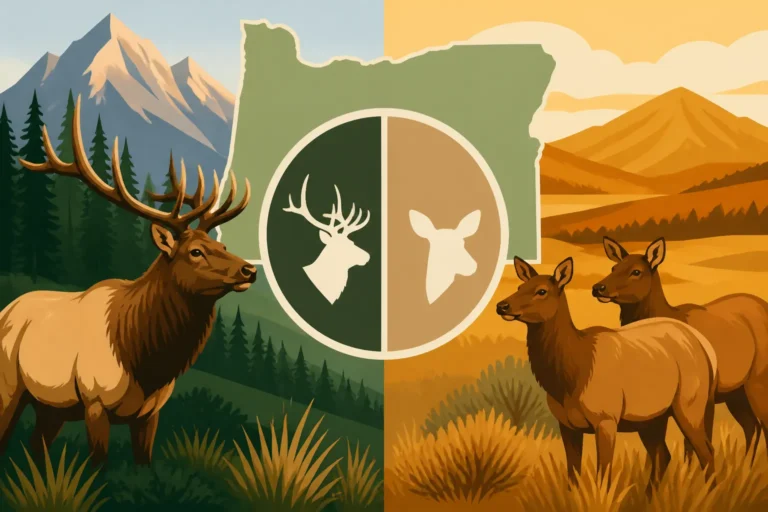
It's a common point of discussion among elk hunters: the difference between Roosevelt and Rocky Mountain elk antlers. While both are impressive, they are distinct, and scoring systems reflect these differences. Rocky Mountain elk, found predominantly in Eastern Oregon, tend to have longer main beams and significantly longer tines, often resulting in higher overall B&C scores. It's not unusual for a mature Rocky Mountain bull to score over 350 inches, with truly giant bulls breaking 400 inches.
Roosevelt elk, on the other hand, while possessing immense body size, typically have antlers that score lower on the B&C scale. This isn't because they are "smaller" in spirit or less impressive, but simply due to the scoring system's emphasis on length. The sheer mass and unique "clubby" nature of a Roosevelt's antlers, though incredibly impressive to the eye, often don't translate into the same numerical score as a typical Rocky Mountain rack with its long, slender tines. This is a key distinction covered in articles like How Roosevelt and Rocky Mountain Elk Differ. So, while a 300-inch Roosevelt is a true monster, a 300-inch Rocky Mountain bull, while still great, might be considered more average for its subspecies.
Body Mass and Physical Prowess of Roosevelt Bulls
Beyond their impressive antlers, the sheer body mass of Roosevelt bulls is something to behold. These are not dainty animals; they are incredibly powerful and built for the rugged, often steep and dense terrain they call home.
Estimated Weights of Mature Roosevelt Bulls
As mentioned earlier, a large, mature Roosevelt bull can easily tip the scales at 800-1,100 pounds (live weight). Imagine an animal that weighs as much as a small car, yet is agile enough to ghost through thick timber and scale steep slopes. This incredible bulk translates directly to a substantial amount of meat, which is, for many, the primary reason for hunting. A mature bull can yield a significant amount of boned-out meat, often ranging from 300 to 500 pounds, depending on the bull's size, age, and how it's processed. This is why understanding Elk Meat Yield From a Roosevelt Bull is so crucial for planning your pack out.
This isn't just a number on paper; it has real implications for hunters. When you connect with a bull of this size, the work has only just begun. The effort required to field dress, quarter, and pack out such a massive animal, often from steep, remote country, is immense. It's a physically demanding endeavor that requires preparation and often a strong team.
Physicality and Challenge of Hunting Large Roosevelts
Hunting a big Roosevelt bull isn't just about finding it; it's about the entire experience of engaging with such a physically dominant creature in its element. Their immense size, coupled with their incredible strength and endurance, means they can cover ground surprisingly quickly, even in the densest cover. When startled, a bull of this magnitude can crash through brush that would stop a human in their tracks, making tracking both exhilarating and challenging.
The terrain they inhabit often reflects their robust build. Roosevelt elk thrive in the dark, wet timber and brushy clearcuts of the Coast Range and Cascades. These areas are notoriously steep, covered in slick moss and decaying leaves, and tangled with thick undergrowth like salal and sword fern. Navigating this environment, especially while carrying a heavy pack, is a significant physical challenge that demands preparation. Articles like Physical Training for an Oregon Elk Hunt are vital reading for anyone heading into this country. The satisfaction of overcoming these physical demands, coupled with the mental fortitude required for a multi-day hunt in such conditions, is a huge part of the allure of chasing these magnificent animals.
Where Oregon's Biggest Roosevelt Bulls Roam
Oregon is truly blessed with excellent Roosevelt elk habitat, offering hunters the chance to pursue these giants in some of the most beautiful, albeit challenging, landscapes imaginable. Knowing where to focus your efforts is key to increasing your odds of encountering a truly big bull.
Prime Roosevelt Habitat and Key Regions
The Coast Range and the western slopes of the Cascade Mountains are the undisputed strongholds of Roosevelt elk in Oregon. These areas are characterized by temperate rainforests, high rainfall, and a mosaic of mature timber, regenerating clearcuts, and dense riparian zones. The constant moisture ensures lush vegetation year-round, providing the rich forage that allows Roosevelt elk to grow to their impressive sizes.
Within the Coast Range, units like the Trask, Wilson, Alsea, and Saddle Mountain are often discussed for their Roosevelt populations. These areas offer a mix of public and industrial timber lands, each with its unique access challenges and opportunities. On the western side of the Cascades, units like the McKenzie and Santiam also hold significant Roosevelt populations. When looking for those truly large bulls, focus on areas that combine good habitat diversity, limited human pressure, and areas where older growth timber provides security and thermal cover, interspersed with younger clearcuts that offer abundant forage. Exploring topics like Calling Roosevelt Elk in Oregon Rainforest Timber can give you an edge in these dense environments.
Researching Units for Trophy Potential
Finding where the biggest Roosevelt bulls roam involves a blend of historical data analysis, topographical scouting, and local knowledge. Start by diving into Oregon Department of Fish and Wildlife (ODFW) harvest statistics, which can reveal trends in antler size and success rates for various units. While these reports don't explicitly tell you where the "biggest" bulls are, they can indicate units with higher populations of mature animals.
Beyond the official reports, resources like GoHunt can be invaluable. Their insights, unit profiles, and filtering tools often aggregate data from multiple sources, helping you identify units with a history of producing larger bulls. Combine this data with detailed map scouting, possibly using tools for E-Scouting Oregon Units With Satellite Imagery, to identify areas with optimal habitat: north-facing slopes, dense bedding cover, nearby water sources, and productive feeding areas like clearcuts. Look for remote pockets that offer sanctuary from hunting pressure, as these are often where older, larger bulls can thrive. Don't underestimate the power of simply talking to hunters who frequent these areas; their anecdotal evidence can sometimes paint a clearer picture than any statistic.
| Characteristic | Roosevelt Elk (Western Oregon) | Rocky Mountain Elk (Eastern Oregon) |
|---|---|---|
| Typical Live Weight | 700-1100+ lbs | 600-900 lbs |
| Antler Style | Heavy, clubby, shorter tines, strong mass | Longer main beams, longer tines, often wider |
| Typical B&C Score (Mature Bull) | 280-320 inches (300+ is excellent) | 320-380+ inches (350+ is excellent) |
| Primary Habitat | Dense, wet coastal rainforest, Cascades | Open sagebrush, juniper, pine forests, mountains |
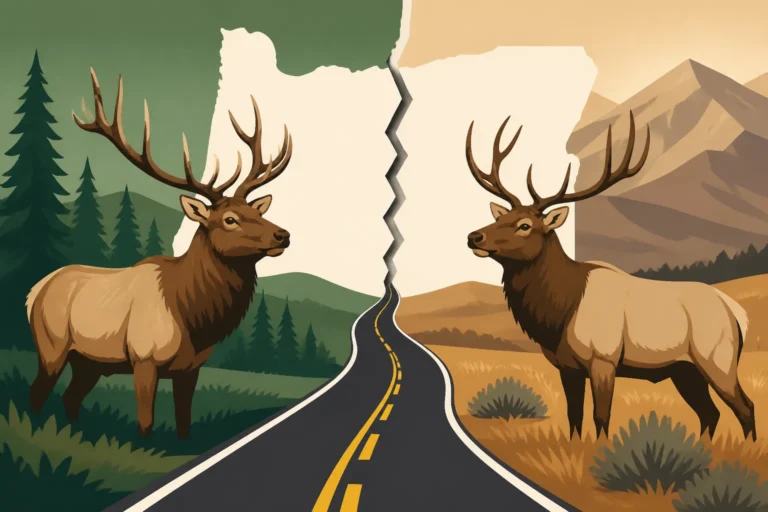
| Distribution | West of Hwy 97 | East of Hwy 97 |
| Vocalization | Deeper, coarser bugle, more grunts/chuckles | Higher-pitched, screaming bugle |
Disclaimer
This article is for general informational purposes only and does not constitute professional advice. Laws, prices and regulations vary by location and change over time. Consult a qualified professional for guidance on your specific situation.