How Roosevelt and Rocky Mountain Elk Differ
For many hunters, the thought of elk conjures images of majestic animals, but in Oregon, we're lucky enough to pursue two distinct subspecies: the coastal Roosevelt elk and the high-desert Rocky Mountain elk. It can be incredibly confusing to understand the nuances that separate these incredible creatures, not just in where they live, but in their very nature and how you approach hunting them. This guide will meticulously break down the differences, giving you a clearer picture of what makes each subspecies unique.
Geographic Divide: Where the Two Giants Roam
Oregon is truly a unique state, offering a diverse range of habitats that support two entirely different elk subspecies. Understanding where each one thrives is the first critical step in appreciating their distinctions and, for hunters, in planning your pursuits. It’s not just a subtle shift; it’s a whole different world for each.
The Invisible Line: Highway 97
If you've spent any time looking at an Oregon map, you might notice a very clear, albeit invisible to the elk themselves, dividing line. This is U.S. Highway 97, which generally serves as the geographical boundary separating the primary ranges of Roosevelt and Rocky Mountain elk in Oregon. West of this highway, stretching to the rugged Pacific Coast, you're firmly in Roosevelt country. East of Highway 97, extending into the high desert, Blue Mountains, and Wallowas, you’ll find Rocky Mountain elk. Now, it's not a perfectly rigid line; there can be areas where their ranges overlap, especially in the Cascade foothills, leading to some interesting genetics. However, for all practical purposes and general understanding, think of Highway 97 as the great divide. This geographic separation has played a huge role in their evolutionary paths, shaping everything from their physical appearance to their behaviors. To dive deeper into this specific split, you might find more insight in our discussion on Where Highway 97 Splits Oregon's Two Elk Subspecies.
Roosevelt's Wet Kingdom: Western Oregon
The Roosevelt elk, often referred to as "Roosies" by local hunters, are creatures of the dense, rain-soaked forests of Western Oregon. Their habitat includes the Coast Range, the western slopes of the Cascades, and the lush river drainages in between. This is a world of towering Douglas firs, impenetrable thickets of salal and sword fern, and moss-draped ancient forests where visibility is often measured in yards, not miles. These elk thrive in areas with high annual rainfall, mild temperatures, and abundant, year-round forage. The sheer density of the vegetation means they don't need to travel vast distances to find food and cover, which profoundly impacts their behavior and how hunters must approach them. Imagine navigating through a jungle where the only sounds are dripping water and your own heavy breathing—that’s often the reality of chasing a Roosevelt. The challenge isn't finding them, it's getting close enough for a shot in their dark, tangled homes. If you're keen on learning more about these majestic animals, check out our piece on Roosevelt Elk in Western Oregon.
Rocky Mountain Strongholds: Eastern Oregon
Venturing east of Highway 97, the landscape transforms dramatically, and with it, the elk. Here, in the drier, more open country of Eastern Oregon, the Rocky Mountain elk reign supreme. Their territories span the vast national forests like the Ochocos, Malheurs, and Umatillas, extending into the rugged Blue Mountains and the formidable Wallowas. This is a land of juniper and sagebrush, ponderosa pine forests, and expansive rimrock canyons, where winters can be harsh and summers bone-dry. Unlike their coastal cousins, Rocky Mountain elk often traverse wide-open spaces, moving between timbered bedding areas and vast feeding grounds in mountain meadows or agricultural fields. Their existence here is a constant balance between finding adequate forage, water, and cover from predators in a more exposed environment. Hunting them often involves glassing vast landscapes, covering significant ground, and adapting to the big country. It's a stark contrast to the thick-timber tactics required out west. For a comprehensive look at their domain, our article Rocky Mountain Elk in Eastern Oregon offers more details.
Physical Characteristics: More Than Just Size
When you lay eyes on an elk, it’s not just about the antlers; the entire physique, from body mass to coat color, tells a story of its adaptation to its specific environment. The differences between Roosevelt and Rocky Mountain elk are quite striking once you know what to look for, offering visual cues that speak volumes about their distinct lifestyles.
Body Mass and Stature: Coast vs. High Desert
One of the most immediate and noticeable differences between the two subspecies is their sheer size. Roosevelt elk are generally larger and heavier-bodied than Rocky Mountain elk. A mature Roosevelt bull can easily tip the scales at 800-1,000 pounds, with some truly exceptional individuals exceeding that. Their robust build is an adaptation to traversing the thick, often steep, and wet terrain of the coastal rainforests. This extra bulk allows them to push through dense undergrowth and retain heat in a consistently damp environment. Think of them as the "heavyweights" of the elk world, built for brute strength and endurance in a confined, challenging habitat. In contrast, Rocky Mountain elk are typically leaner and more athletic, averaging around 600-800 pounds for a mature bull. While still massive animals, their build is geared towards covering vast distances across open country, climbing steep, rocky slopes, and surviving harsher, drier winters. They are built for agility and sustained movement, not necessarily for busting through an impenetrable jungle. This difference in mass is a direct reflection of their respective environments and the demands those environments place on them. For more on the specifics of their physical dimensions, you can delve into Roosevelt Bull Body Size and Antler Shape.
Antler Configuration and Typical Growth
While both subspecies grow impressive antlers, there are some general patterns that differentiate them, though individual variation always exists. Roosevelt elk often develop a wider, more massive antler configuration, frequently with shorter, thicker tines. The main beams tend to be heavier and carry their mass further out. It's not uncommon to see Roosies with "clubby" ends, or a more "crown-like" appearance on their main beams, especially with the fifth and sixth points stacking up. The width can be truly astonishing on a mature bull, often exceeding 50 inches. This wider rack, while sometimes a hindrance in dense timber, can also serve as a formidable tool in disputes within the herd's tight quarters.
Rocky Mountain elk, on the other hand, typically grow longer, more slender main beams with impressive length in their tines, particularly the fourth (or G-4) and fifth (G-5) points. Their antlers often have a greater overall length from base to tip, creating a more "sweeping" and symmetrical look. The inside spread can still be wide, but it's the sheer length of the beams and tines that often stands out. These longer, pointier antlers might be better suited for display in more open country where their size can be fully appreciated and less likely to snag on overhead canopy. Of course, genetics, age, and nutrition play huge roles in antler development for both, but these general trends are useful for identification. To explore the growth patterns in more detail, our article on Rocky Mountain Bull Antler Growth in Oregon provides further insights.
Coat Color and Adaptations
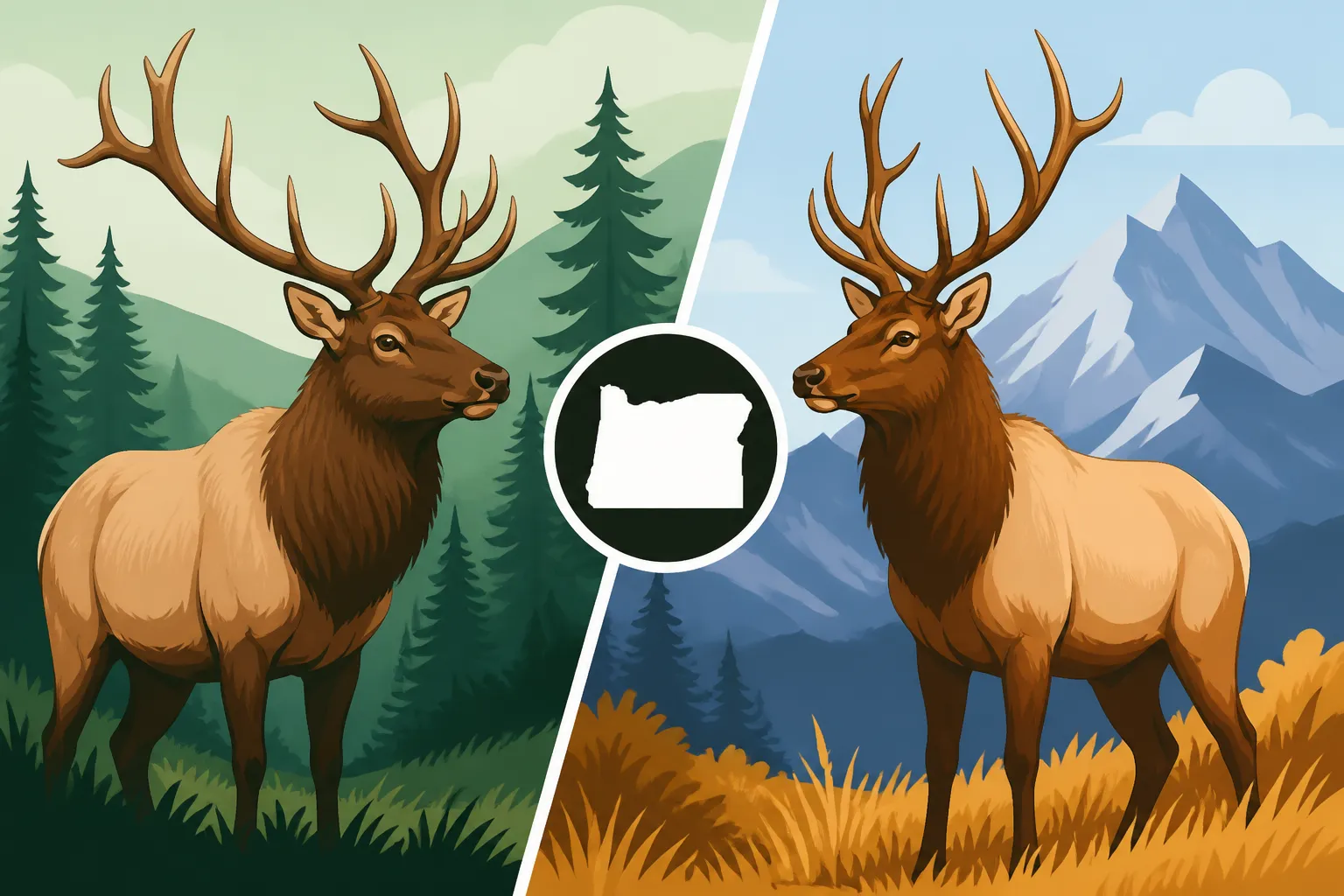
While both are clearly elk, there are subtle differences in their coats that reflect their adaptations to their distinct habitats. Roosevelt elk, living in the perpetually damp and often darker environment of the coastal forests, tend to have a darker, richer chocolate brown coat. Their neck manes can appear almost black, and their bodies a deep, dark brown. This darker coloration might offer a slight advantage in camouflage within the shadowed understory of old-growth forests and helps them absorb heat in cooler, overcast conditions.
Rocky Mountain elk, by contrast, generally display a lighter, often more tawny or grayish-brown coat, especially in the body. Their neck manes are typically lighter brown, blending more seamlessly with the body color. This lighter coloration can provide better camouflage in the more open, sun-drenched sagebrush and pine forests of Eastern Oregon. It might also help them reflect some heat in hotter, drier conditions. Both subspecies, however, retain the classic yellowish-brown rump patch that is characteristic of all North American elk, a visual signal often used within the herd. These subtle color variations are yet another testament to how finely tuned these animals are to their local ecosystems.
Behavioral Traits: Different Environments, Different Habits
Beyond their physical appearance, the behaviors of Roosevelt and Rocky Mountain elk diverge significantly, largely driven by the landscapes they inhabit. These behavioral differences are crucial for hunters to understand, as they dictate everything from effective calling strategies to how these animals navigate their daily lives.
Vocalizations: Bugles and Cow Calls
Ah, the bugle. It's perhaps the most iconic sound of the elk woods, but even here, there are subtle differences between the two subspecies. Rocky Mountain elk are renowned for their loud, piercing, and drawn-out bugles. These vocalizations travel incredible distances across the open canyons and vast timber stands of Eastern Oregon, serving as a primary means for bulls to challenge rivals and locate cows over wide expanses. Their bugles often include a distinctive chuckle at the end, a guttural series of grunts that adds to their impressive repertoire. Hunters often find great success using locator bugles and challenging calls in this open terrain. Our article on Calling Bull Elk During Oregon's Archery Season goes into greater detail about these techniques.
Roosevelt elk, while they certainly bugle, often do so with less frequency and a different quality in their calls. Their bugles tend to be deeper, more guttural, and sometimes shorter or more nasally, not quite carrying the same piercing quality as a Rocky Mountain bugle. In the dense, rainforest timber of the Coast Range, sound doesn't travel as far, so frequent, far-reaching bugles might not be as effective for communication. Instead, Roosies might rely more on quiet cow and calf calls, or simply moving through the dense cover, to locate each other. When a Roosevelt bull does bugle, it often sounds like it's coming from right on top of you, even if it's hundreds of yards away, thanks to the sound-muffling effect of the thick woods. For hunters targeting Roosies, understanding these nuances is vital. Tactics for Calling Roosevelt Elk in Oregon Rainforest Timber often involve more subtle approaches.
Herd Dynamics and Social Structure
The social lives of these elk are also shaped by their surroundings. Rocky Mountain elk often form larger herds, particularly during the winter months when they congregate on lower elevations and feeding grounds. In open country, larger herd sizes offer more eyes and ears for predator detection, a crucial survival mechanism. These large groups can be quite impressive to witness, sometimes numbering in the hundreds. During the rut, dominant bulls will fiercely defend harems of cows, and the competition can be intense and highly visible.
Roosevelt elk, living in dense timber where large gatherings would be impractical for movement and forage, tend to form smaller, more dispersed herds. They are still social animals, but their groups are typically made up of a few cows and their calves, or bachelor groups of bulls. This smaller social unit allows them to navigate the thick vegetation more efficiently and avoid detection. While rutting bulls will still gather cows, the harems are often smaller, and the interactions might be less overtly aggressive and more contained within the dense cover. This difference in herd size significantly impacts how you locate and approach them.
Diet and Foraging Preferences
Both subspecies are herbivores, but their specific diets reflect the flora available in their respective habitats. Roosevelt elk are primarily grazers and browsers, with a strong preference for grasses, forbs, and the tender new growth of shrubs and trees found in their moist, temperate forests. They'll readily consume salal, huckleberry, ferns, and various grasses. The consistent rainfall ensures a year-round supply of lush vegetation, which contributes to their impressive body size. Their digestive systems are well-adapted to processing a higher moisture content in their forage.
Rocky Mountain elk have a more varied diet, reflecting the seasonal changes and diverse vegetation of Eastern Oregon's drier environments. While they also graze on grasses and forbs, they are significant browsers, especially during winter months when they rely heavily on juniper, sagebrush, and the buds and twigs of various shrubs and trees. In spring and summer, they will target lush mountain meadows and agricultural fields. Their ability to switch between grazing and browsing, and to utilize coarser, drier forage, is crucial for surviving the often-harsh winters and arid summers. This adaptability in their diet allows them to thrive across a wider range of habitat types found east of the Cascades.
Hunting Considerations: What Hunters Need to Know
For those of us who live and breathe hunting in Oregon, understanding the distinct characteristics and behaviors of Roosevelt and Rocky Mountain elk isn't just academic—it's absolutely essential for success. These differences dictate everything from how you scout to what gear you bring, and even how you process your tag.
Habitat Challenges and Hunting Strategies
Hunting Roosevelt elk in Western Oregon is a physically demanding endeavor. The terrain is often steep, relentlessly wet, and covered in incredibly dense vegetation like devil's club, salmonberry, and sword fern. Visibility can be so limited that a bull might be standing 30 yards away, and you'd never know it until he bolts. This dictates a hunting strategy that focuses on close-quarters encounters. Still-hunting, moving slowly and deliberately through the timber, is paramount. You'll need to develop an acute sense of hearing and smell, listening for subtle movements, the snap of a twig, or the earthy scent of elk. Calling can work, but it often needs to be subtler, focusing on cow and calf calls to draw a bull into your small visibility window. A reliable GPS or navigation app like GoHunt is non-negotiable here, as it's incredibly easy to get turned around in the featureless green jungle. Expect to track animals through thick undergrowth, often on hands and knees, and be prepared for a strenuous pack-out, potentially through pouring rain. This is not a hunt for the faint of heart, or for someone who dislikes dense cover. Our detailed guide on Oregon Elk Hunting Tactics for the November Rifle Seasons might be particularly helpful for planning.
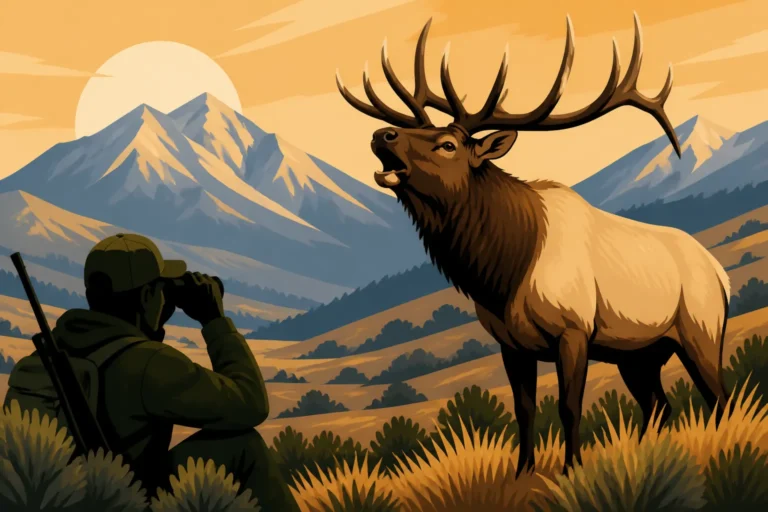
Conversely, hunting Rocky Mountain elk in Eastern Oregon often demands a completely different approach. The landscape is typically more open, with vast sagebrush flats, scattered timber pockets, and expansive rimrock canyons. This means optics are your best friend. Extensive glassing from high vantage points is a common and highly effective strategy. You might spend hours behind your binoculars or spotting scope, searching for a distant herd or a lone bull bedded in the shade. Stalking here often involves long distances, navigating open ground, and utilizing every piece of terrain for cover. When a bull bugles, it’s a game of triangulation and closing the distance before he moves. Fitness is still key, as you’ll cover many miles, but it’s often over less dense, though equally steep, terrain. Getting into position for a shot can require significant exertion, and knowing how to read the landscape for travel corridors and bedding areas is crucial. For those venturing into this big country, our article on Glassing Eastern Oregon Rimrock for Mule Deer offers valuable insights that apply to elk as well, given the similar terrain.
Tag Opportunities and Draw Differences
Oregon's elk tags are divided into general season and controlled hunt categories, and the availability and draw odds differ significantly for Roosevelt and Rocky Mountain elk. Generally, Western Oregon's Roosevelt elk units offer more over-the-counter (OTC) general season opportunities, especially for archery hunters, and often for first and second rifle seasons in units like the Trask or Wilson. While these hunts can be challenging due to the habitat, the sheer accessibility of tags makes them popular. Controlled hunts for Roosies exist, often for specific areas or later seasons, and usually require fewer preference points than their eastern counterparts.
For Rocky Mountain elk, the vast majority of desirable hunts in Eastern Oregon are controlled hunts, meaning you must apply through the Oregon Department of Fish and Wildlife (ODFW) draw system. These tags are highly coveted and often require many preference points to draw, especially for the top-tier units like the Starkey or Wenaha. There are a few general season opportunities, but they tend to be in areas with lower elk densities or more challenging public access. Understanding the preference point system is critical if you aspire to hunt a trophy Rocky Mountain bull. Many hunters utilize tools like GoHunt's Insider service to analyze draw odds and strategize their applications effectively. This helps in understanding which hunts are within reach and how many points you might need to build up. Our guide to the Oregon Controlled Hunt Draw Explained can help demystify this process, and for those specifically targeting the coastal giants, consider our piece on Oregon Roosevelt Elk Rifle Seasons in November. If your sights are set on the eastern herds, then understanding Oregon Rocky Mountain Elk Season Structure is paramount.
| Feature | Roosevelt Elk (Western Oregon) | Rocky Mountain Elk (Eastern Oregon) |
|---|---|---|
| Typical Habitat | Dense, wet, coastal rainforest, thick timber | Open ponderosa pine, sagebrush, rimrock, mountain meadows |
| Average Bull Weight | 800-1000 lbs (larger, more robust) | 600-800 lbs (leaner, more athletic) |
| Antler Style | Often wider, heavier beams, shorter thicker tines | Longer, more slender beams, impressive tine length |
| Primary Diet | Grasses, forbs, lush browse (e.g., salal, huckleberry) | Grasses, forbs, significant browsing (e.g., juniper, sage) |
| Vocalizations | Deeper, guttural, less frequent bugles | Louder, piercing, drawn-out bugles with chuckles |
| Herd Size | Smaller, more dispersed groups | Larger herds, especially in winter |
| Hunting Style | Still-hunting, close quarters, physical pushing | Glassing, long-range stalking, covering vast ground |
| Tag Availability | More general season/OTC tags, fewer points for controlled | Mostly controlled hunts, high preference points needed |
Meat Yield and Trophy Potential
When it comes to the ultimate reward of an elk hunt – the meat – both subspecies offer an abundance of delicious wild game. However, due to their larger body mass, Roosevelt elk generally provide a greater overall meat yield. A mature Roosevelt bull can yield anywhere from 300 to 400 pounds of boned-out meat, sometimes more, making for a truly impressive freezer haul. This substantial yield is a testament to their robust frame and thick musculature developed in their demanding habitat. Packing out a Roosevelt from a deep canyon in the Coast Range is a monumental task, but the bounty of protein makes every aching step worthwhile. Our guide on Elk Meat Yield From a Roosevelt Bull details what to expect.
From a trophy perspective, both subspecies offer incredible opportunities, but hunters often have different preferences. Roosevelt elk are highly sought after for their impressive mass and wide, heavy antlers. A truly exceptional Roosevelt bull with massive beams and a full crown is a sight to behold and makes for a unique, distinctive trophy. For those who value sheer mass and width, a Roosevelt is the pinnacle. Rocky Mountain elk, on the other hand, are prized for their elegant, long, and symmetrical antlers, often with exceptionally long fourth and fifth tines. The Boone and Crockett Club scoring system, which emphasizes length and symmetry, often sees Rocky Mountain elk scoring higher due to these characteristics. Both types of bulls offer challenging and rewarding hunts, and the decision of which to pursue often comes down to personal preference for antler style and the hunting experience itself. Whether you prioritize a heavy, wide rack or a tall, sweeping one, Oregon offers world-class opportunities for both.
Disclaimer
Hunting is an inherently dangerous activity. This guide is for informational purposes only and does not substitute for experience, proper training, or adherence to all local, state, and federal hunting regulations. Always prioritize safety, respect wildlife, and obtain the necessary licenses and tags from the Oregon Department of Fish and Wildlife (ODFW) before venturing into the field. Conditions in Oregon's wilderness can change rapidly; be prepared for all contingencies.