Tracking Mule Deer After the First Snow
For many of us who chase mule deer across Oregon's expansive high desert, those vast sagebrush flats and juniper stands can feel utterly empty. You might spend days glassing, covering miles, and barely cut a track. But then, the first snow falls, and suddenly, the landscape transforms, laying bare the secrets of deer movement. This guide is all about harnessing that magic, teaching you how to read the fresh canvas of winter to find those elusive bucks.
The Magic of First Snow for Oregon Mule Deer Hunters
There's something truly special about the first significant snowfall in Oregon's mule deer country. It's more than just a beautiful blanket; it's a game-changer for hunters who know how to interpret its message. The crisp, fresh layer not only illuminates the movements of deer but also often shifts their behavior in predictable ways that can work to your advantage.
Why Early Season Snowfall Changes the Game
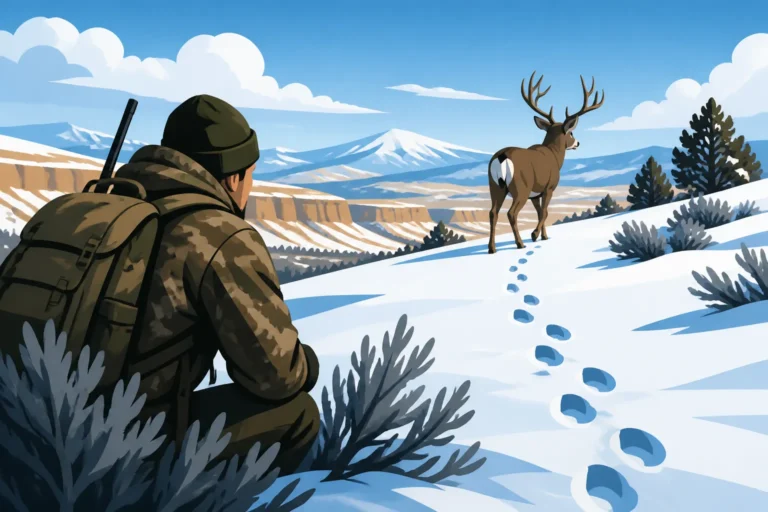
Before the snow, mule deer in Eastern Oregon can feel like ghosts. Their camouflaged coats blend perfectly with the tawny grasses, sagebrush, and rocky terrain. They can disappear into a juniper thicket or melt over a ridge without a trace, leaving you wondering if they were ever there at all. However, that first proper snowfall, usually a few inches that truly blankets the ground rather than just a dusting, flips the script entirely. Suddenly, every step a deer takes leaves a clear impression. This fresh canvas provides an undeniable record of their recent activity, revealing travel corridors, feeding areas, and bedding sites that were invisible just hours before. This drastically reduces the amount of guesswork involved in locating active deer.
Beyond simply revealing tracks, a good snow event often changes how deer move and feed. They might become more concentrated in specific areas as preferred forage becomes harder to access or buried under deeper snow. In some cases, the initial shock of the cold weather and snow can even push deer to feed more actively for a short period, trying to pack on calories before the deeper winter sets in. Understanding these behavioral shifts is as crucial as reading the tracks themselves. For those who hunt Eastern Oregon, knowing where to focus your efforts in these conditions can be a huge boon. It’s also important to be aware of Mule Deer Winter Range in Eastern Oregon as deeper snow will eventually push deer into these critical areas.
Identifying Fresh Tracks Versus Old Sign
The ability to distinguish between fresh tracks and older sign is paramount when tracking mule deer in the snow. A fresh track is your direct connection to a deer that's likely still in the area, offering a real-time lead. An old track, while perhaps interesting, can send you on a wild goose chase. Fresh tracks will typically have very crisp, sharp edges. You'll notice that the snow inside the track hasn't begun to melt or slump, and there won't be any ice crystals forming around the edges. If it's been actively snowing, the track might even be partially filled with light snow, indicating it was made before or during the last few flakes fell. The distinct impression of the dew claws, those small vestigial toes higher up on the leg, will also be very clear in fresh snow, especially if the deer was moving quickly or on a steep slope.
In contrast, older tracks will show signs of weathering. Their edges will appear rounded or softened due to sun exposure, wind, or slight melting and refreezing cycles. The snow within the track might look glazed or have a crust of ice, and any dew claw impressions will be less distinct or even melted away. You might also notice a thin layer of fresh, undisturbed snow over an older track, indicating that the deer passed through before the most recent precipitation. Beyond the tracks themselves, look at other associated sign. Are there fresh droppings that aren't frozen solid and appear moist? Are browsing marks on sagebrush tips still showing green beneath a fresh bite, without any frost or ice? These details, combined with the track clarity, will help you confidently determine if you're on a hot trail or simply following a ghost from yesterday.
Decoding Mule Deer Tracks: More Than Just Footprints
When you find that first track in the snow, it's not just a random impression; it's the beginning of a story. Every detail, from the size and shape to how the tracks are spaced, tells you something about the deer that made them. Learning to read these subtle cues can turn a simple walk into a detective mission, putting you closer to your target.
Mule Deer Track Characteristics and Gait Analysis
Mule deer tracks are generally distinguishable by their heart-like or inverted tear-drop shape, wider at the top and tapering to a point. They typically measure around 2 to 3 inches long and 1.5 to 2.5 inches wide for an average deer, though larger bucks will naturally leave bigger prints. A key differentiator from other similar-sized animals is often the dew claws. While deer tracks can show dew claws, especially when the animal is moving quickly, uphill, or through deep snow, they are not always present. If you see very prominent dew claw marks, it's often a sign of a heavier animal or one exerting itself.
Analyzing the gait—the pattern of steps—can reveal even more. When a mule deer is calmly walking, you'll see a distinct pattern of alternating left and right prints, often with the hind foot stepping directly into or slightly ahead of the front foot's impression. This overstep or direct register walk is efficient and quiet. A slow, browsing gait will show more erratic patterns as the deer stops to nibble, and tracks might be closer together. When a deer is alarmed and running, its tracks will be spread much further apart, and the dew claws will almost always be visible due to the animal's weight shifting and hooves splaying. The depth of the tracks can also indicate the deer's weight, helping you differentiate between a mature buck and a smaller doe or fawn. A deep, wide track with noticeable splay often belongs to a heavy-bodied buck, especially if you also spot other "buck sign" nearby.
Interpreting Associated Sign: Droppings, Rubs, and Beds
While tracks are the primary language of snow tracking, they're rarely the only story being told. Mule deer leave a rich tapestry of other signs that, when pieced together, can paint a clear picture of their recent activities and even their presence. One of the most common is droppings. Fresh droppings will be soft, moist, and typically dark, often clumped together in a pile. As they age, they dry out, become harder, lighter in color, and may be scattered individually. The size and shape can also offer clues: larger, more cylindrical droppings often indicate a buck, while smaller, pellet-like ones usually point to a doe or fawn. Finding fresh droppings along a trackline confirms the track's age and validates your pursuit.
Beyond scat, keep an eye out for other indicators. Browse marks on vegetation are crucial. Mule deer are browsers, meaning they prefer to nibble on twigs, leaves, and buds rather than graze grass. Look for cleanly clipped ends of sagebrush, bitterbrush, or juniper branches. The freshness of these bites, just like tracks, is key. If the cuts are still moist and haven't discolored or frozen, the deer was very recently feeding there. Rubs and scrapes, while more common during the rut, can occasionally be found in the early snow season. Rubs, where bucks have rubbed their antlers on small trees, will often show fresh bark damage and maybe even some antler velvet. Bedding areas are another goldmine. In the snow, a bed will be a clear impression in the snow, often melted down to the bare ground from the deer's body heat. Pay attention to the orientation—deer often bed with the wind at their back, facing downwind to catch scent of anything approaching. Noticing a pattern of how deer utilize the terrain for bedding can be very helpful for Finding Mule Deer in Juniper Draws. Tools like GoHunt can be invaluable here, helping you scout these areas digitally for likely bedding spots or travel corridors before you even set foot in the field, allowing you to focus your efforts more effectively.
Practical Tracking Strategies in Oregon's High Desert
Actually following a trackline in Oregon's diverse mule deer country—from the open sage of the high desert to the denser juniper forests—requires a specific mindset and method. It’s not about rushing; it’s about a methodical approach that maximizes your chances of staying on target and eventually, closing the distance.
The Slow and Steady Approach: Following a Trackline
Successful snow tracking for mule deer is a marathon, not a sprint. The most effective method is a slow, deliberate pace, often called "still-tracking." Instead of staring directly at your feet, focus your eyes 10 to 20 yards ahead along the trackline, looking for the next print or series of prints. This allows you to observe the deer's direction of travel, identify potential turns, and spot any anomalies like a sudden change in gait that might indicate the deer heard or saw something. Confirm each track as you move, ensuring you're indeed following the same animal. If you're tracking with a partner, one person can focus on the immediate track, while the other looks further ahead and scans the surroundings for the deer itself.
One of the biggest challenges comes when the tracks become difficult to see or seemingly vanish. This can happen in areas of thin snow, wind-blown drifts, or where the deer crosses bare ground. When this occurs, don't panic. Instead, stop immediately, mark your last confirmed track, and begin to circle outwards from that spot in increasing spirals. Look for any faint scuffs, broken twigs, or disturbed snow that could indicate the deer's path. If you have a tracking partner, spread out in a small grid, covering the immediate area. Mule deer rarely disappear into thin air. They will either continue on, often in the most logical path of least resistance or best cover, or they've bedded down nearby. Patience here is critical. Sometimes, just stepping back for a moment and reassessing the terrain will reveal the path forward. This methodical approach is key to success when Tracking Bucks in Fresh Eastern Oregon Snow.
Utilizing Terrain and Wind for Advantage
Mule deer are creatures of habit and efficiency, and they use the terrain and wind to their advantage, particularly in snowy conditions. As a tracker, you should too. In the high desert, deer often use draws, gullies, and the edges of juniper thickets as travel corridors, offering them cover and a more sheltered path. When following a track into such terrain, anticipate where the deer might go and focus your scanning ahead in those likely spots. Similarly, deer will often bed on slopes that offer them a panoramic view while providing escape cover and protection from the wind. South-facing slopes, for instance, can be preferred for bedding in winter as they receive more sun and offer warmth.
The wind is arguably your most important ally and biggest enemy. Always try to track into the wind, or at least with a crosswind. This helps carry your scent away from the deer and allows you to hear them before they hear or smell you. Mule deer have incredible senses, and if they catch your scent, your hunt is likely over. As you track, pay attention to shifting thermals, especially in mountainous or hilly terrain. In the mornings, air often flows downhill; in the afternoons, it rises. Understanding these patterns helps you predict how your scent will travel. When you get close to likely bedding areas, like the rimrock and sagebrush country that often holds mule deer, slow down even further. Use every bit of available cover—sagebrush, junipers, rock formations—to break up your outline. Glass ahead frequently, particularly into shadows or dense cover, before moving into exposed areas. Utilizing resources like the Oregon Hunting Map online or the GoHunt app can help you visualize the terrain, identify likely travel routes, and plan your approach while considering wind direction.
Essential Gear and Safety for Snowy Conditions
Hunting mule deer in Oregon after a snowfall, especially in the more remote Eastern Oregon units, demands not just skill but also the right gear and a strong emphasis on safety. Conditions can change rapidly, and being prepared for anything is non-negotiable.
Footwear, Clothing, and Navigation Aids
Your feet are your foundation, and in snowy, cold conditions, keeping them dry and warm is critical. Invest in high-quality, insulated, waterproof hunting boots with good traction. Look for boots designed for cold weather, often rated for specific temperatures. Gaiters are also an absolute must. They form a protective seal over the top of your boots and lower pant leg, preventing snow from getting inside and soaking your socks—a surefire way to get cold and miserable. Layering is key for clothing. Start with a moisture-wicking base layer, add insulating mid-layers like fleece or down, and top it off with a waterproof and windproof outer shell. This system allows you to adapt to changing temperatures and exertion levels, preventing both overheating and chilling. Remember that Rain Gear That Actually Stays Dry is important, even if it's not raining, to shed melting snow effectively.
Navigation becomes more complex when the ground is covered in snow, obscuring familiar landmarks. A reliable GPS unit or a smartphone with a robust mapping app (like GoHunt, which can download offline maps) is indispensable. Always carry a traditional compass and paper map as a backup, and know how to use them. Mark your starting point and your vehicle's location, and regularly update your position as you track. It's easy to become disoriented when intently following a track, especially if you venture off into unfamiliar terrain. A headlamp with extra batteries is also crucial, as winter days are short, and tracking often extends into dusk or requires an early start. Remember, safety always comes first, and that includes knowing the rules regarding hunting near roads. Be mindful of Oregon's 300-Foot Rule Beside an Open Road when tracking near open access routes.
Optics and Shot Preparation in Snow
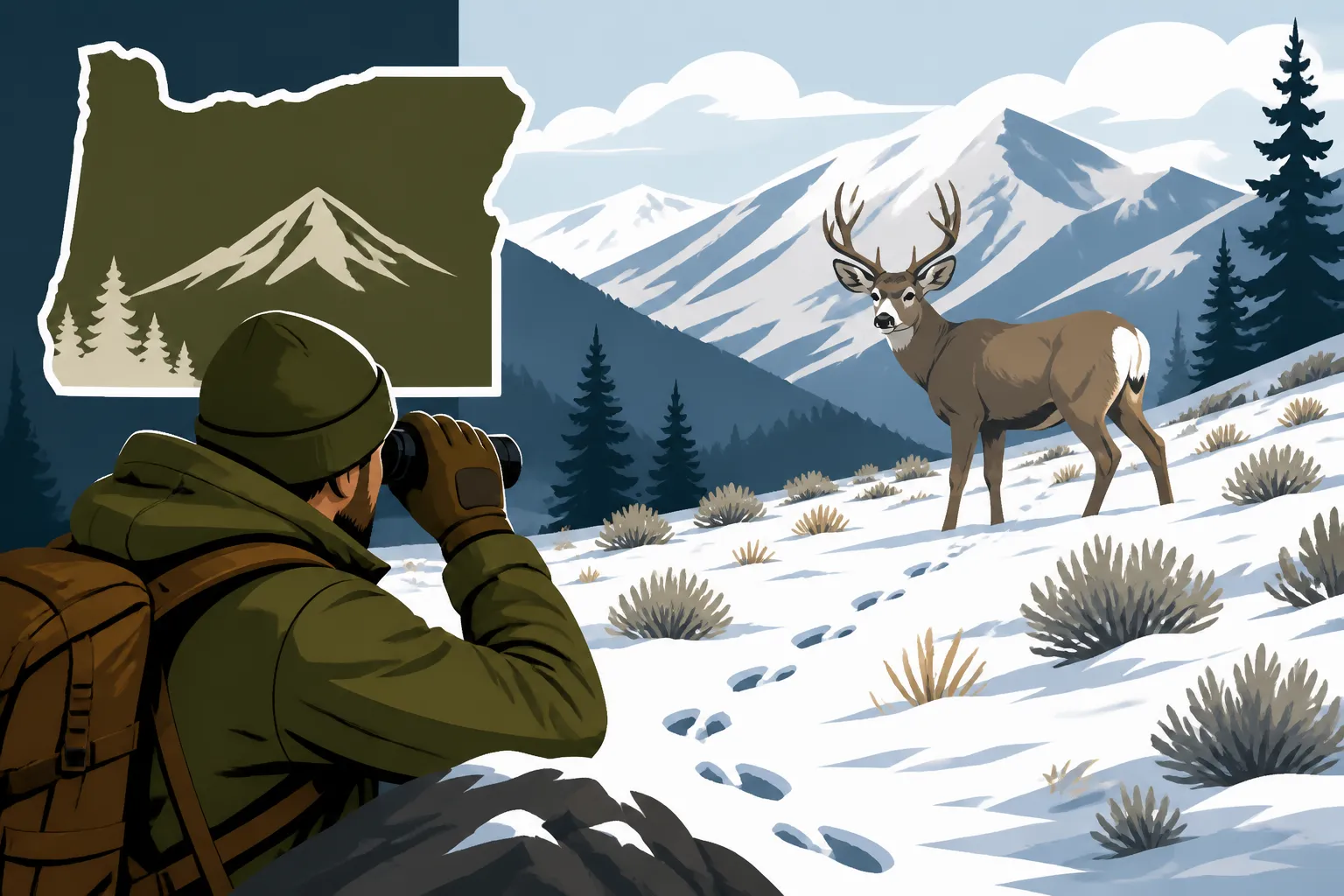
Excellent optics are always important for Western hunting, but they become even more critical when tracking in snow, especially for Glassing Rimrock at First Light or scanning distant snow-covered slopes. A good pair of binoculars, like 10x42s, will help you pick apart distant shadows and scan for bedded deer. A spotting scope can be invaluable for confirming a buck at extreme range before committing to a stalk. Snow can create deceptive mirages and alter light conditions, making clarity and resolution in your optics paramount. When choosing Optics for Dark Timber Versus Open Sage, ensure they perform well in low light, as snowy days can often be overcast and shorten effective hunting light.
Once you’ve located a deer through its tracks or by spotting it, shot preparation in snowy conditions requires extra attention. Snow can muffle sound, making it harder to judge distances by ear, and its reflective qualities can play tricks on your eyes. Always use a rangefinder to confirm exact distances, especially in steep country where optical illusions can make game appear closer or further than it is. Clear any snow or debris from your shooting lane. If you need to drop to a knee or lie prone, be aware that snow will quickly soak through inadequate clothing. A small, lightweight foam pad can be a lifesaver for staying dry and comfortable while setting up for a shot. Ensure your rifle is free of snow and moisture that could affect its function or your sight picture. After all that hard work tracking, you want to be fully prepared when the moment of truth arrives.
Understanding Mule Deer Winter Behavior in Oregon
Tracking mule deer successfully after the first snow isn't just about reading footprints; it's about understanding why those footprints are there. Knowing how mule deer adapt their lives to winter conditions in Oregon's varied landscapes will give you a significant edge.
Migration to Winter Ranges and Feeding Patterns
The first snow can be a precursor to a larger migration for many mule deer herds in Eastern Oregon. As snow depths increase in higher elevations and prime forage becomes buried or less nutritious, deer begin their annual descent to lower, often more sheltered, winter ranges. These traditional Mule Deer Winter Range in Eastern Oregon are crucial areas where deer can typically find more accessible browse, such as bitterbrush, juniper, and various forbs and grasses that remain palatable. The timing and extent of this migration depend heavily on the severity of the snow and cold. A light, early snow might simply push them down a few thousand feet into a juniper draw, while a heavy storm can send them miles.
When snow covers the ground, mule deer must work harder to find food. They will paw through shallow snow to access forage or concentrate on taller browse species. This increased effort means they are often found in areas where food is abundant and easily accessible. Look for concentrations of tracks around pockets of dense bitterbrush, south-facing slopes that melt quicker, or along the edges of juniper stands where browse is more available. Their feeding patterns may also become more pronounced: they might feed more heavily during daylight hours when temperatures are milder, or during lulls in snowfall, to maximize caloric intake. Understanding Summer Versus Winter Deer Distribution is key here; a spot that held deer in September might be completely barren in November.
Bedding and Escape Cover in Snowy Landscapes
Where mule deer choose to bed in snowy conditions is a careful calculation of warmth, security, and proximity to food. During winter, preserving energy is paramount, so bedding choices often prioritize thermal cover and protection from the elements. North-facing slopes, for example, while colder, can offer excellent thermal cover by blocking direct wind and retaining deeper snow that insulates. Conversely, south-facing slopes, catching more sun, can be preferred for their warmth and faster snowmelt, revealing browse. Deer will also seek out dense juniper thickets, large rock outcroppings, or steep canyons that provide overhead cover and break up their silhouette from predators and hunters.
When tracking, pay close attention to the characteristics of a bedding area. Often, a deer will bed with the wind at its back, allowing its keen nose to detect threats approaching from downwind, while its eyes scan the terrain in front of it. They also prefer areas with multiple escape routes, providing options to flee quickly if disturbed. As you approach likely bedding spots, slow down significantly. Use your binoculars to thoroughly scan every clump of sage, every juniper, and every shadow. A bedded deer can be incredibly difficult to spot, often appearing as just another rock or stump. The key is to look for an irregular shape, an ear twitch, or the glint of an eye. Remember that Finding Mule Deer in Juniper Draws often means understanding how those thickets provide both food and bedding sanctuary in the snow.
Overcoming Challenges and Advanced Tracking Tips
Tracking mule deer after the first snow is undoubtedly a powerful tool, but it's not without its challenges. Conditions can change, and deer are masters of evasion. Mastering the art requires persistence and the ability to adapt.
When the Snow Thaws or Winds Blow
Nature is fickle, and the pristine canvas of fresh snow can quickly become a muddy mess or a wind-swept enigma. When the snow begins to thaw, especially if temperatures rise quickly, your clear tracklines can rapidly degrade. The crisp edges soften, tracks fill with meltwater, and distinguishing old from new becomes incredibly difficult. In these conditions, you need to work faster and pay even closer attention to secondary signs. Look for areas where the ground is still frozen underneath, preserving prints. Focus on disturbed vegetation, scuffs on bare patches of ground, and fresh droppings that haven't dissolved in the slush. Often, deer will stick to north-facing slopes or shaded areas where the snow persists longer, giving you a better chance to follow.
Wind is another formidable adversary. A strong wind can quickly drift snow, burying tracks and making them disappear as if by magic. If the wind picks up significantly, you might find yourself on a "cold" trail, unable to follow the deer further. In these situations, rather than blindly wandering, it's often more productive to shift your strategy. Instead of focusing solely on the tracks, use the last known direction of travel and the prevailing wind to predict where the deer might have gone. Head to the next logical patch of dense cover, a sheltered draw, or a leeward slope where tracks might be preserved. Think like the deer: where would you go to escape the wind? Using a tool like GoHunt or other mapping apps to identify these terrain features quickly can be a real time-saver. Also, be mindful of Checking Oregon Road Closures Before You Go, as extreme weather can impact access to your hunting areas.
Patience, Persistence, and Learning from Experience
At its heart, successful snow tracking for mule deer is a test of patience and persistence. It's easy to get frustrated when tracks vanish, or you spend hours following a phantom. But the trackers who consistently find success are those who maintain a calm, methodical approach, understanding that not every track will lead to a deer immediately. It's a mental game as much as a physical one. Sometimes, stepping back, taking a break, and re-evaluating the situation with a fresh perspective can reveal the solution. Remember that mule deer are built for survival, and they will use every trick in the book to evade detection.
Every tracking experience, whether it leads to a harvest or not, is a learning opportunity. Pay attention to how the deer behaved: Did it go through the thickest cover, or did it skirt the edge? How did it use the wind and terrain? Where did it choose to bed? Analyzing these behaviors after the fact will build your intuition for future hunts. Keep a hunting journal, noting conditions, deer behavior, and your tracking successes and failures. Over time, you'll develop an intimate understanding of mule deer in your hunting areas. This deep knowledge, combined with consistent Physical Training for an Oregon Elk Hunt (as tracking can be incredibly demanding on stamina), will transform you from someone who just looks for tracks into someone who truly reads the story the snow tells.
Disclaimer
Hunting is an inherently dangerous activity. This guide provides general information and should not replace proper training, local regulations, or personal judgment. Always prioritize safety, adhere to all Oregon Department of Fish and Wildlife (ODFW) regulations, and consider consulting with experienced local hunters or guides. Conditions in the field can change rapidly, and hunters are responsible for their own safety and decisions.