Wallowa-Whitman National Forest Hunting
For many Oregon hunters, the vast expanse of the Wallowa-Whitman National Forest represents the pinnacle of big game hunting, yet its sheer scale and rugged terrain can be incredibly intimidating. This guide aims to demystify hunting in this iconic Eastern Oregon landscape, breaking down its unique characteristics, primary game species, and critical planning considerations so you can approach your next hunt with confidence and a clear strategy.
An Introduction to the Wallowa-Whitman National Forest for Hunters
The Wallowa-Whitman National Forest, often affectionately known as "the Wallowas" or "Northeast Oregon," is a cornerstone of Oregon's hunting heritage. Spanning over 2.3 million acres across northeastern Oregon and into a sliver of western Idaho, this forest is a mosaic of towering peaks, deep river canyons, high-elevation plateaus, and dense timber. It's truly a place where you can feel small in the best possible way, offering some of the most challenging yet rewarding big game hunting experiences in the state. The sheer size alone can be overwhelming, making it difficult to know where to even begin looking for animals, let alone how to navigate the complex terrain.
The Rugged Beauty and Scale
What sets the Wallowa-Whitman apart is its incredible diversity and sheer ruggedness. From the snow-capped Wallowa Mountains, often called "Oregon's Alps," to the unforgiving depths of Hells Canyon, the deepest river gorge in North America, this forest is not for the faint of heart. Hunters here often face significant elevation changes, dense lodgepole pine and Douglas fir forests, and expansive sagebrush flats that transition quickly into rimrock and canyon country. It's a land of extremes, and understanding its varied topography is the first step to a successful hunt. The terrain itself dictates much of the animal behavior and access challenges you’ll encounter.
Iconic Status for Eastern Oregon Big Game
This region is renowned for its robust populations of Rocky Mountain elk and trophy mule deer, offering some of Oregon's most coveted controlled hunts. Beyond the flagship species, the Wallowa-Whitman also holds black bears, cougars, and even a handful of California bighorn sheep in its most remote, rugged canyons. Hunters come from across the country hoping to draw a tag for one of its prized units. It's a place where history runs deep, with generations of hunters cutting their teeth on its mountainsides, and the sense of tradition is palpable.
Key Hunting Units Within the Wallowa-Whitman
The Wallowa-Whitman National Forest encompasses several distinct hunting units, each with its own characteristics, challenges, and opportunities. Understanding these units is crucial for planning your application strategy and scouting efforts. Many hunters spend years building preference points for these sought-after areas. For a broader perspective on how these units fit into the state's system, check out Oregon's Wildlife Management Units and New Hunt Areas.
The Wallowa, Imnaha, and Chesnimnus Units
These units form the heart of the Wallowa Mountains and surrounding areas. The Wallowa Unit, particularly, is famous for its scenic beauty and challenging elk hunting. It features a mix of alpine meadows, steep timbered slopes, and deep drainages. Access can be difficult, often requiring extensive hiking or packing in with stock. Wallowa Unit Elk Access in Oregon can be incredibly tough, especially deeper into the Wilderness areas.
The Imnaha Unit, bordering Hells Canyon, is characterized by extremely rugged, broken country and steep canyon walls. It's a land of glassing opportunities for mule deer on open slopes and grueling retrieves for elk in the deep timber. The remoteness often deters many, but those willing to put in the work can find incredible solitude and quality animals. For details on getting into this challenging country, see Imnaha Unit Hunting Access.
The Chesnimnus Unit is another gem, offering a mix of high-elevation timber and open rangeland. It's known for strong elk numbers but also presents significant access challenges due to locked gates on private timber parcels and extensive road closures. Hunters here need to be proficient with their maps and be ready to hike. More information on navigating this area can be found in Chesnimnus Unit Roads and Camps.
Snake River and Minam Wilderness Units
These units represent some of the wildest and most remote hunting experiences in Oregon. The Snake River Unit, as its name suggests, is dominated by the Snake River corridor and the vast Hells Canyon National Recreation Area. Hunting here often means utilizing jet boats for access from the river or embarking on multi-day backpacking trips into the adjacent wilderness. The terrain is brutal, with sheer cliffs, deep draws, and sparse water sources, but it holds good populations of mule deer and bighorn sheep. If you're considering a boat-based hunt, Snake River Unit Access by Boat is a must-read.
The Minam Unit is almost entirely wilderness, falling within the Eagle Cap Wilderness Area. This means no motorized vehicles, no mountain bikes, and a true backcountry hunting experience. Access typically involves long hikes from trailheads or packing in with horses or llamas. Elk hunting here is legendary, but the physical demands are extreme. Hunters must be self-sufficient and prepared for any eventuality. For those dreaming of a remote hunt, Minam Unit Wilderness Hunting provides crucial insights into this challenging landscape. Backpacking into these areas requires careful planning and a robust gear list; you might find our guide on Backpack Camps in Oregon Wilderness helpful.
Other Notable Wallowa-Whitman Units
While the aforementioned units are often the most discussed, the Wallowa-Whitman also touches parts of units like Sled Springs (which saw recent name changes, now often falling under broader "Northeast" herd ranges) and Ukiah, offering different terrain and hunting pressures. The key is that while some areas are roaded and relatively accessible, vast portions of the Wallowa-Whitman are true backcountry. Hunters need to match their physical capabilities and hunting style to the specific unit and area they intend to explore.
Access Points and Road Systems
Navigating the Wallowa-Whitman National Forest can be a logistical challenge. Its vastness means many areas are remote, with limited access points, while others feature extensive road systems that are subject to seasonal closures and travel management restrictions.
Understanding Forest Roads and Gates
The Wallowa-Whitman has a complex network of forest roads, ranging from well-maintained gravel roads to barely-there two-tracks. Many of these roads are behind gates, some are permanently locked, others are seasonal, and some might be open only to administrative traffic. Hunters often find themselves frustrated by unexpected closures, especially during early season hunts when roads at higher elevations might still be snowed in, or during fire season when entire sections of the forest can be closed to public entry. Always check the local Forest Service district office for current road conditions and closures before heading out.
When driving into the forest, pay attention to signage. Some roads might be open only during specific seasons or for designated purposes. You might also encounter private timber lands interspersed with public lands, which can have their own access rules, gates, and even permit requirements. It’s critical to know whose land you're on, and this is where a reliable mapping tool like onX Hunt becomes invaluable. It allows you to clearly see property boundaries, public land ownership, and often, the status of roads.
Travel Management Areas (TMAs)
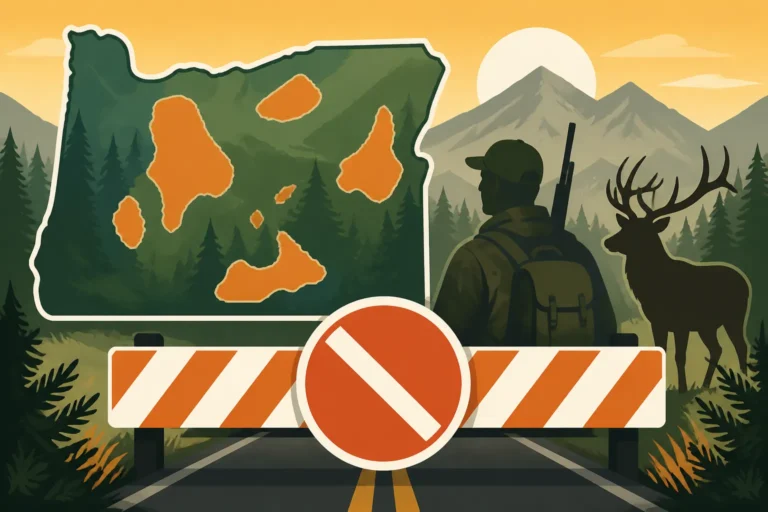
Many portions of the Wallowa-Whitman are designated as Travel Management Areas (TMAs), particularly in prime big game habitat. These areas are established to reduce vehicle disturbance to wildlife, prevent habitat degradation, and enhance the hunting experience by promoting walk-in access. TMAs involve restrictions on motorized vehicle use, often limiting travel to designated "open" roads or closing certain roads entirely for parts of the year.
Successfully hunting in a TMA requires diligent map study and a willingness to hike. You can't just drive to your favorite ridge top and start hunting. Instead, you'll need to park at designated access points and proceed on foot or horseback. This creates a different hunting dynamic, spreading hunters out and often pushing animals into less accessible areas. Always download the official GeoPDF maps for TMAs, as they explicitly show which roads are open, closed, or restricted. Understanding these maps is key to avoiding an unwelcome conversation with a game warden.
Primary Game Species and Habitat
The Wallowa-Whitman National Forest is home to a robust array of big game species, each with preferred habitats and unique behaviors that hunters must understand.
Rocky Mountain Elk
The Wallowa-Whitman is synonymous with Rocky Mountain elk hunting in Oregon. These magnificent animals thrive in the diverse landscape, utilizing the dense timber for cover, high mountain meadows for grazing, and rimrock country for escape routes. Elk here can be incredibly wary due to hunting pressure, and often retreat into the steepest, thickest terrain at the first sign of human activity.
You'll find elk across most of the forest, but densities vary. During early archery seasons, bulls might be found bugling in the higher elevation timber, while later rifle seasons often see them pushed into heavy cover in deep canyons or dense forest blocks. Success often comes down to covering vast amounts of ground, employing effective calling techniques like those discussed in Calling Bull Elk During Oregon's Archery Season, and using optics to Glassing Eastern Oregon Rimrock for Mule Deer (a technique also valuable for elk). Understanding Rocky Mountain Elk in Eastern Oregon behavior and movement patterns is essential for consistent success.
Mule Deer
While elk are the primary draw, the Wallowa-Whitman also offers excellent mule deer hunting, particularly in the more open, sagebrush-dotted eastern and southern portions of the forest, and within the rugged canyon systems like those in the Imnaha and Snake River units. Mule deer are masters of camouflage and utilizing broken terrain. They prefer areas with good visibility, often bedding on benches or slopes where they can spot danger from afar.
During the early archery and rifle seasons, mule deer can be found feeding in alpine meadows or timber edges, but they quickly move to more secluded areas as pressure mounts. Later in the season, particularly if snow begins to fall, they will migrate to lower elevation wintering grounds. Glassing is paramount for mule deer hunters in this country. Spending hours behind binoculars and spotting scopes, systematically picking apart distant hillsides and draws, is often how these elusive deer are found. Look for them in juniper draws and along the edges of open sage.
Black Bear and Cougar
Both black bears and cougars are common residents of the Wallowa-Whitman, preying on the abundant deer and elk populations. Bear tags are generally available over-the-counter, offering a challenging spot-and-stalk opportunity. You'll often find bears foraging in berry patches in late summer and fall, or grazing on green-up slopes in the spring. Understanding Spot-and-Stalk Spring Bear on Oregon's Green Slopes can increase your odds.
Cougar hunting is a year-round pursuit with specific tag requirements and quotas per zone. These stealthy predators are incredibly difficult to target without the aid of hounds (which are illegal in Oregon), making it a true test of tracking and calling skill. Many cougars are taken incidentally by deer and elk hunters. Learning about Cougar Calling Techniques That Work in Oregon might just give you the edge you need.
California Bighorn Sheep
For a very select few, the Wallowa-Whitman is also home to limited populations of California bighorn sheep. These tags are among the rarest and most coveted in Oregon, often requiring decades of preference points and a stroke of luck in the draw. Bighorns inhabit the steepest, most inaccessible canyon country, such as that found in Hells Canyon. Hunting them requires extreme physical fitness, specialized gear, and a willingness to navigate treacherous terrain. If you're chasing a once-in-a-lifetime tag, understanding these incredible animals is your first step.
Planning Your Hunt: Maps, Scouting, and Logistics
A successful hunt in the Wallowa-Whitman hinges on meticulous planning, thorough scouting, and robust logistical support. This isn't a place you just show up to without doing your homework.
E-Scouting with Digital Tools
Before you ever set foot in the forest, modern digital mapping tools are your best friend. Services like onX Hunt allow you to pore over satellite imagery, topographical maps, and public/private land ownership layers from the comfort of your home. You can identify potential bedding areas, feeding zones, water sources, natural funnels, and escape routes. Pay close attention to changes in vegetation, terrain features like saddles and benches, and the proximity of dense timber to open areas. For a deep dive into using technology for hunt preparation, our article on E-Scouting Oregon Units With Satellite Imagery offers excellent guidance.
When e-scouting, look for:
- North-facing slopes with dense cover: Often where elk bed during warmer periods.
- South-facing slopes: Good for early season forage, especially after snow.
- Water sources: Crucial in dry Eastern Oregon, especially for mule deer.
- Ridge lines and saddles: Natural travel corridors for both deer and elk.
- Old clearcuts or burns: Can provide new forage and good visibility.
You can also use tools like GoHunt to research draw odds for specific units, look at harvest statistics, and gain insights into hunt difficulty, which helps immensely when deciding where to put your valuable preference points.
Physical Scouting and Trail Cameras
Nothing replaces boots on the ground. If possible, visit your chosen unit before the season opens. This allows you to verify what you saw on your maps, understand the actual terrain, check road conditions, and locate fresh sign. Early season scouting, even in the spring or summer, can provide invaluable information on animal travel patterns and concentrations. Setting up trail cameras in key areas, legally, can also provide intel on game movement. Our guide on Scouting With Trail Cameras on Oregon Public Land offers valuable tips for effective placement.
Gear and Logistics for Remote Hunts
Hunting in the Wallowa-Whitman often means multi-day trips into remote areas, demanding reliable gear and careful logistical planning. You'll need:
- Navigation: GPS device and physical maps (always have a backup!).
- Shelter: A sturdy tent or bivy sack capable of handling varied weather, from sun to rain to early snow.
- Water: Filters, purifiers, or sufficient packed water. Dehydration is a real risk.
- Food: High-calorie, lightweight options for sustained energy.
- First Aid: A comprehensive kit, as help can be hours away. Consider medical insurance for remote hunts.
- Game Processing: Field dressing tools, game bags, and a sturdy pack frame for packing out meat. Our article on Packing Out an Elk in Oregon's Wilderness Units covers crucial details.
- Clothing: Layered clothing suitable for rapidly changing mountain weather, including waterproof outer layers.
- Weapon: A reliable rifle or bow. For rifle hunters, understanding Rifle Choice for Oregon Elk and Deer is key.
- Optics: High-quality binoculars and a spotting scope are indispensable for glassing vast terrain.
For longer trips into wilderness areas, consider using horses or llamas to pack in camp and supplies, and to assist with packing out meat. Horse and Llama Packing Into Oregon Backcountry details the logistics involved with stock animals.
Challenges and Considerations for Wallowa-Whitman Hunters
While incredibly rewarding, hunting in the Wallowa-Whitman National Forest comes with its share of unique challenges that every hunter should be prepared for.
Extreme Weather and Terrain
The weather in Eastern Oregon mountains can be famously unpredictable. You might start your day in warm sunshine and end it in a blizzard, even in September. Hunters must be prepared for everything from intense heat to driving rain, hail, and heavy snow. Rapid temperature swings are common. The terrain itself, with its steep canyons, dense timber, and high elevations, is physically demanding. You'll be climbing, descending, and traversing uneven ground, often far from roads or trails. Physical fitness is not just a recommendation; it's a necessity.
Hunting Pressure and Crowding
Despite its vastness, popular units and accessible trailheads can experience significant hunting pressure, especially during opening weekends and prime rut periods. While TMAs help to spread out motorized traffic, hunters on foot can still concentrate in certain areas. Finding solitude often means going deeper, hiking further, or exploring less obvious access points. This is where your detailed e-scouting and knowledge of alternative entry points can pay off immensely. Remember, other hunters are also using resources like onX Hunt to find spots, so always have a backup plan.
Wilderness Regulations and Ethics
Portions of the Wallowa-Whitman fall within designated wilderness areas, such as the Eagle Cap and Hells Canyon Wilderness. These areas have strict regulations regarding motorized vehicles, group size, and minimum impact camping. Hunters must adhere to Leave No Trace principles, pack out all trash (including spent casings), and be mindful of fire restrictions. Respect for the land and fellow users is paramount. Our guide on Oregon Wilderness Rules That Ban Motorized Carts can help clarify some of the specific regulations.
Wildlife Encounters and Safety
Beyond your target species, be aware of other wildlife. Black bears are common, and while typically shy, encounters are possible. Always secure food and know how to react to a bear encounter. Cougars are present but rarely seen. Wolves are also established in portions of Eastern Oregon, and while they pose little threat to hunters, their presence can influence elk behavior.
Safety should always be your top priority. Hunt with a buddy if possible, and always leave a detailed trip plan with someone at home. Carry emergency signaling devices like a satellite messenger. Be proficient with your weapon and practice shooting at varying distances and angles, as shots in the Wallowa-Whitman can be long and challenging.
Conclusion
Hunting the Wallowa-Whitman National Forest is an unforgettable experience, offering a blend of breathtaking scenery, challenging terrain, and incredible opportunities for big game. It demands respect, preparation, and a willingness to push your limits. By understanding its unique units, mastering access challenges, knowing your quarry, and planning meticulously with modern tools, you can transform the daunting task of hunting this vast wilderness into a rewarding adventure. Embrace the challenge, enjoy the journey, and may your efforts be met with success in Oregon's majestic Wallowas.
Disclaimer
This article is for general informational purposes only and does not constitute professional advice. Laws, prices and regulations vary by location and change over time. Consult a qualified professional for guidance on your specific situation.