Willamette Valley Access for Hunters
Hunting in the Willamette Valley can feel like an impossible puzzle, with urban sprawl and endless private fields often making public land seem nonexistent. Many hunters get frustrated, thinking they have to drive hours to the Cascades or Coast Range just to find a spot. But with the right approach and knowledge, you can unlock surprising opportunities right here in the Valley, from chasing elusive blacktails to targeting waterfowl and even spring turkeys. This guide will walk you through the unique landscape of the Willamette Valley, equip you with the tools to find access, and provide practical strategies for navigating its predominantly private hunting grounds.
The Unique Challenges and Opportunities of Hunting the Willamette Valley
When most people think of Oregon hunting, their minds drift to the vast timberlands of the Coast Range, the rugged peaks of the Cascades, or the sagebrush expanses of Eastern Oregon. The Willamette Valley, however, presents a completely different picture, one dominated by agriculture, suburban growth, and scattered pockets of natural habitat. This unique environment creates both significant hurdles and distinct advantages for the savvy hunter willing to adapt their approach.
Understanding the Landscape: Agriculture, Urban Sprawl, and Scattered Timber
The Willamette Valley is the agricultural heart of Oregon, a fertile crescent stretching from Portland south to Eugene. This means mile after mile of hazelnut orchards, grass seed fields, berry farms, and vineyards. Interspersed with these agricultural lands are bustling towns and growing suburbs, pushing human development ever outward. This landscape is a far cry from the expansive, unbroken public lands found elsewhere in the state. You won't find endless tracts of national forest to roam freely here. Instead, what you'll encounter are often small, isolated blocks of timber, riparian corridors along rivers and creeks, and hedgerows that provide crucial cover and travel routes for wildlife.
This patchwork environment is precisely what makes hunting the Valley a head-scratcher for many. A blacktail buck might bed down in a small woodlot tucked behind a suburban development, only to feed in an adjacent grass seed field at night. Turkeys might roost in a mature oak grove bordering a vineyard, then spend their mornings strutting through a pasture. Waterfowl, of course, are drawn to the myriad sloughs, ponds, and flood-irrigated fields. Understanding this fragmented habitat is the first step. It requires a different kind of scouting, often focusing on these small, overlooked sanctuaries and transition zones rather than vast expanses. You're looking for the subtle edges, the cover patches that provide security in an otherwise open or developed landscape.
Navigating Private Land Dominance and Limited Public Access
The sheer dominance of private land is the single biggest factor distinguishing Willamette Valley hunting from most other regions in Oregon. The vast majority of the Valley's acreage is privately owned, often by multi-generational farming families or industrial timber companies. This means that simply throwing on your pack and heading into the woods is rarely an option, as most of those woods will be someone else's property. The traditional model of hunting large blocks of public land, where you can walk for miles without seeing a fence, simply doesn't apply here.
This reality can be a huge source of frustration for hunters, especially those new to the area or accustomed to the freedoms of national forests and BLM lands. The fences are plentiful, the "No Trespassing" signs are common, and the fear of inadvertently crossing a property line is ever-present. This necessitates a proactive approach to access, rather than a passive one. You can't just assume land is open; you must actively seek permission or utilize specific access programs. However, this private land dominance also creates unique opportunities. Because access is often restricted, the animals living on these private parcels can be less pressured and more consistent in their patterns. If you can gain permission, you might find yourself hunting a gem of a property with healthy populations and minimal competition, making the effort to secure access incredibly rewarding. It means a shift in mindset: instead of just finding game, your primary challenge often becomes finding a place to hunt that game.
Essential Tools for Unlocking Willamette Valley Access
Given the complexities of hunting the Willamette Valley, relying solely on old paper maps or word-of-mouth just won't cut it anymore. Modern tools have revolutionized how hunters can identify property boundaries, scout remotely, and connect with potential access opportunities. Embracing these technologies is not just helpful; it's practically essential for successful and legal hunting in this unique landscape.
The Power of Digital Mapping with onX Layers for Oregon Land Status
For any hunter looking to navigate the intricate tapestry of public and private land in the Willamette Valley, a robust digital mapping application is your most powerful ally. Platforms like onX Hunt are game-changers, offering detailed satellite imagery overlaid with crucial property information. Instead of guessing where one parcel ends and another begins, you can see it with precision right on your phone or GPS device.
The beauty of onX Hunt lies in its layered approach. You can activate specific layers that clearly delineate public land (national forest, BLM, state lands) from private parcels, and even show you the names of property owners in many cases. This is incredibly valuable when you're trying to figure out who to ask for permission. Imagine driving down a rural road, spotting a promising oak grove or brushy creek bottom, and being able to instantly see who owns it and potentially find their contact information. Furthermore, these apps often include layers for walk-in access programs, wilderness boundaries, and even historical burn areas, all of which can inform your scouting. Using these tools for Finding Property Lines on Oregon Public Land is paramount, not just for knowing where you can hunt, but more importantly, where you absolutely cannot. This precision helps you avoid accidental trespass, which can quickly burn bridges with landowners and local communities. Before you even set foot on the ground, onX allows you to "e-scout" from your living room, identifying potential access points, game travel corridors, and bedding areas without disturbing the land or game.
Harnessing Resources like GoHunt for Research and Planning
While digital mapping helps with the where, resources like GoHunt can significantly assist with the how and what of Willamette Valley hunting. GoHunt, and similar platforms, provides in-depth data and analysis, which can be particularly useful when you're navigating controlled hunt applications or trying to understand overall game trends in specific hunt areas that might encompass parts of the Willamette Valley.
For example, if you're interested in applying for a controlled deer or elk tag in a unit that overlaps with the Valley (though most tags are for units extending into the mountains, some might have lower elevation components), GoHunt can provide statistics on draw odds, harvest success rates, and even unit-specific information that might highlight areas with more consistent public or program access. While the Willamette Valley itself doesn't have many dedicated big game controlled hunts solely within its agricultural core, understanding broader unit data can inform your strategy if you're looking at adjacent units that bleed into the valley fringe. Beyond big game, these platforms can sometimes offer insights into population trends for species like turkeys or even waterfowl, guiding you to areas with higher potential. They aggregate data that would take countless hours to gather manually, allowing you to make more informed decisions about where to focus your limited time and resources. This level of research complements your mapping efforts, helping you build a comprehensive plan that maximizes your chances of success.
Strategies for Gaining Permission on Private Lands
Since the Willamette Valley is largely private land, the most effective strategy for hunting access often boils down to one thing: gaining permission from landowners. This isn't always easy, and it requires a combination of persistence, politeness, and a genuine understanding of a landowner's perspective. It's not just about knocking on a door; it's about building relationships.
The Art of Asking Permission: Approach, Etiquette, and Persistence
Asking for permission is an art form, not a transaction. Many hunters treat it like a quick interaction, but the most successful permission-getters view it as the beginning of a potential long-term relationship. First and foremost, timing is everything. Avoid showing up during busy farming hours (planting, harvesting, milking, etc.) or during meal times. Late afternoon or early evening, once the day's chores are winding down, can often be a good window. Always approach the main farmhouse or office directly, never just wander onto the property. Dress respectfully; clean clothes are better than your mud-stained hunting gear, as it conveys respect for their home and property.
When you do make contact, introduce yourself clearly and state your purpose directly but politely. Start with something like, "Hello, my name is [Your Name], and I was hoping to speak with the landowner about hunting opportunities on your property." Be prepared to explain why you're interested in their specific piece of land—perhaps you've seen a particular buck or heard turkeys in the area, or you're simply looking for a safe place to hunt. Emphasize your respect for their property, your commitment to safety, and your willingness to follow any rules they might have. Offer to share your contact information, provide proof of hunter education, and even show them your hunting license. Sometimes the answer will be a firm "no," and that's okay. Thank them for their time and move on. However, sometimes they might say "not right now" or "maybe later." This is where persistence, without being pushy, comes in. A follow-up letter or a polite re-inquiry next season, perhaps with an offer to help with a chore, might change their mind. Remember, Asking a Landowner for Access is about proving you're a responsible, trustworthy individual.
Building Relationships and Trust in Agricultural Communities
The real secret to consistent private land access in the Willamette Valley isn't just asking once; it's about building and maintaining trust within these tight-knit agricultural communities. A landowner is much more likely to grant permission to someone they know and trust, or someone who has been vouched for by a neighbor, than to a complete stranger. Think about it from their perspective: they live and work on this land, and they want to ensure anyone they let on it will be safe, respectful, and responsible.
Consider offering to help with small tasks around the farm, especially outside of hunting season. A few hours spent mending a fence, clearing brush, or helping with a chore can go a long way in demonstrating your character and commitment. If you do get permission, always adhere strictly to any rules they set regarding gates, specific hunting areas, vehicle access, and times. Leave no trace, and if you're successful, consider offering them some game meat as a thank you. Word travels fast in rural areas, both good and bad. If you prove yourself to be a stellar steward of their land, they might offer access again next season, or even recommend you to a neighbor. Conversely, one careless act can ruin access for you and potentially other hunters. Building these relationships takes time and effort, but the payoff—consistent access to prime, low-pressure hunting ground—is well worth it in the Willamette Valley.
Exploring Oregon's Access and Habitat Programs in the Willamette Valley
Beyond knocking on individual doors, Oregon offers a fantastic suite of programs designed to bridge the gap between private landowners and public hunters. The Access and Habitat (A&H) Program, funded by hunting license fees, partners with landowners to open up private lands, creating valuable hunting opportunities in areas like the Willamette Valley where public land is scarce. These programs are goldmines for hunters willing to do a little research and follow specific rules.
The "Open Fields" Program and Goose Damage Ground
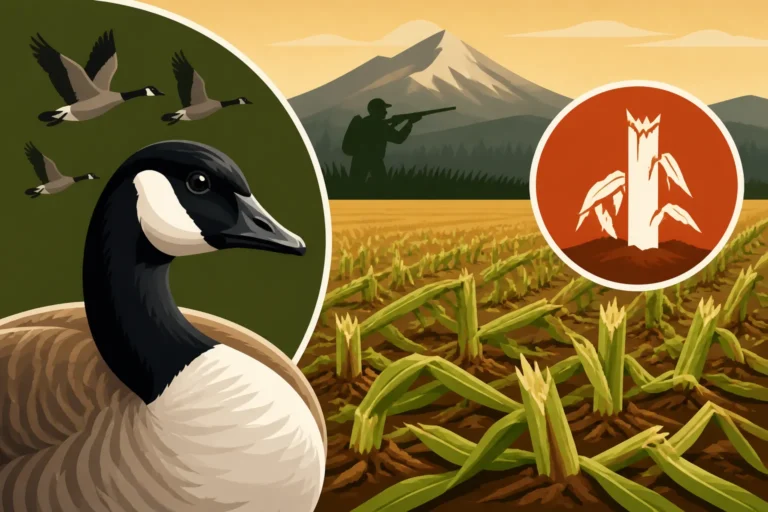
One of the most prominent components of the A&H program, especially relevant to the Willamette Valley, is the "Open Fields" program. This initiative specifically focuses on providing public hunting access to agricultural lands, often targeting areas where wildlife—particularly waterfowl—are causing damage to crops. The Willamette Valley is a major wintering ground for various geese species, and their feeding habits can devastate valuable agricultural fields. This creates a win-win scenario: landowners get assistance with managing wildlife damage, and hunters get access to prime hunting spots.
These "Open Fields" properties are typically open for specific seasons, often for waterfowl, pheasants, or even deer, depending on the property and the primary management objective. Access might be walk-in only, or may permit vehicles to designated parking areas. It's crucial to consult the annual Oregon hunting regulations and the ODFW website for a current list of these properties and their specific rules. You'll often find these properties marked on digital maps like onX Hunt with a special A&H layer. Oregon Open Fields Properties and How to Find Them is a valuable resource for identifying these spots. They represent some of the most reliable and consistent public access for Hunting Willamette Valley Goose Damage Ground, offering a chance to hunt without the need for individual permission requests. However, these areas can be popular, so early scouting and understanding specific entry rules are key.
"Welcome to Hunt" and By-Permission Properties
In addition to "Open Fields," the Access and Habitat program also facilitates other types of private land access, often categorized as "Welcome to Hunt" or "By-Permission" properties. These properties vary widely in their access requirements and the species available, but they all share the common goal of providing hunting opportunities on private land.
"Welcome to Hunt" properties typically operate similarly to "Open Fields," where access is granted to the public without direct landowner contact, as long as hunters adhere to posted rules and often register at a kiosk or online. These might be designated for upland birds, deer, or other species, and can be found across the state, including parts of the Willamette Valley. The rules for these properties are often quite specific, covering everything from legal hunting methods to parking locations and designated hunting zones. You'll often see these lands indicated by distinct signage or specific markers on maps, sometimes referred to as Green Flags Versus Yellow Flags on the Hunting Map depending on the access type. "By-Permission" properties, on the other hand, require direct contact with the landowner prior to hunting, even though they are part of the A&H program. The landowner has agreed to consider requests from hunters, but the final decision rests with them. This is where your skills in Registering for a By-Permission Property and polite communication, as discussed earlier, come back into play. You'll usually find contact information or a registration process outlined for these specific parcels through the ODFW program details. Both "Welcome to Hunt" and "By-Permission" properties offer fantastic, often underutilized, chances to hunt species that might otherwise be inaccessible in the Willamette Valley.
Public Land Opportunities (Though Limited) in the Willamette Valley
While the Willamette Valley is undeniably dominated by private holdings, it's not entirely devoid of public hunting land. These public parcels are often smaller, more fragmented, and sometimes require extra effort to locate and access, but they absolutely exist. Knowing where to look and understanding the specific rules for these areas can open up some fantastic, albeit localized, hunting opportunities.
State Forests and Wildlife Areas: Hidden Gems and Specific Regulations
Within the Willamette Valley and its immediate fringes, you'll find various state-managed lands that can provide legitimate hunting access. Oregon Department of Forestry (ODF) manages several state forests, such as portions of the Santiam State Forest or Tillamook State Forest that stretch into the eastern and western edges of the Valley respectively. These areas can offer opportunities for blacktail deer, Roosevelt elk (especially on the western edge), and even bear, particularly in more heavily timbered sections. However, these are often working forests, so pay close attention to active logging operations, road closures, and specific travel management rules. It's crucial to consult the ODF website for current information, as well as the Oregon State Forest Hunting Rules found in the annual hunting regulations.
Beyond state forests, the Oregon Department of Fish and Wildlife (ODFW) manages several wildlife areas that can provide excellent hunting, especially for waterfowl and upland birds, but sometimes for deer or turkey too. For instance, the Sauvie Island Wildlife Area Hunting in the northern Willamette Valley is famous for its waterfowl hunting, offering diverse blinds and seasonal draws. Other areas like the E.E. Wilson Wildlife Area near Monmouth or Fern Ridge Wildlife Area near Eugene provide additional opportunities, often with specific permit requirements, check-in stations, or hunt schedules. These wildlife areas are managed primarily for habitat and public access, making them prime locations for those willing to learn their specific nuances and regulations. They often have very detailed rules that differ from general public lands, so reading up on them before you go is non-negotiable.
Smaller BLM Parcels and Isolated National Forest Pockets
Even within the Willamette Valley, there are often small, isolated parcels of Bureau of Land Management (BLM) land or even tiny, disconnected blocks of National Forest (USFS) that can offer hunting opportunities. These aren't the expansive, unbroken tracts you might find in Eastern Oregon or the deep Cascades, but they are public land nonetheless. The challenge here often lies in identifying these parcels and then, crucially, figuring out how to legally access them.
Digital mapping tools like onX Hunt are indispensable for pinpointing these small public land islands. You might find a 40-acre square of BLM surrounded entirely by private agricultural fields. This is what we call Landlocked Public Land in Oregon, and it presents a significant access challenge. Legally, you cannot cross private land to reach public land without permission, so you'll need to identify a public road, easement, or an adjacent public parcel to gain entry. Sometimes, these small parcels might be connected by a narrow strip of county road right-of-way, or they might border a river with public access for boats. These "hidden" public lands are often overlooked by other hunters precisely because they're small and difficult to reach, meaning less competition if you can crack the access code. They might hold small groups of blacktail deer, turkeys, or provide good opportunities for small game. It requires careful map study, and sometimes physical scouting (from public roads, of course) to confirm access and potential.
Understanding Regulations and Responsible Hunting Practices
Hunting in the Willamette Valley, with its blend of urban, agricultural, and limited wild spaces, demands a particularly keen awareness of regulations and a strong commitment to ethical, responsible hunting. The close proximity to homes, livestock, and non-hunters means that any misstep can have amplified consequences, not just for you, but for the perception of all hunters.
Local Ordinances, Safety Zones, and Hunter Education
Beyond statewide hunting regulations, hunters in the Willamette Valley must be acutely aware of local ordinances that can impact where and how they hunt. Many counties and even smaller municipalities in the Valley have specific rules regarding firearm discharge, minimum distances from dwellings, and hunting within certain city or urban growth boundaries. What might be legal on a vast timber tract could be strictly prohibited near a rural subdivision. Always check with the local sheriff's office or county planning department if you have any doubts about a particular area. The 150-yard "safety zone" around occupied dwellings (where it's illegal to discharge a firearm) is a statewide rule, but in the Willamette Valley, occupied dwellings are everywhere. This means identifying safe shooting lanes and backstops is paramount, and often limits shot opportunities to very specific situations.
Furthermore, a solid foundation in hunter education is critical. Oregon Hunter Education Requirements ensure that all new hunters understand firearm safety, wildlife identification, legal and ethical hunting practices, and responsible conduct in the field. This knowledge is doubly important in the Willamette Valley, where public perception and safety are constant considerations. Being a responsible, educated hunter isn't just about following the law; it's about being an ambassador for our sport in a populated region where every action is visible.
Respecting the Land and Its Owners
Ultimately, the future of hunting access in the Willamette Valley hinges on hunters' commitment to respecting the land and its owners, whether public or private. When you gain access to private land, you are a guest, and your behavior directly reflects on every hunter who might seek permission after you. This means meticulously adhering to all agreed-upon rules, treating fences and gates as if they were your own, and leaving absolutely no trace of your presence—no trash, no spent casings, no damaged property. Leaving Gates and Fences as You Found Them is not just a polite gesture; it's a foundational principle of land stewardship that directly impacts future access.
For public lands, this same ethos applies. Pack out everything you pack in, and perhaps a little extra trash left by others. Drive only on designated open roads, respect any motorized vehicle restrictions, and avoid creating new trails. Beyond the physical land, respecting the landowners also extends to respecting their privacy and their livelihood. If you harvest an animal, handle it discreetly and efficiently. Be mindful of how your actions might be perceived by non-hunting residents who live nearby. By consistently demonstrating a high standard of ethics and responsibility, Willamette Valley hunters can ensure that these valuable, albeit limited, hunting opportunities continue to exist for generations to come.
Disclaimer
This article is for general informational purposes only and does not constitute professional advice. Laws, prices and regulations vary by location and change over time. Consult a qualified professional for guidance on your specific situation.