The Oregon Open Fields Program
Finding quality hunting access in Oregon can often feel like trying to solve a complex puzzle, especially when public lands are heavily pressured or simply too far for a quick outing. The frustration of staring at maps, seeing promising ground, only to realize it's all private property with "No Trespassing" signs plastered everywhere, is a common one for many hunters. This guide is here to shed light on a fantastic, often underutilized resource: The Oregon Open Fields Program. We'll dive deep into how this program works, how you can find these properties, and most importantly, how to ethically and successfully hunt them, turning those "no entry" zones into exciting hunting opportunities.
What is the Oregon Open Fields Program?
The Oregon Open Fields Program is a truly unique initiative designed to expand hunting access across the state, primarily by working with private landowners. It’s a bridge, connecting hunters hungry for new ground with property owners willing to share their land under specific conditions. Imagine having a chance to hunt fields, timber patches, and riparian areas that have historically been closed off to the public. That's the essence of Open Fields.
The Core Mission: Opening Private Land for Public Hunting
At its heart, the program's mission is simple: to create more places for public hunting. Oregon has vast amounts of private land, much of it prime habitat for deer, elk, waterfowl, and upland birds. Without programs like Open Fields, this land remains inaccessible, limiting opportunities, especially near populated areas or in agricultural zones. The program seeks to alleviate some of this pressure on traditional public lands by opening up new acres, often offering different types of hunting experiences. It's not about taking over private land; it's about fostering a cooperative relationship where landowners receive benefits for allowing controlled, responsible public access. This means hunters get more options, and wildlife managers gain tools to address specific needs, like managing damage caused by game animals.
How it Benefits Landowners and Why They Participate
So, why would a landowner open their property to public hunters? It's a fair question, and the answer usually comes down to a few key incentives. Often, these landowners are experiencing property damage from wildlife—think elk trampling crops, deer eating young trees, or geese devouring pastures. The Open Fields Program provides financial compensation, sometimes calculated as Oregon Open Fields Per-Acre Landowner Payments, to help offset these costs. In exchange, they agree to allow public hunting, which in turn helps manage those wildlife populations that are causing the damage. It's a win-win: landowners get assistance and wildlife management, and hunters get a place to pursue game. Beyond the financial aspect, some landowners simply enjoy being part of a conservation effort and supporting the hunting tradition, especially when they know hunters will be respectful and adhere to clear rules.
Funding and Administration: The Access & Habitat Program
The Open Fields Program doesn't just run on good intentions; it's robustly supported by the larger Oregon's Access and Habitat Program Lands (A&H) which itself is funded primarily through hunting license and tag fees, along with a portion of Oregon Lottery funds. This direct link to hunter contributions means that when you buy a license or a tag, you're directly investing in initiatives like Open Fields that expand access. The A&H Program then works with landowners to develop specific access agreements, tailored to each property's needs and the types of hunting opportunities it can support. This can range from open access for a certain season to controlled access requiring a sign-in or a free permit. Understanding that your dollars are directly fueling these opportunities can make those license purchases feel even more impactful.
How Hunters Can Find and Use Open Fields Properties
Once you understand what the Open Fields Program is all about, the next logical step is figuring out how to actually find and legally hunt these properties. It’s not always as simple as driving down a road and spotting a sign, though sometimes it is! This requires a bit of homework, but the effort is well worth the reward of new hunting grounds.
Navigating the ODFW Access & Habitat Map
The Oregon Department of Fish and Wildlife (ODFW) is the central hub for information on Open Fields properties. They maintain a public map, usually digital, that highlights properties enrolled in the Access & Habitat Program, including those under the Open Fields umbrella. This map is your best friend. It clearly delineates property boundaries, specifies what type of hunting is allowed (e.g., waterfowl, deer, upland birds), outlines the dates of access, and most importantly, lists any special rules or restrictions. You'll want to get comfortable with Reading an Oregon Hunting Map Online directly through ODFW's website. These maps are constantly updated, so checking back regularly, especially before and during hunting seasons, is crucial. Don't rely on old screenshots or outdated information; direct consultation of the current ODFW map is paramount.
Understanding Property Rules and Restrictions
Every Open Fields property is unique, and so are its rules. This isn't a "one size fits all" situation, which is why reading the specific regulations for each property is non-negotiable. Some common restrictions you might encounter include:
- Weapon Restrictions: Archery only, shotgun only for birds, or specific rifle calibers.
- Access Methods: Walk-in only, no ATVs, designated parking areas.
- Bag Limits/Species: Specific to the property, perhaps different from general season limits.
- Time of Day Restrictions: No hunting before sunrise or after sunset.
- Sign-In Requirements: Some properties may require you to sign in and out at a kiosk.
- Harvest Reporting: Beyond the mandatory ODFW reporting, some landowners might request their own reporting.
- Hunter Numbers: Limits on how many hunters can be on the property at one time.
It's critical to respect these rules without exception. Remember, you are a guest on private land, and the continuation of the program relies on hunter compliance. Ignoring rules jeopardizes access for everyone, making it harder for ODFW to convince landowners to participate. For instance, being aware of Oregon's 300-Foot Rule Beside an Open Road is generally good practice but check if a specific property has even stricter setback requirements from residences or property lines.
Leveraging Digital Tools for Access
While ODFW provides excellent maps, enhancing your reconnaissance with other digital tools can make a huge difference. Platforms like onX Hunt and GoHunt are incredibly powerful for precisely locating property boundaries, understanding land ownership, and identifying key terrain features.
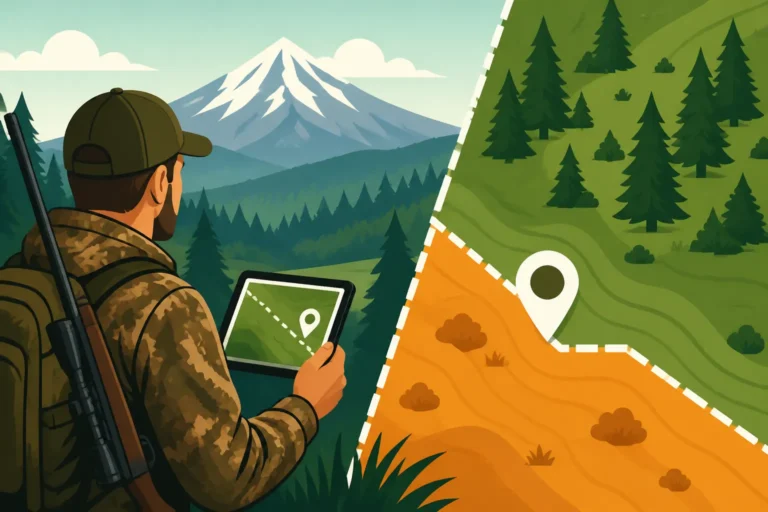
With onX Hunt, you can overlay property lines directly onto satellite imagery and topographic maps. This is invaluable for verifying you're on an Open Fields property, especially if the boundaries aren't clearly marked on the ground. You can mark access points, potential game trails, and even confirm if a specific field is part of the program or belongs to an adjacent landowner. This precision is essential to avoid accidental trespass. Many hunters find E-Scouting Oregon Units With Satellite Imagery to be an indispensable part of their preparation, and these tools take it to the next level by integrating private land data.
GoHunt offers similar mapping capabilities, often with additional data overlays that can help you understand habitat types or historical game movement in a broader area. While its primary focus might be draw odds and unit breakdowns, its mapping functions are excellent for verifying and visualizing Open Fields access. Both of these apps allow you to download maps for offline use, which is critical when you're in areas with no cell service – a common occurrence in many of Oregon's hunting locales. Using these tools to cross-reference ODFW's official maps ensures you have the most accurate picture of where you can and cannot hunt.
Types of Hunting Opportunities on Open Fields Lands
The beauty of the Open Fields Program is the diversity of hunting experiences it offers. These aren't just marginal properties; many are agricultural lands, timber blocks, or riparian corridors that are highly attractive to various game species. Depending on the property, you might find chances to pursue everything from waterfowl to big game.
Waterfowl and Upland Bird Hotspots
Many Open Fields properties are specifically enrolled because of agricultural conflicts with birds. This makes them absolute goldmines for waterfowl and upland bird hunters. Imagine vast grain fields drawing in ducks and geese, or brushy creek bottoms holding pheasants and quail. Hunting Willamette Valley Goose Damage Ground is a prime example where Open Fields properties are specifically managed to mitigate crop destruction caused by large goose populations, offering hunters fantastic opportunities. You might find cornfields, stubble fields, or flooded pastures where thousands of birds congregate. For upland birds, look for properties with diverse cover—hedgerows, tall grasses, fallow fields, and timber edges—which provide crucial habitat for pheasants, quail, and sometimes even turkeys. Always check the specific property rules for season dates and bag limits, as they may differ from general season regulations to address local wildlife management needs.
Deer and Elk Access in the Agricultural Interface
While bird hunting is prominent, the Open Fields Program also provides critical access for deer and elk, particularly in areas where agricultural lands border traditional deer and elk ranges. These are often transitional areas where big game move between feeding in private fields and bedding in nearby timber or heavy cover. Think of mule deer filtering into alfalfa fields in Eastern Oregon's high desert, or blacktail deer venturing into small clearcuts or oak savannas bordering farms in Western Oregon. Elk can be particularly problematic for landowners, causing significant crop damage, so specific Open Fields agreements might target them. Hunting these properties can offer a unique challenge, requiring stealth and an understanding of how game uses agricultural environments. When studying maps, look for properties that connect to larger blocks of public land or natural cover, as these serve as important travel corridors. Knowing the general Oregon's 22 Herd Ranges and Old Unit Names can help you focus on Open Fields properties within specific game management areas.
Predator and Small Game Pursuits
Beyond big game and birds, Open Fields properties can also offer excellent opportunities for predator and small game hunting. Coyotes are often plentiful in agricultural landscapes, drawn by rodents and other small prey, and landowners are usually eager to have their numbers managed. Calling in a coyote across an open field can be an exhilarating experience. Similarly, rabbits and squirrels can provide fun, accessible hunting, especially for new hunters or youth, helping them hone their skills. These opportunities are sometimes overlooked but can provide valuable hunting days, especially outside of peak big game seasons. Always confirm with the property-specific regulations if predator or small game hunting is permitted, as some agreements might focus exclusively on specific "damage" species like geese or deer.
Respecting the Land: Hunter Responsibilities and Ethics
Participating in the Oregon Open Fields Program isn't just about gaining access; it's about upholding a vital trust. The continued success and expansion of this program hinge entirely on the ethical conduct of hunters. Every action you take on an Open Fields property reflects on the entire hunting community.
The Golden Rule: Leaving it Better Than You Found It
This isn't just a suggestion; it's the foundation of maintaining private land access. When you visit an Open Fields property, you are a guest, and your goal should be to leave no trace that you were ever there—or better yet, leave it better than you found it. This means packing out all your trash, including spent shell casings, food wrappers, and anything else you brought in. If you spot litter left by others, consider picking it up. Always adhere to explicit rules like Leaving Gates and Fences as You Found Them, ensuring that if a gate was closed, you close it behind you, and if it was open, you leave it open. Respect crops, fences, farm equipment, and livestock. Drive only on designated roads or parking areas, and never off-road through fields. Your diligence protects the landowner's property and demonstrates that hunters are responsible and respectful stewards.
Communicating with Landowners: When and How
While the Open Fields Program provides public access without needing direct landowner permission for every visit, there might be times when polite communication is beneficial or even necessary. If you have questions about specific access points, parking, or perhaps noticed an issue (like a broken gate or fence), a respectful, brief conversation can go a long way. Always use good judgment. If the landowner is busy with farm work, a quick wave or a brief, polite question is appropriate, not a lengthy chat. Remember that the initial agreement to join the Open Fields Program already grants you access, so you're not there to "ask permission" in the traditional sense, but to be a courteous visitor. Sometimes, a property might be near a residence; showing common courtesy and avoiding unnecessary noise or disturbance is paramount. It’s a good practice to review general guidelines for Asking a Landowner for Access to hone your interpersonal skills, even if direct permission isn't required for these specific properties.
Reporting Violations and Maintaining Program Integrity
Unfortunately, not all hunters uphold the same high standards, and irresponsible behavior can quickly lead to landowners pulling out of the program. If you witness a violation on an Open Fields property—such as trespassing outside the designated hunting areas, littering, damaging property, or poaching—it is your responsibility as an ethical hunter to report it. Contact ODFW enforcement or the State Police. Provide as much detail as possible: license plate numbers, vehicle descriptions, descriptions of the individuals, and the specific nature of the violation. Reporting these incidents is not "snitching"; it's actively protecting hunting opportunities for everyone and preserving the integrity of a program that relies on trust. Don't let a few bad apples spoil it for the rest of us. Strong ethical behavior, as reinforced by Oregon Hunter Education Requirements, is critical to ensuring these programs continue to thrive.
Common Challenges and Troubleshooting
Even with the best intentions and preparation, hunting Open Fields properties can present a few unique challenges. Understanding these ahead of time and having a plan can save you a lot of frustration and ensure a more enjoyable, successful hunt.
Navigating Changing Access and Seasonal Closures
One of the realities of private land is that situations can change quickly. A landowner might need to close a field due to active farming operations, or they might temporarily restrict access because of livestock movements. Fire season closures, especially on adjacent timberlands, can also impact access. ODFW tries its best to keep the online maps updated, but sometimes on-the-ground conditions might differ. Always double-check the ODFW A&H map immediately before your hunt. If you arrive and find a gate unexpectedly locked or a field posted with new temporary closure signs, respect it. It's frustrating, but remember it's private land. Call the ODFW regional office if you have questions about a specific closure; never assume you can ignore it.
Dealing with Crowds and Hunter Pressure
Popular Open Fields properties, especially those close to urban centers or known for good bird hunting, can sometimes draw significant hunter pressure. This can be a shock if you're used to the solitude of deep public land. Be prepared for company, particularly on opening weekends or during peak season for waterfowl. Arrive early, be patient, and always give other hunters ample space. Aggressive or competitive behavior has no place in the field. If a property is too crowded for your liking, have a backup plan. The beauty of the Open Fields Program is that there are often multiple properties available, so be willing to shift your plans if one area is overwhelmed. This is where those digital mapping tools like onX Hunt and GoHunt can really shine, helping you scout alternative locations quickly.
What to Do When Rules Aren't Clear
Despite ODFW's best efforts to provide clear rules, sometimes you might encounter an ambiguity. Maybe a sign is partially obscured, or a situation arises that isn't explicitly covered in the online description. In these instances, always err on the side of caution. If you're unsure if something is allowed, assume it's not. Attempting to interpret ambiguous rules in your favor is a risky move that could lead to a violation or alienate the landowner. The best course of action is to contact the ODFW regional office associated with that property. They are the experts and can provide definitive clarification. Avoid asking other hunters on the property, as their interpretation might be incorrect.
Maximizing Your Success on Open Fields Properties
Hunting Open Fields properties requires a blend of traditional hunting skills, respect for private land, and a dash of modern technology. To truly make the most of these opportunities, a thoughtful approach is essential.
Pre-Season Scouting and Digital Reconnaissance
Just like any other hunt, successful outings on Open Fields properties start long before opening day. Digital scouting is your first line of defense. Use satellite imagery on tools like onX Hunt or Google Earth to identify potential game travel corridors, bedding areas (if timbered), water sources, and feeding locations. Look for pinch points, cover transitions, and areas where game might funnel. Pay close attention to how the private property connects to adjacent public land or other habitat types.
Once you've done your digital homework, consider a physical scouting trip, if permitted (some properties only allow access during hunting seasons). Even a drive-by to observe access points, parking, and visible terrain features can be invaluable. Look for fresh tracks, droppings, and feeding sign. Understand the local terrain, the lay of the fields, and the proximity of roads or houses. Remember, Open Fields are often working farms or ranches, so your presence during scouting should be discreet and respectful, never intrusive.
Adaptability and Low-Impact Hunting Strategies
Hunting private agricultural lands often requires a different approach than vast wilderness areas. Game animals on these properties are usually more accustomed to human activity (tractors, vehicles, residents), but they are also acutely aware of hunting pressure. Adaptability is key. Be prepared to hunt small pockets of cover, utilize hedgerows or drainage ditches for concealment, and make short, calculated movements.
Low-impact hunting strategies are crucial. This means minimizing your footprint, being quiet, and avoiding tactics that might disturb the landowner or their operations. For waterfowl, meticulous decoy setups and effective concealment are paramount. For deer and elk, still-hunting or setting up carefully concealed stands along known travel routes can be effective. Avoid pushing game too hard, especially if it might send them onto neighboring private land where you don't have permission. Your goal is to be effective without being disruptive.
Becoming a Good Steward to Secure Future Access
Ultimately, the longevity and expansion of the Oregon Open Fields Program rest on the shoulders of every hunter who utilizes it. By consistently demonstrating responsible, ethical, and respectful behavior, you become an ambassador for hunting. Each positive interaction, each clean parking area, each well-followed rule reinforces the value of the program to landowners and ODFW alike.
Think beyond just your current hunt. Consider volunteering for an Access & Habitat project, or simply take the initiative to communicate appreciation to the local ODFW staff for the program. Your actions contribute to a larger narrative that helps secure and even grow these precious private land access opportunities for future generations of Oregon hunters. It’s an investment in the future of our sport and our relationship with the land and its owners.
| Aspect | Open Fields Program (OFP) | Direct Landowner Permission | Industrial Timber Permits |
|---|---|---|---|
| Source of Access | ODFW-managed agreements with private landowners | Individual negotiations with private landowners | Commercial timber companies (e.g., Weyerhaeuser, Hancock) |
| Primary Goal | Increase public hunting access, mitigate wildlife damage | Hunter gains access, landowner controls access | Company manages timber, sells access for recreation |
| Information Source | ODFW Access & Habitat online maps | Personal contact, networking, local inquiry | Company websites, local offices, specific permit vendors |
| Cost to Hunter | No direct property access fee (covered by license/tag fees) | Varies: Free to paid lease/fee | Varies: Annual, seasonal, or daily permit fees |
| Rules & Restrictions | Property-specific (online), ODFW-enforced | Landowner-specific, often verbal or simple written | Company-specific, often strict on gates, roads, fire risks |
| Hunter Responsibility | Critical for program continuation, high visibility | Extremely high, personal relationship is key | High, adherence to company rules paramount |
| Typical Game Species | Waterfowl, upland birds, deer, elk, small game | Wide range, depends on landowner's property | Deer, elk, bear, cougar, small game |
| Scouting | Digital maps, visual observation (if allowed) | Direct communication with landowner, in-person scouting | Digital maps, often in-person scouting permitted with permit |
| Key Advantage | Formalized access, often addresses specific game damage | Most personalized, potential for exclusive access | Large blocks of accessible land, often remote |
| Key Challenge | Potential for crowding, rules vary by property | Can be difficult to obtain, limited quantity | Cost, fire season closures, clearcut activity, specific rules |
Disclaimer
This article is for general informational purposes only and does not constitute professional advice. Laws, prices and regulations vary by location and change over time. Consult a qualified professional for guidance on your specific situation.