Oregon Winter Range Closures
There's nothing quite as deflating as meticulously planning an Oregon hunting trip, pouring over maps and regulations, only to discover at the last minute that your chosen area is completely shut down. It's a common frustration, especially when it comes to chasing big game in the colder months. These unexpected roadblocks often come in the form of winter range closures, put in place to protect vulnerable wildlife. This guide will walk you through what these closures are, why they're so crucial, how to find them, and most importantly, how to plan your hunts effectively so you're not caught off guard.
Understanding Oregon's Winter Range Closures
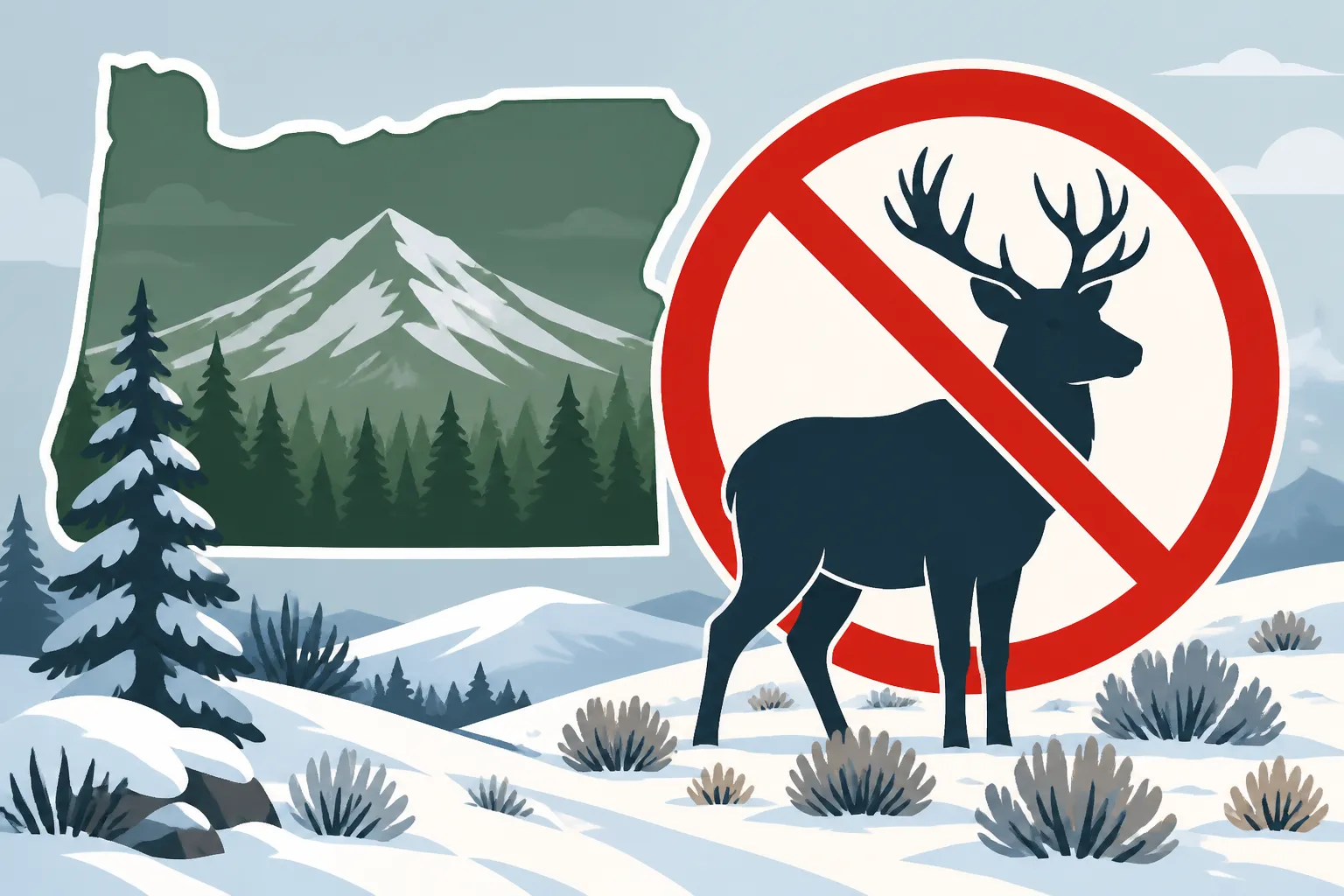
Oregon's landscapes are incredibly diverse, from the high desert to dense coastal forests, and each region hosts its own unique challenges for wildlife during the harsh winter months. Winter range closures are a critical tool used by land management agencies to give deer, elk, and other animals the space and security they need to survive when food is scarce and energy demands are high.
What Constitutes Winter Range?
Think of winter range as a wildlife sanctuary during the toughest part of the year. These aren't just random patches of land; they are specific, often lower-elevation areas where animals naturally congregate when higher elevations become covered in deep snow and brutal cold. For mule deer in Eastern Oregon, this might be a south-facing slope with scattered juniper and bitterbrush, offering both warmth and browse. For elk in the Cascades, it could be a valley bottom with access to riparian areas and more sheltered timber.
These areas are vital because they typically have shallower snowpack, more accessible forage, and provide crucial thermal cover—places where animals can escape the wind and heavy snowfall. Hunting pressure, human recreation, and vehicle traffic in these areas during winter can cause significant stress, forcing animals to expend precious energy when they can least afford it. That energy is literally the difference between life and death for some animals, especially fawns, calves, and older animals that are already struggling. It's about giving them a fighting chance to make it to spring.
The Purpose Behind the Closures
The core purpose of winter range closures is to conserve wildlife populations. It's not about keeping hunters out; it's about ensuring there are healthy herds for future generations to enjoy. When big game animals are constantly disturbed on their winter range, they burn calories trying to escape, sometimes traveling miles away from limited food sources. This can lead to decreased body condition, reduced fawn and calf survival rates, and even direct mortality.
The Oregon Department of Fish and Wildlife (ODFW), along with federal agencies like the Bureau of Land Management (BLM) and the U.S. Forest Service (USFS), collaborates to identify these critical areas and implement closures. The goal is to minimize human disturbance during the most vulnerable time of year for these animals. While it might feel inconvenient when you've got your heart set on a late-season hunt, these closures are a testament to the long-term health of Oregon's deer and elk herds. Many of the measures taken are direct responses to observed declines in Oregon Mule Deer and the Herd Range Decline or challenges faced by Elk Calf Survival and Predation in Oregon.
Types of Winter Range Closures
Not all closures are created equal, and understanding the different categories can help you better anticipate and plan around them. There are typically two main types you'll encounter in Oregon: seasonal and emergency.
Seasonal and Regular Closures
These are the most common and predictable types of winter range closures. Seasonal closures have set start and end dates each year, often running from December 1st or January 1st through March 31st or April 30th, depending on the region and the specific wildlife management needs. These dates are generally published well in advance in the Oregon Big Game Regulations and on agency websites.
For example, many national forests in Eastern Oregon, like parts of the Ochoco or Malheur, will implement seasonal road and area closures in certain zones to protect wintering mule deer. These aren't just for hunters; they often apply to all motorized vehicle use and sometimes even foot traffic, depending on the sensitivity of the area. It's crucial to understand that "closed to vehicles" often means all vehicles, not just full-size trucks, so don't assume your ATV or e-bike is exempt. This proactive approach helps minimize disturbance before heavy snows even arrive, giving animals a chance to settle into their winter patterns undisturbed. These are the kinds of closures you can absolutely plan around if you know where to look. Oregon Winter Range Closure Dates are an important detail to know.
Emergency and Adaptive Closures
While seasonal closures are predictable, emergency closures are exactly what they sound like: responses to unforeseen and severe conditions. These usually happen in years with unusually heavy snowfall, prolonged cold snaps, or widespread ice events that drastically limit an animal's ability to find food or move effectively. When these extreme conditions hit, agencies might implement temporary closures in areas not typically affected, or extend the dates of existing seasonal closures.
Imagine a winter where the snowpack comes in deep and early, followed by weeks of sub-freezing temperatures. Wildlife biologists might observe deer or elk herds struggling, with noticeable weight loss or increased mortality. In such a scenario, ODFW, often in conjunction with the USFS or BLM, can declare an emergency closure on short notice. These decisions are made based on real-time data, aerial surveys, and field observations. While less common, these adaptive measures are vital for preventing catastrophic losses in a herd. The downside for hunters is that they can disrupt late-season hunts or shed hunting plans with little warning. Staying informed through agency announcements is your best defense against these unpredictable situations.
How to Identify Closed Areas
The good news is that land management agencies aren't trying to hide these closures from you. The challenge often lies in knowing where to look and interpreting the various maps and notices. With a little diligent research, you can pinpoint exactly where you can and cannot go.
Official Agency Resources
Your first and most reliable source of information will always be the official websites and publications of the agencies that manage the land.
- Oregon Department of Fish and Wildlife (ODFW): ODFW is your central hub for hunting regulations and often provides links or direct information regarding closures. Their big game hunting regulations pamphlet usually lists known seasonal closures by unit or region. They also issue news releases and alerts on their website, especially for emergency closures. This is also where you'll find details on Oregon's 22 Mule Deer Herd Ranges and general season dates.
- U.S. Forest Service (USFS): If you're hunting in a National Forest, check the website for the specific forest district you plan to visit (e.g., Ochoco National Forest, Malheur National Forest, Wallowa-Whitman National Forest). They will have "Alerts & Notices" sections, recreation maps, and sometimes specific closure orders. Many Forest Service offices also have detailed paper maps you can pick up, which might have closure boundaries marked. These maps are invaluable when scouting.
- Bureau of Land Management (BLM): Similar to the USFS, the BLM manages vast tracts of land, particularly in Eastern Oregon. Visit the website for the relevant BLM field office (e.g., Prineville District, Lakeview District). Their sites will also feature public notices and maps detailing seasonal and emergency closures on their managed lands.
- Oregon State Forests: The Oregon Department of Forestry (ODF) manages several state forests, particularly in Western Oregon. Their websites will have information on closures, often related to fire season but occasionally for winter wildlife protection.
It's a good practice to check these sources frequently, especially as your hunt date approaches, because conditions can change.
Digital Mapping Tools
In the modern hunting world, digital mapping applications are indispensable for identifying and navigating closures. They offer an incredible advantage over traditional paper maps.
- onX Hunt: This application is a game-changer for many hunters.
onX Huntprovides detailed land ownership maps, showing public and private parcels. Crucially, it often includes layers for motorized travel restrictions and winter range closures. These layers visually highlight closed roads and areas, making it incredibly easy to see where you can't go. Before heading out, always download your maps for offline use, as cell service is often nonexistent in prime hunting areas. You can overlay these layers with topography, satellite imagery, and even hunting unit boundaries, giving you a comprehensive view of the landscape. - GoHunt: While
GoHuntis primarily known for its advanced draw odds and research tools, it also offers mapping capabilities and often aggregates information on regulations and access. Their filtering tools can sometimes help identify units with known winter range challenges or link you directly to the relevant agency closure notices. It's an excellent platform for pre-season scouting and understanding unit-specific details.
Beyond these dedicated hunting apps, general mapping tools like Google Earth can be useful for scouting terrain and potential access points, though they won't typically show current closure boundaries. Always cross-reference digital maps with official agency notices to ensure you have the most up-to-date information. Learning to use features like E-Scouting Oregon Units With Satellite Imagery will greatly improve your ability to identify potential winter range and avoid closed areas. You'll also want to familiarize yourself with Downloading Oregon TMA GeoPDF Maps.
| Agency | Primary Land Type Managed | Typical Closure Enforcement | Key Information Source |
|---|---|---|---|
| ODFW | State Wildlife Areas, Regulations | Access restrictions, hunting seasons | ODFW Website, Big Game Regulations |
| US Forest Service | National Forests | Road closures, area closures | Specific National Forest Websites |
| Bureau of Land Management | Public Lands (Eastern Oregon) | Road closures, area closures | Specific BLM Field Office Websites |
| Oregon Dept. of Forestry | State Forests | Road closures, access gates | Specific State Forest Websites |
Impact on Hunting Opportunities
Winter range closures, while frustrating at times, profoundly shape where and when you can hunt in Oregon. They're not just lines on a map; they directly dictate strategy and access, especially for late-season or extended hunts.
Restricted Access and Reduced Huntable Area
The most obvious impact is the physical restriction of access. When critical winter range is closed, it means roads, trails, or entire sections of land that might otherwise be accessible become off-limits. For a hunter, this can translate to losing access to traditional hunting grounds, favorite glassing points, or even entire sections of a unit that you've scouted for years. Imagine planning a late-season deer hunt in a unit where you know bucks often drop down to specific south-facing slopes as the snow falls. If those slopes are now part of a designated winter range closure, your entire strategy is thrown out the window.
This reduction in huntable area can also concentrate hunting pressure on the remaining open lands. If a popular unit has a significant portion closed for winter range, every hunter who drew a tag for that unit is now funneling into a smaller geographical footprint, potentially increasing competition and making the animals that are outside the closure even warier. It forces hunters to be more adaptable and creative in their approach. Understanding Oregon Roads Closed to Protect Wintering Deer is paramount for planning.
Timing Considerations for Late-Season Hunts
Winter range closures have a significant bearing on late-season hunts, particularly those extending into December or January. Many general season deer and elk hunts in Oregon, especially in the Cascade and Coast Range units, often run into mid or late November. However, controlled hunts, muzzleloader seasons, or second-season rifle elk hunts can sometimes stretch into the periods where winter range closures are in effect.
If you have a tag for a hunt that could overlap with these closures, thorough pre-hunt research is non-negotiable. You need to verify the specific dates of any seasonal closures in your unit and understand how they align with your hunt dates. A hunt that starts in late November might find half its territory closed by December 1st. This means you might only have a narrow window to hunt certain areas before they become inaccessible. For instance, if you're targeting Oregon Roosevelt Elk Rifle Seasons in November in a unit with known winter range issues, understanding when those access points will be shut down is crucial to maximizing your opportunity. Don't assume that because your tag is valid, all the land is open.
Respecting Closures: Ethical and Legal Considerations
Adhering to winter range closures isn't just a suggestion; it's a legal requirement with serious implications if ignored. Beyond the law, there's a deep ethical responsibility to respect these boundaries, for the sake of the animals and the future of hunting.
Consequences of Non-Compliance
The penalties for violating winter range closures can be steep. These are not merely suggestions but official orders issued by land management agencies. You could face fines, vehicle impoundment, and potentially even misdemeanor charges. Imagine the financial hit of a hefty fine, coupled with the frustration of having your vehicle towed from a remote location. Beyond the immediate legal repercussions, a violation could also lead to a loss of hunting privileges, which for many dedicated hunters, is a far more devastating consequence.
Enforcement officers, including OSP Fish & Wildlife Troopers, Forest Service Law Enforcement, and BLM Rangers, regularly patrol these closed areas. They are highly aware of typical access points and routes. Don't assume that because a gate is merely closed with a chain and not locked, or because a sign is small, that enforcement isn't active. These officers are dedicated to protecting vulnerable wildlife, and they take violations seriously. It's a risk simply not worth taking, both for your wallet and your hunting future.
Ethical Hunting and Conservation
Beyond the legal aspect, respecting winter range closures is a fundamental part of ethical hunting and responsible conservation. Hunters are often the most vocal advocates for wildlife, and demonstrating respect for management practices reinforces that commitment. By staying out of closed areas, you are actively participating in the conservation effort, ensuring that vulnerable animals can survive the most challenging time of the year.
Think about the bigger picture: the health of the herd. When deer and elk are harassed on their winter range, it impacts their ability to reproduce, their overall health, and ultimately, the population numbers available for hunting in future seasons. Ignoring closures undermines the very resource we cherish. As hunters, we have a unique responsibility to be stewards of the land and its wildlife. This includes understanding and abiding by the science-backed decisions made by wildlife managers. Being a good hunter means being a good conservationist, and that starts with knowing where to hunt and where not to hunt. It's also a great way to ensure healthy populations for activities like Spot-and-Stalk Spring Bear on Oregon's Green Slopes when the season re-opens.
Planning Your Hunt Around Closures
Dealing with winter range closures requires a proactive and flexible approach to your hunt planning. You can't just hope for the best; you need to anticipate the challenges and build contingencies into your strategy.
Pre-Season Research and Map Reconnaissance
The key to navigating winter range closures starts long before you ever step foot in the woods. Begin your research during the summer months, well in advance of the fall hunting seasons. Obtain the latest ODFW big game regulations pamphlet, as it will often highlight units with significant winter range concerns.
Next, dive into your maps. Use digital tools like onX Hunt or GoHunt to identify potential winter range closure layers in the units you're considering. Look for specific roads, gates, or entire sections that are marked as seasonally closed. Compare this with topographical maps to identify areas that look like natural winter range (south-facing slopes, lower elevations, areas with good cover and browse). If you see a prime looking spot that falls within a typical closure period, assume it will be closed.
Also, visit the websites for the local National Forest or BLM office that manages the land. Look for current closure orders, news releases, or any updates regarding winter access. Sometimes, these agencies provide detailed maps specifically showing the closure boundaries. Having this information upfront allows you to rule out certain areas and focus your scouting efforts on lands that will remain open during your hunt dates. It's also wise to check for Oregon Winter Range Closures That Affect Late Hunts from previous years to get a sense of typical patterns.
Developing Alternative Hunt Plans
Once you've identified potential closures, don't just throw your hands up in despair. Instead, use this information to develop alternative hunt plans. If your primary hunting area is going to be closed, what's your backup?
- Shift Focus to Open Areas: Look for similar habitat features (e.g., elevation, aspect, cover) in adjacent areas that are not subject to winter range closures. Animals will still need these resources, and while the patterns might be different, they will still be there.
- Target Earlier Hunts: If winter range closures severely restrict your preferred late-season opportunities, consider applying for earlier tags if available, or shifting your focus to general season hunts that conclude before the closures typically begin.
- Physical Scouting: Once you've done your digital homework, get out and physically scout the open areas. Identify new access points, game trails, and potential bedding and feeding areas. Pay attention to how the terrain transitions from potential winter range to year-round habitat. Public Land Scouting in Oregon Before the Draw Results is vital, and it should include assessing potential closure impacts.
- Consider Other Species: If deer or elk hunts are too impacted, perhaps there are other species or seasons that avoid these specific closures. For instance, Bear Hunting in Oregon Without Bait or Hounds can offer opportunities in different habitats and seasons.
The goal is to be adaptable. A well-prepared hunter has multiple plans, and anticipating closures allows you to develop those plans with confidence, rather than reacting frantically when you encounter a closed gate. It's all about being informed and ready for whatever Oregon's wild country throws your way.
Disclaimer
This article is for general informational purposes only and does not constitute professional advice. Laws, prices and regulations vary by location and change over time. Consult a qualified professional for guidance on your specific situation.