Oregon Industrial Timber Land Access Programs
It’s a scenario many of us have faced in Oregon: you're driving down a forest road, spotting prime-looking elk or deer country, only to be met with a "Private Timber Land – Entry Permit Required" sign. This can be incredibly frustrating when you’ve done your scouting, drawn a tag, and now feel like a huge chunk of potential hunting ground is suddenly off-limits. This guide is here to demystify Oregon’s industrial timber land access programs, helping you understand how to gain legal access and broaden your hunting horizons.
Understanding Oregon's Industrial Timber Landscape
Oregon is rich in timber, and a significant portion of what looks like "forest" from the road is actually privately owned and actively managed industrial timber land. This isn't just a few hundred acres here and there; we're talking vast stretches, often checkerboarded with public lands, that hold tremendous wildlife potential. For hunters, understanding who owns what and how to access it is absolutely crucial.
The Checkerboard Ownership Reality
Imagine a patchwork quilt laid across the landscape. That's often what land ownership in Oregon looks like, particularly in the western and central parts of the state. You might have a section of National Forest, bordered by a section of Bureau of Land Management (BLM) land, then a block of privately owned industrial timber land, followed by a small private parcel. This intermingling can be a real headache if you don't have the tools and knowledge to decipher it. Hunters often assume that if it looks like a forest, it's public, and that assumption can lead to accidental trespassing, which is something none of us want to deal with.
These private timber companies, like Weyerhaeuser or Hancock, own millions of acres across Oregon. They manage these lands primarily for timber production, meaning you'll see active logging, replanting, and road maintenance. While their primary business isn't public recreation, many of these companies have developed programs to allow public access, often through permits or designated walk-in areas. The challenge is knowing which companies offer what, where those lands are, and what the specific rules entail for hunting. It's not a one-size-fits-all situation, and regulations can change from one company to the next, or even within different regions managed by the same company.
Why Industrial Timber is Crucial for Hunters
The sheer acreage of industrial timber land in Oregon means it represents an enormous, often underutilized, hunting resource. These lands typically feature a diverse mosaic of habitats due to active timber management. You'll find recent clearcuts, which quickly become prime browse for deer and elk, providing essential forage. Adjacent to these clearcuts, you'll often discover mature timber stands, offering thermal cover and bedding areas. This combination of food and cover makes industrial timber lands incredibly attractive to big game.
Furthermore, these lands often have extensive road networks built for logging operations. While many of these roads are gated or decommissioned after use, others can provide relatively good access into areas that might otherwise be tough to reach. For hunters willing to do their homework and follow the rules, Hunting Clearcuts on Private Timber Land can be incredibly productive, especially for blacktail deer in Western Oregon or even elk. Ignoring this vast resource means you're overlooking significant opportunities, forcing yourself to compete on potentially more crowded public lands or to hike much further for game.
Navigating Access: Permits, Gates, and Rules
Accessing industrial timber land for hunting typically involves understanding specific permit systems, navigating gated roads, and adhering to often strict rules designed to ensure safety, minimize liability, and protect timber resources. It's not as simple as just driving in, but with a bit of effort, it's often entirely doable.
Weyerhaeuser and Hancock Permit Systems
Many hunters are familiar with the names Weyerhaeuser and Hancock (formerly Hancock Forest Management, now called Manulife Investment Management Timberland and Agriculture). These are two of the largest private timberland owners in Oregon, and both operate permit systems for public access. These permits are generally sold seasonally or annually and can range from vehicle access permits to walk-in only permits for specific areas. The goal is to manage the number of people on their lands, reduce fire risk, and control access points.
Weyerhaeuser, for example, often utilizes an online permit system where you purchase access to specific "recreation areas" or units. These permits can be highly sought after, especially for prime elk or deer hunting units, and may sell out quickly after becoming available. Hancock, similarly, manages access through various permits, some of which are sold directly through their website or sometimes through local vendors. The details, including the cost of a Weyerhaeuser permit in Oregon or a Hancock forest permit, and the specific rules for each area, are frequently updated, so it's always best to check their official websites well in advance of hunting season. These companies often have detailed maps that show permitted areas, road systems, and access points, which are indispensable for planning your hunt. Timber Company Access Fees and Gates in Oregon are a reality, but the access they provide can be invaluable.
Other Timber Companies and Local Access
While Weyerhaeuser and Hancock are major players, many other smaller, regional timber companies and private landowners also manage significant tracts of forest. Their access policies can vary wildly. Some may have informal "open gate" policies for specific periods, while others might require direct contact with a local land manager or even a handshake agreement. Some participate in programs like the Oregon Department of Fish and Wildlife (ODFW) Access and Habitat program, which facilitates public access to private lands.
For these smaller companies, finding information can be trickier. It often requires local knowledge, asking around at sporting goods stores in small towns, or looking for posted signs at specific gates. Sometimes, land is simply posted "No Trespassing" and there is no public access, which must be respected. The key is to never assume access. Always verify ownership and permission before stepping foot on private timber land. This might mean making phone calls, sending emails, or doing some boots-on-the-ground reconnaissance to check for signs.
The Impact of Fire Season Closures on Timber Land
One of the most significant challenges when hunting industrial timber land in Oregon, especially during early seasons, is the risk of fire season closures. Due to the high value of standing timber and the inherent fire risk, many private timber companies have very strict fire prevention policies. This often includes outright closures of their lands to public entry during periods of high fire danger, regardless of whether you hold a permit. These closures can be sudden and extensive, often without advance warning, based on local weather conditions and fire risk assessments.
It’s heartbreaking to have a permit and a hunt planned, only to find the gates locked due to a closure. Many of us have experienced this frustration. The fire danger can be particularly acute in areas with recent logging activity, where there’s a lot of dry slash and debris. Always check the fire danger levels and specific company closure announcements before heading out. Sometimes, partial closures might allow access in certain zones while others remain closed. Information about Fire Season Closures on Oregon Timber Land is usually available on company websites, ODFW updates, and local news channels. Planning an early season hunt on private timber means you absolutely must have a backup plan in case the gates close.
Walk-In Access and "Green Dot" Roads
Beyond the formal permit systems for vehicular access, many timber companies offer significant walk-in access opportunities. These can be fantastic for hunters who are willing to put in the legwork and get away from road hunters. Understanding these systems, like "Green Dot" roads, is vital for expanding your hunting options.
Identifying Walk-In Only Gates
Across Oregon's timber country, you'll encounter countless gates. Many of these are simple logging gates, some permanently locked, others opened and closed for active timber operations. What's important for hunters are the "walk-in only" gates. These are typically marked with specific signage indicating that foot traffic is allowed beyond the gate, but motorized vehicles are prohibited. This can be a game-changer, as these areas often see less hunting pressure because most people don't want to walk in.
These walk-in zones allow you to penetrate deeper into the timber, accessing areas that might be adjacent to clearcuts, dense bedding areas, or secluded draws. When scouting, pay close attention to the signage on gates. Some will explicitly say "Walk-In Access," while others might have rules like "No Motorized Vehicles Beyond This Point" with a small foot-access icon. It's crucial to distinguish these from strictly "No Trespassing" gates. Always respect the posted signs. These Walk-In Only Gates on Industrial Timber offer a chance to experience a more backcountry-style hunt without needing to venture into designated wilderness areas. Remember, while you're on foot, you're still on private land and subject to any specific rules the timber company might have, such as no camping or fires.
Understanding Travel Management on Private Timber
Just like public lands have Travel Management Areas (TMAs) that dictate where and when you can drive, many private timber companies implement their own internal travel management strategies. The most common of these is often referred to as the "Green Dot" road system, particularly prevalent in areas managed by some of the larger companies. The concept is fairly straightforward: certain roads are marked with green dots (or similar indicators like specific colored signs) on maps or directly on the ground, signifying that they are open to public motorized vehicle traffic during specific seasons. Other roads, without these markings or with different colored signs, might be permanently closed, open only for administrative use, or gated.
These systems are designed to balance timber operations with public access, often providing hunters a way to get closer to good hunting ground before transitioning to foot travel. However, it's vital to have an up-to-date map showing these designations. A road that was open last year might be closed this year, or vice versa, depending on logging schedules or environmental considerations. Misinterpreting these markings can lead to fines for illegal road use or accidental trespass. ODFW often collaborates with timber companies to provide maps that incorporate this information, or you can find company-specific maps. Knowing how to interpret Reading Green Roads on an Oregon Travel Management Map can save you a lot of headache and keep you on the right side of the rules.
Leveraging Technology for Timber Land Access
In today's hunting world, technology is your best friend when it comes to figuring out land ownership and access. Gone are the days of relying solely on paper maps and cryptic signs. Modern mapping applications have revolutionized how hunters navigate complex land ownership patterns, especially on industrial timber lands.
Using Mapping Apps for Ownership and Access
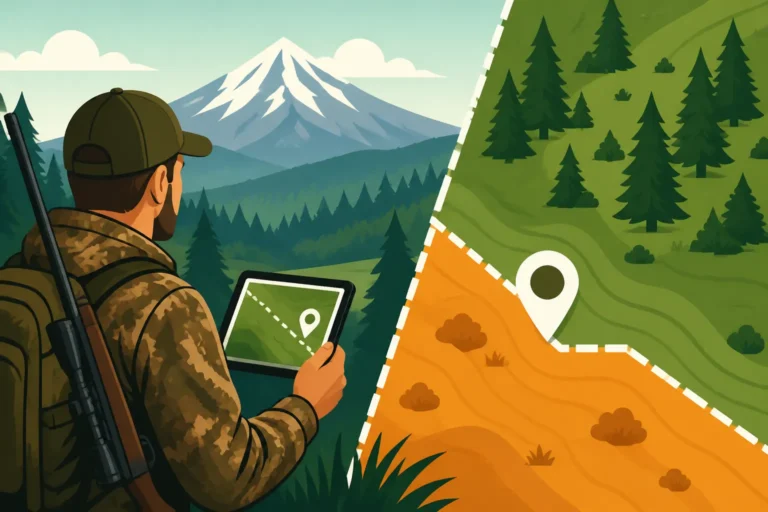
For any hunter serious about expanding their access options, a robust mapping application is an absolute must-have. Tools like onX Hunt have become indispensable for countless Oregon hunters, including myself. These apps typically offer layers that clearly show land ownership boundaries, distinguishing between public lands (National Forest, BLM, State Parks, ODFW lands) and private parcels, including those owned by large timber companies. What's more, onX Hunt often provides specific information about these private parcels, sometimes even indicating if a company has a public access program or if a specific gate is walk-in only.
Imagine standing at a gate, unsure if the land beyond is public or private. With one tap on your phone, you can see the property lines, the landowner's name, and potentially details about access. This eliminates guesswork and helps you avoid inadvertently trespassing. Beyond ownership, these apps also display satellite imagery, topography, and often show roads and trails, which are critical for E-Scouting Oregon Units With Satellite Imagery before you even leave home. This allows you to identify potential bedding areas, clearcuts, and travel corridors on industrial timber lands, just as you would on public land. Other platforms like GoHunt also offer detailed maps and access information, often integrating permit details, helping hunters plan effectively.
Finding Timber Gate Combination Systems
Some private timber lands, particularly those managed by smaller companies or individual large landowners, might use a gate combination system for access. This is less common with the huge industrial timber companies that favor permit sales, but it does exist. In these situations, a permit might grant you a specific combination to a locked gate, allowing you vehicle access to an area. This is a privilege, not a right, and comes with significant responsibility.
When a combination is provided, it's usually part of a formal access agreement or permit. This combination is almost always specific to you and your permit and is not meant to be shared. The security of these gates relies on hunters adhering to this rule. Sharing a gate combination can compromise the entire access program for everyone, potentially leading to the company discontinuing public access entirely. Always ensure the gate is securely locked behind you, both upon entry and exit. This small act of diligence is crucial for maintaining good relationships with landowners and ensuring these access opportunities continue for future seasons. Without good mapping tools that clearly define property lines and access points, Timber Gate Combination Systems would be much harder to manage and understand for the average hunter.
Costs, Considerations, and Hunter Etiquette
Accessing industrial timber land often comes with certain costs, both financial and in terms of required responsibility. Beyond paying for permits, hunters must understand the underlying considerations and practice impeccable etiquette to maintain these crucial access opportunities.
Permit Fees and What They Cover
Unlike national forests or BLM lands where general access for hunting is free (after purchasing your state license and tags, of course), industrial timber lands almost always come with a fee for access. These permit fees can vary significantly. Some companies might offer a relatively low-cost seasonal permit for walk-in access to a broad area, while others might charge substantially more for vehicle access to prime, limited-entry hunting blocks. These fees contribute to the timber company's costs for road maintenance, fire prevention, and liability insurance, among other things.
It's important to view these fees not as a burden, but as an investment in increasing your hunting opportunities. Many hunters find that the reduced pressure and quality habitat on permitted timber lands make the investment well worth it. When you purchase a permit, carefully read what it covers. Does it allow motorized vehicle access? Only walk-in? What are the dates of validity? Are there specific areas or roads that are still off-limits? Don't assume. Ignorance of the rules won't exempt you from penalties if you violate them. These fees, which are part of Timber Company Access Fees and Gates in Oregon, are a necessary part of the equation for many private land hunting experiences.
| Access Type | Typical Cost Structure | Key Benefits | Key Considerations |
|---|---|---|---|
| Annual Vehicle Permit | Higher annual fee | Drive deep into territory, less walking | Limited availability, higher cost, subject to closures |
| Seasonal Walk-in Permit | Moderate seasonal fee | Access to gated areas, less competition | Requires hiking, carrying all gear |
| Daily Permit | Lower daily fee | Flexibility for short trips | Can add up, often limited to specific areas |
| Access & Habitat (A&H) Program | Free (through ODFW) | Public access on private land | Often walk-in, limited properties |
Responsible Hunting on Industrial Timber Land
When you are granted access to private industrial timber land, you become an ambassador for all hunters. Your actions directly influence whether these companies continue to offer access. This means practicing an elevated level of hunter etiquette and responsibility. The most fundamental rule is to always respect the property. This includes staying on designated roads, not blocking gates, and leaving no trace of your presence—pack out everything you pack in.
Beyond the basics, be mindful of timber operations. You might encounter active logging sites, heavy machinery, or ongoing silviculture work. Stay clear of these areas for your own safety and to avoid disrupting their operations. Adhere to any specific rules regarding off-road travel, camping, or campfires. Many timber companies have zero-tolerance policies for damaging gates, fences, or property, or for leaving trash. Remember that Hunting Private Timber Land With a Permit is a privilege, and that privilege can be revoked if rules are violated by a few irresponsible individuals. By being a good steward, you help ensure that these valuable hunting grounds remain available for years to come.
Disclaimer
This article is for general informational purposes only and does not constitute professional advice. Laws, prices and regulations vary by location and change over time. Consult a qualified professional for guidance on your specific situation.