Timber Gate Combination Systems
It's incredibly frustrating to spend hours scouting a promising area, only to arrive on opening morning and find a locked gate blocking access to prime hunting ground. Many of us have been there, staring at a "No Trespassing" sign or a sturdy chain, feeling our dreams of a successful hunt deflate. This guide is all about demystifying those seemingly impenetrable timber gate combination systems you encounter across Oregon, giving you the knowledge and practical steps to potentially unlock new hunting opportunities on private industrial timber lands.
Understanding Timber Gate Combination Systems in Oregon
Oregon is a state rich in timber, and much of what appears to be vast, wild forest is actually managed by private timber companies. These companies own millions of acres that are often interwoven with public lands, creating a complex patchwork. For hunters, this means navigating a mix of public access, private land with no access, and private land that might be accessible through specific programs, often guarded by gates.
Why Timber Companies Use Gates and Combinations
Timber companies aren't putting up gates just to be difficult or to keep hunters out; there are very legitimate reasons behind their controlled access policies. Foremost among them is property protection. These lands are working forests, home to valuable timber assets, heavy machinery, and ongoing operations. Gates deter theft, vandalism, and unauthorized dumping that can cost companies significant money and disrupt their business.
Another major concern is fire danger. During dry seasons, public access can significantly increase the risk of human-caused fires. By controlling entry, companies can manage who is on their land and often restrict access entirely during extreme fire conditions. This is a crucial safety measure for their employees, their timber, and the surrounding communities.
Liability also plays a huge role. When people are on their land, timber companies take on a degree of responsibility for their safety. By implementing gate systems and requiring permits or combinations, they can ensure users are aware of potential hazards like active logging, heavy truck traffic, and uneven terrain. This system allows them to communicate rules and sometimes even have visitors acknowledge waivers, reducing their exposure to lawsuits.
Finally, consider active logging and road maintenance. Many of these roads are built for heavy equipment, not public passenger vehicles. They might be actively used by logging trucks, which need clear passage and present a significant hazard to unaware recreational users. Furthermore, maintaining miles of gravel roads is costly. Controlling access helps manage wear and tear and ensures that road closures can be implemented for necessary repairs without conflict.
How Combination Systems Work for Hunters
Historically, access to private timber lands might have involved getting a physical key from a local office or simply relying on "open gate" periods. Today, with the widespread use of technology and the need for more dynamic control, combination gate systems have become common. Instead of a key, you're given a numeric code that unlocks the gate. This allows for greater flexibility for the timber company, as combinations can be changed seasonally, weekly, or even daily, depending on operational needs or fire risk.
For hunters, this often means acquiring a permit or registering for an access program directly through the timber company. When you purchase a permit (sometimes free, sometimes for a fee), you'll typically receive the current combination for the specific gate(s) covered by that permit. It's not a one-size-fits-all solution; different companies, and sometimes even different regions within the same company, will have their own systems and their own gates. For example, a Weyerhaeuser permit for a certain area will give you combinations for their gates in that specific area, not necessarily for Hancock Forest Management gates next door. This is where researching individual company policies is critical.
Navigating Access Programs and Obtaining Combinations
Getting access to private timber lands for hunting in Oregon is less about finding a secret handshake and more about doing your homework and following proper channels. Each major timber company tends to have its own access program, and understanding these is your first step.
Industrial Timber Land Access Programs
Oregon is home to several large industrial timber landowners, and many of them have programs that grant public access, sometimes for a fee, sometimes for free. The key is to find their specific program details, which are almost always found on their official websites.
Companies like Weyerhaeuser often have various permit options, ranging from general access permits to more specific hunting permits that might cover certain dates or areas. These are typically purchased online. You might find a range of costs depending on the access level and duration. For instance, a permit allowing walk-in access might be free or low cost, while a vehicle access permit for prime hunting acreage could be more substantial. They usually provide a map of their lands that are open to permit holders, indicating which gates are part of the system and where their property boundaries lie.
Hancock Forest Management is another significant landowner that often provides public access, sometimes through different permit tiers. Their access might be managed through a system where you purchase an annual permit for a broad region, which then grants you access to specific areas as they open up. Just like Weyerhaeuser, their websites are the go-to source for current information, maps, and permit purchases. Remember that these companies might also offer Hunting Private Timber Land With a Permit, so checking their sites regularly is essential as seasons approach.
Beyond these giants, there are numerous smaller timber companies and private landowners. Some participate in programs like the Oregon Department of Fish and Wildlife's (ODFW) Access and Habitat Program, which incentivizes landowners to open their lands to public hunting. These might be designated as Oregon Access and Habitat Welcome to Hunt Sites or Oregon Open Fields Properties and How to Find Them. For these, the access specifics, including gate combinations, would usually be communicated through ODFW or directly by the landowner if it's a Asking Permission on Oregon By-Permission Land scenario.
It's crucial to always visit the company's official website or the ODFW Access and Habitat page for the most current information. Do not rely on old forum posts or word-of-mouth, as policies, open areas, and combinations can change frequently.
Key Information When Getting a Combination
Once you've identified a timber company or program that grants access, paying close attention to the details of your permit and the associated combination is paramount.
First, understand the specific unit or area your combination covers. A combination for "Unit A" won't work for "Unit B." Often, companies will issue permits for very defined geographic areas. Your permit should clearly state the boundaries and the corresponding gate numbers. Misinterpreting this can lead to frustration or, worse, trespassing.
Second, be acutely aware of the dates of access. Permits are almost always time-sensitive. A combination might be valid only for a specific hunting season, a particular month, or even just certain days of the week. Logging operations, fire season closures, or road maintenance can all influence these dates. Always double-check the validity period before you head out.
Third, the duration of the combination's validity. Some combinations might remain static for an entire season, while others, particularly in active logging areas or during periods of high fire risk, might change frequently. Companies will usually have a system for updating permit holders, perhaps via email or a dedicated webpage. It's your responsibility to check for the most current code.
Finally, and this is critical, never share or misuse combinations. These codes are provided to you as part of a contract for legal access. Sharing them with unauthorized individuals or using them on dates or in areas not covered by your permit is a serious violation. It can result in the revocation of your access, fines, and in some cases, legal action for trespass. Beyond personal consequences, widespread misuse can lead timber companies to shut down their access programs entirely, hurting all hunters. It's a privilege, not a right, and we all need to be responsible stewards of these opportunities.
Practical Tips for Hunting Behind Combination Gates
Hunting behind a combination gate adds a few extra layers of planning and execution compared to purely public land. But with a bit of foresight and adherence to the rules, these areas can offer some incredible experiences.
Planning Your Hunt and Verifying Access
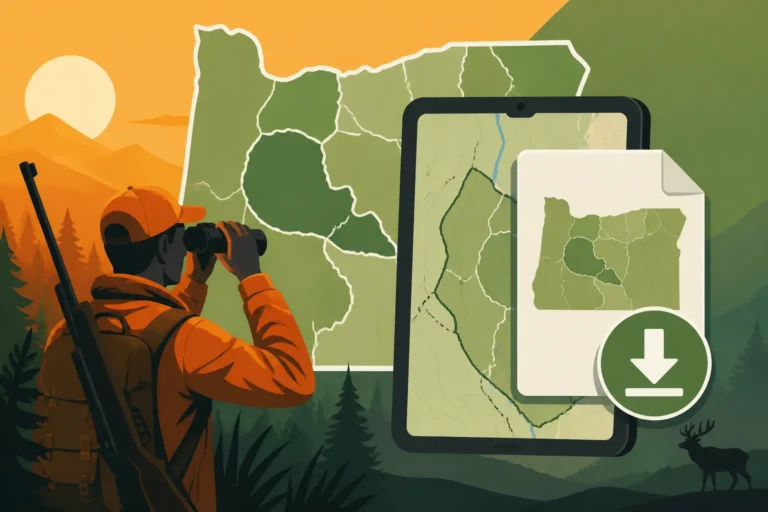
The first and arguably most important tip is to cross-reference everything. You might have your permit, but what does that permit really mean on the ground? This is where modern mapping applications become indispensable. Platforms like onX Hunt are invaluable for overlaying land ownership maps directly onto satellite imagery or topographic maps. You can clearly see where private timber company land begins and ends, which parcels correspond to your permit area, and where the specific gates are located. Before you even leave home, use onX Hunt to pinpoint the exact gate you plan to use and trace the roads you intend to travel.
Even with a valid combination, it's crucial to check for emergency closures before you go. This includes fire-related closures, which can happen very rapidly during dry periods, and closures due to active logging. Many timber companies have dedicated phone lines or website sections for daily updates on access status. Nothing sours a hunting trip faster than a two-hour drive only to find your gate unexpectedly closed.
It's also wise to have backup plans. If your primary timber land access falls through due to an unexpected closure or a changed combination you weren't aware of, having a secondary public land spot or another permit option can save your trip. Always consider alternative access points or nearby units, perhaps researching Oregon's Wildlife Management Units and New Hunt Areas or Public Land Hunting in Oregon: Forest, BLM and State.
Best Practices at the Gate and Beyond
Once you arrive at a combination gate, your actions matter.
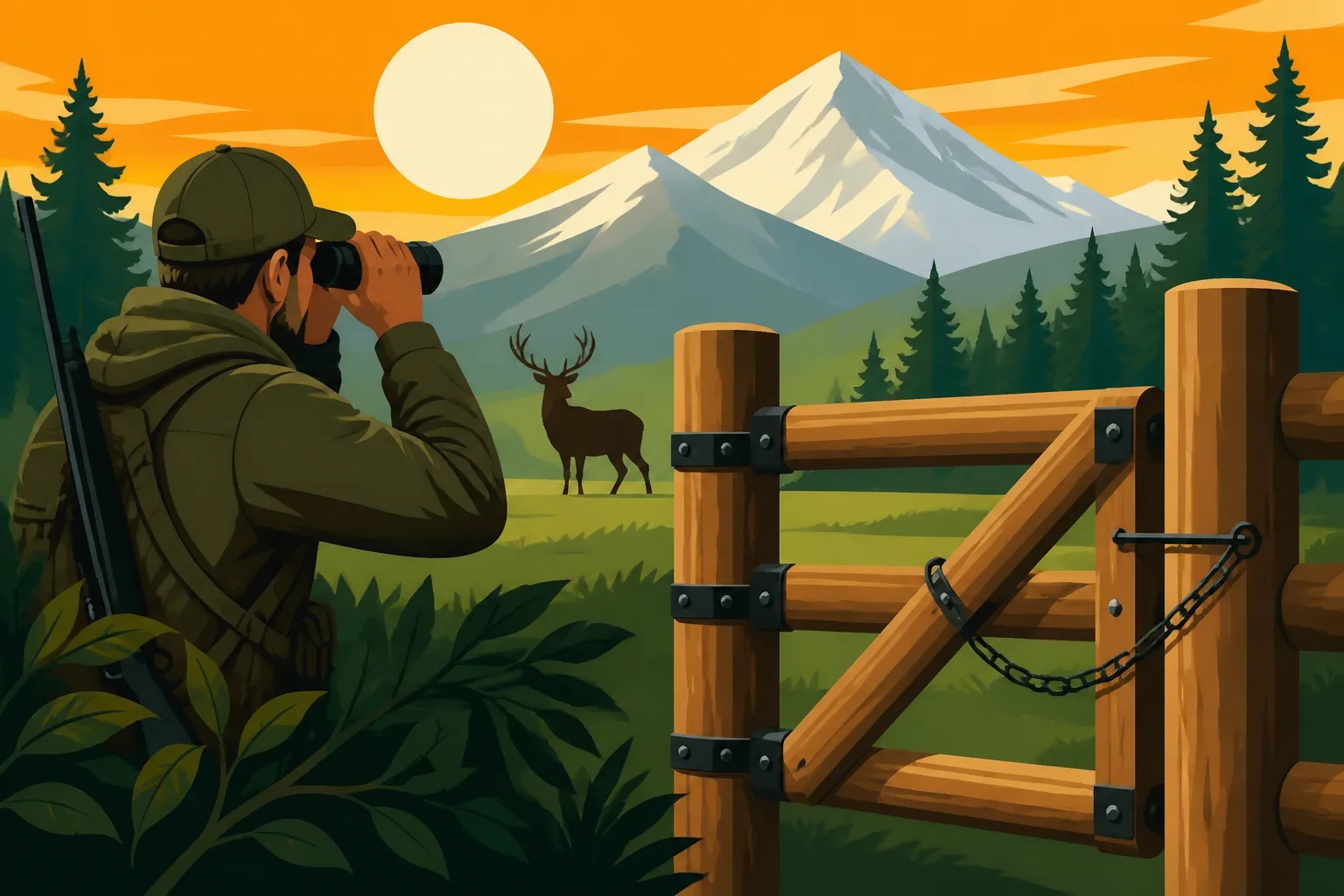
The absolute golden rule is to always re-lock the gate behind you. Every single time. Whether you're entering or exiting, after you've opened it, driven through, and closed it, spin the combination dials to scramble the code. Leaving a gate open, even for a few minutes, is an invitation for unauthorized access, can lead to livestock escaping, or allow non-permit holders to enter, all of which reflect poorly on hunters and jeopardize future access.
Leave gates and fences exactly as you found them. If a gate was closed, close it. If it was chained, re-chain it. This shows respect for the landowner's property and their management practices.
Parking considerations are also important. Once you're inside the gate, be mindful of where you park. Avoid blocking active logging roads, even if they seem unused. Pull completely off to the side, ensuring there's ample room for large vehicles to pass. If you're on a main haul road, consider how visible your vehicle is and if it presents a safety hazard.
When driving on active logging roads, which can be rough, muddy, or dusty, drive defensively. These roads are often used by heavy, fast-moving trucks whose operators may not expect recreational traffic. Yield to all logging equipment. Assume they have the right-of-way and be prepared to pull over safely. The vast majority of these roads are not maintained for public use, so expect potholes, washboards, and tight turns.
Finally, while behind the gate, adhere to all posted rules and regulations. This includes rules about fire, camping, and vehicle use. Many timber lands, particularly those under a Travel Management Area (TMA) designation, will have specific rules about where you can drive or park. Familiarize yourself with Reading a Travel Management Area Map Before You Drive to understand specific restrictions on motorized travel.
The Role of Mapping Apps (onX Hunt, GoHunt)
In today's hunting world, digital mapping applications are no longer a luxury; they are an absolute necessity, especially when dealing with the intricate access of private timber lands. Brands like onX Hunt and GoHunt have revolutionized how hunters navigate and understand land ownership.
These apps allow you to identify land ownership boundaries instantly. With a quick tap on your phone, you can see if you're on public land (Forest Service, BLM, State), or private land, and crucially, which private entity owns it. This is invaluable when your permit is for a specific timber company. You can visually confirm you are on Weyerhaeuser land, for example, and not accidentally straying onto an adjacent Hancock parcel or private property with no access.
Furthermore, these apps often include layers for roads, trails, and even timber cuts. This allows you to plan your route, identify potential walk-in areas beyond vehicle access, and locate clearings that might hold game. E-Scouting Oregon Units With Satellite Imagery using these tools can show you recent logging activity, which often creates excellent forage and cover for deer and elk. You can mark gates, access points, and even potential hunting spots directly on your map, making navigation in unfamiliar territory much easier.
Before you go, ensure you download offline maps for the area you'll be hunting. Cell service is notoriously spotty in many of Oregon's remote timber regions, and relying on a live connection for your map is a recipe for getting lost. Both onX Hunt and GoHunt offer robust offline map capabilities that will keep you oriented even miles from the nearest signal tower.
Here's a quick comparison of general access types for timber lands in Oregon:
| Access Type | Description | Common Provider/Scenario | Key Consideration for Hunters |
|---|---|---|---|
| Combination Gate (Permit) | Hunter purchases a permit; receives a numeric code for specific gates. | Weyerhaeuser, Hancock Forest Management | Requires careful attention to dates, areas, and rules; combinations change. |
| Walk-In Only (Permit/Free) | Access granted on foot, often through specific gates or designated entry points. | Various timber companies, ODFW A&H | Good for hunters without ATVs, but often requires more physical effort. |
| "Open Gate" Periods | Company leaves certain gates unlocked during specific seasons or dates. | Less common now, some smaller landowners | Always verify; can change without notice; respect closing dates. |
| ODFW Access & Habitat | Landowners are compensated to open private land, often with specific rules. | ODFW partnered landowners | Check ODFW website for specific properties and rules; some are by permission. |
| Landowner Permission | Direct contact and permission from a private landowner. | Individual landowners | Requires building relationships and direct communication. |
Successfully hunting behind timber gate combination systems requires more than just knowing the code. It demands respect for private property, diligent research into access programs, and smart use of technology to navigate these unique landscapes. By understanding the rules and using your tools wisely, you'll unlock more of Oregon's diverse hunting opportunities.
Disclaimer
This article is for general informational purposes only and does not constitute professional advice. Laws, prices and regulations vary by location and change over time. Consult a qualified professional for guidance on your specific situation.