Archery Elk Hunting Oregon’s August and September Seasons
The anticipation leading up to Oregon's archery elk seasons in August and September is a special kind of torture. You've spent months dreaming of bugling bulls and close encounters, only to face the harsh reality of hot weather, dense timber, and elk that can feel utterly invisible. This guide is here to walk you through the nuances of hunting these challenging yet incredibly rewarding seasons, offering practical strategies and insights to help you navigate the terrain, understand elk behavior, and ultimately, put an arrow in the vitals.
Understanding Oregon's Archery Elk Seasons
Oregon offers some fantastic opportunities for archery elk hunters, primarily targeting Roosevelt elk in the wetter western part of the state and Rocky Mountain elk in the drier, more open eastern regions. The season spans late August into September, a period that covers both the pre-rut and the peak of the rut, presenting vastly different hunting scenarios and requiring flexible tactics. It's not a "one size fits all" endeavor, and understanding these shifts is crucial.
August Opener: The Early Season Challenges
When the archery season opens in late August, especially in the western part of the state, you're often greeted with conditions that feel more like summer camping than elk hunting. High temperatures are common, sometimes pushing into the 80s or even 90s, especially in the valleys and lower elevations. This heat can be brutal, not just for you, but for the elk, significantly influencing their daily patterns and making them incredibly challenging to locate and approach.
During this early period, elk are typically in their summer patterns. Bulls, often still in velvet, are usually grouped in small bachelor herds, focusing on feeding and putting on weight. They haven't yet dispersed to begin the rut, and their vocalizations are minimal to non-existent. You won't hear much bugling, making traditional calling tactics largely ineffective. Instead, you're looking for subtle signs: fresh tracks around water, wallows in shaded areas, and recent droppings in dense timber where they seek refuge from the heat and biting insects. The dense canopy of the Coast Range or Cascade forests, while providing cover for the elk, also makes visibility extremely limited for hunters, turning every step into a calculated risk of spooking unseen animals. Finding where the elk are scattered across vast public lands, when they're not talking, often feels like searching for a needle in a haystack.
September Peak: The Rut and Its Opportunities
As September progresses, a noticeable shift occurs, particularly around the second and third weeks. The days begin to shorten, temperatures gradually cool, and the rut begins to kick in. This is when the woods come alive with the sound of bugling bulls, a sound that can send shivers down any elk hunter's spine. Bachelor herds break up, and bulls become more aggressive, seeking out cows and establishing dominance.
This period offers entirely different opportunities and challenges. Elk become more vocal and less cautious, making them susceptible to calling strategies. Herd bulls will gather cows, and satellite bulls will try to cut in, leading to intense interactions. However, this also means more hunters are in the woods, drawn by the allure of the rut. Public land can feel crowded, and heavily pressured elk might go quiet or move into even thicker cover to avoid human interaction, even when the rut is in full swing. Hunters often experience the frustration of hearing a bull screaming his head off one moment, only for him to go completely silent and disappear into the timber the next, making closing the distance a true test of skill and patience.
Season Dates and Regulations Specific to Archery
Understanding Oregon's specific archery season dates and regulations is paramount. Unlike rifle seasons, which are often drawn through a controlled hunt system, Oregon's archery elk seasons are primarily general season hunts, meaning anyone with a valid hunting license and an archery elk tag can participate. This accessibility, while great, also contributes to the increased hunter pressure in many popular units.
Typically, the general archery season for both Rocky Mountain and Roosevelt elk begins in late August and runs through most of September. It's crucial to consult the current Oregon Big Game Regulations for the exact dates, as they can shift slightly year to year. You'll need an Oregon hunting license and a valid general season elk tag, specific to the "Western Oregon" or "Eastern Oregon" zone, depending on where you plan to hunt. Keep in mind that some specific units might have controlled archery hunts, requiring a separate application and draw, but the vast majority of opportunities fall under the general season. Always double-check any unit-specific rules, such as antler point restrictions or weapon restrictions, for your chosen hunting area. The last thing you want is to be out in the field only to realize you're non-compliant with local regulations because you overlooked a small but critical detail in the massive ODFW pamphlet.
Scouting for Success in the Early Archery Season
Scouting is undeniably the most critical component of consistent success in archery elk hunting, especially in Oregon's diverse and often challenging terrain. You can be the best caller or the most patient still-hunter, but if you're not in elk country, it simply won't matter. This holds particularly true for the early season when elk are less vocal and more spread out. Effective scouting isn't just about finding elk; it's about understanding why they are in a particular location and how they are using the landscape.
Pre-Season Digital Scouting with Topo and Satellite Maps
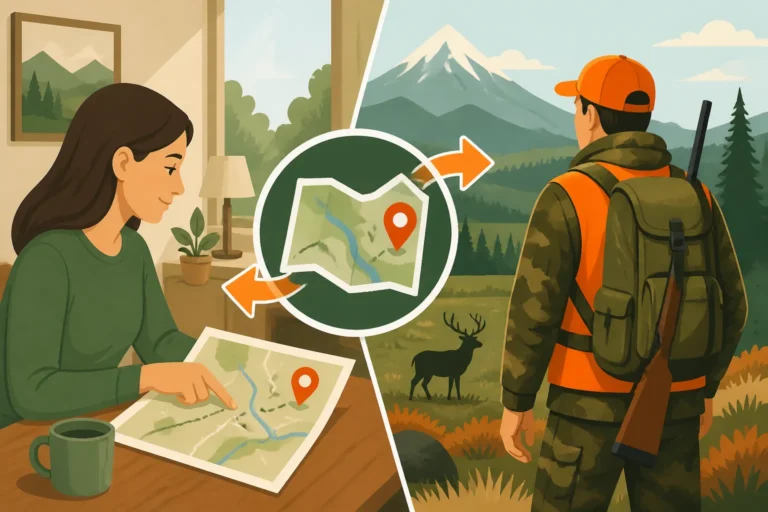
Before you ever put boots on the ground, a significant portion of your scouting can and should happen from the comfort of your home, utilizing various digital mapping tools. The goal here is to narrow down vast tracts of public land into manageable, high-potential areas. Start by identifying the general zones where elk reside during the summer and early fall. Look for areas that offer a combination of essential habitat components: water, food, and cover.
Satellite imagery, like what you find on platforms such as GoHunt's mapping system, is invaluable for this. You can identify potential bedding areas, often dense timber stands on north-facing slopes that offer shade and thermal protection from the August sun. Look for natural travel corridors, such as saddles, benches, and ridge lines that connect feeding areas (like clearcuts, meadows, or recent burns) to bedding cover. Water sources are paramount in the early season, so mark every seep, spring, creek, and pond you can find on the map. Old logging roads and trails, even if overgrown, can indicate past human activity or potential access points that double as game trails. Identifying recent burns is also a smart play, as these areas often produce a flush of nutritious new growth that elk crave, drawing them in like a magnet. The frustration of staring at a seemingly endless green expanse on a map can be real, but by systematically breaking it down, focusing on these key features, you can develop a solid plan for your actual ground scouting. This initial work lets you virtually walk the landscape, saving precious time and effort later on.
Boots-on-the-Ground Scouting in August
Once you've identified promising areas through digital reconnaissance, it's time to hit the woods. Boots-on-the-ground scouting in August is about confirming your digital findings and gathering real-time intelligence. This isn't just a leisurely hike; it's an active investigation. Focus on the areas you flagged on your map: potential bedding, feeding, and watering sites. Pay close attention to subtle changes in terrain, vegetation, and micro-features that might not be apparent from satellite view.
Look for fresh sign: tracks, droppings, rubs, and wallows. Early season rubs will typically be smaller and on younger trees than the aggressive, bark-shredding rubs you'll see during the rut. Fresh wallows, especially in shaded, damp areas, are a huge indicator of current activity. Look for tracks entering and exiting these wallows. Take note of the freshness of droppings – firm and dark pellets are recent, while old, dried, or disintegrated piles are from weeks or months past. The idea is to find concentrated, fresh sign, which tells you elk are actively using this area now. It's also important to observe how elk might be using specific features. Do they cross a certain ridge at first light? Are they bedding in a specific timber pocket during the day? Understanding these patterns is key. Many hunters face the frustration of finding only old sign, or worse, no sign at all, after a long, hot hike, making them question their initial map-based assumptions. However, persistence here often pays off, revealing hidden pockets of elk activity that others overlook. For more on this, check out our guide on Public Land Scouting in Oregon Before the Draw Results.
Reading Sign for Elk Activity and Patterns
Interpreting the sign you find on the ground is an art form that develops with experience, but some fundamental principles apply universally. The freshness of the sign is paramount. Fresh tracks, with clear edges and no debris accumulation, tell you an elk was recently there. Droppings that are moist and unbroken mean the elk was there very recently. Old sign, while indicating elk presence at some point, doesn't necessarily mean they'll be there on opening day.
When you find rubs, note their size and height. Bigger rubs on larger trees often indicate a mature bull. Are the rubs fresh and sticky with sap, or are they dried and weathered? Fresh rubs, especially a concentration of them, indicate current or very recent bull activity. Wallows are another excellent indicator. A muddy, churned-up wallow with fresh tracks around it means an elk has been enjoying a cool, therapeutic mud bath very recently, often a big bull trying to cool down and get rid of bugs. Observe the direction of travel from tracks. Are they consistently moving from a certain bedding area towards a specific feeding ground? Identifying these patterns allows you to predict where and when elk will be in certain locations. For instance, if you find fresh tracks leading from a dense north-facing slope bedding area down to a creek bottom feeding area, you might anticipate an opportunity to intercept them during the early morning or late evening transition. The better you become at reading these subtle clues, the more accurately you can predict elk movements and set yourself up for a successful ambush.
Gear and Preparation for Oregon's Archery Conditions
Oregon's varied terrain and weather, especially during the August and September archery seasons, demand meticulous attention to your gear. From the high desert plateaus of Eastern Oregon to the dense, wet rainforests of the Coast Range, conditions can swing wildly. Being prepared for everything from scorching heat to sudden downpours is not just about comfort; it's about safety and effectiveness.
Bow Setup for Wet Oregon Timber and Long Shots
Your bow setup is your primary tool, and it needs to be absolutely dialed in for the conditions you'll encounter. For Oregon's often-wet timber, moisture resistance is key. Ensure your sights, rest, and string are well-maintained and can withstand damp conditions. A good quality string wax is your friend here to prevent stretching and fraying. While shots in dense timber are often close, archery hunting also presents scenarios for longer shots in more open areas, like clearcuts or across canyons. This means your bow needs to be accurately tuned for both speed and precision.
Broadhead selection is a critical decision. Many seasoned Oregon hunters favor fixed-blade broadheads for their reliability and penetration, especially when encountering the heavy bone structure of a bull elk. Mechanical broadheads can be effective, but ensure they are robust enough to handle tough hide and bone and deploy consistently without issues. Practice with your chosen broadheads well in advance to ensure they fly true with your field points. Your draw weight should be manageable for repeated practice and holding at full draw, but also powerful enough to deliver sufficient kinetic energy for a clean pass-through on a large animal. Having an Archery Setup for Wet Oregon Timber article might be helpful, as would our guide on Broadhead Choice for Heavy Bone. Remember, a bow is only as good as the shooter behind it, so consistent practice is more important than any specific brand or model.
Essential Clothing and Footwear for Diverse Weather
The weather in Oregon during August and September can be a real mixed bag. You might start your day with frosty temperatures, experience a warm, sunny afternoon, and then get hit with a sudden, soaking rain shower by evening. Layering is not just a suggestion; it's a necessity. Start with a moisture-wicking base layer to manage sweat, add a warm mid-layer for insulation, and top it with a waterproof and windproof outer shell. Look for quiet fabrics that won't rustle when you're drawing your bow.
Footwear is equally important. You'll be covering miles over uneven, often steep, and potentially wet terrain. A good pair of waterproof, supportive hiking boots with excellent traction is non-negotiable. Break them in well before the season to avoid blisters. Consider carrying an extra pair of socks in your pack to keep your feet dry, especially after crossing a creek or navigating dew-soaked brush. The frustration of cold, wet feet or the pain of blisters can quickly ruin a hunt, pulling your focus away from the elk. Companies like Kenetrek or Schnee's offer excellent options specifically designed for rugged mountain hunting, providing the durability and comfort you need.
Backpack, Optics, and Camp Considerations
Beyond your bow and clothes, a well-equipped pack is crucial. For day hunts, a comfortable 30-45 liter pack is usually sufficient to carry water, snacks, extra layers, a first-aid kit, and game bags. If you're planning overnight trips or packing out an animal, a larger pack frame or an expedition-style pack in the 65-80 liter range will be necessary. Don't skimp on quality here; a poorly fitting or uncomfortable pack can lead to serious fatigue and even injury.
Optics are your eyes in the woods. A good pair of 10×42 binoculars will help you pick apart distant timber edges or open slopes. A reliable rangefinder is absolutely essential for archery hunting to accurately gauge distances and make ethical shots, especially in steep or broken terrain where distances can be deceiving. Check out our detailed guide on Rangefinders in Steep Country for more insights. As for camp, if you're planning on multiple days in the backcountry, a lightweight, durable tent or bivy sack, along with a warm sleeping bag and pad, are necessary. Always remember Leave No Trace principles; pack out everything you pack in, and leave your campsite cleaner than you found it. Finding water sources on your digital maps and confirming them during scouting will also help you plan your camp locations, reducing the amount of water you need to carry.
Early Season Tactics: Adjusting to August Elk
Hunting elk in August requires a complete shift in mindset from the roaring, rut-crazed bulls of September. The heat, the lack of vocalization, and the elk's focus on food and cover mean you need to adapt your strategies. It's less about aggressive calling and more about patient, stealthy hunting.
Hunting Water Sources and Thermal Cover
In the heat of late August, elk, like all animals, need water. They also seek dense, cool thermal cover to escape the sun and insects during the day. This makes water sources, particularly springs, seeps, and cool creek bottoms, absolute magnets for elk. Identify these locations on your map and focus your efforts around them. Elk will often drink at first light and last light, but they may also frequent water sources throughout the day, especially if they are heavily timbered and shaded.
Focus your hunting efforts during the cooler parts of the day: early mornings and late evenings. During the peak heat of midday, elk will be bedded in the thickest, shadiest cover they can find – often on north-facing slopes, in dense conifer stands, or in deep canyons. Approaching these bedding areas requires extreme stealth and an understanding of thermals. In the morning, thermals typically rise, carrying your scent uphill. In the evening, they fall, carrying your scent downhill. Use these air currents to your advantage to make a silent, undetected approach into their sanctuaries. The frustration of encountering seemingly nocturnal elk, only to find fresh sign from their nighttime activities, is common. By focusing on water and using thermals, you increase your odds of intercepting them during legal hunting hours.
Spot-and-Stalk in Open Country and Burns
While much of Oregon's elk country is dense timber, there are also opportunities for spot-and-stalk hunting, especially in Eastern Oregon's more open sage country or in areas with recent clearcuts and burns. Recent wildfires, as devastating as they are, often result in a flush of highly nutritious new forage in the subsequent years, attracting elk. Utilize your binoculars and spotting scope from a distance at first light or last light to pick apart these open areas, looking for feeding elk. Tools like GoHunt's map overlays can highlight recent burn areas, making your digital scouting even more efficient.
Once you spot elk, the real challenge begins: planning and executing a silent, scent-free stalk. This often means long detours, crawling on hands and knees, and using every available piece of cover. The wind is your absolute master; if it shifts and carries your scent to the elk, the stalk is over. This tactic demands extreme patience, physical fitness, and meticulous attention to detail. One wrong step, one broken twig, or one gust of wind in the wrong direction can send a herd scattering. It can be incredibly frustrating to spend hours on a stalk only to have it blow up at the last minute, but the reward of a successful spot-and-stalk on a wary elk is immense. For strategies on locating these areas, refer to our article on E-Scouting Burns and Clearcuts From Satellite.
Passive Calling and Low-Pressure Strategies
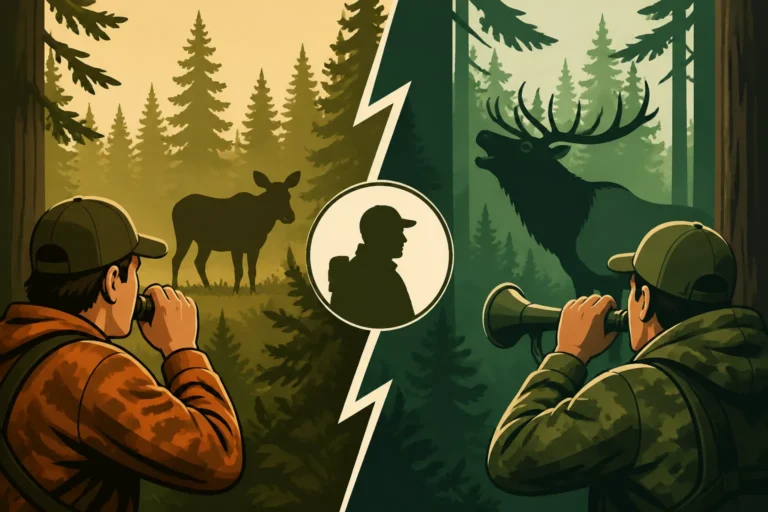
In August, aggressive bugling or cow calling will usually do more harm than good. Bulls are not yet interested in fighting or breeding, and loud calls will likely just spook them. Instead, adopt a passive, low-pressure approach. Soft cow chirps, mews, and quiet contact calls can be used to locate elk or pique their curiosity if they are close. Think of it as mimicking the subtle sounds of a contented herd, rather than challenging a dominant bull.
Still-hunting is another highly effective early season tactic. This involves moving incredibly slowly and deliberately through dense timber, pausing frequently to listen, look, and scan for any sign of elk. Take one or two steps, then stop for several minutes, allowing your eyes to adjust and your ears to pick up faint sounds. Focus on fresh sign and likely bedding areas. Many elk are busted by hunters who move too quickly and aren't paying attention. This method requires immense patience, but it allows you to cover ground silently and discover elk in their sanctuaries. The goal is to get within bow range without them ever knowing you're there. While more active calling becomes crucial later, knowing when to adopt a quiet approach can be a game-changer. Our guide on Cow Calling Versus Bugling in Heavy Timber offers more nuanced insights into when each strategy is most effective.
Rut Tactics: Capitalizing on September Vocalizations
As August fades into September, the elk woods in Oregon undergo a dramatic transformation. The subtle hints of elk activity give way to a cacophony of bugles, mews, and raking, signaling the peak of the breeding season. This is the time many archery hunters dream of, but it also comes with its own set of complexities and demands a different approach.
Locating Bulls with Bugles and Cow Calls
The primary shift in September is that bulls become vocal. This is your cue to change tactics. Now, instead of passively searching for silent animals, you can actively locate them using their own language. Start your mornings and evenings by listening. Bulls will often bugle from their bedding areas at first light or while moving to feed. Imitate a cow or a young bull with some soft mews or a challenge bugle to elicit a response. Don't be afraid to move and call from different locations until you get an answer.
Once you hear a bull, don't just charge in. Listen carefully to the cadence and tone of his bugles. Is he a lone satellite bull, or does he sound like a confident herd bull with cows? Listen for other elk sounds: mews from cows, chirps from calves, or the sounds of branches breaking as elk move through the timber. These secondary sounds can tell you a lot about the size and composition of the herd. Understanding the difference between a locating bugle, a challenging bugle, and a social bugle is key. This information will help you formulate your approach. Sometimes the most frustrating part is hearing elk all around you, but not being able to pinpoint the specific bull you want to target, or simply not being able to get close enough through the dense timber. Our article, Calling Bull Elk During Oregon's Archery Season, delves deeper into effective communication strategies.
Aggressive Calling Strategies for Herd Bulls
When you've located a herd bull with cows, or a bull that seems willing to interact, it's time to consider more aggressive calling. A herd bull's primary goal during the rut is to keep his cows gathered and fend off any intruders. A well-timed, challenging bugle, especially when combined with some raking of a tree with a branch or your bow, can be incredibly effective at drawing him in. He perceives you as a rival attempting to steal his cows, and his instinct is to investigate and defend his territory.
Setting up properly is critical for this strategy. The caller should position themselves behind the shooter, perhaps 30-50 yards back, to draw the bull's attention away from the bowhunter. When the bull comes in, he will typically focus on the source of the calling, allowing the shooter a better chance at a broadside or quartering-away shot. Pay attention to wind direction and topography. A bull will often circle downwind to get your scent before committing, so try to anticipate his approach. There’s a fine line between an aggressive challenge that brings a bull charging in and one that spooks him into disappearing. Learning when to push hard and when to back off, perhaps switching to more submissive cow calls, is an art that comes with experience. For advanced strategies, consider reviewing Setting Up a Caller and Shooter on a Bull.
Dealing with Satellite Bulls and Cows
While the herd bull is often the primary target, you'll inevitably encounter satellite bulls and, perhaps more often, the watchful eyes and noses of the cows. Satellite bulls are often younger, less dominant males that hang on the fringes of a breeding herd, hoping to cut in and breed a cow when the dominant bull is occupied. They can be a blessing or a curse. Sometimes, they will respond aggressively to calls, coming in first and giving you an opportunity. Other times, they can simply alert the main herd to your presence.
Cows are perhaps the most challenging aspect of rut hunting. They are incredibly wary, have excellent eyesight, and their primary role is to keep the herd safe. If a cow spots or smells you, she will usually blow out, taking the entire herd with her. The key is to be extremely patient and stealthy when approaching a herd. Use terrain and vegetation to break up your outline. If cows are between you and the bull, you may need to wait for them to move, or make a wide, silent detour to get around them. Sometimes, a soft, reassuring cow call can calm nervous cows, but it's a gamble. The frustration of getting busted by a seemingly innocuous cow, after hours of meticulous stalking and calling, is a common and disheartening experience in archery elk hunting.
After the Shot: Recovery and Meat Care
The moment of truth—the shot—is only the beginning of another critical phase of the hunt. Ethical hunting dictates that you do everything in your power to recover the animal quickly and ensure the meat is properly cared for. This is especially vital in Oregon's early seasons, where warm temperatures can quickly lead to spoilage.
Tracking and Recovery in Challenging Terrain
After you release an arrow, the first step is almost always to wait. Resist the urge to immediately pursue the animal. Give the elk time to bed down and expire. The exact waiting period depends on your shot placement. For a suspected heart/lung shot, 30-60 minutes is usually sufficient, but for a liver shot, waiting 4-6 hours, or even overnight if conditions allow, is prudent. For a gut shot, a minimum of 8-12 hours, ideally overnight, is crucial to allow the animal to stiffen and reduce its ability to travel far. Pushing a marginally hit elk too soon will often result in a much longer, more difficult, or even lost recovery.
Once you begin tracking, move slowly and methodically. Look for blood, broken branches, disturbed leaves, and tracks. Mark your last known blood or sign with flagging tape or your hat so you can easily return if you lose the trail. If the blood trail peters out, expand your search in circles or grids around the last sign. Look in likely bedding areas—dense thickets, under downed logs, or in creek bottoms. Tracking in Oregon's dense rainforest understory, filled with sword fern and salal, can be incredibly challenging, even with a good blood trail. If darkness falls and you haven't recovered the animal, and legal night tracking allows (check regulations for Using a Tracking Light Legally at Night in Oregon), consider bringing in more help. Our guide on Blood Trailing in Oregon Rainforest Understory provides in-depth tips for these situations.
Field Dressing and Quartering in Warm Weather
Once you've located your elk, time is of the essence, especially in warm August and early September weather. Getting the hide off and the meat cooled as quickly as possible is paramount to prevent spoilage. The "gutless method" is an excellent technique for archery hunters, particularly those hunting alone or in steep, remote terrain. This method involves skinning and quartering the elk without removing the internal organs, which speeds up the process and reduces the mess.
Start by skinning one side of the elk down to the spine, then remove the front shoulder, hindquarter, and backstrap. Repeat on the other side. You'll then have access to the tenderloins from inside the cavity. The gutless method significantly reduces the weight you need to handle and speeds up the initial cooling process by exposing the meat to air. Hang the quarters if possible, even for a short time, to allow them to cool. Keep the meat as clean as possible, wiping away any dirt or debris. Our detailed articles on Field Dressing an Elk in Warm Early-Season Weather and Gutless Method on a Bull Elk offer step-by-step instructions for these critical tasks.
Packing Out and Meat Preservation
With an elk on the ground, the real work of packing begins. A mature bull can yield several hundred pounds of meat, bones, and antlers, requiring multiple trips, even with a strong partner. Quality game bags are essential to protect the meat from dirt, insects, and flies. Hang the bagged quarters in the shade, if possible, allowing air to circulate around them. This "air cooling" is a vital first step in preservation.
Plan your packing strategy carefully. If you're alone, you might need to carry one hindquarter, a front shoulder, and a backstrap on each trip, then return for the other side and the head/antlers. A sturdy pack frame is invaluable for distributing heavy loads comfortably. Remember that hiking out in the dark with a heavy pack is physically demanding and requires caution. Once you get the meat back to your vehicle, it needs to be immediately put on ice in quality coolers. Even a short drive in warm weather can compromise meat quality if not properly managed. Get the meat to a processor or into your home freezer as quickly as possible. For more insights on this Herculean task, explore our guides on Packing Out an Elk in Oregon's Wilderness Units, Getting Meat Out Before It Spoils, and Cooling Meat in a Truck Bed.
Common Challenges and Troubleshooting
Oregon's archery elk seasons, while exciting, are rarely straightforward. Hunters routinely face a range of challenges, from crowded public lands to unpredictable weather and fickle elk behavior. Learning to anticipate and adapt to these hurdles is a hallmark of a successful hunter.
Navigating Other Hunters and Pressure
One of the most significant frustrations during Oregon's general archery season, especially on public land, is dealing with other hunters. Popular trailheads can be full, and you might hear bugles not from elk, but from other hunters. When elk are pressured, they quickly become silent and move into the thickest, nastiest cover they can find, sometimes becoming almost entirely nocturnal.
The key to success in pressured areas is often to go where others won't. This means either hiking farther, climbing higher, or dropping into steeper, more inaccessible terrain. Use your digital mapping tools, like those found on GoHunt, to identify remote drainages, deep canyons, or dense timber pockets that are a significant distance from roads and trails. These areas often hold unpressured elk that have learned to avoid human contact. Be prepared to put in the miles and effort. If you find your primary hunting spot is crowded, don't be afraid to change your plans and explore a backup area. Adapting to the presence of other hunters, rather than letting it spoil your hunt, is a crucial skill.
Weather Extremes: Heat, Rain, and Wind
Oregon's August and September weather can swing wildly, presenting its own set of challenges. Early August often brings oppressive heat, which can quickly lead to dehydration and fatigue. During these times, focus your hunting efforts during the coolest parts of the day—dawn and dusk—and prioritize staying hydrated. Midday is best spent resting, scouting new areas, or making plans.
As September progresses, sudden rain showers are common, especially in Western Oregon. Getting soaked and cold can be miserable and even dangerous in the backcountry. Invest in good quality, quiet rain gear that actually stays dry. Our guide on Rain Gear That Actually Stays Dry offers excellent recommendations. Wind, while less talked about, also poses challenges. Strong winds can make it incredibly difficult to hear elk bugles or even the rustle of leaves that signals approaching animals. It also makes scent control more challenging, as wind swirls can carry your scent in unpredictable directions. In windy conditions, focus on still-hunting into the wind through thick cover, or find sheltered areas where elk might be seeking refuge from the gusts.
Understanding Elk Behavior Shifts
Elk behavior, especially during the rut, is not a constant. While bulls may be bugling aggressively one day, they can go completely silent the next. This "lockdown" phase, where a dominant bull has gathered his cows and is focused solely on breeding, often results in fewer vocalizations as he doesn't need to challenge other bulls. This can be incredibly frustrating for hunters relying on calling.
When elk go quiet, you need to adjust back to early season tactics: focus on finding fresh sign, still-hunting, and covering ground silently. Elk are also highly adaptable to changes in feed and water availability. A sudden rain can create new water sources, altering their patterns. Learning to read the subtle cues of elk behavior—the intensity of their bugles, the patterns of their movement, their response (or lack thereof) to your calls—is a continuous learning process. Every hunt is a classroom, and even "unsuccessful" encounters provide valuable lessons in understanding these magnificent animals.
| Feature / Tactic | August Early Season | September Peak Rut |
|---|---|---|
| Primary Challenge | Heat, silent elk, scattered patterns | Hunter pressure, fickle rut behavior |
| Elk Behavior | Bachelor groups, focused on food/water, minimal calls | Breeding herds, dominant bulls vocal, aggressive |
| Locating Strategy | Digital scouting, boots-on-ground for sign, water sources | Listening for bugles/mews, active calling |
| Calling Strategy | Passive cow chirps, soft mews, locator calls only | Aggressive bugling, challenging calls, raking |
| Hunting Focus | Water sources, dense thermal cover, transition zones | Herd interaction points, bedding/feeding transition |
| Movement Speed | Slow, methodical still-hunting, glassing | Deliberate approaches, strategic positioning |
| Gear Priority | Hydration, sturdy boots, scent control | Calling tools, keen optics, layered clothing |
Disclaimer
The information provided in this guide is for informational purposes only and is not a substitute for official Oregon Department of Fish and Wildlife (ODFW) regulations. Hunting regulations, season dates, and unit boundaries can change annually. It is the hunter's responsibility to consult the most current ODFW Big Game Regulations pamphlet and all applicable laws before engaging in any hunting activities. Always prioritize safety, ethical hunting practices, and respect for wildlife and public lands.