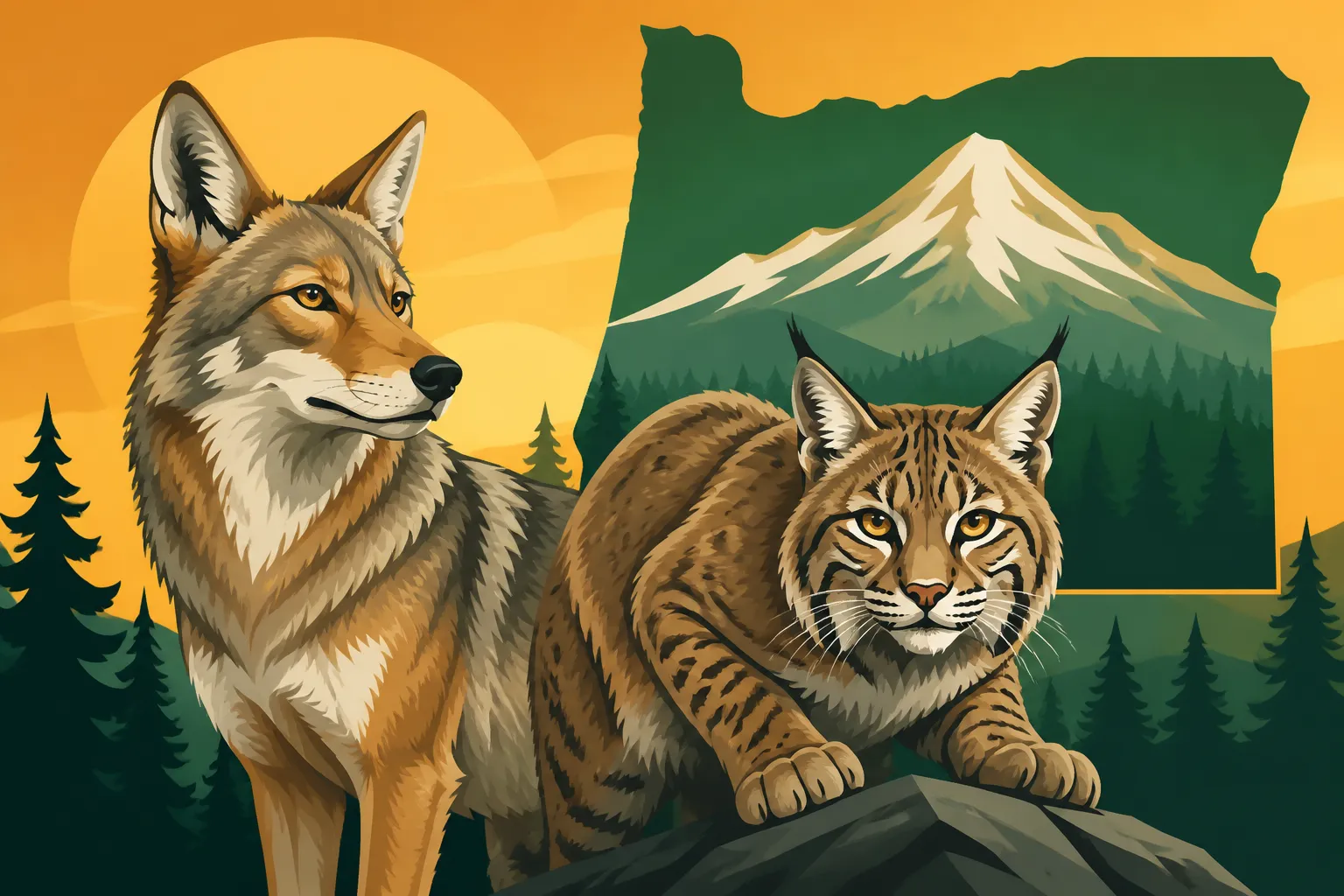
Coyotes and Bobcats as Oregon Predators
When you're out in Oregon's vast, beautiful landscapes, whether you're chasing elk through the timber or glassing for mule deer on the high desert, you're always sharing the woods with its resident predators. Coyotes and bobcats are a huge part of the natural balance here, but for hunters, they can sometimes feel like a mystery, leaving you wondering about their impact on the game animals you pursue. This guide is all about pulling back the curtain on these often-elusive hunters, helping you understand their roles, how to identify them, and even what opportunities exist if you decide to try your hand at predator hunting.
The Role of Coyotes in Oregon's Ecosystem
Coyotes are one of those animals that people have very strong opinions about, and for good reason. They are incredibly adaptable, intelligent, and definitely play a significant role in every Oregon ecosystem they inhabit. Understanding them isn't just about managing populations; it's about appreciating their place in the wild.
Coyote Distribution and Habitat Preferences
You'd be hard-pressed to find a corner of Oregon where coyotes don't roam. From the dense, wet forests of the Coast Range to the vast sagebrush flats of Eastern Oregon, these canids have made themselves at home almost everywhere. They're incredibly resilient and aren't shy about living close to human settlements, often thriving on the fringes of farms, ranches, and even suburban areas. This adaptability is precisely what makes them such a successful species.
In Western Oregon, you'll often find them in clearcuts, along timber edges, and in agricultural fields, using the varied cover to their advantage. They blend into the landscape, often moving through drainages and old logging roads. Over in Eastern Oregon, they're common across the high desert, in juniper draws, and along rimrock, where they can spot prey from a distance. Their ability to switch between open country and thick cover makes them formidable survivors, always finding a niche to exploit. This widespread presence means that wherever you are hunting deer or elk, there's a good chance coyotes are nearby.
Coyote Diet and Hunting Strategies
Coyotes are opportunistic omnivores, meaning they'll eat just about anything they can get their paws on. Their diet is incredibly varied, reflecting the seasonal availability of food. Small mammals like voles, mice, and rabbits are staples, especially in winter when other food sources are scarce. They'll also readily consume birds, insects, and even fruits and berries when they're ripe. On the larger side, they are known to prey on fawns and calves, particularly during spring when these young animals are most vulnerable. They're not above scavenging on carrion either, cleaning up after larger predators or roadkill.
Their hunting strategies are as diverse as their diet. Coyotes are often solitary hunters, especially when targeting smaller prey. However, they're also known to hunt in pairs or small family groups, particularly when going after larger game like a stressed deer or a young elk calf. They use a combination of stealth, speed, and endurance. In open country, they might stalk and chase, while in thicker cover, they rely on ambushes. Calling is a popular and effective method for hunters trying to bring them in, especially Coyote Calling in Open Sage Country. They are keenly attuned to sounds, making them responsive to distress calls or territorial howls.
Impact on Game Species and Livestock
The presence of coyotes undoubtedly impacts other wildlife, particularly big game populations. While they primarily target smaller animals, their predation on fawns and calves can be significant, especially in areas with declining deer or elk numbers. They often exert a constant pressure, culling the weak or sick, which, in a natural sense, can be seen as beneficial for the overall health of a herd. However, when game populations are already struggling due to habitat loss or other factors, coyote predation can exacerbate the problem.
Beyond wild game, coyotes are a major concern for ranchers and farmers. They readily prey on lambs, calves, and poultry, leading to economic losses for livestock producers. This is why coyote management, often through hunting or trapping, is a common practice in agricultural areas. It's a complex balancing act, trying to maintain healthy ecosystems while also protecting livelihoods. Understanding this dynamic is key to appreciating why predator control can be an important part of broader wildlife management efforts in Oregon.
Unmasking Oregon's Bobcats: Elusive Hunters of the Undergrowth
If coyotes are the adaptable generalists of Oregon's predator scene, then bobcats are the secretive specialists. These stunning felines are a true testament to nature's stealth and efficiency, but they're far less commonly encountered than their canine counterparts.
Bobcat Range and Preferred Habitats
Bobcats, much like coyotes, have a wide distribution across Oregon, but their preferred habitats lean heavily towards areas with dense cover and rugged terrain. You'll find them in the deep timber of the Coast Range, the broken canyons and rimrock of Eastern Oregon, and throughout the Cascades. They love a mosaic of dense brush, rocky outcrops, and timbered areas that provide ample concealment for stalking prey and safe denning sites. While they can tolerate some human presence, they generally prefer wilder, less disturbed landscapes.
Unlike coyotes, you're far less likely to see a bobcat casually strolling across an open field in daylight. They are creatures of shadow and surprise, masters of utilizing every bit of cover the landscape offers. This makes them incredibly challenging to spot, let alone hunt. Knowing their preferred haunts – creek bottoms, dense stands of young timber, and rocky ledges – is critical whether you're a hunter hoping to encounter one or simply an outdoor enthusiast looking to understand their world. GoHunt provides excellent satellite imagery and public land maps that can help you identify these types of rugged, brushy areas where bobcats thrive.
Bobcat Hunting Techniques and Prey Base
Bobcats are pure carnivores, and their diet primarily consists of small to medium-sized mammals. Rabbits and hares are their bread and butter, especially snowshoe hares in timbered areas and jackrabbits in more open, sagebrush country. They also regularly prey on rodents, squirrels, and birds. Occasionally, they'll take a young or sick deer fawn, particularly during the spring fawning season, but this is less common than with coyotes. Their sleek, muscular bodies are perfectly designed for explosive bursts of speed and incredible agility, making them supreme ambush predators.
Their hunting technique is a masterclass in stealth. A bobcat will patiently stalk its prey, using every bit of cover to remain unseen, before launching a lightning-fast attack. They have excellent eyesight and hearing, which they use to pinpoint the slightest movement or sound. Unlike coyotes, which can sometimes work together, bobcats are strictly solitary hunters. Calling can be effective for bobcats too, often using distress calls that mimic a rabbit or bird, which can pique their curiosity enough to bring them out of cover. When considering techniques like Cougar Calling Techniques That Work in Oregon, many of the same principles of patience and stealth apply when targeting bobcats, though the sounds themselves differ.
How Bobcats Influence Local Game Populations
While bobcats are undeniably predators, their impact on major big game populations like deer and elk is generally less significant than that of coyotes or larger predators like cougars. Their primary prey base is smaller animals, meaning their role is more about regulating those populations. They are crucial for keeping rodent and rabbit numbers in check, which in turn can benefit vegetation health and reduce competition for forage among larger herbivores.
That's not to say they have no impact. A bobcat taking a deer fawn is a natural event, and in localized areas, particularly during fawning season, their presence can add to the suite of challenges facing young deer. However, they typically don't cause widespread declines in big game. Instead, they act as a vital part of the natural predator-prey balance, contributing to a healthy and resilient ecosystem by ensuring the fitness of their prey species. Understanding this ecological role helps us appreciate why bobcat populations are carefully monitored and managed in Oregon.
Distinguishing Between Coyotes and Bobcats in the Field
Being able to tell the difference between a coyote and a bobcat, whether you glimpse one through the trees or find their sign, is a valuable skill for any Oregon hunter or outdoors enthusiast. They occupy similar niches but are distinctly different animals.
Physical Characteristics and Identification Cues
At first glance, a coyote might be mistaken for a domestic dog, while a bobcat often looks like a larger, wild version of a house cat. However, there are key distinctions.
-
Coyotes:
- Size: Generally medium-sized, similar to a German Shepherd, but much leaner.
- Color: Typically grayish-brown, often with rusty or buff coloration on the legs, ears, and belly.
- Tail: Long, bushy, and carried low, often with a black tip.
- Ears: Erect, pointed, and proportionally large for their head.
- Muzzle: Long and slender.
- Body: Lean and lanky, built for endurance and speed.
-
Bobcats:
- Size: Significantly smaller and stockier than a coyote, more akin to a medium-sized dog, but with a powerful build.
- Color: Variable, from tawny brown to reddish-brown, with distinctive dark spots or streaks, particularly on the legs and belly. These spots help them camouflage in dappled light.
- Tail: Short and "bobbed," usually 4-7 inches long, with a black tip on the upper side and white underneath. This is their most distinguishing feature.
- Ears: Tufted, black on the back, and often with small, short ear tufts.
- Muzzle: Shorter and broader than a coyote's, with prominent cheek ruffs that frame their face.
- Body: Muscular and compact, built for explosive power and agility.
Observing these features, even quickly, can help you identify which elusive predator you're looking at.
Tracks, Scat, and Other Field Sign
Even if you don't see the animal itself, their sign tells a story. Learning to read tracks and scat can enhance your scouting efforts, whether you're trying to figure out where Reading Clearcut Edges for Blacktail Bucks might be bedding or if a predator is working the area.
-
Coyote Tracks:
- Shape: More oval than a domestic dog's track, with a clear X-pattern visible between the toe pads and heel pad.
- Toes: Four toes, usually tightly together, with visible claw marks.
- Size: Typically 2-3 inches long.
- Pattern: Often found in a straight line, indicating purposeful movement.
-
Bobcat Tracks:
- Shape: Rounder than a coyote's track, with a distinct leading toe.
- Toes: Four toes, but claw marks are rarely visible as bobcats can retract their claws like a domestic cat.
- Size: Smaller than a coyote's, usually 1.5-2 inches long.
- Pattern: Can be erratic, indicating a stalk, or a direct line in snow.
-
Scat (Feces):
- Coyote: Usually rope-like, often containing hair, bone fragments, and sometimes berries or other plant matter. Ends are often tapered.
- Bobcat: Segmented, blunt-ended, and almost exclusively contains hair and bone fragments from their prey. Often covered with dirt or leaves, as cats try to bury their waste.
Other signs include scratch marks on trees (bobcats), or trails regularly used (coyotes). Learning to identify Identifying Cougar Tracks From Dog Tracks can also give you context, as cougar tracks are significantly larger than a bobcat's, but also show no claw marks.
Behavioral Differences and Activity Patterns
Beyond physical traits, observing their behavior can give you clues.
-
Coyotes:
- Activity: Often active during dawn, dusk, and night, but not uncommon to see them moving during the day, especially in less disturbed areas.
- Vocalization: Known for their distinctive howls, yips, and barks, especially around sunrise and sunset. These sounds are often territorial or communicative.
- Social Structure: Can be seen alone, in pairs, or in small family groups.
- Temperament: Generally wary of humans, but less secretive than bobcats.
-
Bobcats:
- Activity: Primarily nocturnal or crepuscular (active at dawn and dusk). Seeing one in broad daylight is a rare treat.
- Vocalization: Much quieter than coyotes. They might emit growls, hisses, or subtle meows, but rarely howl.
- Social Structure: Almost exclusively solitary, except for mothers with kittens.
- Temperament: Extremely shy and secretive, masters of concealment. If you see one, it's usually just for a fleeting moment before it vanishes.
Understanding these differences helps paint a clearer picture of these animals and how they interact with the Oregon landscape. For hunters using resources like GoHunt, understanding these behaviors can inform where to focus scouting efforts, whether it's setting up a trail camera or planning an approach.
Managing Predator Populations in Oregon
Managing predator populations in Oregon is a nuanced and often debated topic. For hunters, it offers unique challenges and opportunities, contributing to overall wildlife health and sometimes easing pressure on big game herds.
Hunting Regulations and Opportunities for Coyotes
In Oregon, coyotes are classified as unprotected furbearers, which means hunting them is open year-round, with no bag limits and no closed seasons on private land, given landowner permission. On public lands, general hunting regulations apply, but the open season remains. This provides ample opportunity for those interested in predator hunting. You generally need a valid hunting license, but a specific coyote tag isn't required. This liberal approach recognizes their wide distribution and impact, particularly on livestock.
Hunting coyotes can be a thrilling pursuit. Many hunters enjoy the challenge of calling them in, using a variety of vocalizations like distress calls, pup yips, or even challenge howls. When considering Predator Calling for Coyotes in Eastern Oregon, the wide-open spaces and diverse terrain offer incredible opportunities. Electronic calls are also legal for coyotes in Oregon, which can be highly effective. For those looking to manage local coyote populations, perhaps to reduce pressure on a deer herd, or simply for the sport, Oregon provides a very accessible framework. Be sure to check local rules regarding night hunting, as Night Hunting Rules for Predators in Oregon can have specific requirements or prohibitions, even for unprotected species.
Bobcat Harvest and Management Considerations
Bobcats are managed differently than coyotes in Oregon. They are classified as furbearers and are managed under specific regulations, including limited seasons and bag limits, which change annually. This approach reflects their more secretive nature and lower population density compared to coyotes. Hunters pursuing bobcats need a Furbearer Trapping License or a Furbearer Hunting License. The season is generally restricted to certain months, often in fall and winter when their pelts are prime.
Successful bobcat hunting often requires significant stealth and knowledge of their habits. Calling can be very effective, typically using small mammal distress calls. Unlike coyotes, you're looking for a much more patient, deliberate approach, often waiting for longer periods after a call due to their cautious nature. Understanding their Cougar Territory Size and Movement can also provide insights, as bobcats, while smaller, share a similar need for dense cover and will avoid open areas. Always check the current Oregon Department of Fish and Wildlife (ODFW) regulations pamphlet for the most up-to-date season dates, bag limits, and licensing requirements for bobcats, as these can vary year to year based on population assessments.
Understanding the Broader Predator-Prey Balance
Both coyotes and bobcats are integral components of Oregon's predator-prey dynamics. While hunters often focus on their impact on deer and elk, their broader ecological role is crucial for ecosystem health. Predators help regulate prey populations, preventing overgrazing, controlling disease spread by removing weaker individuals, and driving natural selection. For example, understanding Elk Calf Survival and Predation in Oregon involves acknowledging the role of all predators, not just the largest ones.
When considering the overall health of game species, it's rarely just one factor at play. Habitat quality, severe weather events, disease, and the presence of all predators (including wolves and cougars, which are also part of the conversation on Oregon Wolf Pack Numbers and Oregon Cougar Population Estimates) contribute to population fluctuations. Management efforts, including regulated hunting, aim to maintain a healthy balance. Hunters play a vital role in this, not just as harvesters of game, but often as active participants in predator management, especially with species like coyotes that can proliferate rapidly. Tools like GoHunt can help hunters analyze data and potential trends when planning their hunts, offering insights into habitat and game distribution.
Tools and Strategies for Predator Hunters
Whether you're targeting coyotes or bobcats, going after predators requires a specific set of tools and a nuanced approach. It's a different game than big game hunting, often relying on patience, stealth, and a deep understanding of animal behavior.
Calling Techniques for Coyotes and Bobcats
Calling is arguably the most popular and effective strategy for hunting coyotes and bobcats. It relies on mimicking sounds that attract these curious and opportunistic predators.
-
Coyote Calling:
- Distress Calls: This is the bread and butter of coyote calling. Sounds like rabbit, fawn, or bird in distress can trigger a coyote's predatory instinct. Start with softer calls, then gradually increase volume.
- Pup Distress/Challenge Howls: In certain times of year, especially early fall, pup distress calls can bring in protective adult coyotes. Challenge howls can also pique the interest of dominant males looking to defend their territory.
- Setup: Always call into the wind so your scent doesn't carry to approaching predators. Choose a spot with good visibility downwind and a solid backdrop to break up your silhouette. Remain absolutely still. A sequence of 1-3 minutes of calling followed by 5-10 minutes of silence is a common strategy. It's often helpful to sit for at least 30 minutes, as coyotes can circle or approach cautiously.
- Electronic Calls and What Oregon Allows: Electronic calls are legal for coyotes in Oregon and can be extremely effective. They allow for a wider variety of sounds and often better volume control. Placing the call away from your position can draw the coyote's attention to the sound source rather than directly to you.
-
Bobcat Calling:
- Distress Calls: Similar to coyotes, small mammal distress calls (rabbit, mouse, bird) are highly effective. Bobcat calling often requires even more patience and subtle sounds.
- Setup: Stealth is paramount. Choose dense cover where you can hide completely, and ensure your scent is well-controlled. Bobcats are extremely cautious.
- Patience is Key: Call for short durations (30 seconds to 1 minute) and then remain silent for much longer periods, sometimes 10-15 minutes or more. Bobcats move slowly and deliberately, taking their time to approach. Don't be surprised if one appears silently and suddenly. A common mistake is to give up too soon.
Remember, consistency and practice are crucial for mastering predator calling. Your success will often hinge on understanding the specific environment and the animals' current behavior.
Scouting and Locating Predator Hotspots
Successful predator hunting, like any hunting, starts with good scouting. You need to know where these animals are spending their time.
- Habitat Analysis: Use mapping tools like GoHunt to identify areas with ideal predator habitat. Look for transitions between open country and dense cover, water sources, natural funnels, and areas with high concentrations of small game. In Western Oregon, focus on Blacktail Deer Habitat in Oregon Clearcuts, as these areas often provide good cover and prey for bobcats, and travel corridors for coyotes.
- Sign Reading: Look for tracks, scat, and other evidence of predator activity. Fresh sign near game trails, water crossings, or in dusty roads indicates recent presence. Learning to identify specific tracks is vital, as discussed earlier.
- Scouting With Trail Cameras on Oregon Public Land: Trail cameras can be invaluable for identifying predator travel routes, den sites, and activity patterns. Place them on game trails, pinch points, or near water sources. Pay attention to the time of day they are most active.
- Game Density: Predators follow their prey. If you find areas with high concentrations of rabbits, hares, or deer fawns, you've likely found a predator hotspot. Consider how predators might be impacting local populations, for instance, when assessing Mule Deer Fawn Recruitment Rates.
- E-Scouting: Before you even leave home, use digital mapping tools for E-Scouting Oregon Units With Satellite Imagery. Look for potential calling setups, access points, and terrain features that would appeal to coyotes or bobcats. Mark potential ambush points or travel corridors.
Combining these scouting techniques with effective calling strategies will significantly increase your chances of success and deepen your understanding of these fascinating and challenging Oregon predators.
| Feature | Coyote | Bobcat |
|---|---|---|
| Size | Medium (German Shepherd-like) | Small to Medium (larger house cat) |
| Tail | Long, bushy, black tip, carried low | Short "bobbed," black on top, white below |
| Coat Color | Grayish-brown, rusty/buff accents | Tawny to reddish-brown, distinct spots |
| Ear Shape | Pointed, erect, proportionally large | Tufted, black on back, small ear tufts |
| Muzzle | Long and slender | Shorter, broader, prominent cheek ruffs |
| Tracks | Oval, claw marks visible, X-pattern | Round, no claw marks (retracts), leading toe |
| Primary Prey | Small mammals, fawns, calves, carrion | Rabbits, hares, rodents, birds |
| Activity | Nocturnal/Crepuscular, sometimes diurnal | Primarily Nocturnal/Crepuscular |
| Vocalization | Howls, yips, barks | Hisses, growls, rarely heard meows |
| Social | Solitary, pairs, small family groups | Solitary |
Disclaimer
This article is for general informational purposes only and does not constitute professional advice. Laws, prices and regulations vary by location and change over time. Consult a qualified professional for guidance on your specific situation.