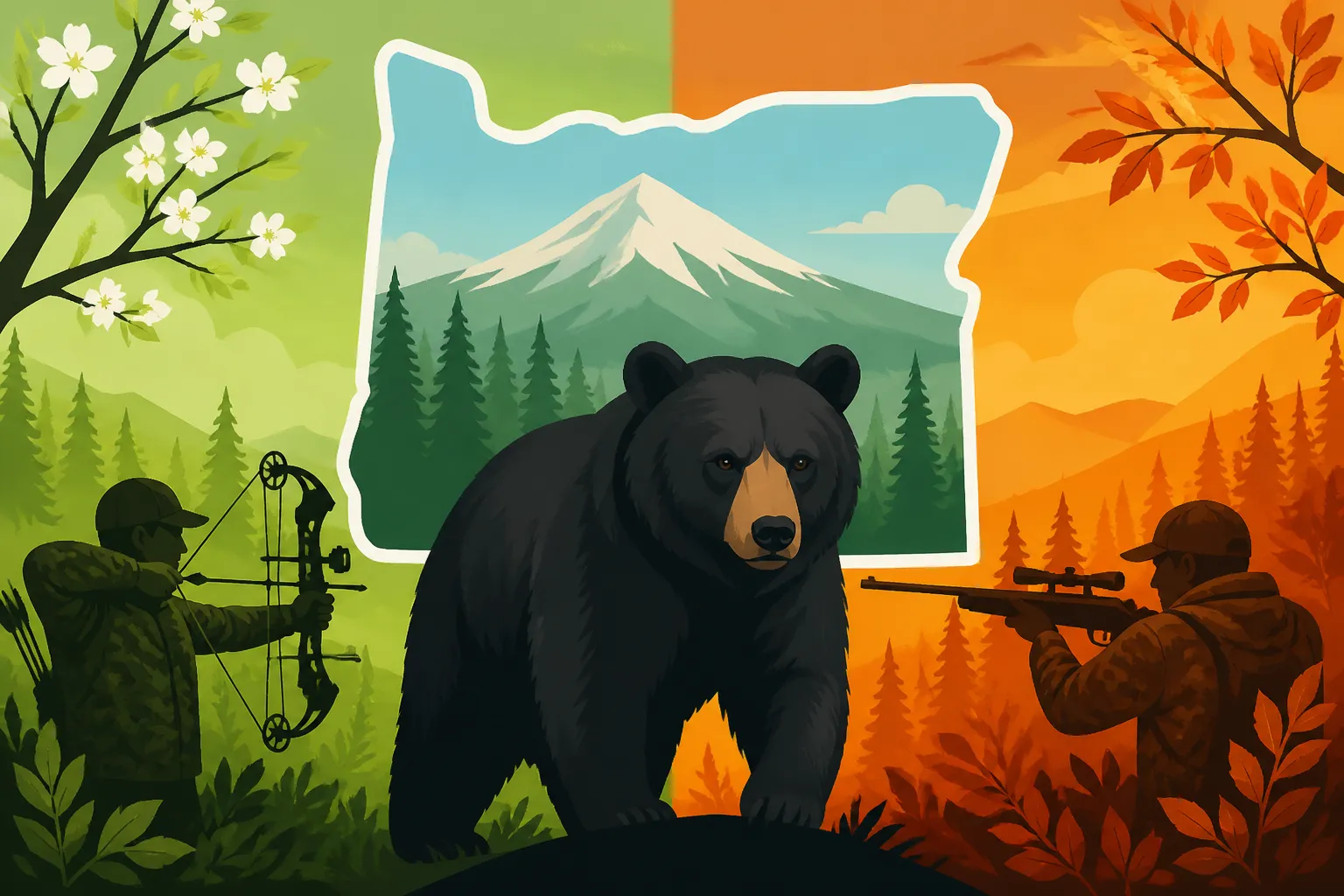
Oregon Spring and Fall Bear Seasons
Hunting black bear in Oregon can feel like a game of hide-and-seek with a ghost. These intelligent, often elusive animals roam vast and varied terrain, from dense coastal forests to rugged eastern mountains. Many hunters struggle to pinpoint exactly when and where to focus their efforts, especially given Oregon's unique regulations like the ban on baiting and hounds. This comprehensive guide aims to demystify Oregon's spring and fall bear seasons, offering detailed insights into tactics, regulations, and preparation to help you confidently pursue these incredible big game animals.
Understanding Oregon's Bear Hunting Philosophy and Management
Oregon manages its black bear population through a combination of general seasons and controlled hunts, with a strong emphasis on fair chase principles. Unlike many other states, you won't find bait piles or packs of hounds trailing bears through the timber here. This approach means hunters need to be more attuned to bear behavior, habitat, and natural food sources. It's a challenging but deeply rewarding way to hunt.
Population Dynamics and Conservation Efforts
Oregon's black bear population is robust and healthy, estimated to be around 25,000 to 35,000 individuals, a number that has been stable or slightly increasing in recent years. You'll find bears across nearly two-thirds of the state, from the Coast Range and the Cascades to the Blue Mountains in eastern Oregon. The Oregon Department of Fish and Wildlife (ODFW) actively monitors these populations, using data from harvest reports, sightings, and research to set tag numbers and season structures. They balance recreational hunting opportunities with the need to manage bear-human conflicts, particularly in areas where bears might interact with livestock or urban fringes. Understanding these Bear Population Estimates Across Oregon helps frame why and how seasons are structured.
This strong population allows for regulated hunting, which is a critical tool in wildlife management. Hunting helps maintain healthy population levels, reduces disease transmission, and can mitigate conflicts with agricultural interests or residential areas. It's not just about taking an animal; it's about being an active participant in conservation. The consistent harvest numbers over the years demonstrate that Oregon's management strategies are effective in sustaining a thriving bear population for both hunters and the ecosystem.
Why Oregon Bans Baiting and Hounds
One of the defining characteristics of bear hunting in Oregon is the statewide ban on using bait or hounds. This regulation was put into place by a voter initiative in 1994, reflecting a public preference for fair chase methods. For hunters coming from states where these methods are common, it can be a significant adjustment. The intent is to promote a more traditional, challenging form of hunting where the hunter relies on their woodsmanship, tracking skills, and ability to read the landscape. This approach truly demands that hunters understand Why Oregon Bear Hunters Cannot Use Bait and instead focus on natural bear movements and food sources.
This ban shifts the entire dynamic of the hunt. Instead of waiting over a bait site or pursuing a treed bear, you're now engaging in extensive scouting, covering ground, and honing your observation skills. It means you're often covering many miles on foot, glassing slopes, and deciphering faint tracks and rubs. While it adds a layer of difficulty, it also deepens the connection to the land and the animal, fostering a profound sense of accomplishment when a bear is successfully harvested. It's a testament to the idea that the hunt is as much about the journey and the challenge as it is the outcome.
Navigating Oregon's Spring Bear Season: Dates, Tags, and Strategy
The spring bear season in Oregon is a fantastic opportunity to shake off the winter blues and get back into the woods. It typically runs from April 1st through May 31st, though specific dates can vary slightly by unit. It's a spot-and-stalk hunter's dream, requiring keen eyesight and patience as bears emerge from their dens.
Season Dates and Tag Acquisition
Oregon's spring bear season dates are generally consistent, running from April 1st through May 31st each year. However, it's always crucial to double-check the current Oregon Big Game Regulations for any unit-specific changes or emergency closures. Unlike many other big game species, bear tags are available over-the-counter for residents and non-residents. You don't need to apply in a controlled hunt draw for a general spring bear tag, which simplifies the process considerably. You simply purchase your annual hunting license and then add a bear tag. You can buy one spring bear tag and one fall bear tag per calendar year, allowing for two separate opportunities if you're so inclined. For more details on exact timing, you can check Oregon Spring Bear Season Dates.
The accessibility of these tags means that if you decide last minute to head out, you can usually do so, provided you have your license and tag in hand. Remember that mandatory harvest reporting is required, just like with deer and elk, and missing the deadline can incur a penalty. So, keep good records of your tag number and hunt dates.
Spotting Bears on Green-Up Slopes
Spring bear hunting in Oregon is synonymous with glassing green-up slopes. As bears emerge from hibernation, their primary focus is finding fresh, nutritious vegetation to replenish lost reserves. This means they are often found on south-facing slopes, clearcuts, powerline rights-of-way, or avalanche chutes that catch the sun early and sprout new growth before the denser timber. Learning to read these slopes and identify key feeding areas is paramount. The best strategy is to find a high vantage point with good visibility, set up your spotting scope or binoculars, and patiently scan the landscape, often for hours at a time. This method is incredibly effective for Spot-and-Stalk Spring Bear on Oregon's Green Slopes.
Early mornings and late evenings are typically the most productive times. Bears will often move out of the timber to feed in the open, taking advantage of the cooler temperatures and lower light. Look for anything that seems out of place – a dark blob moving slowly, a patch of black fur against the green, or even birds circling overhead if a bear has found a carcass. Pay close attention to the edges where timber meets open areas, as bears often move along these transition zones. Patience here isn't just a virtue; it's a necessity. Don't just scan once and move on; continually re-scan promising areas, as a bear could appear from seemingly nowhere.
Judging a Boar from a Sow at Distance
One of the most critical aspects of ethical spring bear hunting is properly identifying your target, especially to avoid harvesting a sow with cubs. While not always foolproof, there are several visual cues that can help you differentiate between a boar (male) and a sow (female) from a distance. Boars generally appear blockier, with a thicker neck, broader shoulders, and a more robust build overall. Their head might seem smaller in proportion to their body. Sows, conversely, tend to have a more triangular body shape, appearing leaner in the midsection, with a less defined neck and shoulders. Their head often looks larger in proportion to their body. Another key indicator, though not always present or easily visible, is the presence of cubs. If you see cubs, no matter how small or hidden, do not shoot the sow. This is paramount, as protecting the reproductive segment of the population is vital. Learning to tell the difference is a crucial skill, as detailed in Judging a Boar From a Sow at Distance.
Behavioral cues can also offer hints. Boars tend to be more solitary, while a sow might exhibit more cautious or protective behavior if cubs are nearby, even if they're not immediately visible. Look for how the bear moves; a sow might glance back more frequently, while a boar often moves with a more deliberate, unconcerned swagger. Always use high-quality optics to scrutinize the animal for as long as possible, and if there's any doubt about its sex or whether cubs are present, err on the side of caution and pass. A missed opportunity is always better than an unethical harvest.
Exploring Oregon's Fall Bear Season: Opportunities and Challenges
Oregon's fall bear season presents a different set of challenges and rewards compared to spring. With a landscape often drier and denser, and other big game seasons simultaneously open, the fall bear hunt requires a shift in strategy.
Overlapping Seasons with Deer and Elk
The fall bear season in Oregon typically runs from August 1st through December 31st, though again, unit-specific regulations can apply. What makes fall bear hunting unique is its extensive overlap with deer and elk seasons. This means you can often pursue bears as an incidental opportunity while focused on other game, or specifically target bears in areas known for both. This dual-purpose hunting can be highly efficient but also requires a nuanced approach. You might be Blacktail Deer Hunting in Oregon's Coastal Clearcuts and stumble upon a bear, or Archery Elk Hunting Oregon's August and September Seasons and find a bear hitting a berry patch.
When multiple seasons are open, it's crucial to be absolutely clear on your tag situation. If you have a general bear tag, great. If you don't, and you encounter a bear, you'll need to resist the temptation. Always carry the appropriate tags for the species you intend to harvest or might encounter. The presence of other hunters also means being extra vigilant about hunter orange requirements, even if you're primarily bear hunting, especially during rifle seasons for deer and elk. Being aware of the primary game species in an area, and the behavior of other hunters, is key to a safe and successful experience.
Identifying Key Food Sources
Fall bears are largely focused on packing on calories for their winter den. This means they are often found in areas rich with seasonal food sources: huckleberries, blackberries, acorns, and other mast crops. Knowing what's ripe and where it's abundant is the single most important factor for success in the fall. Bears will spend significant time feeding in these areas, making them predictable targets if you can locate the food. This often involves scouting specific drainages, clearcuts, or oak stands where these food sources are prevalent. The timing of these food sources can shift year to year based on weather, so current conditions are vital.
For instance, in the Coast Range, dense patches of salmonberries and huckleberries are bear magnets in late summer, followed by blackberries and acorns as fall progresses. In eastern Oregon, look for chokecherries, serviceberries, and especially oak stands producing acorns. Bears will hit these hard. Learning to identify these plants and understanding their ripening cycles is like learning a secret language of the forest. You might scout an area on a mapping app like GoHunt for promising clearcuts or timber stands, then physically check them for actual berry production and bear sign, like scat or disturbed bushes.
General Season Opportunities and Controlled Hunts
Oregon offers both general season bear tags and a limited number of controlled hunt tags for fall bears. The general season, as mentioned, is an over-the-counter tag and covers most of the state from August 1st to December 31st. This is where most hunters will focus their efforts. These general tags provide a lot of flexibility in terms of location and duration, allowing you to chase bears throughout the fall as other seasons come and go. Many hunters will buy a general tag and fill it opportunistically while pursuing deer or elk. You can find the full details of these seasons in the regulations, including Oregon Fall Bear General Season.
However, Oregon also has a few controlled bear hunts in specific units. These hunts are generally designed to target bears in areas with higher populations or specific management needs, often with slightly different dates or weapon restrictions. Applying for these controlled hunts means going through the draw system, similar to deer and elk. While success rates in the draw can be low for popular hunts, the limited number of tags can sometimes mean less hunter pressure in the field. It’s worth checking the ODFW regulations pamphlet each year to see if any controlled bear hunts align with your goals and to understand the application process.
Essential Gear and Preparation for Oregon Bear Hunts
Bear hunting in Oregon, especially in the rugged terrain, demands solid preparation and reliable gear. Being ready for varied weather, long hikes, and potentially heavy pack-outs is non-negotiable.
Rifle Caliber and Ammunition Considerations
When it comes to rifle choice for bear hunting in Oregon, reliability and adequate stopping power are key. While black bears aren't grizzlies, they are incredibly tough animals and often found in dense cover. A caliber that delivers substantial energy and penetration is highly recommended. Popular choices include cartridges like the .30-06 Springfield, .300 Winchester Magnum, .338 Winchester Magnum, and even larger .375 H&H Magnum. For more general big game, options like the .270 Winchester or 7mm-08 can work, but selecting premium, heavy-for-caliber bullets designed for deep penetration is critical. For a broader look at suitable firearms, consider Rifle Choice for Oregon Elk and Deer, which often applies to bears as well.
The type of ammunition you choose is arguably more important than the exact caliber, within reason. Look for bullets designed for controlled expansion and high weight retention, such as Barnes TSX, Nosler Partition, Federal Trophy Bonded Tip, or Hornady InterLock. These bullets are engineered to drive through thick muscle and bone, ensuring a clean kill even on a large bear. Always practice extensively with your chosen load, ensuring accuracy and familiarity with your rifle in field conditions. Shot placement, as always, is paramount, and a calm, precise shot with a well-constructed bullet trumps brute force with an inadequate one.
Optics for Bear Hunting
High-quality optics are your best friends on an Oregon bear hunt, particularly during the spot-and-stalk spring season. You'll spend hours glassing vast landscapes, looking for that subtle movement or dark patch that signifies a bear. A good pair of binoculars, at least 10×42 or 12×50, is essential for initial scanning. Brands like Vortex, Leupold, and Maven offer excellent clarity and durability that stand up to Oregon's often wet and rugged conditions.
Even more critical, especially for judging bears at long distances, is a spotting scope. A 20-60x or 25-75x scope will allow you to scrutinize an animal for an extended period, helping you distinguish a boar from a sow, assess its size, and confirm whether cubs are present. Mount your optics on a sturdy tripod for stability; shaky glassing leads to missed opportunities and eye strain. Remember to bring lens cleaning supplies, as fog and rain are common companions in Oregon's outdoors. Investing in quality optics is not just a luxury; it's a necessity for successful and ethical bear hunting.
Physical Fitness and Safety
Oregon bear hunting, particularly in the spring, is often a physically demanding endeavor. You'll be hiking steep terrain, covering miles of clearcuts, and potentially packing out a heavy animal over uneven ground. Being in good physical condition is non-negotiable. Start a fitness regimen well before the season, focusing on cardio, leg strength, and endurance. Incorporate hiking with a weighted pack to simulate field conditions. This preparation will not only make the hunt more enjoyable but also safer, reducing the risk of injury or exhaustion in remote areas.
Safety should always be your top priority. Carry a well-stocked first-aid kit, and know how to use it. Inform someone of your hunting plans, including your route and estimated return time – this is sometimes referred to as Leaving a Trip Plan With Someone at Home. Be aware of your surroundings, especially if hunting in areas with high bear densities or other predators like cougars. A reliable GPS device or a mapping app like GoHunt on your phone with downloaded offline maps is crucial for navigation. Consider carrying bear spray as a last resort, especially in dense brush. When hunting in fall during other rifle seasons, wear hunter orange as required to ensure you're visible to other hunters.
Locating Bears: Key Habitats and Scouting Techniques
Finding bears consistently without bait or hounds means becoming an expert in their habits and preferred habitats. This involves dedicated scouting, both pre-season and in-season.
Scouting for Sign and Tracks
Bears leave a wealth of sign if you know what to look for. Scouting for tracks, scat, rubs, and feeding sign is paramount. Fresh tracks in mud or soft earth near water sources or game trails are a clear indicator of recent bear activity. Bear tracks are distinctive, showing five toes and often prominent claw marks, differing from dog tracks. You can learn more about differentiating similar tracks from articles like Identifying Cougar Tracks From Dog Tracks, which helps build general tracking skills.
Scat can tell you what bears are eating and how recently they've been in the area. In spring, it will often contain grass and herbaceous material. In fall, it will be full of berry seeds or acorn fragments. Look for rubs on trees, especially cedars or pines, where bears scratch their backs or mark their territory. Turn over rocks or logs to see if bears have been foraging for insects. In clearcuts, look for disturbed berry bushes or flattened areas where a bear might have bedded down. The more time you spend on the ground, the better you'll become at recognizing these subtle clues.
Understanding Bear Diet Through the Seasons
A bear's diet changes drastically with the seasons, and understanding this is key to finding them. In spring, fresh green growth, such as grasses, sedges, and forbs, is the primary draw. They will also look for winter-killed carcasses. As summer progresses, their diet shifts to early berries like huckleberries, salmonberries, and thimbleberries. By fall, the focus is on high-calorie foods: acorns, blackberries, hazelnuts, and other hard mast, as well as carrion.
Knowing the phenology of these plants – when they ripen and where they grow – is critical. A bad berry year in one area might push bears to another, or to different food sources altogether. Conversely, a bumper crop of acorns can concentrate bears in specific oak stands. This requires annual assessment of conditions. Drive logging roads, hike timber company lands, and use topographical maps to identify areas with a mix of these food sources at different elevations. Bears will often move to higher elevations as summer progresses and berries ripen, then descend to lower elevations for acorns and late-season forage in the fall.
Utilizing E-Scouting Tools like GoHunt
In today's hunting world, digital mapping tools have become indispensable, and platforms like GoHunt can give you a significant advantage in Oregon. These tools allow you to virtually scout vast areas from your computer or phone, identifying potential bear habitat before you ever step foot in the field. You can analyze satellite imagery to pinpoint south-facing slopes, clearcuts, dense timber edges, and creek bottoms – all prime bear territory. Overlaying public land boundaries, timber company ownership, and road systems helps you identify access points and plan routes, which is crucial for E-Scouting Oregon Units With Satellite Imagery.
GoHunt, for example, allows you to view different layers like vegetation types, recent burns, and even historical satellite imagery that can reveal patterns of clearcutting or forest changes over time. You can mark waypoints for promising areas, potential glassing knobs, and access points. By combining this digital reconnaissance with knowledge of bear behavior and seasonal food sources, you can drastically narrow down your search area, making your limited time in the field much more efficient. Many hunters use GoHunt's detailed maps to identify areas that might hold specific berry bushes or oak stands, saving hours of unproductive hiking.
Rules, Regulations, and Ethical Considerations for Bear Hunters
Adhering to Oregon's regulations and practicing ethical hunting are fundamental responsibilities for every bear hunter. These rules are designed to ensure fair chase, promote conservation, and maintain public trust.
Mandatory Harvest Reporting
Oregon requires mandatory harvest reporting for all big game animals, including black bears. This means that if you are successful in harvesting a bear, you must report it to ODFW by the specified deadline. For fall bear tags, the deadline is typically January 31st of the following year. For spring bear tags, it's usually by May 31st or an early June date, depending on how the season ends. Failing to report your harvest can result in a $25 penalty when you purchase your license or tags the following year, and repeated failures can lead to more serious consequences. This data is critical for ODFW to monitor population health, assess harvest rates, and make informed management decisions. You can find more information about the process by looking up Reporting an Oregon Deer or Elk Tag, as the process is generally similar for all big game.
The reporting system is straightforward and can be done online through the ODFW licensing system. You'll need your tag number, the hunt area, the date of harvest, and information about the animal (sex, approximate age, etc.). Even if you don't harvest a bear, you are still required to report your tag as "unfilled." It's a simple step that takes only a few minutes but provides invaluable data for wildlife management and is a direct contribution to conservation efforts.
Carcass Care and Meat Salvage
Ethical hunting dictates that you utilize as much of the animal as possible. In Oregon, black bears are classified as big game, and the meat must be salvaged. This means that after harvesting a bear, you are legally obligated to retrieve all edible portions of the meat. Just like with elk, you can't just take the hide and head; the meat must be packed out and cared for. Bear meat is excellent when handled properly, but it does require prompt cooling and careful processing, similar to how you would approach Field Dressing an Elk in Warm Early-Season Weather.
Given that bear seasons often occur in warmer weather, especially in spring and early fall, getting the meat cooled down quickly is paramount. This might involve quartering the bear in the field, skinning it out, and placing the quarters in game bags to allow air circulation. Having a plan for packing out a bear, whether it’s a quick drag, utilizing a game cart, or a pack frame, is essential. Once out of the field, the meat should be immediately put on ice in coolers or taken to a processor. Be aware that bear meat, like pork, can carry trichinosis, so it must be thoroughly cooked to 160°F (71°C) internal temperature. Proper handling ensures safe and delicious table fare.
Avoiding Sows with Cubs
As mentioned earlier, a cornerstone of ethical bear hunting in Oregon is the avoidance of harvesting sows with cubs. While it is legal to harvest any black bear during the general season, responsible hunters go to great lengths to ensure they are targeting a lone adult bear, preferably a boar. Young cubs are highly dependent on their mother for survival, and taking a sow with dependent cubs almost guarantees the cubs will not survive. This is why careful, prolonged observation and positive identification are so important.
If you observe a bear and suspect there might be cubs nearby, even if you can't see them, it's always best to pass on that animal. A sow might leave her cubs briefly to feed or investigate. Patience, observation, and a willingness to walk away from an animal if there's any doubt demonstrate true ethical hunting principles. This conscious decision contributes directly to the long-term health and stability of the bear population by protecting the reproductive females and their offspring.
Table: Oregon Black Bear Season Overview
| Feature | Spring Bear Season (General) | Fall Bear Season (General) |
|---|---|---|
| Dates (Approx.) | April 1 – May 31 | August 1 – December 31 |
| Tag Type | Over-the-counter | Over-the-counter |
| Application Req. | No (purchase directly) | No (purchase directly) |
| Primary Strategy | Spot-and-stalk on green-up slopes | Spot-and-stalk, opportunistic |
| Key Food Sources | Fresh grasses, forbs, carrion | Berries, acorns, hard mast, carrion |
| Terrain Focus | South-facing slopes, clearcuts | Berry patches, oak stands |
| Other Hunts Open | Limited (some predator seasons) | Deer, Elk, Predator seasons |
| Emphasis | Judging sex, avoiding sows/cubs | Judging sex, avoiding sows/cubs |
| Reporting | Mandatory by early June | Mandatory by January 31 (next year) |
Disclaimer
The information provided in this guide is for general informational purposes only and is not a substitute for the official Oregon Department of Fish and Wildlife (ODFW) hunting regulations. Hunting laws and seasons are subject to change. Always consult the most current ODFW Big Game Regulations pamphlet and relevant local regulations before planning any hunt. Ensure you possess all required licenses and tags.