Smoke and Visibility During Fire Season
When wildfire smoke descends on Oregon’s hunting grounds, it can feel like your carefully planned season goes up in smoke right along with the forests. The frustration is palpable when you’ve spent months scouting, only to arrive in your favorite unit to find a thick, suffocating haze that makes seeing past 50 yards a pipe dream. It’s not just about diminished visibility; it’s about altered animal behavior, unexpected access closures, and significant safety concerns that can derail even the most experienced hunter. This comprehensive guide will help you understand how wildfires impact your hunt, from visibility and animal movements to critical access restrictions, and equip you with practical strategies to navigate these challenging conditions for a safer and more successful experience in the Oregon outdoors.
Understanding Wildfire Smoke's Impact on Hunting Visibility
Wildfire smoke isn't just a nuisance; it's a profound environmental factor that fundamentally alters the hunting experience. When smoke blankets the landscape, it introduces a layer of complexity that demands a shift in tactics, patience, and a heightened awareness of safety. It's a game-changer, turning familiar terrain into a disorienting, low-visibility maze.
Visual Obstruction and Animal Detection
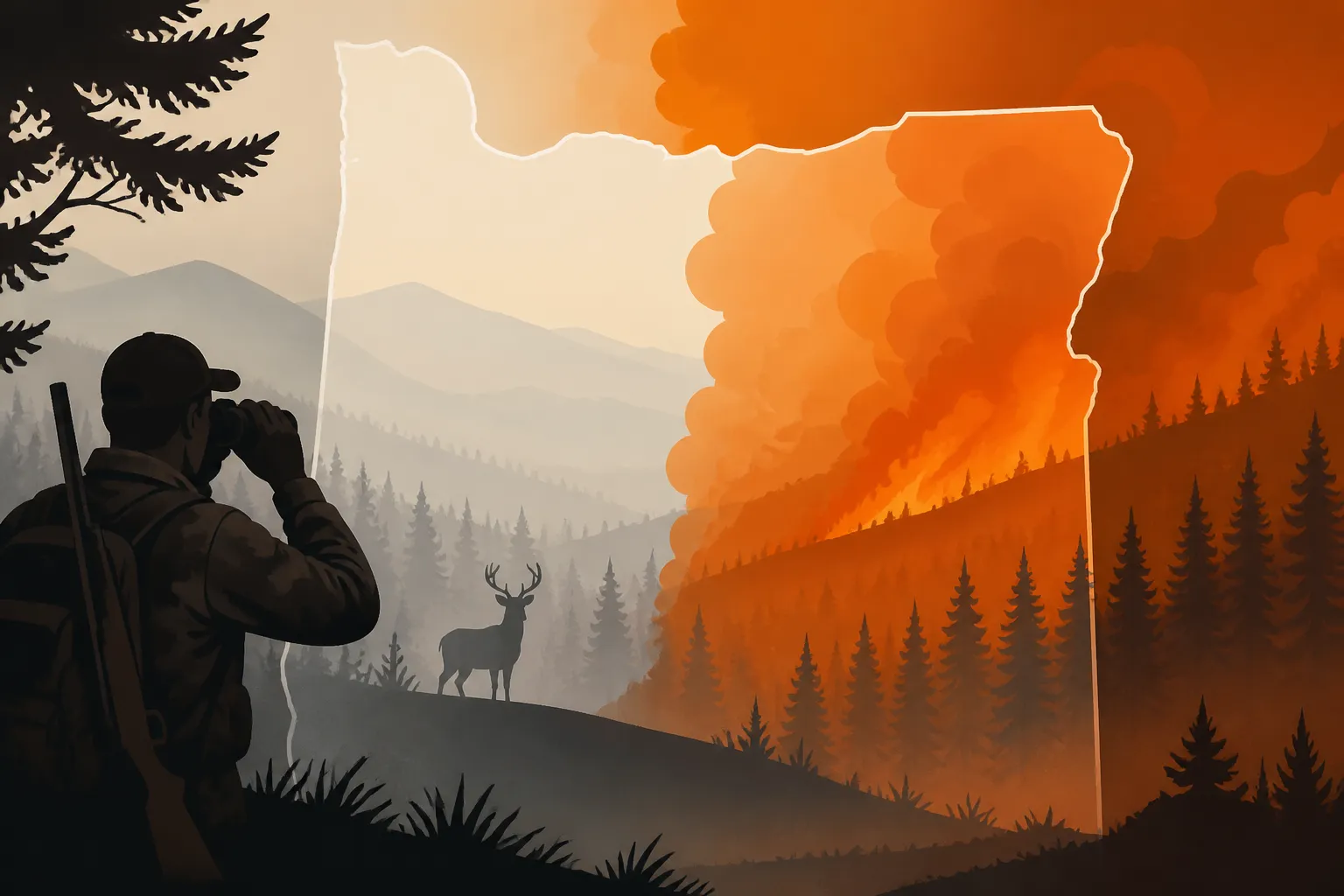
The most immediate and obvious impact of wildfire smoke is the drastic reduction in visibility. Imagine waking up before dawn, eager to climb to your favorite glassing knob, only to find the entire basin below obscured by a murky, orange-tinged veil. Even moderate smoke can turn a mile-long vista into a frustrating 200-yard tunnel, making strategies like Glassing Eastern Oregon Rimrock for Mule Deer or trying to pick out an elk across a vast clearcut virtually impossible. What might be an easy spot on a clear day, where you could pick out the flick of an ear, becomes an exercise in futility.
Beyond simply shortening your sightlines, smoke fundamentally changes light conditions. The phenomenon of "smoke-glow" often casts the sun as a dim, orange orb, diffusing light in a way that reduces contrast and depth perception. This makes it incredibly hard to discern the subtle shapes of animal bodies from the complex patterns of shadows, distant trees, or brush. A magnificent mule deer buck might be standing perfectly still at 150 yards, but the lack of sharp light and the overall haze allow him to blend seamlessly into the background, effectively disappearing before your eyes.
This severe visual obstruction forces hunters to completely re-evaluate their approach. Long-range observation, which is a cornerstone of hunting in many open Oregon units, becomes irrelevant. Instead, successful hunting shifts to closer-quarters encounters, demanding a much more deliberate and intimate approach to the landscape.
Effects on Animal Behavior and Sensory Input
Animals, much like hunters, rely on a sophisticated combination of sight, smell, and hearing to navigate their world and avoid predators. Wildfire smoke, particularly when it's heavy and persistent, can disrupt all three of these senses in complex ways, leading to observable changes in animal behavior. While the acrid smell of smoke can, in some instances, slightly mask a hunter's scent, it primarily creates an overwhelming background odor that can confuse an animal's natural detection abilities, making it harder for them to pick out specific threats.
Additionally, animals may become more reclusive or alter their daily routines. They might bed down more frequently, moving less during daylight hours, or seek out areas with less smoke, especially if it's dense and irritating to their respiratory systems. This often means a shift into thicker timber, deeper canyons, or lower elevations where the air might be clearer or the cover more secure. These shifts can mirror patterns observed in Elk Behavior After a Wildfire, where animals adapt to changes in their environment.
Furthermore, the continuous presence of smoke can muffle ambient sounds, potentially making animals less alert to subtle noises in their immediate vicinity. However, it can also create a general sense of unease, making them jumpier and more reactive to sudden movements or unfamiliar sounds. The constant hum of distant fires, the drone of firefighting aircraft, or the sudden roar of a tanker plane passing overhead can all disrupt an animal's normal patterns, adding stress and unpredictability to their movements.
Strategies for Hunting Safely and Effectively in Smoky Conditions
Hunting in wildfire smoke is not just about adapting your tactics; it's about prioritizing safety above all else. The challenges presented by reduced visibility and air quality demand a proactive and cautious approach, ensuring that your hunt remains both productive and secure.
Adapting Your Hunting Tactics
When the landscape is shrouded in smoke, the traditional long-range glassing strategies become impractical. Instead, you need to shift to a more intimate and methodical style of hunting. This means slowing down significantly and focusing on close-quarters detection. Think about still-hunting through thick cover, where your eyes are constantly scanning the immediate surroundings, looking for fragments of an animal – a leg, a patch of hide, a horizontal line in a vertical world. This is where techniques similar to Still-Hunting Blacktails in Wet Oregon Coastal Brush become highly effective, even when pursuing elk or mule deer. You're no longer observing from afar but actively dissecting the immediate environment.
In these conditions, your other senses become even more critical. You need to train yourself to use your ears and nose more keenly. Listen for the subtle sounds that might indicate an animal's presence – a twig snapping, a distant grunt, the rustle of leaves that isn't caused by the wind. While smoke can be an olfactory challenge, sometimes a sudden change in its intensity or the addition of a new, earthy smell might indicate a nearby animal. Constantly check the wind, even in seemingly calm conditions, as localized air currents can still carry your scent directly to game.
Modern tools can also aid in these challenging conditions. Using game cameras, like for Trail Camera Placement on Public Land, can help monitor activity patterns in specific areas, especially pinch points or heavy cover where animals might concentrate when visibility is low. Furthermore, GoHunt's mapping tools are excellent for identifying these natural funnels and bedding areas, helping you focus your efforts where animals are most likely to move or seek refuge from the pervasive smoke. You'll want to target areas where animals feel a greater sense of security from distant threats due to the reduced visibility.
Prioritizing Hunter Safety
Safety must be your absolute top priority when hunting in smoky conditions. Prolonged exposure to heavy smoke can cause significant respiratory issues, particularly for individuals with pre-existing conditions like asthma or emphysema. Always check air quality reports for your specific hunt area, and if the air quality index (AQI) is high, seriously consider wearing an N95 or P100 respirator. Your health is far more important than a few hours in the woods.
Navigation becomes exponentially more challenging when familiar landmarks disappear into the haze. It's incredibly easy to become disoriented, especially in rugged or unfamiliar terrain. Always rely heavily on a GPS device with downloaded maps, a compass, and good old-fashioned map-reading skills. Smartphones with GPS capabilities, especially with robust hunting apps like the one offered by GoHunt, can be a lifesaver, but always have a backup. Crucially, always let someone know your exact hunt plan, including your route and expected return time. Sharing a detailed Leaving a Trip Plan With Someone at Home is not just a good idea; it’s essential for your well-being. Getting lost in heavy smoke can quickly escalate into a dangerous situation.
Finally, never forget the ongoing fire danger itself. Even if there's no active fire immediately nearby, the underlying dry conditions often persist. Exercise extreme caution with any heat sources: avoid parking your vehicle in tall, dry grass where a hot catalytic converter could spark a fire, be meticulous with camp stoves, and ensure your vehicle's spark arrestor is in good working order. It's always a wise practice to carry a shovel and a fire extinguisher in your vehicle during fire season.
Navigating Oregon's Fire Season Closures and Restrictions
One of the most frustrating aspects of hunting during fire season in Oregon is the sudden and often widespread closures of prime hunting grounds. These aren't just inconveniences; they are critical safety measures designed to protect both the public and natural resources. Understanding how to navigate these restrictions is paramount to avoiding disappointment and potential legal trouble.
Public Land Closures and Entry Rules
Oregon's fire season regularly brings extensive closures of national forests, Bureau of Land Management (BLM) lands, and even state forests. These closures aren't solely implemented when an active fire is raging; they are often preventative measures enacted during periods of extreme fire danger to minimize the risk of new ignitions and ensure public safety. A unit you've meticulously scouted, where you planned to pursue Roosevelt Elk in Western Oregon or chase after the elusive Oregon Mule Deer and the Herd Range Decline, might be completely shut down, even if the nearest fire is many miles away.
These closures can be announced with very little notice, sometimes just days or even hours before they go into effect. It is absolutely crucial to check the official websites of the U.S. Forest Service (USFS), the BLM, and the Oregon Department of Fish and Wildlife (ODFW) daily, or even multiple times a day, both leading up to and during your planned hunt. Relying on outdated information can lead to a wasted drive, profound disappointment, and worse, hefty fines for violating closure orders. Remember, "closed" truly means closed – there are no exceptions for hunters.
Even if an area isn't subject to a full closure, there may be specific restrictions in place. These can include bans on campfires, prohibitions on off-road travel, restrictions on certain motorized vehicles, or even time-of-day access limits. Always, without fail, read the current year's Oregon Big Game Regulations pamphlet and pay close attention to any supplemental fire orders or emergency declarations issued by land management agencies. These details are critical for staying compliant and safe.
Private Timber Land Access During Fire Season
For many Oregon hunters, access to private timber lands, managed by companies like Weyerhaeuser or Hancock, is crucial. However, these lands are often subject to even more stringent fire season restrictions than public lands due to the immense economic value of the timber at risk. These companies have a strong incentive to protect their assets, and fire prevention is a top priority. Many permit systems, which allow access for activities like Hunting Clearcuts on Private Timber Land, go into full lockdown during periods of high fire danger.
Private timber companies typically operate under an Industrial Fire Precaution Level (IFPL) system, which dictates everything from when chainsaws can be operated to when driving on forest roads is permitted. When IFPLs are elevated to levels III (Partial Hootowl) or IV (Closed), public access, even with a permit, is almost always revoked entirely. This isn't just an inconvenience; it's a critical safety measure designed to protect company employees, contractors, and the forest itself from devastating wildfires.
Therefore, it is absolutely essential to check the specific timber company's website or dedicated fire information hotline before heading out. Do not assume that because adjacent public land is open, private timber land will be as well. This is a common and costly mistake that often leads to long drives, locked gates, and profound frustration. Resources like GoHunt's mapping application can provide valuable overlays showing land ownership, making it easier to identify these private parcels and know which company's rules you need to check.
Planning Your Hunt Around Fire Season Challenges
While fire season presents undeniable hurdles for Oregon hunters, it doesn't have to mean canceling your plans entirely. With smart planning, flexibility, and a commitment to staying informed, you can still pursue game, albeit often with a modified approach. The key lies in being prepared for contingencies and adapting to the dynamic nature of summer and fall in Oregon's wildlands.
Pre-Season Research and Contingency Planning
The best defense against fire season disruptions is proactive planning. In the months leading up to your hunt, keep a close eye on long-range weather forecasts, snowpack levels from the previous winter, and any emerging drought conditions. If it's shaping up to be a dry, hot summer, it's wise to start developing backup plans for your hunt. This means identifying not just one, but several potential hunt units or even different regions of the state that might be less prone to severe fire activity or closures.
Modern digital tools are incredibly helpful here. Platforms like GoHunt offer excellent features for e-scouting various areas, allowing you to examine different units and understand their accessibility, potential escape routes, and water sources. Look for units with diverse terrain, as certain aspects like riparian zones or higher elevations might offer pockets of less smoke or remain open longer than others. Having a Plan B, and even a Plan C, can be the difference between a successful hunt and a canceled trip. Remember to utilize resources like E-Scouting Oregon Units With Satellite Imagery to explore alternatives from the comfort of your home.
Consider how your tag choices can provide flexibility. If you're applying for controlled hunts, diversify your choices across different units and even species if possible. For general season tags, understand the boundaries and regulations that apply, and be ready to shift your focus to a different part of the unit if fire dictates. Don't put all your eggs in one geographic basket, especially if your primary unit has a history of intense fire activity.
Being Flexible with Dates and Locations
Sometimes, the most effective strategy for dealing with fire season is pure adaptability. If the early archery season is marred by thick smoke and widespread closures, don't be afraid to shift your focus. Can you pivot to a late-season deer or elk hunt once conditions have improved? Or perhaps explore a different species altogether, such as pursuing Waterfowl and Upland Birds as a Second Season once the main fire danger has subsided and migration patterns begin. The Oregon hunting calendar is rich with opportunities, and a flexible mindset can unlock them.
If your chosen unit is heavily impacted by smoke or closures, researching nearby units, or even a completely different part of the state, might be necessary. This might mean sacrificing the hope of a "trophy" animal for a quality "opportunity" hunt, but being in the field is often better than being stuck at home. Utilize comprehensive resources like the Using the Oregon Hunting Map Online to quickly identify and compare alternative locations, checking their current fire status and access rules.
Also, stay vigilant about weather forecasts. A significant rain event can often dramatically clear smoke and reduce fire danger rapidly, potentially reopening areas that were previously closed. Being ready to pivot quickly if conditions change means having your gear packed, a few target areas digitally scouted, and the willingness to hit the road at a moment's notice.
Investing in Information and Predictive Tools
In the age of information, hunters have access to an incredible array of resources that can make a huge difference during fire season. Beyond the official ODFW alerts, websites like InciWeb for specific fire incident information, or AirNow.gov for real-time air quality data, provide crucial intelligence. These tools can help you understand the trajectory of smoke plumes, predict fire growth, and assess the immediate impact on your intended hunting area.
Subscription services designed for hunters are also invaluable. GoHunt, for example, offers robust mapping overlays that display land ownership, historical fire data, and often even real-time fire perimeters derived from satellite data. This kind of comprehensive, integrated information is worth its weight in gold when you're trying to make informed decisions about where and when to hunt safely and effectively. It allows you to visualize the challenges and opportunities in unprecedented detail.
Finally, don't underestimate the value of human intelligence. Reach out to local ODFW biologists, Forest Service rangers, or even the staff at local sporting goods stores in the region you plan to hunt. These individuals often have the most current, on-the-ground intelligence about local conditions, unofficial fire updates, and potential closures that might not yet be widely publicized online. They can offer insights that no digital map can provide, helping you make the most informed decisions possible.
| Fire Danger Level | Description | Hunting Implications | Hunter Action Plan |
|---|---|---|---|
| Low | Fires are unlikely; if they occur, they are small. | Minimal impact; normal hunting expected. | Proceed, but maintain fire awareness. Ensure spark arrestors are functional. |
| Moderate | Fires can start easily; spread at a moderate rate. | Increased risk of localized smoke. Minor access restrictions possible. | Be extra vigilant. Carry basic fire tools (shovel, water). Check local fire regulations daily. |
| High | Fires start easily; spread rapidly and intensify quickly. | Significant risk of widespread smoke. Closures likely, especially for off-road travel. | Check all agency websites multiple times daily. Prepare for reduced visibility. Consider respirators. Avoid open flames. |
| Very High | Fires start very easily; spread very fast with high intensity. | Extreme risk. Widespread closures almost certain. Severe smoke and air quality issues. | Re-evaluate hunt plans. Assume closures. Prioritize safety. Consider alternative hunt locations or dates. |
| Extreme | Fires ignite explosively; grow uncontrollably. | Catastrophic risk. Hunt cancellations and mandatory evacuations are highly probable. | Do NOT attempt to hunt. Stay home or seek alternative, safe activities far from fire zones. Monitor emergency alerts. |
Disclaimer
The information provided in this guide is for informational purposes only and is subject to change. Wildfire conditions and associated closures or restrictions can change rapidly. Always consult the most current regulations and official announcements from the Oregon Department of Fish and Wildlife (ODFW), the U.S. Forest Service, the Bureau of Land Management (BLM), and private timber companies before and during your hunt. Hunter safety is paramount.