Predator Calling for Coyotes in Eastern Oregon
Those eastern Oregon coyotes can be incredibly intelligent, often making you feel like you're playing chess against a grandmaster in fur. It's frustrating when you spend hours setting up, only for a wily 'yote to skirt downwind and vanish, leaving you wondering what went wrong. This guide aims to demystify predator calling for coyotes in Eastern Oregon, breaking down proven strategies, essential gear, and how to adapt to the unique challenges of the high desert.
Understanding the Eastern Oregon Coyote
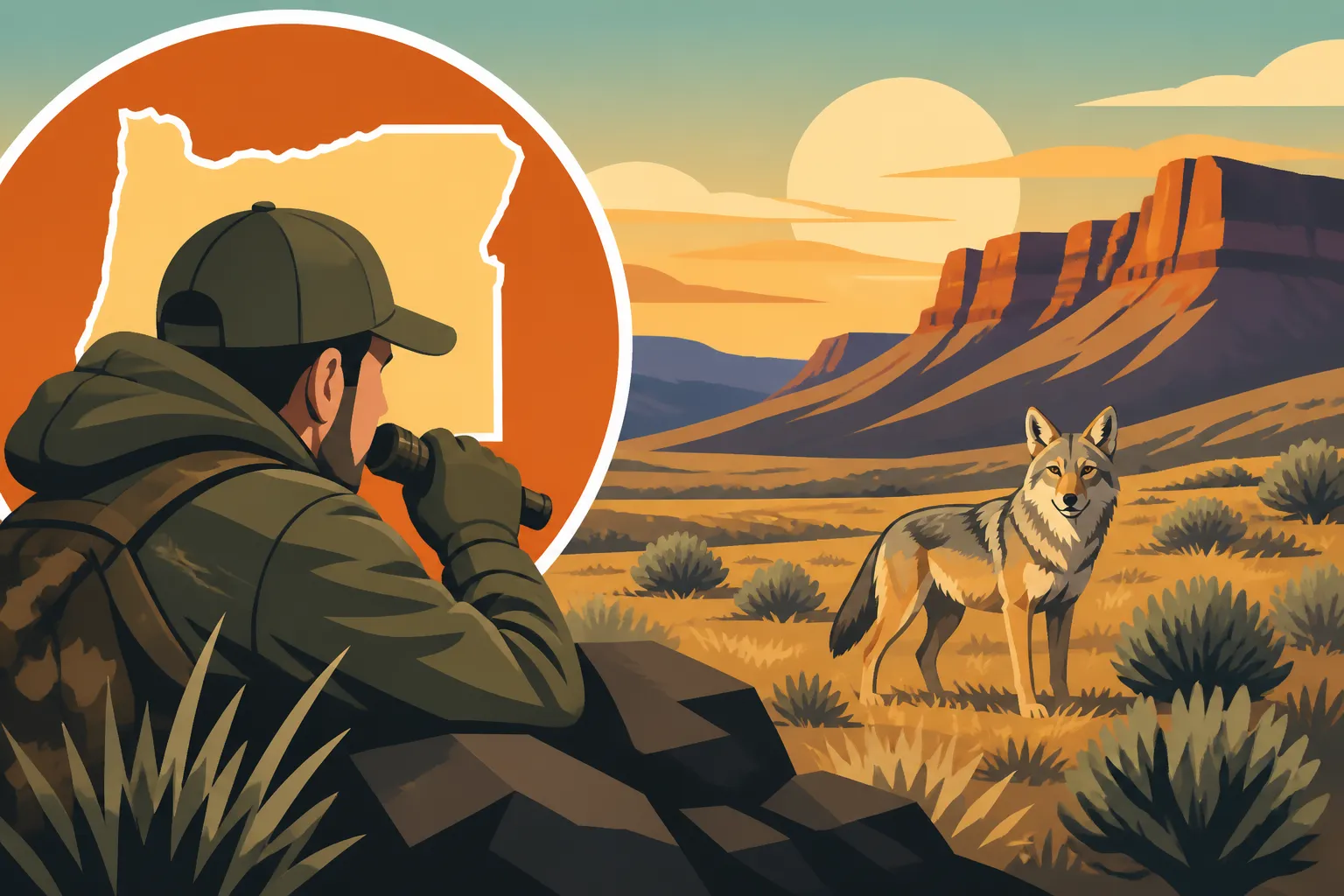
Hunting coyotes in Eastern Oregon isn't just about making noise; it's about understanding the animal you're trying to outsmart. These canids are survivors, perfectly adapted to the varied and often harsh conditions of the high desert, from vast sagebrush flats to rugged rimrock canyons. Knowing their habits, their keen senses, and what motivates them is the first step toward consistent success.
Coyote Behavior and Habitat in the High Desert
Eastern Oregon's landscape dictates a lot about how coyotes live and hunt. Here, you'll find them ranging across immense stretches of sagebrush, especially where it borders agricultural fields, juniper stands, or pockets of rimrock. These areas provide not only cover and denning sites but also critical food sources like jackrabbits, cottontails, ground squirrels, and even deer fawns or weak livestock. Coyotes are opportunistic predators, and their diets shift with the seasons, impacting their movements and responsiveness to calls. In winter, they might be more concentrated near wintering deer herds, while in spring, denning activity means they're protecting pups and actively seeking food for the litter. Understanding these seasonal shifts helps you anticipate where they might be holding up.
Their social structure also plays a huge role. While often seen alone, coyotes live in family groups or pairs. A lone coyote might be more responsive to a lonesome howl or distress call, whereas a territorial pair could be more inclined to respond to a challenge howl. They use specific areas for denning, hunting, and travel, often sticking to saddles, draws, and the edges of heavy cover. When you're E-Scouting Oregon Units With Satellite Imagery, look for these natural funnels and breaks in the terrain where coyotes might naturally traverse or hunt. Their intelligence, born from generations of survival against ranchers, hunters, and other predators, means they learn quickly from mistakes, making them incredibly wary, especially in areas with significant hunting pressure.
Key Senses and What Drives Them
A coyote's survival hinges on its incredibly sharp senses, and as callers, we need to respect and account for all of them. Their sense of smell is legendary, allowing them to detect a human scent trail hours after you've passed through, even a faint one drifting on the wind. This is why scent control is paramount; they will absolutely circle downwind to confirm what their ears are telling them, and if they catch a whiff of you, the game is over. Their hearing is equally impressive, capable of pinpointing a squeak or a howl from incredible distances, even in windy conditions. This makes a well-placed electronic call or a realistic mouth call incredibly effective.
Visually, coyotes are masters of stealth and detection. They are experts at spotting movement, even subtle ones, from afar. Their camouflage blends seamlessly with the sagebrush and juniper, allowing them to approach a call site unseen or vanish into thin air. They often use available cover to their advantage, slipping through draws or along ridge lines. What truly drives them to a call, however, is a combination of hunger and territorial instinct. Distress calls, mimicking an injured rabbit or a fawn, tap into their predatory drive, while howls can either locate them (curiosity) or challenge their dominance, prompting them to investigate or confront. Successful calling is about creating a convincing scenario that exploits these primal drives while mitigating your presence.
Essential Gear for Eastern Oregon Predator Calling
Heading into the vastness of Eastern Oregon to chase coyotes requires more than just a call. The right equipment can make the difference between a frustrating day and a successful one, enabling you to stay comfortable, concealed, and effective in diverse conditions. Thinking through your gear list carefully is just as important as perfecting your calling sequences.
E-Callers Versus Mouth Calls: Pros and Cons
When it comes to the actual sound production, hunters typically choose between electronic callers (e-callers) and traditional mouth calls, or sometimes a combination of both. E-callers, like those offered by FoxPro or Lucky Duck, provide a vast library of realistic sounds, from rabbit distress to various howls and pup yelps. Their primary advantage is the ability to place the caller away from your position, drawing the coyote's attention away from you and giving you hands-free control via a remote. This is particularly useful for single hunters, allowing them to stay motionless and focused on shooting. E-callers also offer consistent sound quality and volume, critical for reaching out across vast Eastern Oregon sage flats, and can be easily adjusted to respond to a coyote's approach. However, they require batteries, can be expensive, and might lack the nuanced, on-the-fly improvisation possible with a skilled mouth caller.
Mouth calls, on the other hand, offer unparalleled realism and adaptability. From open-reed distress calls that can mimic a dying rabbit with chilling accuracy to closed-reed howlers, these calls allow for subtle inflections and immediate adjustments that an e-caller might struggle to replicate. They are lightweight, inexpensive, and never run out of batteries. Many seasoned predator hunters swear by mouth calls, finding them more engaging and allowing for a deeper connection to the hunt. The main drawback is that the sound source is right at your position, making concealment and stillness even more critical, as the coyote's focus will be directly on where you're sitting. Often, the most effective strategy in Eastern Oregon is to combine them: use an e-caller for initial long-range attention-grabbing, then switch to a mouth call for realistic, up-close coaxing. Remember, Electronic Calls and What Oregon Allows are legal for coyote hunting, but always double-check the latest regulations.
Optics, Cover, and Concealment
Given the open nature of much of Eastern Oregon, excellent optics are non-negotiable. A good pair of binoculars, usually 10×42 or 12×50, will be your primary tool for spotting coyotes approaching from hundreds of yards away, allowing you to prepare for the shot. Don't skimp here; clear glass makes all the difference in low light or across heat-shimmering distances. A rangefinder is also crucial for confirming shot distances, especially when a coyote might appear suddenly at an unexpected range.
Concealment isn't just about wearing camouflage; it's about becoming part of the landscape. Seek out natural cover that breaks up your outline – a juniper bush, a rock outcropping, or the shade of a steep bank. Consider bringing a ground blind or even just a simple camo netting if natural cover is sparse. Your clothing should blend with the dominant colors of Eastern Oregon: tans, grays, and muted greens. Face paint or a face mask and gloves will hide exposed skin, which can reflect light or stand out against the background. Remember that coyotes have an uncanny ability to pick up movement, so once you're set up, stillness is your best friend. Even subtle head turns can be detected, so move slowly and deliberately, or ideally, not at all when a coyote is focused on your position.
Weapon Choices for Coyote Hunting
The wide-open spaces of Eastern Oregon often mean long shots, making flat-shooting, accurate rifles the go-to choice for most coyote hunters. Calibers like .223 Remington, .22-250 Remington, .204 Ruger, and .243 Winchester are immensely popular. They offer sufficient velocity to handle wind drift and deliver precise shot placement on coyotes, which, despite their size, require accurate hits for a quick, ethical harvest. Pair your rifle with a quality scope that has appropriate magnification for longer shots, typically something in the 3-9x or 4-12x range. A bipod is also a fantastic addition, providing a stable shooting platform in varied terrain, allowing you to make those crucial long-distance shots with confidence.
While rifles are dominant, shotguns can be effective in areas with thicker cover or when you anticipate close-range encounters, such as hunting draws or timber edges. A 12-gauge or 20-gauge loaded with coyote-specific loads (like #4 buckshot or even heavier turkey loads) can be devastating at ranges up to 40-50 yards. This is a great option if you're also targeting other small game or simply prefer the versatility of a scattergun. Whatever weapon you choose, practice extensively to know its capabilities and your own limitations. Ethical hunting means making clean kills, and that starts with knowing your equipment inside and out.
Mastering Coyote Calling Techniques
Calling coyotes is as much an art as it is a science. It involves selecting the right sounds, knowing when and how to deploy them, and constantly adapting to the responses – or lack thereof – from the local coyote population. Each stand offers a unique challenge, and success often comes down to finely tuning your approach.
Locating Promising Stands
Before you even think about calling, you need to find a good spot. In Eastern Oregon, this means scouting the terrain, either physically or by using mapping tools like GoHunt. Look for areas that offer good visibility downwind, as coyotes almost always circle to get your scent. Elevated positions on ridges or hillsides can be excellent, providing a panoramic view, but be mindful of breaking the skyline. Focus on natural travel corridors such as draws, fence lines, and the edges of differing vegetation types (e.g., where sagebrush meets juniper or agricultural fields). These are pathways coyotes use regularly for hunting and movement. Areas with concentrations of prey, such as rabbit populations in dense sage, are also prime locations.
Consider the prevailing wind, which is crucial in Eastern Oregon. You want the wind blowing from the coyote to you, preventing them from scenting you as they approach. This often means setting up on the leeward side of a ridge or in a position where you can cover multiple downwind approaches. Think about your backdrop; setting up against a dark juniper stand or a rock face will help you blend in more effectively than silhouetting yourself against the sky. Finally, always have an escape route or a plan for how you'll move to intercept a hung-up coyote, ensuring you don't spook it if you need to reposition. A key part of successful calling is finding multiple promising stands in an area, allowing you to move if the first doesn't produce. This is where good public land maps, like those found through Public Land Hunting in Oregon: Forest, BLM and State resources, become essential for identifying suitable locations away from roads and other hunters.
Effective Call Sequences and Sounds
The sounds you choose and how you sequence them are vital. Most coyote calling revolves around distress calls (mimicking prey in trouble), howls (communicating with other coyotes), and pup distress calls.
For distress, rabbit distress is a universal go-to, as coyotes everywhere hunt rabbits. Fawn distress can be deadly during late spring and early summer when fawns are vulnerable. Start your sequence with short, sharp bursts of distress, gradually increasing volume and duration.
For howls, a lonesome howl or an interrogation howl can elicit a response, telling you if coyotes are in the area. Once you locate them, a challenge howl might draw in a territorial male.
Pup distress, on the other hand, mimics a lost or injured pup and can often draw in protective adults, especially a female.
A common sequence might look like this: Start with a series of lonesome howls to locate. Listen for responses. If you get one, move to a rabbit distress call, starting quietly and building in intensity. Give it 2-3 minutes of calling, then 5 minutes of silence, scanning constantly. Repeat, varying the distress sound slightly. If a coyote hangs up, throw in some pup yelps or a quick howl to pique its interest again. The table below outlines some common call types and their typical applications.
| Call Type | Primary Purpose | Best Used When | Sample Sequence/Duration |
|---|---|---|---|
| Rabbit Distress | Mimics injured prey, appeals to hunger | Any time, especially when coyotes are actively hunting | 30-60 sec bursts, 2-3 min pause |
| Fawn Distress | Mimics injured deer fawn, effective in spring/early summer | Post-fawning season, areas with deer | Similar to rabbit distress |
| Lonesome Howl | Locates coyotes, establishes presence | Initial call to survey area, low-pressure situations | 2-3 howls, listen for response |
| Challenge Howl | Invokes territorial response, draws dominant males | After locating, or in high-pressure areas to "anger" | 1-2 aggressive howls |
| Pup Distress/Yelps | Mimics lost/injured pups, draws protective adults | Spring/summer when pups are present, hung-up coyotes | Short bursts, whimpers, cries |
| Coyote Fight | Mimics conflict, appeals to curiosity | To draw in wary coyotes, late in a stand | Short, intense bursts, then silence |
Varying your volume and intensity is key. Start quieter and build up, especially if you think coyotes are close. Don't be afraid to experiment, and remember that Coyote Calling in Open Sage Country often requires louder, longer-range calls than in timbered areas.
Reading Coyote Responses and Adjusting
A successful caller isn't just someone who makes good sounds; it's someone who can interpret what the coyotes are telling them and adjust accordingly. Pay close attention to how a coyote reacts to your call. Is it coming in fast and hard, charging straight at the sound? That often means a hungry, less wary animal. Is it skirting wide, trying to get downwind? This is a common tactic for intelligent coyotes; you need to be ready to pivot your shot or even reposition if feasible. Is it "hanging up" at a certain distance, sitting down and staring, unsure if it's safe to approach further? This is where patience, subtle call changes, or a shift to a different sound (like pup distress or a soft whine) can often close the deal.
If a coyote is approaching rapidly, often you'll need to stop calling to prevent it from pinpointing your exact location or becoming overstimulated. Let it commit. If it's hanging up, try a softer, more subtle call to coax it in those last critical yards. Sometimes, a quick, almost imperceptible twitch of a hand or foot, or even a soft vocalization can be enough to make a hung-up coyote take one more step, offering a shot. If a coyote busts you and runs, note its escape route and learn from the experience. Don't be discouraged; they're incredibly smart. The best hunters learn more from their failures than their successes. Observing how they use the terrain and respond to pressure in Eastern Oregon Hunting Units and Access will make you a much more effective caller.
Strategic Setups and Environmental Factors
Beyond the calls themselves, how you set up your stand and how you account for environmental conditions like wind, terrain, and time of day are crucial for consistent success. Eastern Oregon's diverse landscape demands a flexible and thoughtful approach.
Wind Direction and Scent Control
Wind is arguably the single most critical factor in predator calling, especially in the vast, open country of Eastern Oregon. Coyotes will use the wind to their advantage, circling downwind to catch your scent before committing to a visible approach. If they smell you, the hunt is over. Therefore, always set up so the wind is blowing from the direction you expect the coyote to come, across your position, and then away from where you are calling. This means you need to be able to see downwind to catch them trying to circle. Often, having a shooter covering the downwind flank is essential, especially when hunting with a partner.
Scent control goes hand-in-hand with wind management. While it's impossible to completely eliminate human scent, minimizing it is key. Wear clean clothes, avoid strong-smelling detergents, and use scent-eliminating sprays or washes. Store your hunting clothes separately from everyday items. Consider placing your e-caller upwind of your position and you sit slightly crosswind, allowing your scent to drift away from the call source. Understanding Oregon's 300-Foot Rule Beside an Open Road and other regulations ensures you set up legally and safely, especially when positioning yourself relative to public access points and roads where wind patterns can be unpredictable.
Terrain Considerations for Stand Placement
The varied terrain of Eastern Oregon offers both challenges and opportunities for setting up a stand. In sagebrush flats, look for subtle rises, eroded banks, or even a thick juniper bush that can break up your silhouette. These small features can be enough to conceal your presence. When hunting rimrock or canyon country, use the topography to your advantage. Set up on a bench or a point that offers good visibility into draws and across canyon floors, but ensures you are not silhouetted against the sky. Coyotes will often travel the bottom of draws or the tops of ridges, so position yourself to intercept them as they move.
Remember that coyotes are masters of using cover, even sparse cover, for their approach. They'll hug a wash, use the shade of a juniper, or duck behind a small knoll. Your setup should anticipate these movements. If you're calling from an elevated position, be aware of dead spots or areas below you that a coyote could use to approach unseen. Always have a clear field of fire for at least 180 degrees, ideally more, to cover all likely avenues of approach. Using maps with topographic lines, such as those available through GoHunt, is invaluable for identifying these terrain features before you even step foot on the ground. This kind of advanced scouting can significantly increase your success rate.
Time of Day and Seasonality
While coyotes can be called at any time of day, certain periods are generally more productive. Early morning, just after first light, and late afternoon, leading into dusk, are often prime times. During these periods, coyotes are typically more active, moving between bedding areas and hunting grounds. They also tend to be more confident and less wary in the softer light. Midday calling can still be effective, especially on overcast days or during cooler weather, but coyotes might be more hesitant to move in the direct sun and heat.
Seasonality also plays a significant role. During the denning season (typically spring), coyotes are highly protective and will respond aggressively to intruder or pup distress calls. In the fall, as pups disperse and are learning to hunt, they might be more curious and less wary, making them easier to call. Winter can be excellent, as coyotes are often hungrier and more desperate for food, especially in areas with deep snow that makes hunting difficult. Conversely, in the dead of summer, when food is abundant and temperatures are high, they might be less responsive. Adapting your calling techniques and stand locations to match the season and typical coyote behavior for that time of year is a game-changer. Also, be aware of Oregon Winter Range Closures That Affect Late Hunts to avoid disturbing big game animals.
Common Challenges and Troubleshooting
No matter how prepared you are, coyote calling in Eastern Oregon comes with its fair share of challenges. From wary, pressured animals to unpredictable weather, success often hinges on your ability to troubleshoot and adapt on the fly.
Dealing with Call-Shy Coyotes
The biggest frustration for many Eastern Oregon callers is encountering call-shy coyotes. These are animals that have been called before, perhaps even shot at, and have learned to associate certain sounds with danger. They might approach cautiously, hang up at long distances, or simply circle downwind and disappear without ever showing themselves. The key to tackling call-shy coyotes is to break their learned patterns. First, experiment with less common or quieter sounds. Instead of a loud, aggressive rabbit distress, try a subtle mouse squeak or bird distress. Sometimes, changing up your howls can work too, opting for softer, lonesome howls instead of challenge howls.
Varying your volume and cadence is also crucial. Instead of long, drawn-out sequences, try shorter, softer bursts, or even long periods of silence. Coyotes that have heard the same "song and dance" before might be fooled by something completely different. Another effective tactic is to switch to pup distress calls; even wary adults sometimes struggle to ignore the sound of a distressed young one. Finally, consider moving to less pressured areas. Utilize detailed mapping applications like those provided by GoHunt to find remote public lands or seek permission on private land that sees less hunting activity. The fresher the coyote, the more likely it is to respond aggressively to a call.
The Impact of Pressure and Public Land Crowding
Eastern Oregon's vast public lands, managed by the Bureau of Land Management (BLM) and the U.S. Forest Service, are fantastic resources for hunting. However, popularity brings pressure, and coyotes in easily accessible areas learn quickly. When an area gets pounded by hunters, coyotes become incredibly wary. They'll move more at night, stick to dense cover, and respond minimally, if at all, to common calls. This is where truly diving into your research and physical scouting comes in. Look for areas off the beaten path, places that require a longer hike or more challenging access. Reading Green Roads on an Oregon Travel Management Map can reveal motor vehicle access, but often, the real gems are found beyond the "green" (open) roads, where few hunters venture.
If you find yourself in a crowded area, adjust your tactics. Be exceptionally patient, stay longer on each stand, and focus on extreme stealth. Consider using decoys to draw attention away from your position, giving the coyote something else to focus on. Also, try hunting during off-peak times, like weekdays, or during less popular seasons. While coyote hunting is open year-round, many hunters focus on it during big game off-seasons. Sometimes, even Glassing Sage and Juniper for Eastern Oregon Mule Deer can lead to spotting a coyote in a less-pressured area that you wouldn't normally call. Learning to adapt to hunting pressure is a skill that will serve you well in all forms of hunting.
Adjusting to Weather Conditions
Eastern Oregon weather can be notoriously unpredictable, and it significantly impacts coyote behavior and calling effectiveness. High winds, common in the high desert, can make calling incredibly difficult. The wind can carry your scent far and wide, make it hard for coyotes to hear your calls, and also makes it tough for you to hear their responses or spot them approaching. On extremely windy days, focus on areas with natural windbreaks like draws, canyon bottoms, or dense juniper stands. Increase your call volume and duration to cut through the noise, but be mindful of potentially spooking coyotes if they're closer than you think.
Rain and snow also change the game. Light rain can sometimes improve calling conditions, as it dampens sound, washes away some scent, and often makes coyotes more active. Heavy rain, however, usually sends them to cover, making them less responsive. Snow can be a double-edged sword: fresh snow makes tracking easier and can reveal prime travel routes (especially helpful when Tracking Bucks in Fresh Eastern Oregon Snow), but deep, crusty snow can make movement difficult for both you and the coyotes. In cold weather, coyotes are often more eager to find a meal, making them potentially more aggressive to distress calls. Always dress in layers, have reliable rain gear, and be prepared for rapidly changing conditions. Flexibility in your approach, based on the day's weather, will yield far better results.
Disclaimer
Please ensure you are aware of and adhere to all current Oregon Department of Fish and Wildlife (ODFW) regulations regarding predator hunting, including licensing, seasons, methods of take, and land access rules. Regulations can change, so always consult the latest ODFW hunting manual. This guide is for informational purposes only and does not constitute legal advice.