One-on-One Versus Two-on-One Guiding
When you're finally ready to book that dream guided hunt in Oregon, you might find yourself staring at the outfitter's price list, scratching your head over the "1×1" and "2×1" options. This isn't just about the number of people in your party; it's a fundamental decision that profoundly impacts your entire hunting experience, from the guide's attention to your overall success and, of course, the dent it makes in your wallet. This guide will walk you through the distinct differences between one-on-one and two-on-one guiding, helping you choose the best fit for your next Oregon adventure.
Understanding the Difference Between One-on-One and Two-on-One Guiding
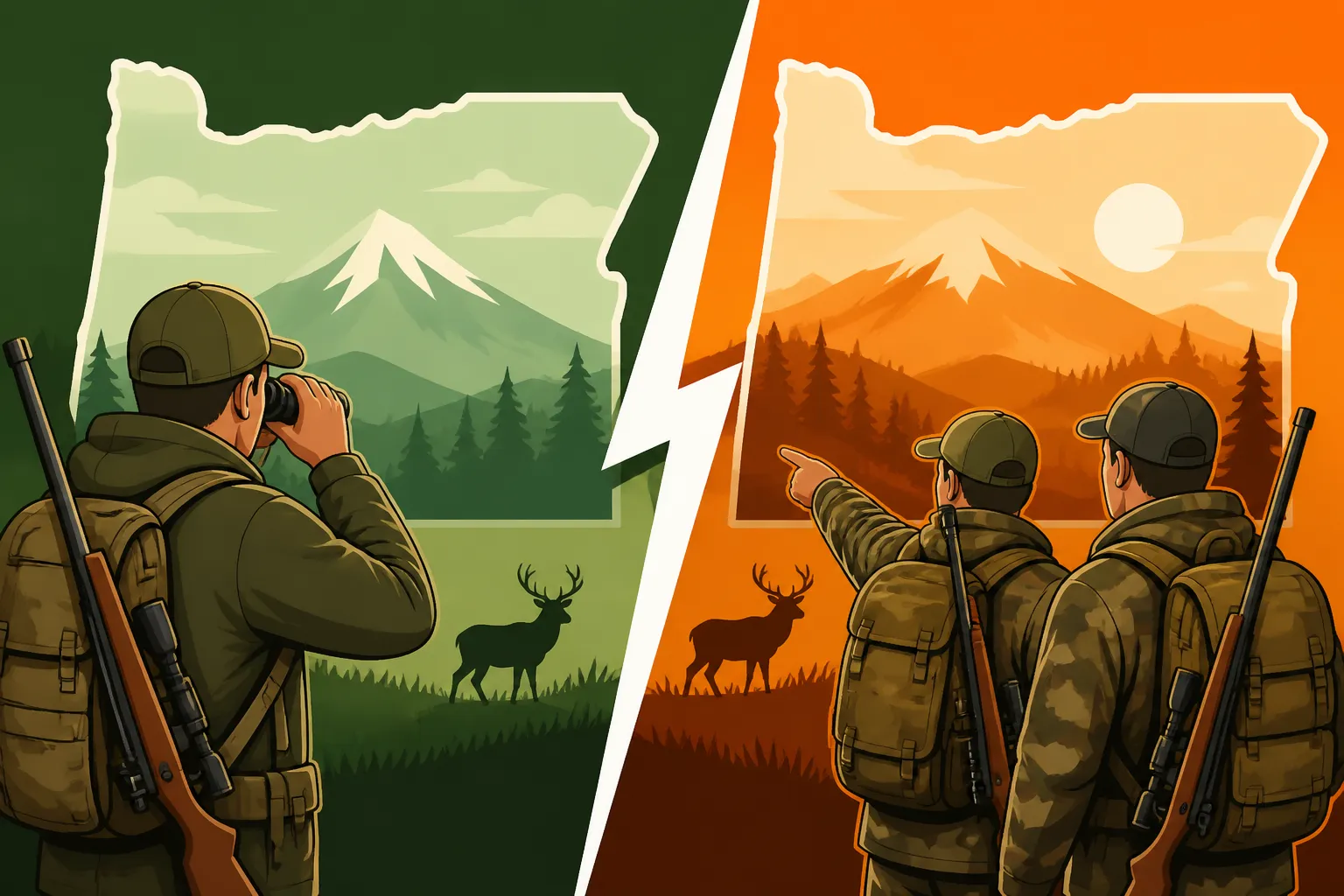
At its core, the terms "1×1" and "2×1" refer to the hunter-to-guide ratio on your trip. It’s a simple concept with far-reaching implications for everything from strategy to camaraderie in the field. This ratio dictates how much direct attention you'll receive, the pace of the hunt, and the dynamics of decision-making when a big buck or bull steps out.
A one-on-one (1×1) guided hunt means you have your own dedicated guide. It's just you and the guide, trekking through Oregon's dense timber, glassing vast sage flats, or calling elk in a remote canyon. This setup offers an extremely personalized experience, tailored directly to your fitness level, hunting style, and specific goals. You dictate the pace, you make the calls (with the guide's expert input, of course), and all the guide's focus is solely on putting you on an animal.
Conversely, a two-on-one (2×1) guided hunt involves two hunters sharing one guide. This is a very popular option, especially for hunting buddies, couples, or family members who want to experience the wilderness together. The guide's attention is split between two clients, and decisions in the field often need to accommodate both hunters' preferences, physical capabilities, and sometimes, even their individual hunting goals. While it offers a unique camaraderie and often a more budget-friendly price point, it also comes with a different set of compromises and considerations.
The choice isn't just about economics; it's about what kind of experience you're truly seeking. Do you want an intense, singular pursuit where every moment is about your personal quest, or do you envision a shared adventure where the successes and challenges are part of a collective memory? Knowing this fundamental difference is the first step in making an informed decision for your Oregon hunting trip.
The Intimate Experience: One-on-One Guiding
Opting for a one-on-one guide is often seen as the premium choice for a reason. It offers an unparalleled level of personalization and focus that can truly elevate your hunting experience. For many, especially those pursuing a once-in-a-lifetime tag or a specific trophy animal, the investment is well worth it.
Unwavering Focus and Personalized Pace
With a 1×1 setup, you are the singular focus of your guide. Every moment, every strategy, every decision is centered around your hunt. If you need to stop for a breather on a steep climb in the Blue Mountains while Training for a Backcountry Elk Hunt, your guide waits. If you want to spend an extra hour glassing a particular ridge for a mule deer in eastern Oregon, that's what you do. This undivided attention means your guide is constantly assessing your strengths, understanding your limitations, and adapting the hunt to maximize your personal opportunities.
For instance, imagine you're on an archery elk hunt in September. With a 1×1 guide, if you're struggling with a particular cow call or your shot confidence, the guide can dedicate time to coaching you, refining your technique, or simply boosting your morale without the distraction of another hunter's needs. This focused approach can be invaluable for new hunters learning the ropes, or seasoned hunters with very specific goals for their Roosevelt Elk in Western Oregon or Rocky Mountain Elk in Eastern Oregon hunt.
Flexibility and Adaptability in the Field
One of the biggest advantages of a 1×1 hunt is the sheer flexibility it offers. Hunting situations can change rapidly in Oregon's diverse landscapes. A sudden shift in wind, an unexpected encounter with game, or a change in weather conditions can necessitate a quick change of plans. When it's just you and your guide, these adjustments can be made instantly, without needing to consult a second hunter or consider their specific needs or physical condition.
Let's say you're still-hunting for Blacktail Deer Hunting in Oregon's Coastal Clearcuts and your guide spots a monster buck slipping into a thick patch of salal. With a 1×1 setup, you can immediately pivot, initiate a stalk, and try to intercept that deer. There's no concern about a second hunter needing to catch up, staying quiet, or having different expectations for the stalk. This agility allows for more dynamic hunting, often leading to opportunities that might be missed in a larger group. It's truly about seizing the moment as a cohesive unit of two.
The Cost Factor
There's no getting around it: a one-on-one guided hunt typically comes with a higher price tag per person. You are, after all, paying for the guide's exclusive time, expertise, and resources. When you're considering the Cost of a Guided Oregon Elk Hunt or a Guided Oregon Mule Deer Hunt Price, you'll notice that the 1×1 option often represents a significant premium.
This higher cost covers the guide's full attention, allowing them to dedicate every ounce of their energy to your success. It also means the outfitter might have fewer clients in the field for a given period, meaning less overhead is spread across more hunters. While it's a larger financial commitment, many hunters view it as an investment in a highly personalized, potentially higher-success experience. It's crucial to weigh this against your overall budget, but understand that the value isn't just in the kill, but in the tailored journey.
Potential Downsides
While a 1×1 hunt offers many advantages, it's not without its potential downsides. For some, the intense focus can create a sense of pressure, especially if they are feeling the weight of a high-cost trip. The solitude, while appealing to many, might not suit everyone; some hunters thrive on the shared experience and conversation that comes with a hunting partner.
Another point to consider is the guide's energy. While dedicated to you, a guide still works incredibly hard. Some hunters might feel an unspoken pressure to keep pace or perform, even if the guide reassures them otherwise. It's a very personal dynamic, and being comfortable with that singular focus is key.
The Shared Adventure: Two-on-One Guiding
For many hunters, a two-on-one guided trip strikes an excellent balance between professional guidance and shared camaraderie, all while often being more accessible from a cost perspective. It's a fantastic option for those who enjoy the journey with a friend or family member.
Shared Experience, Shared Cost
The most immediate and obvious benefit of a 2×1 guided hunt is the reduced financial burden per person. When you look at the price structures for Oregon Guided Elk Hunt Price Ranges or Oregon Guided Deer Hunt Costs, you'll consistently find that the per-hunter price for a 2×1 is notably lower than for a 1×1. This makes professional guiding accessible to a wider range of hunters, allowing more people to experience what an Oregon outfitter can offer.
Beyond the economics, sharing the experience with a hunting buddy is a huge draw. The laughs on the trail, the quiet moments spent glassing together, the shared excitement when a bull bugles back, and the post-hunt stories around the campfire create indelible memories. For many, hunting is a social activity, and a 2×1 setup perfectly caters to that desire for companionship, fostering a bond over shared challenges and triumphs in Oregon's backcountry. You're not just getting a guide; you're also getting to spend quality time with someone important to you.
Teamwork and Dynamic Strategies
While the guide's attention is split, a 2×1 hunt can foster a unique teamwork dynamic. Two hunters mean two extra sets of eyes and ears, potentially spotting game or hearing distant calls that the guide might otherwise miss. The guide essentially directs a small team, utilizing both hunters' abilities to increase the odds of success. For example, in a calling setup for elk, one hunter might be positioned as the primary shooter, while the other serves as a backup or a strategic advantage for distracting the animal's attention. Setting Up a Caller and Shooter on a Bull is a skill perfected in these scenarios.
This collaborative approach can be very effective, especially in species like elk where multiple animals might be present or a specific setup requires careful positioning. The guide can assign roles, whether it's one person spotting while the other gets into position, or using both hunters to cover different angles during a stalk. It adds another layer of strategy to the hunt, making it a more interactive and engaging experience for everyone involved.
Less Flexibility and Potential Compromise
The primary drawback of a 2×1 hunt is the inherent reduction in flexibility. With two hunters, decisions regarding pace, strategy, and even shot opportunities must often be a compromise. If one hunter is more physically fit than the other, the group's pace will likely be dictated by the slower individual. If one hunter is determined to pursue a trophy while the other is happy with any legal animal, the guide has to balance these differing goals.
Imagine a situation where a bull elk presents a shot to one hunter, but not the other, or is positioned such that only one hunter can reasonably attempt a stalk. The guide must navigate these moments, often leading to one hunter having to pass on an opportunity for the benefit of the other, or to ensure safety. Communication and shared understanding between the two hunters are absolutely vital to minimize frustration and ensure a positive experience for all. There's an art to Cow Calling Versus Bugling in Heavy Timber that often requires precise placement, and with two shooters, finding that perfect spot can be more complicated.
Considerations for Hunter Compatibility
Perhaps the single most critical factor for a successful 2×1 hunt is the compatibility of the two hunters. You'll be spending long, often challenging, days together in close quarters with your guide. Differences in physical fitness, hunting experience, personality, and even desired trophy quality can quickly lead to friction.
It's paramount that both hunters have a frank discussion before booking about their expectations, physical limits, and what they hope to get out of the trip. Are you both comfortable with the same level of exertion? Do you have similar patience levels? Are you willing to defer to your hunting partner if they get the first, best shot opportunity? Having a mismatched pair can turn a shared adventure into a source of stress. When looking for outfitters, platforms like BookYourHunt or GoHunt sometimes allow you to specify group sizes, but it's always up to you to ensure your hunting partner is truly a good match for the experience.
Making Your Choice: Key Considerations
Deciding between a 1×1 and 2×1 guided hunt isn't a trivial matter. It involves self-reflection, honest assessment of your resources, and clear communication with your potential outfitter. There are several factors to weigh to ensure you pick the option that best aligns with your expectations and makes for a truly memorable Oregon hunting experience.
Budgetary Realities
Let's be realistic: for many of us, the budget is the elephant in the room. A guided hunt is an investment, and the difference between 1×1 and 2×1 pricing can be substantial. Before you get too deep into the daydreaming, sit down and determine what you are genuinely comfortable spending. Remember that the listed guided Oregon elk hunt price or Guided Blacktail Hunt Cost in Oregon is often just the base. You also need to account for travel, licenses, tags, tips, and potentially meat processing or taxidermy.
If your budget is tighter, a 2×1 hunt with a trusted friend or family member often makes the dream a reality. If you have the financial flexibility and crave that unparalleled, singular focus, then a 1×1 might be the better fit. Don't stretch yourself so thin that the financial stress overshadows the joy of the hunt. Look for transparency in what your Oregon Guided Hunt Package Includes to ensure you understand all the costs involved.
Your Hunting Style and Goals
What kind of hunter are you, and what do you truly want to achieve on this trip?
- Trophy-focused hunter: If you're chasing a specific Boone and Crockett minimum or a particular class of animal, the laser focus of a 1×1 guide might be invaluable. They can dedicate all their efforts to finding that precise animal and executing a meticulous stalk, increasing your Oregon Record Book Roosevelt Bulls chances.
- First-time hunter: For novices, the undivided attention of a 1×1 guide can provide essential coaching on everything from tracking to shot placement. However, a 2×1 with an experienced friend can also be a fantastic learning environment, offering peer support.
- Experience-seeker: If the journey, the time in nature, and the camaraderie are more important than the harvest, a 2×1 hunt could be perfect. The shared moments often create richer memories.
- Physical fitness: Be honest about your physical condition. If you struggle with steep terrain or long treks in the Oregon Coast Range Hunting Access, a 1×1 guide can tailor the pace to you. In a 2×1, you'll need to match the pace of your partner and the guide. Considering Fitness Expectations on an Oregon Wilderness Hunt is critical.
Companionship and Group Dynamics
Are you a solo adventurer or someone who thrives on shared experiences? If you cherish solitude and deep personal reflection in the wilderness, a 1×1 hunt provides that quiet communion with nature. You can immerse yourself fully without external distractions.
If, however, you find joy in sharing successes, overcoming challenges with a friend, and recounting the day's events around a crackling fire, a 2×1 hunt offers that social dimension. It's a fantastic way to bond and create lasting memories with someone close to you. Just ensure that you and your hunting partner have compatible personalities, similar goals, and a shared understanding of how you'll handle various scenarios in the field.
Outfitter Specialization
It's worth noting that some outfitters tend to specialize or excel in one type of guiding over the other. When researching potential guides for Hiring a Registered Oregon Hunting Guide, pay attention to how they present their hunts. Some might heavily promote their personalized 1×1 experiences, emphasizing the individual attention. Others might highlight the group aspect and the value of their 2×1 offerings.
Platforms like BookYourHunt or GoHunt can be great resources for comparing different outfitters and their service models. Don't hesitate to directly ask outfitters about their typical guide-to-hunter ratio and which setup they believe yields the best experience for particular species or hunting styles in Oregon.
Asking the Right Questions
Once you've narrowed down your choices, direct communication with the outfitter is paramount. This is where you clarify expectations and ensure there are no surprises. When you're making those important calls, refer to this list of Questions to Ask an Oregon Outfitter. Specifically for the 1×1 vs. 2×1 decision, consider asking:
- "What is your typical success rate for 1×1 versus 2×1 hunts for [Game Species]?"
- "How do you handle shot opportunities when two hunters are sharing one guide?"
- "What measures do you take to ensure compatibility between hunters on a 2×1 hunt?"
- "Can you describe a typical day on a 1×1 versus a 2×1 hunt with your operation?"
- "Are there specific units or types of terrain where one ratio works better than the other?"
Don't forget to ask for references from past clients, particularly those who have experienced both 1×1 and 2×1 hunts with the outfitter. Their insights can be invaluable. This diligent research, combined with an honest assessment of your own needs, will guide you to the right choice for your Oregon hunting adventure.
Here's a quick comparison to help you visualize the key differences:
| Feature | One-on-One (1×1) Guiding | Two-on-One (2×1) Guiding |
|---|---|---|
| Guide Attention | Exclusive, undivided focus on a single hunter. | Shared focus between two hunters. |
| Cost (per hunter) | Generally higher. | Generally lower. |
| Flexibility | High; plans can change rapidly to suit one hunter. | Moderate; decisions involve input from two hunters and guide. |
| Pace | Set by the individual hunter and guide. | Often dictated by the slower or more cautious hunter. |
| Social Aspect | Solitary, deep connection with guide. | Shared camaraderie, great for friends/family. |
| Pressure | Can be higher due to exclusive focus and cost. | Often diffused, shared successes and challenges. |
| Ideal For | Specific trophy goals, new hunters needing intense coaching, solo adventurers, those with unique physical needs. | Friends/family hunting together, budget-conscious hunters, those who enjoy shared experiences. |
| Decision-Making | Unilateral (hunter + guide). | Collaborative (two hunters + guide). |
Disclaimer
This article is for general informational purposes only and does not constitute professional advice. Laws, prices and regulations vary by location and change over time. Consult a qualified professional for guidance on your specific situation.