Camp Size on an Oregon Outfitted Hunt
One of the most common anxieties for hunters considering an outfitted trip, especially in a state as wild and varied as Oregon, revolves around the dynamic of the camp itself. You're envisioning a deep woods adventure, perhaps a solitary pursuit, but the reality of sharing a tent or a hunting area with other clients can feel a bit daunting. This guide is here to shed light on what "camp size" truly means for an Oregon outfitted hunt, helping you understand the factors involved and how to pick the experience that best suits your vision of a successful hunt.
Understanding What "Camp Size" Really Means for an Outfitter
When you hear "camp size," it's easy to picture the literal footprint of tents and gear in the backcountry. While that's certainly part of it, for an outfitted hunt in Oregon, it's far more nuanced. It really boils down to the number of people—both hunters and staff—who will be sharing that experience, and how that dynamic plays out both in camp and in the hunting areas. This distinction is critical because it dictates everything from your personal space to the amount of one-on-one time you get with your guide, and even how much pressure might be put on the local game population.
Distinguishing Between Physical Camp Size and Hunter Ratios
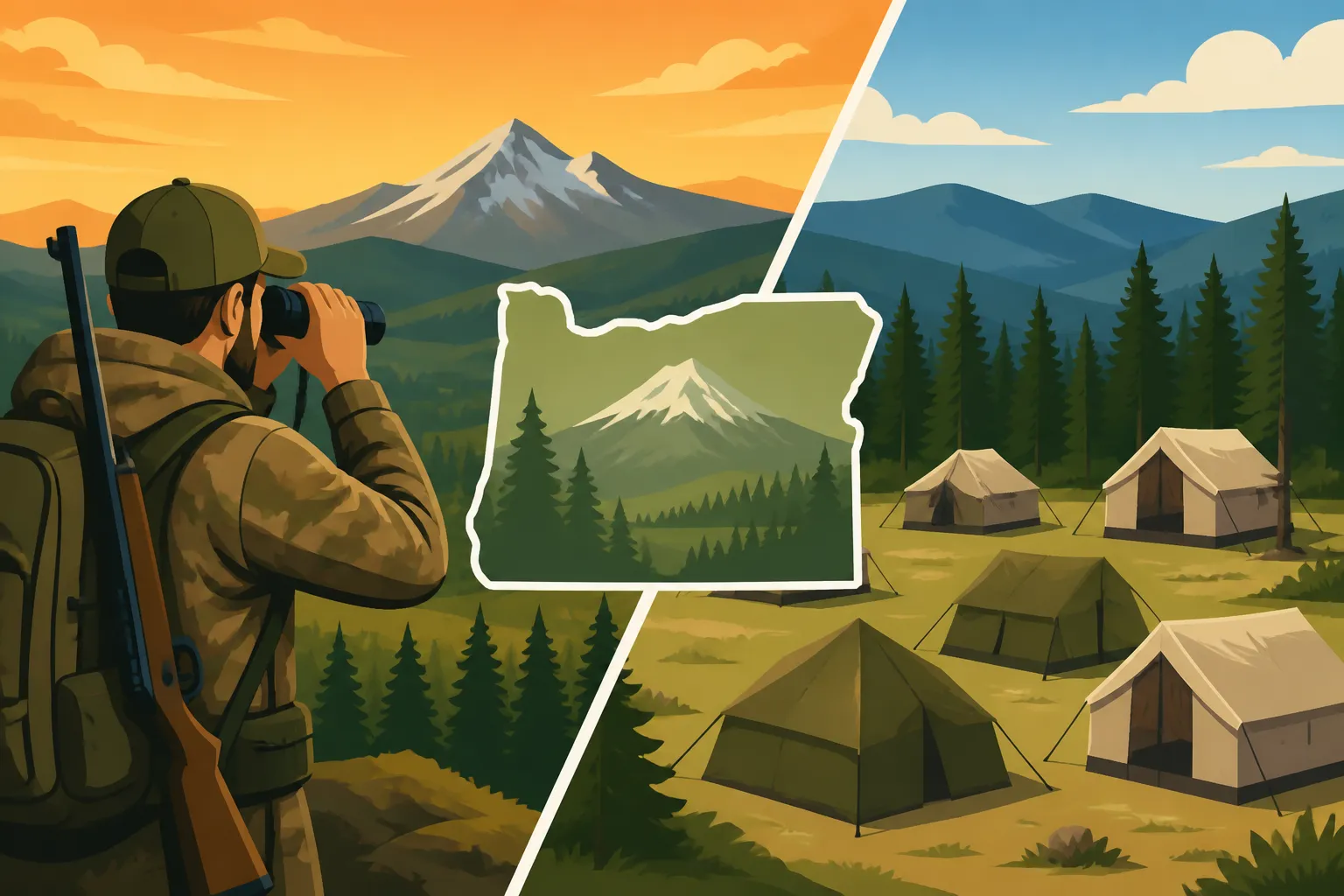
Think of it this way: a physical camp might consist of a large wall tent for cooking and eating, a few smaller sleeping tents, and a designated area for horses and gear. That's one kind of size. But within that physical space, you could have an outfitter hosting just two hunters with two guides, or a larger operation with six hunters and three guides, plus a cook and a wrangler. The hunter-to-guide ratio and the total number of clients are often more significant than the sheer square footage of the camp.
For example, a boutique wilderness outfitter might run a very small, exclusive camp with only two clients per week, offering a true One-on-One Versus Two-on-One Guiding experience. Their physical camp might be modest, perhaps a single cook tent and individual spike tents. In contrast, another outfitter operating on private timberland might have a larger, more permanent base camp with several wall tents and even cabins, hosting a dozen hunters simultaneously. Even though the private land camp might be physically larger, the number of hunters per guide could still be low if they have ample staff. The core frustration here often lies in expecting solitude and receiving a crowd, or vice versa. It’s about managing expectations between the dream of a rugged, lone wolf adventure and the practicalities of a commercially run operation.
The Logistical Constraints Outfitters Face in Oregon
Outfitters in Oregon don't just set up camp wherever they please; they operate under a strict set of rules and logistical constraints, especially when working on public lands. Federal agencies like the Forest Service and Bureau of Land Management (BLM) issue special use permits that dictate where, when, and how outfitters can conduct their business. These permits often specify maximum group sizes, the number of stock animals allowed, and even the type of equipment that can be used. For instance, in designated wilderness areas, there are stringent regulations about motorized vehicles, mechanical transport like game carts, and even group size limits to maintain the area's wild character.
This means an outfitter working in, say, the Eagle Cap Wilderness will have very different camp size limitations compared to one operating on a vast private ranch in Eastern Oregon. On public land, there are often explicit caps on the number of clients an outfitter can host at any given time, as well as restrictions on how long a camp can be established in one spot without being moved. An outfitter might have multiple permitted areas, moving clients between them to spread out pressure and comply with regulations. It’s a complex dance of regulations and logistics, and it's why you'll see such a variety in camp sizes and setups across the state. Understanding that these aren't arbitrary choices but often legally mandated parameters can help set realistic expectations.
The Impact of Camp Size on Your Hunting Experience
The size of your hunting camp, particularly the number of other hunters and guides present, profoundly shapes your overall experience. It's not just about the hunt itself, but also the atmosphere, the pace, and the camaraderie (or lack thereof) during those early mornings and late evenings.
Intimacy Versus Companionship in Camp
When you book a hunt, you're not just buying a chance at an animal; you're buying an experience. A smaller camp, perhaps just you and your guide, or two hunters with one guide, often fosters a more intimate and focused environment. You might spend more time discussing strategy, sharing stories, and really getting to know your guide. These Backpack Camps in Oregon Wilderness or spike camps tend to be quieter, allowing for deeper immersion in the natural surroundings. For many, this solitude and direct connection with the wilderness is precisely what they're seeking—a chance to disconnect from the hustle and bustle and focus solely on the hunt.
Conversely, a larger camp with multiple hunters and support staff can offer a different kind of richness. There's often a greater sense of camaraderie, shared excitement, and varied perspectives around the dinner table. You might find yourself swapping tales with other hunters who have different experiences and skill sets. This can be fantastic for social hunters, those new to the game looking to learn from others, or those who simply enjoy a lively atmosphere. However, the trade-off can be less one-on-one time with your guide, more noise, and perhaps less flexibility in the daily schedule. It's a genuine choice between a deeply personal journey and a more communal adventure, and neither is inherently better; it just depends on your personal preference.
How Camp Size Affects Hunt Pressure and Animal Movement
More people in an area, even experienced hunters, generally means more human presence, which can translate to increased pressure on game animals. In a larger camp setting, especially if multiple hunting parties are heading out from the same location each morning, there's a higher chance of encountering other hunters, driving roads more frequently, or pushing animals in directions that are less favorable for you. Elk and deer, especially mature animals, are incredibly sensitive to human activity. Even subtle changes in routine, like multiple vehicles driving the same forest road at dawn, can alter their patterns.
Consider a scenario in Western Oregon's dense timber: if a larger camp means several groups of hunters are simultaneously still-hunting different clearcuts or calling in different drainages, the collective human footprint can be substantial. This might push animals into thicker cover, make them more nocturnal, or cause them to vacate the area entirely. While experienced outfitters work hard to mitigate this by spreading out their hunters across different areas or rotating spots, the sheer volume of human scent, sound, and movement can be a factor. Smaller camps, by their nature, tend to have a lighter footprint, potentially allowing animals to behave more naturally, which can sometimes translate into better hunting opportunities for the individual hunter who values that low-pressure environment. It's a frustration many hunters face when the reality of public land meets the dream of an undisturbed wilderness.
Factors Influencing an Outfitter's Camp Size
Outfitters don't just pull camp sizes out of a hat. Their decisions are shaped by a complex interplay of regulations, business strategy, and the practical demands of operating in the backcountry. Understanding these factors can give you insight into why a particular outfitter runs their camp the way they do.
Permit Requirements and Allocation on Public Land
For any outfitter operating on federal lands in Oregon, such as National Forests or BLM acreage, obtaining the necessary Special Use Permits for Forest Service Land is paramount. These permits are meticulously managed and dictate not only where an outfitter can guide, but also how many clients they can serve at one time and what kind of infrastructure they can deploy. Agencies issue these permits with conservation in mind, aiming to minimize impact on wildlife and other recreational users. For instance, in designated wilderness areas, there are strict Group Size Limits in Wilderness Areas that apply to both commercial and private parties, often limiting groups to 12 or fewer people, sometimes even smaller depending on the specific wilderness management plan.
These permits are not easily acquired; they're often allocated for specific operating areas and may take years to obtain. An outfitter's existing permit will largely define their maximum camp size and the number of hunters they can legally host. This means if you're looking for a hunt deep in the Wallowa-Whitman National Forest, the outfitter is absolutely constrained by their permit's capacity. They can't simply double their client load if demand is high. This regulatory framework ensures some level of resource protection, but it also means that outfitters often have fixed capacities, which can lead to limited availability for popular hunts.
The Outfitter's Business Model and Client Load
Beyond permits, an outfitter's core business philosophy plays a huge role in determining camp size. Some outfitters explicitly market themselves as offering exclusive, low-client-volume hunts, focusing on a premium, highly personalized experience. Their pricing structure reflects this, as they divide their operational costs by fewer clients. These types of operations might run only one or two hunts simultaneously, focusing intensely on those specific clients. You'll often find these advertised as one-on-one or two-on-one guide service hunts, where the guide is dedicated to a very small group.
Other outfitters, particularly those with larger private land leases or extensive public land permits, might operate with a higher volume of clients. Their business model might be to offer a more accessible price point by accommodating more hunters, perhaps with a 1:2 or 1:3 guide-to-hunter ratio. This doesn't necessarily mean a lesser experience, but it will certainly mean a different camp dynamic. They might have a dedicated cook and more comprehensive base camp facilities, allowing them to manage a larger client load efficiently. When you're browsing platforms like BookYourHunt or GoHunt, you'll see a spectrum of offerings, and it’s important to match your expectations with the outfitter's chosen model.
Infrastructure and Logistics: Wall Tents, Horses, and Food
The practicalities of running a backcountry camp also heavily influence its size. How much gear can be packed in? How many people can be comfortably housed and fed? For horse-pack-in hunts, the number of stock animals required to transport tents, stoves, food, and personal gear for several hunters and staff is a major consideration. A Wall Tent and Stove Camp Setup provides warmth and comfort but requires more effort to establish and move, often necessitating a larger crew and more stock.
Consider the daily logistics: cooking for two people is vastly different from cooking for twelve. A larger camp might require a dedicated cook, a more extensive kitchen setup, and more food storage. Waste management, particularly in remote areas, also scales with camp size. These factors translate directly into the personnel required—guides, wranglers, cooks, camp jacks—which in turn contributes to the overall "size" of the camp in terms of human presence. An outfitter planning a comfortable, multi-day experience for numerous clients will naturally have a more extensive and staffed camp than one offering a minimalist spike camp for a single hunter.
Choosing the Right Camp Size for Your Oregon Hunt
Deciding on the ideal camp size for your guided Oregon hunt is a highly personal choice, akin to picking the perfect pair of hunting boots. It hinges on your personal hunting philosophy, what you hope to get out of the experience beyond just harvesting an animal, and how much interaction you desire with fellow hunters.
Assessing Your Personal Hunting Style and Preferences
Before you even start looking at outfitters, take a moment to honestly assess your own hunting style and what truly makes a trip fulfilling for you. Do you crave solitude? Is the idea of waking up in a quiet camp, with just the sounds of the wilderness, paramount? If so, you'll likely gravitate towards smaller, more intimate camps, perhaps a spike camp or a simple Backpack Camps in Oregon Wilderness where the focus is almost entirely on the hunt and your personal experience. You might prefer the quiet introspection that comes with a very small group.
On the other hand, if you enjoy camaraderie, swapping stories, and learning from others, a larger camp could be a fantastic fit. Some hunters thrive on the shared energy of a bustling camp, finding motivation and enjoyment in the collective experience. Perhaps you're a first-time hunter, and the idea of being around more experienced individuals offers a sense of comfort and a chance to learn. Think about your ideal mornings and evenings: do you want a quiet cup of coffee with one other person, or a lively breakfast with multiple discussions about the previous day's adventures? Your answer to this question is a critical first step.
Questions to Ask Potential Outfitters About Camp Size
Once you have a sense of your preferences, it's time to get specific with potential outfitters. Don't be shy; reputable outfitters expect these questions and will be transparent. Here are some key Questions to Ask an Oregon Outfitter regarding camp size and dynamics:
- "How many hunters will be in camp during my hunt dates?" This is the most direct way to understand the client load.
- "What is your typical guide-to-hunter ratio?" This tells you about the personal attention you can expect. Is it 1:1, 1:2, or something else?
- "What are the sleeping arrangements?" Are clients in individual tents, shared wall tents, or cabins? This impacts your personal space.
- "Beyond guides, what other staff will be in camp (cooks, wranglers)?" This gives you a sense of the total human presence.
- "How are hunting areas assigned or rotated among groups?" This provides insight into how they manage pressure and potential crowding.
- "Can you describe a typical day in camp, from wake-up to lights out?" This helps you visualize the camp rhythm.
- "Are there any non-hunting companions typically in camp?" Sometimes, guides' family or other non-hunters are present.
Don't just listen to the words; listen to the tone. A good outfitter will openly discuss these details and help you determine if their camp environment aligns with your expectations. When looking through an outfitter's details on platforms like BookYourHunt, pay close attention to the listed ratios and camp amenities.
Researching Outfitter Reviews and Testimonials
In today's digital age, one of your most valuable tools for choosing an outfitter is their reputation and the experiences of past clients. Websites like GoHunt and BookYourHunt often host detailed reviews and testimonials, which can offer invaluable insights into camp dynamics and size. Don't just look at the star ratings; dive into the actual comments.
Look for specific mentions of camp atmosphere. Did clients feel crowded? Was there enough personal attention? Did they enjoy the camaraderie or wish for more solitude? Sometimes, a nuanced comment like "the cook tent was lively, but our sleeping quarters felt private" can tell you a lot. Pay attention to how many clients are mentioned in successful hunt stories—does it seem like a small, focused group, or a larger operation? Be critical when Reading an Outfitter's Photo Gallery Honestly; sometimes, photos can highlight only a few clients, masking a larger overall camp. It's also a great idea to ask the outfitter for references, and when you call them, make sure to ask about the specific camp size and overall experience. Getting References From Past Clients is crucial for verifying what an outfitter tells you. These candid conversations often reveal the true nature of a camp.
Practical Considerations for Managing Your Expectations
Even with all the research in the world, the reality of an outfitted hunt, especially in the wild and unpredictable landscape of Oregon, means embracing a certain degree of flexibility. Managing your expectations is key to ensuring you have a positive experience, regardless of the precise camp size.
Flexibility and Adaptability in an Outdoor Setting
Hunting is inherently unpredictable, and even the most meticulously planned outfitted hunt can encounter unexpected turns. Weather can change on a dime, animal patterns might shift, or you might find yourself in a camp with personalities that are different from your own. This is where your personal flexibility and adaptability really shine. A positive attitude, even when faced with minor inconveniences, can transform a potentially frustrating situation into a memorable adventure. If you're expecting everything to run like clockwork and for every moment to be perfectly tailored to your solitary ideal, you might be setting yourself up for disappointment in a larger camp.
Being open to new experiences, whether it's sharing a larger What an Oregon Guided Hunt Package Includes cook tent or adjusting your schedule to accommodate another hunter's needs, goes a long way. Remember that the outfitter and guides are working hard to create the best possible experience for everyone. A little grace and understanding on your part can make a huge difference in the overall camp morale and your enjoyment of the trip. The wild backcountry of Oregon demands respect and a readiness to roll with the punches, and that includes the social dynamics of your camp.
The Role of Camp Staff Beyond the Guides
In many larger outfitted camps, particularly those that offer more creature comforts, you'll find staff beyond just the hunting guides. This might include a dedicated cook who handles all the meals, wranglers who manage the stock animals, or general camp jacks who keep things running smoothly. While these individuals add to the overall "human footprint" of the camp, they also contribute significantly to the quality of your experience. Having a cook means guides can focus entirely on hunting and client care, rather than worrying about preparing dinner after a long day in the field. This can lead to more focused hunting efforts and better-rested guides.
Think about the comfort and efficiency of a camp where Camp Food and Dietary Requests are managed by a professional, allowing you and your guide to discuss hunting strategy over breakfast instead of arguing about who's doing dishes. While the presence of extra staff certainly increases the total number of people in camp, their roles are designed to enhance your comfort and allow for a more streamlined hunting operation. It's a trade-off that many hunters appreciate, as it allows for a more relaxed and enjoyable camp life after the day's hunt is done.
Respecting Fellow Hunters and Camp Etiquette
Regardless of whether you find yourself in a tiny spike camp or a sprawling base camp, basic camp etiquette is non-negotiable. Sharing space, even in the grand outdoors, requires mutual respect. This means being mindful of noise levels, especially in the mornings and evenings when some hunters might be trying to sleep or have quiet reflection. It also involves respecting personal space and shared common areas, keeping your gear organized, and contributing positively to the overall camp atmosphere.
In smaller sleeping arrangements, like shared wall tents, this becomes even more critical. Think about things like managing your scent, keeping your gear tidy, and being punctual for meals or departure times. Just as you want your experience to be enjoyable, so do your fellow hunters. A little consideration goes a long way in fostering a positive camp environment. Even if the camp isn't exactly what you envisioned in terms of size, a group of respectful, like-minded individuals can turn any camp into a fantastic experience. When it comes time to provide feedback on an outfitter, platforms like BookYourHunt or GoHunt are excellent places to Reviewing an Outfitter After the Hunt, and your comments can help future hunters make informed decisions about camp dynamics.
| Feature | Small Camp (e.g., 2-4 hunters) | Large Camp (e.g., 6-12+ hunters) |
|---|---|---|
| Hunter-to-Guide Ratio | Often 1:1 or 1:2 | Often 1:2 or 1:3 |
| Atmosphere | Intimate, quiet, personalized, solitary | Communal, lively, more social, bustling |
| Physical Setup | Spike tents, small wall tent, minimalist | Multiple wall tents, cabins, larger common areas |
| Staff Presence | Guides only, or guide + packer | Guides, cook, wranglers, camp jacks |
| Hunt Pressure | Generally lower impact on local game | Potential for higher pressure, spread out |
| Flexibility | More adaptable to individual hunter's pace | More structured schedule, less individual variation |
| Cost | Often higher per-person for exclusivity | Can be more budget-friendly due to scale |
| Interactions | Deep connection with guide, minimal peer interaction | Broad interaction with multiple hunters and staff |
Disclaimer
This article is for general informational purposes only and does not constitute professional advice. Laws, prices and regulations vary by location and change over time. Consult a qualified professional for guidance on your specific situation.