Steens Mountain Hunting Country
Steens Mountain. Just uttering the name conjures images of vast, high-desert grandeur, a place that feels as ancient and untamed as any corner of Oregon. For many hunters, it's a bucket-list destination, a place where big mule deer bucks roam and pronghorn streak across the sagebrush flats. But let's be real: the sheer scale and remoteness of Steens Mountain can be incredibly intimidating. The thought of navigating its rugged terrain, understanding its unique ecosystem, and even just getting there can feel overwhelming. This guide is here to break down the mystique of Steens Mountain hunting country, offering practical insights and detailed advice to help you prepare for a truly unforgettable adventure in this majestic, challenging landscape.
Understanding the Steens Mountain Landscape and Ecology
Steens Mountain isn't just a mountain; it's a massive fault-block range, one of the largest in North America, rising dramatically from the Alvord Desert in southeastern Oregon. Its sheer size and isolation create a unique environment that shapes everything from its weather patterns to its wildlife. If you're going to hunt here, understanding the lay of the land is your first, best step.
High Desert Environment and Elevations
Imagine an ocean of sagebrush stretching to distant, jagged peaks. That's the Steens. While it rises to nearly 10,000 feet at its summit, much of the hunting country is found on the expansive plateaus and canyon rims that range from 5,000 to 8,000 feet. This is high-desert country, meaning extreme temperature swings are the norm – baking hot days can give way to freezing nights, even in summer, let alone during a fall hunt. The air is thin, and the sun is intense, demanding vigilance with hydration and sun protection.
The geology is a spectacle in itself, with massive U-shaped glaciated valleys like Kiger Gorge and Little Blitzen Gorge carved into its flanks. These deep canyons provide critical thermal cover and escape routes for game, but they also create formidable barriers for hunters. Knowing how to read these geological features on a map, perhaps using a tool like onX Hunt to visualize the topography, can save you hours of wasted effort and conserve precious energy.
Unique Flora and Fauna
While sagebrush dominates, you'll also find aspen groves, mountain mahogany, and scattered juniper, especially in draws and on north-facing slopes. These areas are crucial for deer and other wildlife, offering shade, browse, and bedding cover. The Steens is also home to a diverse array of smaller creatures, from pikas in the rock slides to raptors soaring overhead. You'll often see wild horses, a beautiful reminder of the wild nature of this place, but also another species competing for forage.
Understanding the forage availability, particularly how it changes through the season and in response to annual precipitation, is key to locating game. Mule deer, for example, will adapt their movements based on where the best browse is. Pronghorn, on the other hand, are keen on the open flats, utilizing their incredible eyesight to spot danger. Recognizing the types of vegetation and their condition can tell you a lot about what animals might be in the area.
Seasonal Changes and Their Impact
The Steens is a land of dramatic seasonal shifts. Summers are dry and hot, often leading to critical water shortages in many areas. Fall brings cooler temperatures, but also unpredictable weather, from early snowstorms to blustery winds that can make glassing a real challenge. Winter blankets the high country in deep snow, forcing most game animals down to lower elevations. These lower, often privately-owned areas, become vital winter range. Mule Deer Winter Range in Eastern Oregon is a topic unto itself, and understanding these movements is crucial, especially if you're hunting during the later seasons.
Hunting early in the season means dealing with warmer temperatures and potentially more spread-out game, while later hunts might mean battling snow and ice, but also potentially finding deer concentrated in transitional zones. The famed Steens Mountain Loop Road, a major artery into the high country, often closes due to snow sometime in late fall or early winter, cutting off access to vast swathes of hunting ground. Always check road conditions before heading out, as weather can change on a dime and strand you.
Primary Game Species and Their Habits on the Steens
When most hunters think of the Steens, two animals immediately come to mind: mule deer and pronghorn. These are the crown jewels of the high desert, each offering a distinct and challenging hunting experience.
Mule Deer: The Primary Draw
The Steens Mountain mule deer population has a legendary reputation for producing big, heavy-antlered bucks. While herd numbers fluctuate due to various factors like habitat, predation, and severe winters, the potential for a trophy buck keeps hunters dreaming. Mule deer here are often found in the higher, rougher country during the early archery and muzzleloader seasons, utilizing the canyon rims, aspen pockets, and steeper draws for cover and forage. They are incredibly wary animals, well-adapted to their exposed environment.
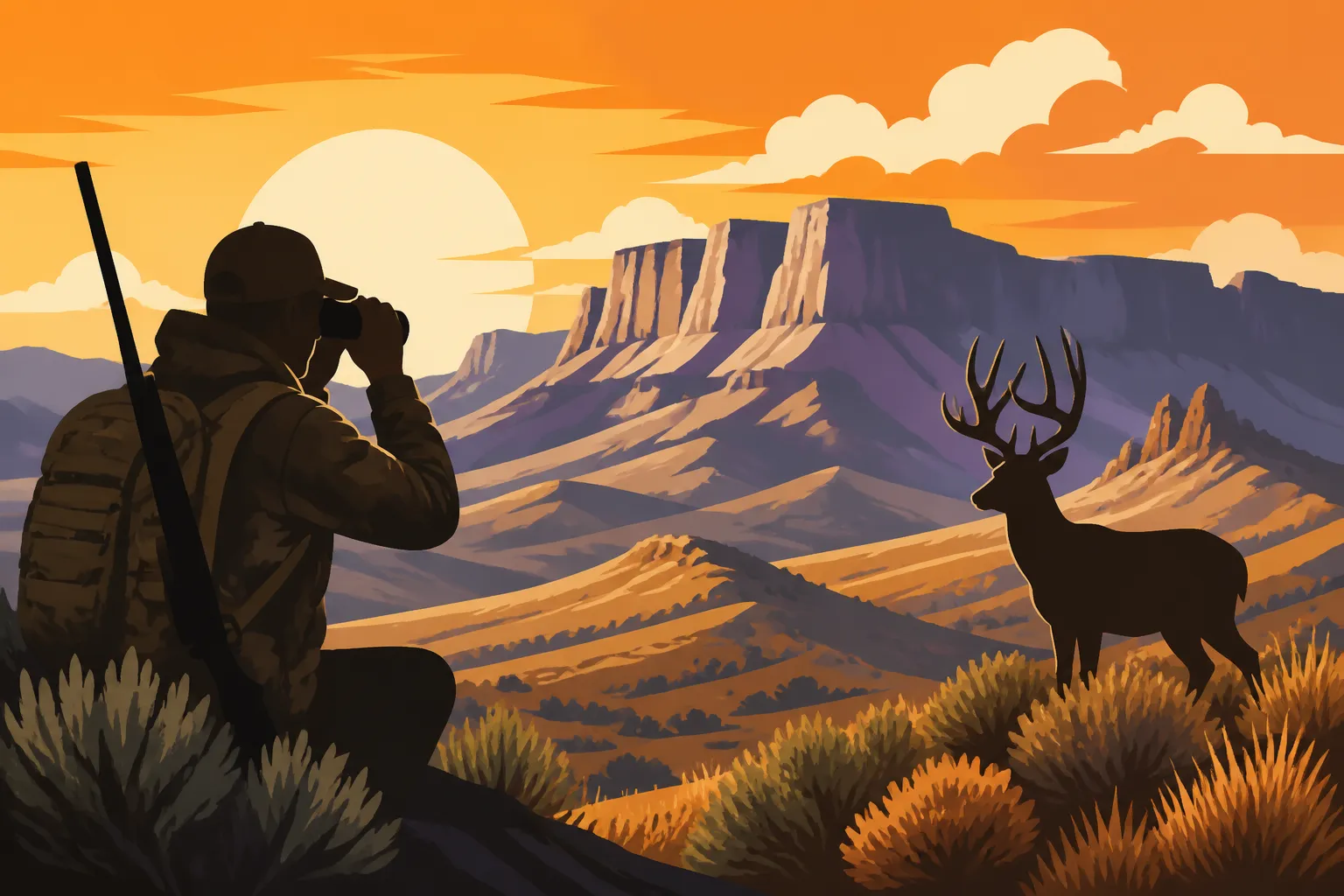
During rifle seasons, as hunting pressure increases and weather cools, these deer will often move into slightly lower, often denser, cover. They are masters of using topography to their advantage, disappearing into folds in the landscape that seem impossible to hide in. Glassing is paramount here; you'll spend far more time behind binoculars and spotting scopes than walking. Knowing Glassing Sage and Juniper for Eastern Oregon Mule Deer techniques is essential. Look for isolated groups of junipers or patches of mountain mahogany, especially on slopes with good visibility for the deer.
Pronghorn: Speedsters of the Flats
Pronghorn, often mistakenly called antelope, are the true kings of the open plains surrounding the Steens. Their incredible speed and eyesight make them one of the most challenging and rewarding animals to pursue. You'll find them predominantly in the expansive sagebrush flats at the base of the mountain and on the rolling plateaus, far from the rough canyons. Unlike deer, pronghorn prefer wide-open spaces where they can see danger from miles away and use their blistering speed to escape.
Hunting pronghorn on the Steens requires a completely different approach than mule deer. Stalking is extremely difficult due to their vision and the lack of cover. Often, it's a game of long-range glassing, careful observation, and strategic vehicle use (where permitted) to get into position, followed by long, low crawls or utilizing small rises and dips in the terrain for concealment. Understanding Pronghorn Speed, Eyesight and Behaviour is critical for success; they rarely jump fences and prefer to crawl under, which can influence how you approach them.
Other Opportunities: Chukar, Sage Grouse, and More
While deer and pronghorn dominate, the Steens offers other hunting opportunities for those willing to explore. Chukar partridge are abundant in the rocky, steep terrain of the canyons and rimrock, providing a fast-paced, physically demanding bird hunt. These hardy birds thrive in the same rugged country that challenges mule deer hunters. A chukar hunt is an excellent way to extend your stay or explore new country after filling a big game tag.
Sage grouse, a truly iconic bird of the high desert, can also be found in certain areas. However, their populations are sensitive, and hunts are typically limited and highly regulated, often by controlled draw. Always check current regulations for specific seasons and restrictions for any bird hunting on the Steens. Beyond these, you might find coyotes, which can be called in for a thrilling predator hunt, and a variety of other small game species.
Accessing Steens Mountain: Roads, Regulations, and Wilderness
Getting to and around Steens Mountain is a significant part of the hunting challenge. Its remoteness means long drives, limited services, and a deep understanding of land management is absolutely necessary.
The Steens Mountain Loop Road and Seasonal Closures
The primary artery into the higher elevations of Steens Mountain is the famous Steens Mountain Loop Road. This mostly gravel road offers breathtaking views and access to numerous trailheads and hunting areas. It's a key piece of infrastructure for hunters, but it comes with a major caveat: seasonal closures. Due to snow, the higher sections of the loop road are typically closed from late fall (often October or November) through late spring (sometimes as late as July). This means your hunt dates heavily influence where you can drive and access the mountain. Always check the current road status with the Bureau of Land Management (BLM) or local visitor centers before you leave home.
Attempting to drive a closed road can lead to fines, vehicle damage, or worse, becoming stranded in harsh conditions. Even when open, the road can be rough, and a high-clearance, four-wheel-drive vehicle is highly recommended. Cell service is virtually nonexistent in many areas, so navigation tools like onX Hunt, loaded with offline maps, are indispensable. Having a physical map as a backup is also a very smart idea, as electronics can fail.
Wilderness Areas and Non-Motorized Travel
A significant portion of the Steens Mountain is designated as wilderness, specifically the Steens Mountain Wilderness Area. This means strict rules apply to motorized travel. Within these boundaries, vehicles, including ATVs and even motorized bicycles, are strictly prohibited. Hunting in wilderness areas requires you to be entirely on foot or to use horses or llamas for packing. This significantly ups the physical ante of the hunt, but also offers an incredibly pristine and solitary experience. Oregon Wilderness Rules That Ban Motorized Carts and similar topics are crucial to understand before venturing into these areas.
Before planning a hunt that involves wilderness sections, thoroughly review the boundaries. These areas are managed to preserve their wild character, and respecting the rules is paramount. This often means packing in all your supplies and packing out everything you bring in, including all trash and animal waste. Planning for Multi-Day Camps in Oregon's Roadless Country in this type of terrain requires a different level of preparation and self-sufficiency.
Private Versus Public Land Mix
While much of Steens Mountain is managed by the BLM and is public land, it's not a monolithic block. There's a complex checkerboard of private lands, particularly at lower elevations and around ranching operations. These private parcels are often crucial winter range or access points. Always know exactly where you are and whose land you're on. Trespassing, even accidentally, is a serious offense and can damage the reputation of all hunters.
Utilizing mapping apps like onX Hunt or researching land ownership data beforehand is crucial. Some private lands may offer access through programs or by seeking permission directly from landowners. However, never assume access; always verify. Respecting private property is essential for maintaining good relations between hunters and landowners and ensuring future access opportunities. GoHunt's resources might also offer insights into general land access in the region, though specific parcel-level detail usually comes from mapping software.
| Land Type | Primary Access Method | Key Considerations |
|---|---|---|
| BLM (High) | Steens Mountain Loop Road, Hiking | Seasonal closures, wilderness restrictions, remoteness |
| BLM (Lower) | Gravel roads, primitive tracks | Private land boundaries, water sources, early season |
| Private Ranch | Permission-only, guided hunts | Respect boundaries, inquire about access, sensitive areas |
| Wilderness Area | Foot or Pack Stock Only | No motorized vehicles, physical demands, deep solitude |
Planning Your Hunt: Essential Gear and Strategy for the Steens
A successful hunt on Steens Mountain isn't just about finding game; it's about being prepared for anything this unforgiving, yet beautiful, landscape throws at you. Preparation is key to both safety and success.
E-Scouting and Map Tools
Before you even think about putting boots on the ground, immerse yourself in e-scouting. Use satellite imagery, topographical maps, and public land layers from tools like onX Hunt or through services like GoHunt. Look for key features: water sources, even seasonal ones, as these are magnets for game in dry country. Identify potential bedding areas, escape routes, and glassing knobs. Mark possible access roads and trails, paying close attention to travel management area (TMA) restrictions, which might limit vehicle use to designated routes. E-Scouting Oregon Units With Satellite Imagery is an art form on the Steens.
Pay close attention to changes in elevation, vegetation types, and north-facing slopes which often hold snow longer or provide cooler bedding. Identify natural funnels or saddles that might concentrate animal movement. This pre-hunt research allows you to arrive with a solid game plan, saving precious time and energy when you're on the mountain. Knowing where you won't hunt is almost as important as knowing where you will.
Physical Preparation and Navigation
Hunting the Steens is physically demanding. You'll be covering vast distances, often at high elevations, with significant elevation changes if you're working the canyons. Start a rigorous physical training regimen well in advance. Hiking with a weighted pack, especially on inclines, will pay dividends. Your boots need to be broken in, comfortable, and supportive, capable of handling rough, rocky terrain and potentially mud or snow. Physical Training for an Oregon Elk Hunt can offer transferable advice, even for mule deer hunting.
Navigation is paramount. As mentioned, cell service is often nonexistent. Rely on a reliable GPS unit with pre-loaded maps, or a mapping app like onX Hunt with downloaded offline maps. Always carry a compass and a physical map as backup. Learn how to use them effectively. Having a satellite communication device, like an inReach or Spot, for emergency situations is not just a luxury, it's a necessity on the Steens. Leaving a detailed trip plan with someone at home, including your expected route and return date, is also a critical safety measure.
Water, Weather, and Emergency Preparedness
Water is life, especially in the high desert. Natural water sources are scarce and unreliable. Plan to carry significantly more water than you think you'll need, and have purification methods available. Dehydration can quickly turn a challenging hunt into a dangerous situation. Think about your Water Sources That Hold Deer in Dry Country as well as your own.
The weather on the Steens is notoriously unpredictable. Sunny, warm mornings can quickly turn into freezing rain, hail, or even a full-blown snowstorm. Layered clothing is crucial. Invest in quality rain gear that actually stays dry, and bring warm insulating layers, even in early fall. Always have an emergency shelter (even a lightweight tarp or bivy sack), a fire starter, and extra high-energy food. A comprehensive First Aid Kit Items for a Remote Hunt is non-negotiable. Being prepared for an unexpected night out or a sudden change in conditions is simply good sense in this country.
Overcoming Challenges and Maximizing Success
Steens Mountain challenges hunters in unique ways, but with the right mindset and strategies, those challenges can be overcome to create a deeply rewarding experience.
Dealing with Remote Conditions
The remoteness of Steens Mountain is both its greatest allure and its most significant hurdle. Services are few and far between. The closest substantial towns are many hours away. This means you need to be self-sufficient for the duration of your trip. Carry extra fuel, spare tires (and the tools to change them), and basic vehicle repair supplies. Don't rely on finding an open gas station or a mechanic when you're 100 miles from the nearest paved road.
Mentally prepare for the solitude. You might not see another hunter for days. This is a profound experience for many, but it can also be isolating. Make sure your hunting partners are on the same page regarding safety, expectations, and decision-making. Communication is vital, especially when splitting up to cover ground. Remember that help is a long way off, so prevention and self-reliance are your best friends.
Shot Opportunities and Ethical Considerations
Given the open nature of much of the Steens hunting country, shot distances for both mule deer and pronghorn can be long. Ethical hunting means knowing your effective range and practicing extensively before the season. This isn't the place for Hail Mary shots. Practice shooting from various field positions, including prone with a bipod, and be proficient at judging distance, especially in steep or undulating terrain. A high-quality rangefinder is essential.
When you do get an opportunity, make it count. Focus on shot placement. The vastness of the Steens means that a marginally hit animal can travel a very long way, making recovery incredibly difficult, if not impossible. Always follow up on any shot, no matter how confident you are or aren't. Blood trailing in this kind of environment, especially after a fresh snow, can be tricky but important. Tracking Bucks in Fresh Eastern Oregon Snow offers some good advice applicable to the Steens.
Packing Out and Meat Care
Congratulations, you've successfully harvested an animal on the Steens! Now the real work begins. Packing out a mule deer from a deep canyon or a pronghorn from miles of sagebrush can be an arduous task. You'll need a sturdy pack frame and the physical stamina to make multiple trips if necessary. Consider the gutless method for field dressing, which can make quartering and packing more efficient, especially for larger deer.
Meat care in the high desert, particularly during warmer early seasons, is critical. Get the hide off and the meat cooled as quickly as possible. Use game bags to protect the meat from flies and dirt. If temperatures are warm, even mild, you need a plan to get the meat to ice quickly. Having large coolers and plenty of ice waiting at your vehicle is a must. Coolers, Ice and the Drive Home From Eastern Oregon provides excellent tips for preserving your hard-earned game meat. Don't let your efforts go to waste by neglecting proper meat handling.
Disclaimer
This article is for general informational purposes only and does not constitute professional advice. Laws, prices and regulations vary by location and change over time. Consult a qualified professional for guidance on your specific situation.