Safety Gear Required on Oregon Guided Trips
Heading into a guided hunting trip in Oregon can be incredibly exciting, but let's be real: it also comes with a whole lot of questions, especially when it comes to packing. One of the biggest stressors often revolves around safety gear. You're probably wondering, "What does my guide provide, and what exactly am I responsible for bringing to stay safe in Oregon's wild country?" This guide is here to untangle that knot for you, ensuring you step into the field prepared and confident.
Understanding the Guide's Responsibilities and Your Own
It's easy to assume that when you hire a guide, they're responsible for absolutely everything, including every piece of safety gear. While a good Oregon guide certainly carries a robust kit and has significant training, relying solely on their provisions for your personal safety could put you in a tough spot. Think of your guide as the leader of the expedition, equipped for the group, but you are a self-sufficient participant expected to carry your own weight in preparedness.
What Oregon Law Requires of Guides
Oregon, like many states, has regulations in place to ensure professional guides meet certain safety standards. These often include requirements for things like proper licensing, first aid and CPR certification, and carrying specific safety equipment. The Oregon Marine Board oversees the registration of outfitters and guides, ensuring they meet professional standards for safety and conduct. This helps guarantee that your guide has a foundational level of preparedness and knowledge, from knowing how to handle a medical emergency to ensuring their boats or pack stock meet safety criteria. For example, guides are typically expected to have at least basic first aid kits for their group, and often much more.
However, these regulations are generally about the guide's minimum preparedness for the group, not a comprehensive packing list for each individual client. It means they're equipped to lead and respond, but not necessarily to outfit every hunter with their personal emergency beacon, headlamp, or rain gear. You can often check a guide's registration and see more about Oregon Marine Board Guide Registration Requirements to help you pick a reputable operation.
Why Your Guide's Gear Isn't Enough for You
Imagine you're deep in the Blue Mountains, perhaps on an archery elk hunt, and you get separated from your group for a few hours. Your guide has the primary first aid kit, the satellite phone, and the large navigation unit. If you don't have your own personal items—a small first aid kit, a whistle, a compass or GPS, and maybe a personal locator beacon—you could be in serious trouble, even if you know your guide is well-equipped back at camp or with the main group. Personal safety gear ensures that you are self-reliant in an immediate emergency, no matter where you are relative to your guide.
This isn't to say your guide isn't doing their job; it's simply acknowledging the reality of hunting in vast, rugged terrain. Things happen quickly out there. A slip on a wet log, a sudden whiteout blizzard in the high Cascades, or an unexpected detour during a stalk can leave you momentarily isolated. Having your own personal safety net means you can address immediate needs, signal for help, or find your way back to a rendezvous point without critical delay. It's about empowering you to be part of the solution, not solely relying on someone else to bring you every single item you might need.
The Importance of a Detailed Gear List
Every reputable Oregon outfitter should provide you with a comprehensive gear list well in advance of your trip. This isn't just a suggestion; it's a vital tool for your preparation. This list will often differentiate between what the outfitter provides (like tents, cooking gear, communal first aid supplies) and what you, the hunter, are expected to bring. Pay close attention to items marked "mandatory" or "highly recommended." If a guide, say one found through a service like BookYourHunt, doesn't offer a detailed list, that might be a bit of a red flag, or at least a signal to ask for one.
Don't be shy about asking for clarification on any item on the list. For example, if it says "rain gear," ask what kind of rain gear they recommend for the specific environment and season. Is it merely a light rain jacket, or do you need heavy-duty, GORE-TEX level waterproofs for a Rain Gear That Actually Stays Dry type of hunt in the Coast Range? Understanding these nuances prevents you from showing up under-prepared and uncomfortable, which can quickly degrade your safety and overall hunting experience. A thorough gear list is the foundation of a safe and successful guided hunt, helping you pack smart rather than just packing heavy.
Essential Personal Safety Gear for Every Hunter
Regardless of whether you're chasing Roosevelt elk in the wet western timber or mule deer in the dry eastern high desert, certain personal safety items are non-negotiable. These are the things that should be in your backpack, readily accessible, every time you step out of camp with your guide.
First Aid and Emergency Preparedness
Even if your guide carries a comprehensive first aid kit for the group, you need your own personal, compact version for minor scrapes, blisters, headaches, or more immediate needs. This kit should include items specific to you, such as any prescription medications you take, along with basics like pain relievers, bandages, antiseptic wipes, moleskin for blisters, and perhaps an antihistamine. Beyond medical supplies, consider a whistle to signal for help—it carries much further than a shout, especially in dense timber or across canyons. A small emergency blanket can be a lifesaver if you get stuck waiting in unexpected cold or rain.
For truly remote hunts, especially if you anticipate being in rugged country where immediate guide assistance might be challenging, a personal locator beacon (PLB) or a satellite messenger device is an excellent investment. While your guide might have a satellite phone for the group, a personal device ensures you can trigger an SOS or send check-in messages directly, even if separated. This is particularly relevant if you're on a multi-day backcountry hunt where help could be hours or days away. Think about adding a small fire-starting kit with waterproof matches or a lighter, along with some tinder, for emergency warmth or signaling. This type of self-sufficiency greatly enhances your overall safety. You might also want to look into First Aid Kit Items for a Remote Hunt for a more detailed breakdown.
Navigation and Communication Tools
Never rely solely on your guide's navigation. While they know the area like the back of their hand, you should always carry your own map and compass, and know how to use them. A topographical map of your hunting unit and a good quality compass are fundamental. Many hunters also carry a handheld GPS unit or use a mapping app on their smartphone (like those offered by GoHunt) with downloaded maps, ensuring they have a digital backup. Remember, batteries die, and signals can be lost, so physical tools are crucial.
Beyond navigation, consider how you'll communicate. While your guide might have two-way radios for close-range group communication, having a fully charged cell phone (even if service is spotty, it can still be useful for emergencies or in areas with unexpected coverage) is wise. For more reliable communication with your guide in the field, invest in a good set of two-way radios, and make sure you know the channels and protocols your guide uses. Always ensure all your electronic devices are fully charged before leaving camp, and carry spare batteries or a portable power bank. You can learn more about appropriate communication devices in Two-Way Radios and Legal Use While Hunting.
Personal Protection and Comfort
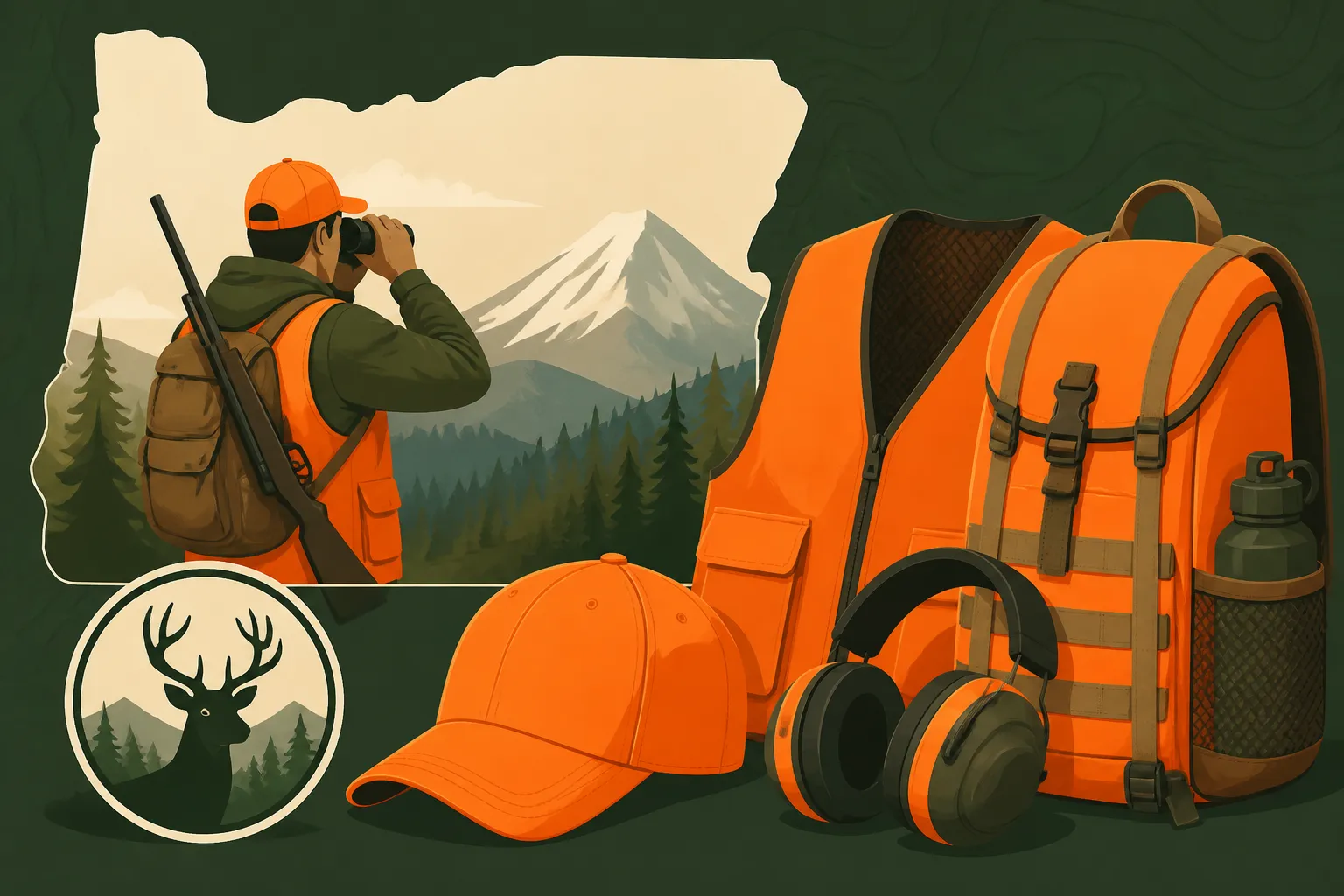
This category covers the gear that keeps you protected from the elements and comfortable enough to focus on the hunt. In Oregon, this almost always means high-quality rain gear. From the incessant drizzle of the Coast Range to unexpected thunderstorms in the high desert, staying dry is paramount to avoiding hypothermia and maintaining morale. Your outer layers should be waterproof and breathable. Proper layering is also key—synthetic or wool base layers, insulating mid-layers, and your waterproof shell.
Footwear is another critical safety item. Well-broken-in, waterproof hunting boots with excellent ankle support are essential for navigating Oregon's often steep, uneven, and wet terrain. A sprained ankle deep in the backcountry isn't just painful; it's a serious safety issue. Depending on the terrain, you might even consider specialized boots like those discussed in Boots for Wet Coastal Hunting. Always carry a headlamp or flashlight with extra batteries. You never want to be caught in the dark without a reliable light source, whether you're blood trailing an animal or simply trying to get back to camp. Sunglasses and sunscreen are also important, even in cooler weather, to protect against sun and snow glare.
Specific Gear Considerations for Oregon's Diverse Terrain
Oregon is a state of incredible topographical diversity, from the misty, dense rainforests of the Coast Range to the vast, arid sagebrush of Eastern Oregon. The safety gear required can vary significantly depending on where your guided trip takes you. What works for a high-altitude hunt in the Wallowas might be completely inadequate for a blacktail hunt in a clearcut near Tillamook.
Coastal Rainforest vs. High Desert Differences
If you're heading to Western Oregon for Roosevelt elk or blacktail deer, prepare for consistent moisture. Your gear needs to prioritize staying dry and moving quietly through dense vegetation. This means top-tier waterproof outerwear, waterproof boots, and quick-drying layers. Consider gaiters to keep water, mud, and debris out of your boots, and waterproof gloves are practically a necessity. Your pack cover should be robust, and even internal dry bags are a good idea for electronics and essential items. The focus here is on shedding water and preventing chafing from wet clothing.
Conversely, a guided hunt in Eastern Oregon's high desert, perhaps for mule deer or pronghorn, demands different considerations. While you might still encounter unexpected rain or snow, the primary concerns shift to hydration, sun protection, and dealing with extreme temperature swings. A larger capacity water reservoir or multiple water bottles are critical. Sunscreen, a wide-brimmed hat, and protective eyewear are non-negotiable for exposed glassing sessions. Layering is still important, but your outer layers might focus more on wind resistance and warmth in cold mornings, rather than constant waterproofing. Navigation becomes more about long distances and landmark identification than punching through thick brush.
Elevation and Weather Variable Gear
Hunting at higher elevations, such as in the Cascade or Blue Mountains, brings its own set of safety concerns. Temperatures drop significantly with elevation, and weather can change dramatically within hours. You might start a morning hunt in mild conditions and end up in a snow squall by afternoon. This requires versatile layering systems that can be easily added or removed, as well as gear that performs across a wide temperature range. Insulated hats, heavier gloves, and a puffy jacket become essential, even if they stay packed away for much of the day.
Even for lower elevation hunts, Oregon's weather can be notoriously unpredictable. A mild October day can quickly turn into a freezing rain event. Always check the forecast for your specific hunt area, but also be prepared for the unexpected. Packing an emergency space blanket, extra warm socks, and a small, lightweight tarp can make a huge difference if you find yourself weathering an unforeseen storm or needing to build an emergency shelter. Think about the coldest, wettest scenario you could face, and pack at least a basic level of gear to survive it comfortably.
Water Crossings and Steep Terrain
Many prime hunting areas in Oregon involve traversing creeks, rivers, or incredibly steep, broken terrain. If your guided hunt involves water crossings, discuss this with your guide beforehand. You might need specialized footwear or even waders, depending on the depth and current. Even for shallower crossings, having a dry pair of socks readily available can prevent blisters and cold feet. Your guide should certainly have protocols for safe water crossings, but knowing what to expect and having appropriate personal gear helps immensely.
For steep country, whether it's the rimrock of the Owyhees or the sidehills of the Coast Range, sturdy hiking poles can be a game-changer for stability and reducing strain on your knees. They're not just for comfort; they're a legitimate safety tool, helping prevent falls on loose rock, slippery mud, or steep descents with a heavy pack. Ensure your boots have excellent traction. If you're going to be in really gnarly, off-camber terrain, sometimes a small length of utility cord can be useful for securing gear or even creating a makeshift handline in a pinch, though your guide should be leading the way on these types of hazards.
Pre-Trip Planning and Communication with Your Outfitter
The best safety gear in the world is useless if you don't know how to use it, or if it duplicates what your guide already has when you could have packed something else. Effective communication with your outfitter is your first and most important piece of "safety gear."
Asking the Right Questions Before You Pack
Once you've booked your hunt, don't hesitate to reach out to your guide or outfitter with questions about gear. This is their stomping grounds, and they know what works and what doesn't. Ask about specific brands or types of gear they recommend. For example, asking "What kind of headlamp do you prefer your clients carry for blood trailing in the dark?" might get you a more useful answer than just "Bring a headlamp." Inquire about the average temperatures and precipitation for your hunt dates, and ask about the terrain's difficulty. This information will help you tailor your personal safety kit.
You'll also want to ask about things like Physical Training for an Oregon Elk Hunt. Understanding the physical demands will help you pack appropriate footwear and clothing that won't hinder your mobility or cause undue fatigue, which can be a safety concern in itself. A physically prepared hunter is a safer hunter. Don't leave any stone unturned; the more you know before you go, the better prepared you'll be.
Clarifying Shared vs. Personal Items
One of the most common packing dilemmas is figuring out what's shared group gear and what you need individually. Your guide will likely provide a large group first aid kit, cooking gear, and perhaps a satellite communication device for the entire camp. However, you need your own small, personal first aid kit, your own emergency fire starter, and your own headlamp. Always clarify these distinctions. Will your guide have extra water filters or a large quantity of emergency rations? Probably. Do you need a personal emergency water filter and a few energy bars for your daypack? Absolutely.
Here’s a simple table to help you categorize:
| Category | Typically Provided by Guide (Group) | Typically Required by Hunter (Personal) |
|---|---|---|
| First Aid/Medical | Large comprehensive kit, specialized trauma gear | Small personal kit, prescription meds, blister treatment |
| Navigation/Comms | Primary GPS, detailed maps, satellite phone, group radios | Personal map/compass, handheld GPS/app, personal radio |
| Shelter/Survival | Tents, camp stove, general emergency kit | Emergency blanket, fire starter, emergency whistle |
| Personal Comfort | Camp chairs, communal cooking pots | Appropriate layers, rain gear, sturdy boots, headlamp |
| Hydration/Nutrition | Water filters, cooking water, main food supply | Water bottle/reservoir, personal snacks, water purification tablets |
This table isn't exhaustive, but it illustrates the principle: your guide handles the broad strokes for the group, while you cover your immediate, individual needs.
Utilizing Resources like Hunt Consultants
If you're still feeling overwhelmed by the gear list or have specific concerns, don't forget there are fantastic resources out there beyond just your outfitter. Hunt consultants or online platforms can provide invaluable insights. Websites like GoHunt often have forums or articles dedicated to regional gear recommendations and can connect you with experienced hunters who have "been there, done that" in Oregon. They can offer advice on everything from Best Bugle Sequence for Early September Elk (which doesn't sound like safety gear, but knowing it is part of your preparation!) to the most reliable rain gear for a specific unit.
Similarly, services like BookYourHunt allow you to read reviews and sometimes directly compare the amenities and gear provisions of different outfitters. If you're new to guided hunts or to Oregon's particular hunting environments, leveraging these resources can fill in knowledge gaps and give you added confidence that your gear choices align with what's truly needed for a safe and successful adventure. Investing time in research and asking questions is a form of proactive safety planning.
Disclaimer
This article is for general informational purposes only and does not constitute professional advice. Laws, prices and regulations vary by location and change over time. Consult a qualified professional for guidance on your specific situation.