First Aid Certification Oregon Guides Must Hold
Venturing into Oregon's vast and wild landscapes for a hunt is an incredible experience, but it's also inherently risky. From the dense, wet coastal timber to the rugged, remote high desert, unexpected situations can arise quickly, far from immediate medical assistance. This guide aims to shed light on the crucial first aid certification requirements that Oregon hunting guides must hold, ensuring that when you're deep in the backcountry, your safety is in capable hands.
The Non-Negotiable Need for First Aid in the Backcountry
When you’re preparing for an Oregon hunting trip, especially with a guide, you’re often thinking about rifle calibers, optics, and what kind of rain gear to pack. But one of the most vital, yet often overlooked, aspects of a successful and safe hunt is the preparedness of your guide for medical emergencies. The reality is, accidents happen. A slip on a wet log, a twisted ankle on a rocky slope, a sudden allergic reaction, or even something more severe can turn a dream hunt into a nightmare in mere moments. In remote areas, where cell service is non-existent and the nearest road might be miles away, immediate and competent first aid can literally be the difference between life and death.
Understanding Oregon's Remote Hunting Environments
Oregon's hunting grounds are incredibly diverse, and with that diversity comes a unique set of challenges. Picture yourself deep in the Coast Range chasing Roosevelt elk. The timber is thick, the ground is uneven, and it's almost perpetually wet. A fall here could mean a serious injury, and getting help out might involve hours of arduous packing. Then consider the vast, dry expanses of Eastern Oregon, glassing for mule deer. Distances are immense, water sources are scarce, and heatstroke or dehydration can be real threats. Or perhaps you're in the Wallowas, chasing Rocky Mountain goats in steep, rocky terrain where every step is a calculation. In all these scenarios, immediate professional medical help is not just a phone call away. Knowing your guide has the training to stabilize an injury, manage a medical crisis, and initiate an evacuation plan is paramount. Tools like E-Scouting Oregon Units With Satellite Imagery can help you understand the remoteness, but real-world preparedness is key.
Common Hunting Injuries and Medical Emergencies
Hunting isn't a walk in the park; it's physically demanding and often takes place in unforgiving environments. You're traversing uneven terrain, carrying heavy gear, and often dealing with unpredictable weather. Common injuries can range from minor cuts and abrasions, sprains, strains, and blisters (oh, the blisters!) to more severe issues like fractures, dislocations, deep lacerations, or even concussions from a fall. Beyond physical trauma, medical emergencies like severe allergic reactions (think bee stings or sudden food allergies), diabetic episodes, heat exhaustion or hypothermia (depending on the season), or even cardiac events can occur. A guide, while not a doctor, must be equipped with the knowledge to assess these situations, provide immediate care, and prevent the condition from worsening while awaiting advanced medical support. This immediate response is a critical link in the chain of survival, especially when considering the sheer distances involved in Getting Meat Out Before It Spoils or even just getting yourself out.
Oregon Marine Board's Specific First Aid Requirements for Guides
This is where the rubber meets the road. Oregon takes the safety of guided hunting clients seriously, and as such, specific requirements are laid out for outfitters and guides operating in the state. These aren't just suggestions; they are mandates designed to ensure a basic level of competency in emergency medical care. The Oregon State Marine Board oversees the registration and regulation of outfitters and guides, and their rules include clear stipulations for first aid training. It's not enough to simply have a first aid kit; the person leading the trip must know how to use it effectively.
Required Certifications and Training Levels
For any individual to be registered as an outfitter or guide in Oregon, they must demonstrate proof of specific first aid and CPR certification. Generally, this means holding a current and valid Wilderness First Aid (WFA) certification, or an equivalent or higher-level certification such as Wilderness First Responder (WFR) or Wilderness EMT (WEMT). These certifications go far beyond the basic first aid you might get in a community class. They are specifically designed for remote environments where definitive medical care is hours, if not days, away.
- Wilderness First Aid (WFA): This is often the minimum standard. WFA courses typically involve 16-20 hours of training and cover topics like patient assessment, wound management, splinting, environmental emergencies (hypothermia, heatstroke, altitude sickness), and basic CPR. The focus is on prolonged care and improvisation using limited resources, which is exactly what's needed when you're miles from the truck.
- Wilderness First Responder (WFR): A more advanced certification, WFR courses are intensive, usually 70-80 hours long. They delve deeper into subjects like long-term patient care, managing spinal injuries, advanced wound cleaning, and decision-making for evacuation in complex situations. Many guides, especially those leading multi-day backcountry hunts in areas like the Eagle Cap Wilderness, will opt for this higher level of training.
- Wilderness EMT (WEMT): This is the highest level of wilderness medical training for a non-doctor, combining urban EMT skills with the remote care principles of a WFR. While not always mandated, a guide with WEMT certification brings a very high level of medical expertise to any trip.
The key takeaway is that these certifications aren't just about band-aids; they're about comprehensive care in challenging environments. When you're researching potential guides, perhaps through resources like GoHunt to scout areas and opportunities, make sure to verify their certifications. It's a fundamental part of a guide's Oregon Marine Board Guide Registration Requirements.
Why Specificity Matters: Wilderness vs. Standard First Aid
It's easy to assume "first aid is first aid," but in the context of remote Oregon hunting, the distinction between standard first aid and wilderness first aid is critical. Standard first aid and CPR courses are excellent for urban or easily accessible settings where emergency services can arrive quickly. They teach you how to stabilize someone until paramedics take over, typically within minutes.
Wilderness first aid, on the other hand, operates under a different paradigm. It assumes that help is not coming quickly. This means a guide isn't just treating a symptom; they're managing a patient for extended periods, potentially hours or even days, until a proper evacuation can occur. This includes:
- Prolonged Patient Assessment: Continuously monitoring vital signs, checking for changes, and documenting observations over time.
- Improvised Care: Learning to use what's available—branches for splints, clothing for bandages, shelters from natural materials.
- Evacuation Decision-Making: Knowing when to evacuate, how to do it safely, and coordinating with outside resources (if available).
- Environmental Considerations: Understanding how temperature extremes, hydration, and elevation affect injuries and recovery in a backcountry setting.
A guide with wilderness-specific training understands that a sprained ankle in downtown Portland is very different from a sprained ankle 10 miles into the Wenaha-Tucannon Wilderness. The skills taught in these certifications are directly applicable to the challenges of a multi-day hunt in Oregon's diverse terrain. This depth of knowledge is part of what sets a professional guide apart and contributes to adherence to Oregon Guide Ethical and Professional Standards.
Beyond Certification: The Practical Application of First Aid Skills
Holding the certificate is one thing; being able to apply that knowledge under pressure in a real-world scenario is another. A truly prepared guide doesn't just have the paper; they have the practical experience and the right tools at their disposal. The ruggedness of Oregon's hunting grounds demands not just classroom knowledge, but a ready and adaptable approach to emergencies.
Essential First Aid Kit Contents for an Oregon Hunt
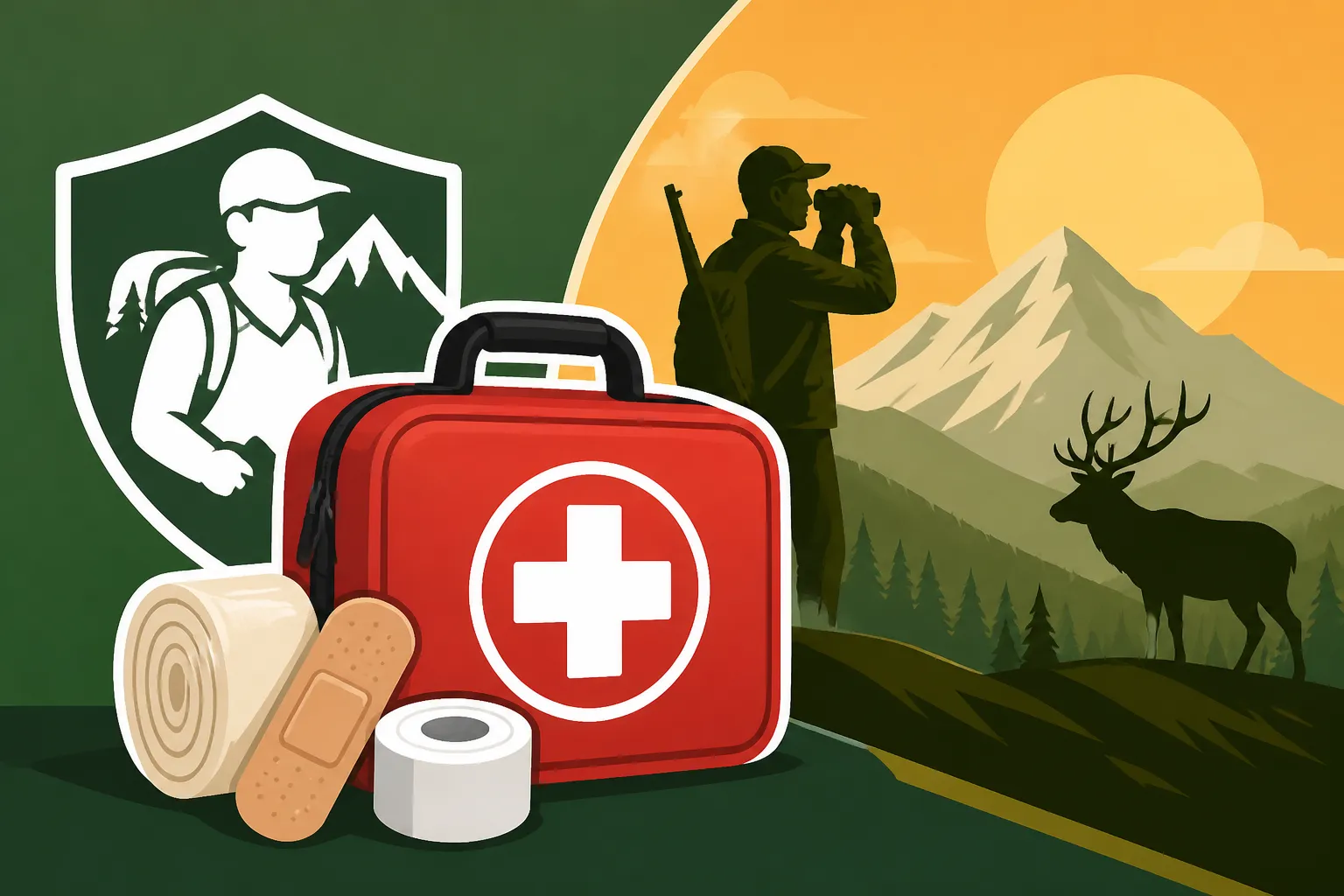
A guide's first aid kit for an Oregon hunting trip needs to be robust, well-organized, and specific to the environment and potential risks. It goes beyond the basic band-aids and antiseptic wipes. Here’s a general idea of what a comprehensive backcountry first aid kit, often carried by professional guides, might contain, keeping in mind the details from First Aid Kit Items for a Remote Hunt:
| Category | Essential Items | Notes |
|---|---|---|
| Wound Care | Sterile gauze, adhesive bandages (various sizes), wound closure strips, medical tape, antiseptic wipes, antibiotic ointment, trauma dressings, triangular bandages | For cuts, scrapes, deeper wounds, and severe bleeding. |
| Blister/Foot Care | Moleskin, athletic tape, blister pads | Essential for long hikes and reducing friction. |
| Pain & Inflammation | Ibuprofen, acetaminophen, anti-inflammatory cream | For general aches, sprains, and muscle soreness. |
| Allergies | Antihistamines (oral), EpiPen (if prescribed for client/guide), Benedryl | For allergic reactions, insect stings. EpiPen is critical for severe reactions. |
| Digestive Issues | Anti-diarrheal medication, anti-nausea medication | For stomach upset common with camp food or water changes. |
| Environmental | Sunscreen, lip balm, insect repellent, space blanket, emergency bivy, splinting material (e.g., SAM splint) | For exposure, dehydration prevention, hypothermia/hyperthermia, snake bite kit (Eastern Oregon). |
| Tools | Trauma shears, tweezers, headlamp, medical gloves, thermometer, small mirror, CPR mask, note-taking materials | For safe and effective treatment, personal protection, and documentation. |
| Medication | Any personal prescription medications (in waterproof container) | Always ensure clients carry their own. Guides may carry basic non-prescription meds. |
The contents should be regularly checked for expiration dates and replenished. It's not a "set it and forget it" item; it's a dynamic resource that adapts to the hunt, the weather, and the specific needs of the party. Moreover, a guide should ensure they have other Safety Equipment an Oregon Guide Must Carry, such as satellite communication devices, to call for help when needed.
Scenario Planning and Continuous Education
A first aid certificate isn't a one-and-done achievement. The best guides understand that continuous learning and scenario planning are crucial. They regularly review their skills, update their knowledge, and mentally walk through potential emergencies. What if a client falls in a ravine? What if someone gets lost and needs to be located quickly? What if a severe weather front moves in unexpectedly?
This kind of proactive thinking allows them to react more effectively when a real crisis hits. Many guides participate in refresher courses, practice their splinting techniques, or run mock emergency drills. They might read up on regional risks, like venomous snakes in Eastern Oregon or how to deal with severe trauma in dense undergrowth. It's about building muscle memory and confidence in their skills, which is invaluable when stakes are high. When you're considering a guide, don't be afraid to ask about their training philosophy or how they prepare for emergencies. It's a key question when you're making decisions, much like deciding between Oregon Guided Elk Hunt Price Ranges or a DIY trip.
Client Expectations and Guide Responsibilities
As a client, you have every right to expect a certain level of preparedness from your Oregon hunting guide. Their registration through the Oregon Marine Board is a baseline, but understanding what that entails, especially regarding first aid, empowers you to make informed choices.
Asking About Your Guide's Qualifications
Before you book a hunt, engage your potential guide in conversation about their qualifications. Don't be shy about asking specific questions about their first aid training.
- "What level of first aid certification do you hold?"
- "When was your last certification renewed?"
- "What kind of emergency communication do you carry?"
- "Do you carry a comprehensive backcountry first aid kit, and what does it typically include?"
- "Can you describe your plan for a medical emergency deep in the woods?"
A reputable guide will be happy to discuss these points and provide assurance. Transparency is key. This is a critical part of Asking Questions to an Oregon Outfitter, and it reflects their commitment to your well-being. Knowing their plan for potential injuries or emergencies, such as managing a fall in difficult terrain, is as important as knowing their hunting strategy.
The Ethical Imperative of Preparedness
Beyond the legal requirements, there’s an ethical imperative for guides to be fully prepared for any emergency, especially those that involve human health. Clients trust their guide with their safety, and sometimes, with their lives. This trust is earned through competence, experience, and comprehensive preparedness. A guide's role is not just to find game, but to ensure the entire experience, from beginning to end, is as safe as possible. This commitment is deeply intertwined with Oregon Guide Ethical and Professional Standards. From navigating complex land access rules on Guiding on Public Land Versus Private Land in Oregon to ensuring clients are properly equipped for Physical Training for an Oregon Elk Hunt, a guide’s responsibility is vast. Their first aid certification is a tangible manifestation of that commitment, proving they've invested the time and effort to safeguard those who rely on them in the wild.
Disclaimer
This article is for general informational purposes only and does not constitute professional advice. Laws, prices and regulations vary by location and change over time. Consult a qualified professional for guidance on your specific situation.