Oregon Turkey Tag Cost
Trying to figure out the exact cost of an Oregon turkey tag can feel a bit like untangling a ball of fishing line – it’s not always as straightforward as it seems. Many hunters, especially those new to the state or just getting into turkey hunting, often underestimate the total financial outlay beyond the simple tag price. This comprehensive guide aims to meticulously break down the actual cost of an Oregon turkey tag, including all the necessary licenses and endorsements, so you can budget accurately and avoid any unwelcome surprises when you're ready to hit the spring or fall woods.
Demystifying Oregon's Turkey Tag System and Pricing
It's easy to assume a turkey tag is just a single fee, but in Oregon, the system is a bit more nuanced. You've got to consider your residency status, the specific type of hunting license you hold, and whether you want to pursue more than one bird. Let's delve into these specifics to ensure you have a clear picture.
Resident Versus Non-Resident Turkey Tag Prices
The price you pay for an Oregon turkey tag largely depends on whether you are an Oregon resident or if you're visiting from out of state. This distinction is standard across most hunting opportunities, and turkeys are no exception.
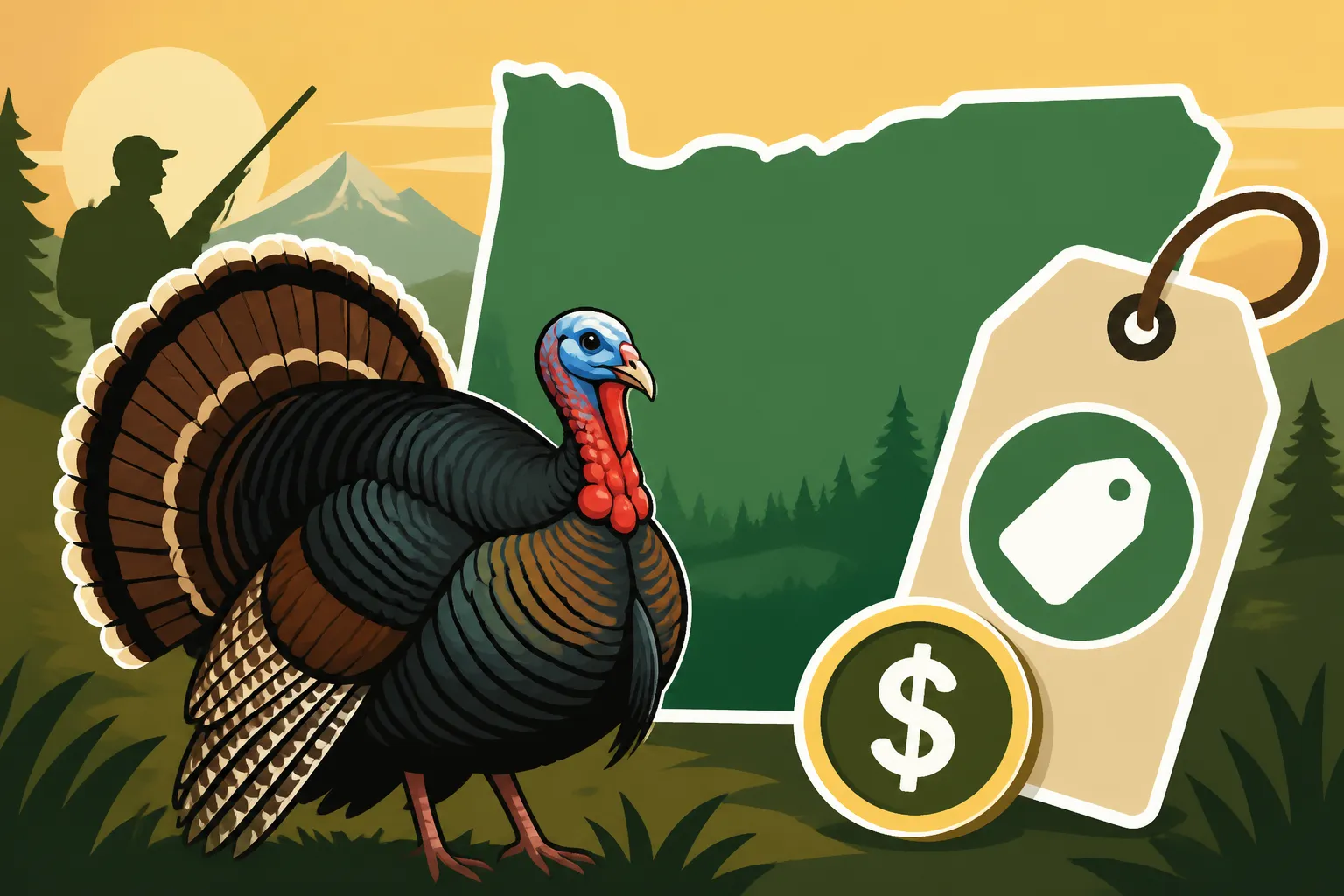
As an Oregon resident, you're looking at a much more favorable price point. For the 2024-2025 season, the cost for a Resident Turkey Tag is generally around $21.50. This fee is quite stable and hasn't experienced dramatic increases in recent years, though it's always a good practice to double-check the latest Oregon Department of Fish and Wildlife (ODFW) regulations pamphlet for the most up-to-date figures. This tag is your essential permit to legally hunt either spring gobblers or fall birds across the state, provided you also possess the required general hunting license.
If you're coming from out of state, the cost for a turkey tag increases significantly, mirroring the structure for most big game and upland bird opportunities in Oregon. A Non-Resident Turkey Tag typically costs around $68.50. This higher fee is a common way for states to generate revenue that directly supports wildlife management programs, habitat conservation, and enforcement efforts, ensuring healthy turkey populations for both residents and visitors alike. For non-residents, this is a substantial difference, making appropriate budgeting a crucial step, especially if you're traveling a considerable distance to experience Oregon's diverse hunting landscapes.
Additional Tags and Youth Hunting Opportunities
Oregon's turkey regulations offer some flexibility for hunters, particularly during the spring season, and provide discounted options for younger participants, making the sport more accessible for the next generation.
During Oregon's popular spring turkey season, adult hunters have the opportunity to purchase up to two tags. This means if you successfully harvest a turkey with your first tag, you have the option to buy a second one and continue your hunt for another gobbler. This is an exciting prospect for avid spring turkey hunters who want to maximize their time afield and potentially fill their freezer or pursue a second trophy bird. Each additional tag will be priced at the same rate as your first, adhering to either the resident or non-resident fee. This ability to chase two birds in a single spring season often adds significant value to the overall hunting experience, providing more opportunities for success. You can find detailed information on specific season dates and bag limits by reviewing the Oregon Spring Turkey Season Dates in the current ODFW regulations.
In contrast, the fall turkey season usually limits hunters to only one tag per individual. While often less pressured and offering a distinct hunting experience compared to spring, it's important to be aware of this single-tag restriction. Further details on these season dates can be found in the Oregon Fall Turkey Hunts section of the regulations.
Oregon strongly supports youth participation in hunting and offers reduced license and tag fees to encourage young hunters. Typically, youth hunters (those under 18 years old) can obtain a Resident Youth Hunting License for a much lower cost than an adult license. This, in turn, allows them to purchase turkey tags at a reduced rate, often around $11.50 per tag. These discounted rates help alleviate the financial burden for families, making it more feasible to introduce children and teenagers to the rewarding experience of turkey hunting and fostering a lifelong appreciation for wildlife and the outdoors.
The Prerequisite: A Valid Hunting License
It's absolutely critical to understand that a turkey tag cannot stand alone in Oregon. Before you can even think about purchasing a turkey tag, you must possess a valid annual Oregon hunting license. This is a common oversight, particularly for new hunters or those accustomed to different regulations in other states.
Consider your hunting license as your fundamental permission slip from the state to engage in hunting activities, while the turkey tag acts as a specific endorsement or permit for a particular species. Without that foundational hunting license, any turkey tag you might purchase is legally invalid, rendering your hunting efforts unlawful. We'll explore the specific costs associated with the annual hunting license in the next section, but always prioritize securing your base hunting license first to avoid any legal complications or wasted money. This foundational step is where many aspiring turkey hunters can inadvertently get tripped up, assuming the tag is the only purchase required.
Calculating Your Total Investment: Licenses, Tags, and Endorsements Combined
Beyond the simple turkey tag, there are other essential costs you need to account for when planning your Oregon turkey hunt. Understanding the full financial picture upfront helps you budget effectively, ensures compliance with state regulations, and prevents any unwelcome last-minute surprises.
Standard Hunting License Requirements for Turkey Hunters
To participate in any hunting activity in Oregon, including turkey hunting, you must first secure an annual hunting license. This isn't just a formality; it's the gateway to all other hunting opportunities the state provides.
For Oregon residents, the annual adult hunting license typically costs around $34.50. This license is valid for the entire calendar year, from January 1st to December 31st, covering all small game, migratory birds, and serving as the prerequisite for purchasing specific big game tags like those for deer, elk, or bear. For non-residents, the cost for an annual hunting license is considerably higher, usually around $172.00. This reflects the broader access it grants to the state's diverse hunting opportunities. So, right from the start, this base license fee represents a significant portion of your total investment, especially for non-residents. You can check the current Oregon Annual Hunting Licence Cost for precise figures.
In addition to the base hunting license, if your plans include hunting upland birds—which includes turkeys—you will also need to acquire an Upland Game Bird Validation. This specific endorsement is an extra, mandatory fee, typically costing about $10.00 for both residents and non-residents. While a smaller amount, it's an easily overlooked component that is absolutely necessary for legal turkey hunting. Therefore, for most turkey hunters, the total upfront licensing cost will be the sum of their annual hunting license plus the upland bird validation. Don't let this small add-on slip your mind; missing it can invalidate your hunt.
The Oregon Sports Pac: A Comprehensive Option
For dedicated Oregon residents who enjoy pursuing a variety of game species throughout the year, the Oregon Sports Pac often represents the most economical and convenient choice. This comprehensive package bundles several essential licenses and endorsements into a single purchase, simplifying the process and potentially offering significant savings.
The Sports Pac typically includes your annual hunting license, a fishing license, various angling and hunting endorsements (such as the crucial upland bird validation needed for turkeys), and even a Columbia River Basin Endorsement, all for a single, attractive price. For residents, the Sports Pac usually costs around $196.50. While this might appear as a substantial initial outlay, if you intend to hunt multiple species—such as deer, elk, bear, cougar, waterfowl, and turkeys—in a given year, it can result in considerable savings compared to purchasing each component separately. It truly acts as an all-in-one solution for the avid Oregon outdoors person, ensuring you're covered for a wide range of activities. You can delve into more specifics about what this package covers in What the Oregon Sports Pac Includes. I've found it to be particularly valuable when I transition from big game hunting to Waterfowl and Upland Birds as a Second Season later in the year.
Beyond the cost savings, the convenience of the Sports Pac is a major benefit. It eliminates the worry of forgetting a specific validation or endorsement, as everything is consolidated into one package. For non-residents, it's important to note that there isn't a direct equivalent to the resident Sports Pac; you will generally need to purchase individual licenses and tags, which underscores the importance of meticulous planning for out-of-state hunters. You can find the latest pricing in Oregon Sports Pac Price for 2026.
Total Estimated Costs for Your Oregon Turkey Season
To provide a clearer and more practical financial overview, let's look at some common scenarios for an Oregon turkey hunt. Please remember that these figures are approximate for the 2024-2025 season, and you should always consult the official ODFW fee schedule for the most current and exact pricing.
| Item | Resident (approx.) | Non-Resident (approx.) | Notes |
|---|---|---|---|
| Annual Hunting License | $34.50 | $172.00 | Mandatory base license for all hunters |
| Upland Game Bird Validation | $10.00 | $10.00 | Required for turkey hunting |
| Total Base Licensing | $44.50 | $182.00 | Essential costs before any turkey tags are purchased |
| Spring Turkey Tag (1st) | $21.50 | $68.50 | Allows for one turkey harvest |
| Spring Turkey Tag (2nd, optional) | $21.50 | $68.50 | Purchase this if you plan to harvest a second turkey |
| Fall Turkey Tag (1st only) | $21.50 | $68.50 | For one turkey during the fall season |
| Sports Pac (Resident Only) | $196.50 | N/A | All-inclusive option, covers many species/licenses |
As this table illustrates, a resident planning to hunt spring turkey with a single tag will be looking at an approximate total of $66.00 (which combines the $44.50 for the license and validation with the $21.50 for the first turkey tag). Should you opt for a second spring tag, your total would increase to roughly $87.50. For a non-resident, that first spring turkey hunt entails a more significant outlay, coming in at about $250.50 (comprising the $182.00 for the license and validation plus the $68.50 for the tag). These figures are crucial for putting the "cost" into proper perspective, clearly demonstrating that it's more than just a single, small fee. For those dedicated hunters who pursue multiple species throughout the year, the Sports Pac genuinely offers outstanding value and convenience.
Navigating Application Deadlines and Ensuring Compliance
Understanding the financial costs is only part of the preparation; knowing when and how to pay for your licenses and tags is an equally critical piece of the puzzle. Oregon has specific timelines and mandatory requirements that you absolutely must adhere to if you want to be legally ready to hit the woods for turkeys.
When and Where to Purchase Your Oregon Turkey Tag
Fortunately, purchasing an Oregon turkey tag is generally a straightforward process, unlike the complex draw systems for some big game species. Turkey tags are typically available over-the-counter, meaning you don't need to apply months in advance or go through a lottery.
You have several convenient options for purchasing your annual hunting license and turkey tags. The most popular method is online, through the Oregon Department of Fish and Wildlife's (ODFW) electronic licensing system. This allows you to purchase and manage your licenses and tags from the comfort of your home. Alternatively, you can purchase them in person at various ODFW license vendors located throughout the state, which often include sporting goods stores, bait and tackle shops, and some general retail outlets.
While the flexibility to buy tags even on the day the season opens exists, it's always highly recommended to complete your purchases well in advance of your planned hunt. Why risk it? Technical issues with the online system, unexpected long lines at a vendor, or simply forgetting crucial identification details can easily derail your plans and cause unnecessary stress. Especially for the popular spring season, ensure all your licensing and tag requirements are squared away long before opening day. The ODFW website remains the most convenient route for many, as it typically allows you to print your tags at home or save them to a mobile device, which is usually permitted as a valid form of tag in Oregon.
Avoiding the $25 Harvest Reporting Penalty
This particular detail is one that many hunters overlook until it's unfortunately too late, resulting in an avoidable penalty. Oregon maintains a mandatory harvest reporting system for all big game and turkey tags, regardless of whether you successfully harvested an animal.
It is absolutely imperative that you report the outcome of your hunt online by a specific deadline. For spring turkey tags, the reporting deadline is typically in January of the following calendar year (for example, tags from the 2024 season would need to be reported by January 31, 2025). Fall turkey tags generally have similar reporting timelines. This applies whether you filled your tag, hunted but didn't harvest, or didn't even go hunting.
What are the consequences if you forget or neglect to report your tag? ODFW imposes a $25 penalty for each individual unreported tag. This penalty isn't simply waived; you will be required to pay this outstanding fee before you can purchase any hunting license or tag in Oregon during subsequent years. Imagine the frustration of attempting to buy your deer or elk tag next fall, only to discover you owe an additional $25 (or more, if you've forgotten multiple tags) from an overlooked turkey report. This scenario is entirely avoidable. Make it a habit to set reminders on your phone or calendar for these critical reporting deadlines to prevent incurring this unnecessary cost and hassle. This mandatory reporting rule extends to all big game, so understanding the Oregon Harvest Report Deadline in January is a vital piece of knowledge for all your hunting endeavors in the state. Don't let the excitement of a successful hunt, or the disappointment of an unsuccessful one, make you forget this crucial administrative step.
Maximizing Your Investment and Success in Oregon Turkey Hunting
Now that you've got a handle on the financial outlay for an Oregon turkey tag and associated licenses, let's pivot to how you can ensure every dollar spent translates into the best possible hunting experience and increases your chances of success. It's not just about the cost, but the tangible value you derive from that investment.
Strategic Scouting and Preparation to Increase Success
A turkey tag, in essence, is merely a piece of paper until you put in the necessary legwork and preparation. The true value and potential for success from your investment come from diligent scouting, ideally beginning well before the season actually opens. Turkeys are creatures of habit, and understanding their typical roosting locations, preferred feeding areas, and established travel corridors is absolutely paramount to increasing your odds.
Start by paying close attention to available food sources in your target areas, such as oak stands for acorns, areas with abundant berries, or agricultural fields where turkeys might forage. During the pre-season, listen for gobbling at dawn, even if you're just driving through a potential hunting area on a weekend reconnaissance trip. This can pinpoint roost locations and give you a huge advantage.
Modern e-scouting tools, like those offered by GoHunt, can be incredibly valuable in this phase. These platforms allow you to virtually scout potential hunting units from the comfort of your home, identifying likely roosting timber, open clearings where birds might strut, and crucial water sources. You can mark potential waypoints, accurately measure distances, and even utilize E-Scouting Oregon Units With Satellite Imagery to analyze changes in habitat or recent timber activity that might impact turkey movements. Combining this digital reconnaissance with actual boots-on-the-ground scouting is the most effective approach to confirm your suspicions and gain a real feel for the terrain. The more knowledge you acquire about your chosen hunting area, the less time you'll spend guessing during the season, and the more time you'll spend effectively hunting, truly maximizing the return on your tag investment. Remember, a well-placed blind, a perfectly executed calling sequence, or knowing precisely where to set up can make all the difference, and that level of precision comes directly from thorough preparation.
Exploring Public and Private Land Access Opportunities
Oregon offers a fantastic and diverse mix of both public and private land opportunities for turkey hunting. Knowing how to access and utilize these different types of land can significantly impact your hunting experience and overall success.
Public Land: Vast tracts of national forest and Bureau of Land Management (BLM) lands across Oregon are open to turkey hunting. Popular areas like the Umatilla National Forest in Eastern Oregon, which is known for its robust turkey populations, or various sections of the Rogue River-Siskiyou National Forest in the southwest, provide ample space for hunters. Accessing these public lands is typically free beyond your license and tag costs, but they often require more effort to locate birds and navigate potential hunting pressure from other enthusiasts. A solid understanding of Public Land Hunting in Oregon: Forest, BLM and State regulations and access points is absolutely key here.
Private Land: Beyond public lands, many private timberlands and agricultural properties throughout the state also hold significant turkey numbers. Some large timber companies operate permit systems that grant access for a fee, while other private landowners might allow access if you simply Asking Permission on Oregon By-Permission Land. These private access points can sometimes offer less pressured birds and a more intimate hunting experience, though they may come with their own specific rules or additional access fees. It is always, unequivocally, essential to confirm land ownership and obtain explicit permission before venturing onto any private property to hunt. Regardless of whether you choose public or private land, maintaining respect for the land and practicing Leave No Trace principles is paramount for ensuring continued access for all hunters. Learning Finding Public Access in Oregon can make or break your hunt, so exploring all your options for both land types is a strategic move.
Multi-Species Planning with GoHunt and Broader Hunting Strategy
If you're already making the financial commitment to an annual hunting license and the upland bird validation for turkeys, it's smart to consider how you can leverage that initial investment for other species and hunting opportunities. Oregon boasts incredible wildlife diversity, and your base hunting license opens doors to many other adventures throughout the year.
For instance, many of the same general areas that hold turkeys also support populations of blacktail deer or even black bears, particularly in western Oregon. This presents a fantastic opportunity to combine your turkey scouting trips with reconnaissance for other species. While you're out listening for gobblers, you might simultaneously be looking for bear sign or deer trails, effectively doubling the value of your time and effort in the field.
This is precisely where comprehensive planning platforms like GoHunt become invaluable, extending far beyond just turkey hunting. They provide detailed unit information, historical draw odds, and powerful filtering tools for a multitude of species, including deer, elk, and other big game. By integrating such tools into your annual hunting strategy, you can plan your turkey hunts in conjunction with scouting for Oregon Black Bears in the Coast Range and Cascades or even identifying prime areas for Blacktail Deer Hunting in Oregon's Coastal Clearcuts. Thinking broadly about your entire hunting year allows you to maximize the utility and value of your initial license and validation purchases. For those with aspirations for controlled hunts in the future, GoHunt also offers invaluable insights into the Oregon Controlled Hunt Draw Explained and how Oregon Preference Points and How They Work can affect your chances, helping you craft a robust, long-term strategy for all your Oregon hunting adventures. By making informed decisions about your licenses and planning your hunts efficiently, you'll discover that the "Oregon Turkey Tag Cost" is merely one small, albeit worthwhile, piece of a much larger and deeply rewarding hunting puzzle.
Disclaimer
The information provided in this guide is for general informational purposes only and is subject to change. Hunting regulations, license fees, and tag costs in Oregon are set by the Oregon Department of Fish and Wildlife (ODFW) and can be updated annually. Always consult the official ODFW hunting regulations pamphlet or their website for the most current and accurate information before planning any hunt.