Oregon Fall Turkey Hunts
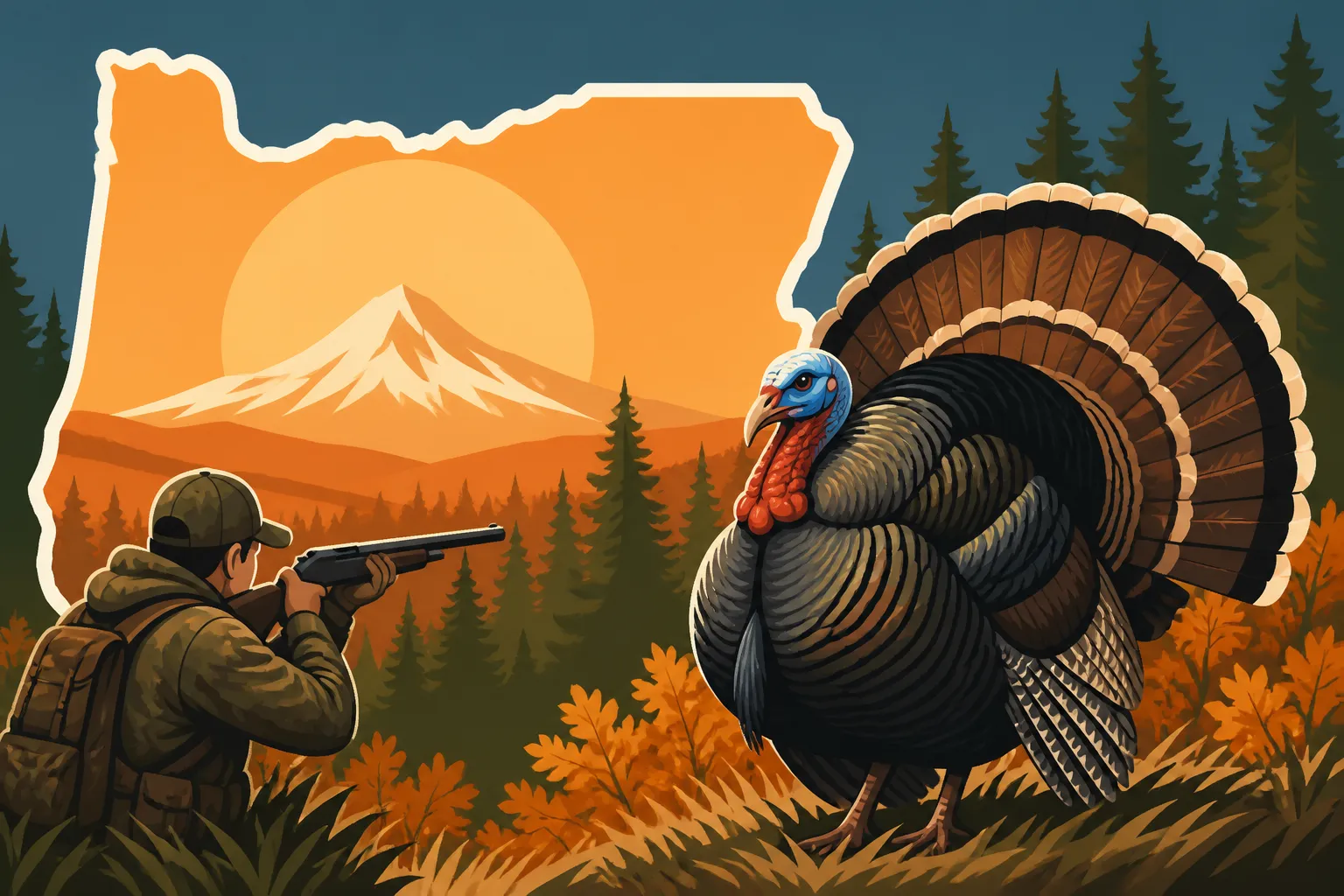
The crisp air of autumn brings a different challenge and a unique reward for turkey hunters in Oregon. Unlike the boisterous spring mornings filled with aggressive gobblers, fall turkey hunting can feel like searching for a ghost in the woods, with silent birds, scattered flocks, and ever-changing food sources leaving many hunters scratching their heads. This guide is designed to cut through that confusion, giving you the insights and strategies needed to successfully pursue Oregon's wild turkeys during the often-overlooked fall season.
Navigating Oregon's Fall Turkey Season: What You Need to Know
Hunting wild turkeys in Oregon during the fall is a distinctly different beast than chasing gobblers in the spring. If you approach it with the same tactics, you're likely to end up frustrated, listening to silence instead of booming calls. The entire landscape, the birds' behavior, and even the regulations shift, demanding a more nuanced and adaptive approach from hunters.
Decoding the Differences from Spring Gobbler Pursuits
The most glaring difference, and often the biggest hurdle for hunters accustomed to spring, is the drastic change in turkey vocalizations. In the spring, you're primarily listening for gobblers proclaiming their presence and seeking hens. It's a game of sound, of striking a bird and moving in. Come fall, however, that all changes. The breeding season is long past. Gobblers are no longer interested in showing off, and hens are focused on keeping their poults safe and fed. You'll find the woods significantly quieter. Turkeys are still vocal, but their calls are softer, less frequent, and serve entirely different purposes, mostly related to flock communication rather than breeding.
Another major shift is the flock structure. Spring sees toms separated from hens, each group with its own priorities. In the fall, turkey populations typically consolidate into larger, mixed-gender flocks. These flocks often consist of a few mature hens, their now half-grown poults (often called jakes and jennies, though physically they might appear more like young adults), and often a few bachelor groups of jakes or even mature gobblers nearby. These big flocks are wary, with many eyes and ears, making them notoriously difficult to approach undetected. The birds are constantly moving, following food sources, and covering significant ground throughout the day. This requires hunters to transition from an ambush-style hunt to one that often involves more walking, scouting, and strategic displacement.
Furthermore, the foliage has changed. The thick green canopy of spring that often provided excellent cover for sneaking in on a gobbling bird is now either thinned out or completely gone, especially as November rolls in. This means visibility is often better, but also that you, the hunter, are more exposed. You need to adjust your camouflage and movement strategies accordingly, using terrain features, timber stands, and brush to break up your outline rather than relying on leaves. The cooling temperatures also mean birds are less active during the heat of the day, preferring to feed steadily throughout the morning and late afternoon.
Critical Dates, Regulations, and Tag Essentials
Oregon's fall turkey season typically offers a much longer window than the spring season, often stretching from early October through late January, though specific dates can vary by year and region. It's absolutely crucial to consult the current Oregon Department of Fish and Wildlife (ODFW) hunting regulations pamphlet for the exact dates in your chosen hunting area. The boundaries of these areas can sometimes be quite specific, so a detailed map or a good hunting app like GoHunt can be invaluable in ensuring you're in the right place at the right time.
When it comes to tags, fall turkey hunting is generally an over-the-counter affair, meaning you don't have to navigate a draw system like you might for deer or elk. You'll need a valid Oregon hunting license and a fall turkey tag. The cost for an Oregon Turkey Tag Cost is typically quite reasonable, making it an accessible hunt for many. Unlike deer or elk, where tags are often unit-specific, turkey tags often cover much larger zones or even statewide general seasons, though always double-check. Oregon generally allows for multiple fall turkey tags, giving hunters the opportunity to pursue more than one bird if they're successful early.
The bag limit is usually one turkey per tag, but the type of turkey you can harvest differs from spring. In spring, the focus is on bearded birds (primarily gobblers). In fall, however, the regulations usually permit the harvest of any turkey, meaning you can take a hen, a jake, a jennie, or a mature gobbler. This flexibility is a significant advantage, as identifying gender can be challenging in a large, moving fall flock. You're simply looking for a legal turkey to fill your tag.
Mandatory harvest reporting is another key regulation to remember. Just like with deer and elk, you are required to report your turkey harvest to ODFW. Fail to do so, and you could face penalties, including a fine. Keep track of the Oregon Harvest Report Deadline in January to ensure you're compliant. This data helps ODFW manage turkey populations and ensures healthy hunting opportunities for years to come.
Understanding these foundational differences and regulatory specifics is the first step toward a successful fall turkey hunt. It's not just about what you do in the field, but how you prepare for a completely different kind of game. For more details on tags and seasons, you can check out the ODFW information on Oregon Turkey Seasons and Tags.
Finding Fall Turkeys: Habitat, Food, and Flock Dynamics
Successfully hunting turkeys in the fall boils down to understanding their primary motivators: food and safety. With breeding season over, their entire focus shifts to fattening up for winter and avoiding predators. This means knowing what they're eating, where they're eating it, and how their social structure plays into their daily movements.
The Autumn Buffet: Key Food Sources and Their Locations
As the season progresses from early fall into late autumn, the turkey's diet shifts dramatically. Gone are the lush greens of spring and the early summer insects. Fall turkeys are masters of foraging, keying into abundant, high-energy food sources that are crucial for winter survival.
Acorns and Mast Crops: This is perhaps the most important food source for fall turkeys, especially in timbered areas of western Oregon like the Coast Range and the western Cascades. Oak trees (white oak, black oak, Oregon oak) drop their acorns, providing a veritable buffet. Turkeys will spend hours, even days, under productive oak stands, scratching through leaves to gobble up these nutritious nuts. Look for areas with a good mix of mature oaks, especially on south-facing slopes where acorns tend to drop earlier. If you find one good oak, chances are there are others. Besides acorns, other mast crops like hazel nuts, madrone berries, and even some wild cherry or hawthorn berries can be important. When these food sources are abundant, turkeys will often stick to them, making scouting for specific mast trees a high-percentage tactic.
Agricultural Fields: In regions like the Umpqua Valley, Rogue Valley, or areas bordering agricultural lands in eastern Oregon, turkeys will readily move into fields to glean leftover grains, seeds, and insects. Cornfields, wheat stubble, and even harvested hay fields can be prime locations. They're often most active in these areas during the early morning and late afternoon. Keep an eye out for tracks, droppings, and scratch marks on field edges. If you're hunting near private land, remember to always be mindful of property boundaries and obtain permission if necessary. For guidance on securing access, see Asking Permission on Oregon By-Permission Land.
Berries and Forbs: While less critical than mast, various wild berries (like huckleberries in higher elevations earlier in fall, or salal and elderberries in the Coast Range) and persistent forbs can supplement their diet. As temperatures drop and snow begins to dust the ground in higher elevations, turkeys will move to lower elevations and sun-drenched slopes to find food.
The key here is understanding that food sources dictate movement. A hot acorn crop will concentrate birds in one area for weeks. A sparse year might see them spread out, covering more ground in search of a meal. Using tools for E-Scouting Oregon Units With Satellite Imagery can help you pinpoint potential oak stands or agricultural fields from home, saving valuable scouting time.
Understanding Flock Behavior and Roosting Patterns
Fall turkeys live in large, often multi-generational flocks. These groups can range from a handful of birds to several dozen, comprising hens, jakes, jennies, and sometimes mature gobblers too. Their sheer numbers are both a strength and a weakness. On one hand, more eyes and ears make them incredibly difficult to sneak up on. On the other, their need to stay together and their strong pecking order can be exploited.
Daily Routine: Turkeys typically fly down from their roost trees at first light, gather, and then begin their daily foraging circuit. They'll spend most of the morning feeding, moving slowly across the landscape, often following ridgelines, creek bottoms, or the edges of clearcuts. Midday might see them loafing, dusting, or sunning themselves in an open area, especially on cooler days. In the late afternoon, they'll feed intensely again before flying up to roost just before dark. Their roosting sites are often large, mature trees (pines, firs, oaks) in protected areas, usually near a reliable food source or water. They'll often return to the same general roosting areas night after night unless pressured.
Identifying Roosts: Look for large trees with a distinct whitewash of droppings underneath, and discarded feathers. You might hear soft clucking or yelping as they settle in for the night, or the distinctive sound of their wings as they fly up. Knowing where a flock roosts gives you a starting point for your morning hunt. However, remember that turkeys don't typically respond to calls off the roost in the fall the way they do in spring. They simply fly down, gather, and move on. Your best bet is to position yourself along their likely travel route from the roost to a feeding area.
Flock Dynamics: Within these larger flocks, there's a strict pecking order. Mature hens often lead the charge, with the younger birds following. Jakes and jennies will often be quite vocal, constantly communicating with soft yelps, clucks, and the distinctive "kee-kee" run. While these flocks stick together, they can sometimes splinter, especially if they are very large or if a smaller group of jakes decides to go off on their own. This fracturing can present an opportunity for a hunter.
Scouting is paramount in the fall. You need to know where the food is, and where the birds are using that food. Don't rely solely on calling. Spend time walking, looking for fresh tracks, droppings, scratch marks, and feathers. Pay attention to the subtle calls you hear. Utilizing trail cameras in areas with good mast production or on the edges of fields can give you invaluable intel on their patterns and presence. Platforms like GoHunt often have public land layers that can help you identify accessible areas where these food sources might be present. Check out Scouting With Trail Cameras on Oregon Public Land for more tips on effective camera use. Oregon is home to Oregon Turkey Subspecies and Range, predominantly Rio Grande turkeys, which often thrive in these mixed timber and agricultural settings.
Mastering Fall Turkey Hunting Tactics: Breaking Flocks and Strategic Calling
Fall turkey hunting truly tests a hunter's patience and adaptability. You can't just set up and expect a gobbler to come charging in. Instead, you need to think like a turkey, anticipate their movements, and often, actively create the hunting scenario you want.
The Dispersal Method: How to Break a Flock Effectively
This is arguably the most effective and classic fall turkey hunting tactic, and it directly leverages the strong social bonds within a fall flock. Turkeys, especially young birds, have an innate need to regroup after being scattered.
The Strategy:
- Locate a Flock: First, you need to find a flock. This often involves significant walking, listening for soft calls, or spotting them feeding. They might be in open fields, along timber edges, or scratching in oak flats.
- Rush Them: Once you've located a flock, the goal is to surprise them and get them to scatter in all directions, as widely as possible. This is where the term "running and gunning" gets a slight twist. You're not necessarily shooting; you're rushing them. Charge into the flock, yell, wave your arms – do whatever it takes to send them flying or running in every direction. The more scattered they are, the more anxious they'll be to get back together.
- Find a Setup Location: Immediately after breaking the flock, find a strategic setup location. You want a spot with good visibility and cover, preferably in the direction the majority of the birds flew, or at least in a central area they might try to regroup. A ridge top, the edge of a clearing, or a strategic point in the timber can work well. If you know their original feeding area or travel route, setting up there can be highly effective. Sit down quickly, quietly, and get ready.
- Wait and Call: The magic typically happens 15-30 minutes after the break, sometimes longer. The scattered birds will start making "assembly calls"—soft clucks, yelps, and especially the distinctive "kee-kee" or "kee-kee run" (a series of high-pitched whistles followed by yelps). These are calls of distress and reunion. Start with very soft, infrequent calls, mimicking a lost bird. A few soft yelps, a subtle cluck. As time passes, and if you hear more distant kee-kees, you can increase the volume and frequency slightly, but always err on the side of realism. The goal is to sound like another lost bird trying to find its way back to the flock. Younger birds, especially jakes and jennies, are often the first to respond and can be quite aggressive in their return, sometimes running right in. Mature hens and gobblers will often be warier, circling wide before committing.
The key to this method is patience. Don't call too much or too aggressively right away. Let the birds start calling first. The feeling of success when a scattered bird responds to your kee-kee and comes running back is incredibly rewarding.
Fall Calling Techniques: Yelp, Kee-Kee, and Assembly Calls
Calling in the fall requires a different vocabulary than in the spring. Forget those loud, aggressive gobblers and cutts you might use for breeding season. Fall calling is about communication, reassurance, and reassembly.
- Kee-Kee: This is the quintessential fall turkey call. It's a series of high-pitched, plaintive whistles (usually 3-5) followed by a short yelp. It mimics a lost poult or young bird trying to locate its flock. The "kee-kee run" is an extended version, often starting with the whistles and blending into a series of yelps. This call is your bread and butter after a flock dispersal.
- Plain Yelp: A soft, simple yelp, often in a series of 3-5 notes, is a general contact call. It's used to reassure other birds of your presence or to get their attention. In the fall, keep it soft and inquisitive, not demanding.
- Cluck: A single, sharp "cluck" is another good contact or alarm note. In the fall, a soft cluck can be used in combination with yelps or kee-kees to sound more realistic.
- Purr: A soft, rolling purr can be used to indicate contentment, often when birds are feeding. It's a subtle call that can draw a curious bird closer.
Mouth calls (diaphragm calls) are excellent for producing realistic kee-kees and soft yelps. Slate or pot calls can also work well for a variety of sounds. Box calls can be used but are often a bit loud for the subtlety required in fall. Remember, less is often more. In the quiet fall woods, a soft, realistic call carries surprisingly far. Avoid overcalling, as it can sound unnatural and spook wary birds. Using Electronic Calls and What Oregon Allows is important to check as regulations on these devices can vary.
Essential Gear and Field Strategies
Beyond your weapon of choice, several pieces of gear will make your fall turkey hunt more productive and comfortable.
- Camouflage: As mentioned, the woods are thinning. Full head-to-toe camouflage that blends with the browns, grays, and subdued greens of autumn is critical. A good face mask or paint is also essential.
- Calls: A variety of calls is helpful. A good mouth call is almost indispensable for kee-kees. A slate or pot call provides versatility for yelps and clucks.
- Optics: Binoculars (8x or 10x) are extremely valuable for spotting birds from a distance, especially in open country or when trying to locate a scattered flock after dispersal. A rangefinder is also useful for confirming distances before a shot.
- Comfortable Footwear: Fall hunting often involves a lot of walking and covering ground. Invest in comfortable, waterproof boots that can handle varied terrain.
- Pack: A small day pack to carry calls, snacks, water, a first-aid kit, and enough room for a harvested bird is crucial.
- Weapon Choice: Shotguns are popular for turkeys, and a 12 or 20 gauge with specialized turkey loads (like Federal's Heavyweight TSS or Winchester's Long Beard XR) is highly effective. Archery hunting for fall turkeys is incredibly challenging but rewarding. A bow with a good broadhead designed for turkeys (like a guillotine style or a large mechanical) can do the trick, but shot distances need to be much closer. For general rifle choices that might overlap, see Rifle Choice for Oregon Elk and Deer, though turkeys are usually a shotgun or bow game.
Field Strategies:
- Walk and Listen: Cover ground. Move slowly and deliberately, stopping frequently to listen for subtle turkey sounds or to scan likely feeding areas.
- Glassing: In more open country, particularly in eastern Oregon, use your binoculars to systematically glass hillsides, clearcuts, and field edges at dawn and dusk.
- Patience: After a flock dispersal, resist the urge to move for at least 30-60 minutes, even if you don't hear anything immediately. Sometimes birds will come in silently.
- Safety: Always be aware of your surroundings and other hunters. Wear blaze orange when moving between locations (though remove it when set up). Be absolutely certain of your target and what's beyond it. Remember Oregon's 300-Foot Rule Beside an Open Road for safety around public thoroughfares.
- Public vs. Private: Oregon offers abundant public land opportunities, but private timberlands often hold excellent turkey numbers. Always confirm land ownership and access rules. Finding Public Access in Oregon can guide you.
By embracing these fall-specific tactics and being prepared for a different kind of hunt, you'll significantly increase your chances of filling your Oregon fall turkey tag. It's a truly engaging and rewarding way to extend your hunting season.
Oregon Fall Turkey Hunt Overview
| Aspect | Spring Season (General Comparison) | Fall Season (Oregon Specific) |
|---|---|---|
| Primary Target | Bearded Birds (Gobblers) | Any Turkey (Gobbler, Hen, Jake, Jenny) |
| Season Length | Shorter (approx. 1 month) | Longer (Oct. – Jan., check ODFW regs) |
| Flock Structure | Toms separated from hens, breeding focus | Large, mixed-gender flocks (hens, poults, jakes, gobblers) |
| Vocalizations | Loud gobbling, aggressive calling | Quieter, soft yelps, clucks, kee-kees (assembly calls) |
| Key Tactic | Ambush/decoy, responding to gobbling | Flock dispersal & reassembly calling, still-hunting, scouting |
| Food Focus | Fresh greens, insects | Hard mast (acorns), agricultural gleanings, persistent berries |
| Hunting Pressure | Higher, especially opening week | Generally lower, but can vary by location |
| Tag Type | Over-the-counter or limited draw (check specifics) | Over-the-counter, often multiple tags allowed |
| Mandatory Reporting | Yes | Yes |
Disclaimer
Hunting involves inherent risks, and conditions in the field can change rapidly. Always prioritize safety, adhere to all current Oregon Department of Fish and Wildlife (ODFW) regulations, and respect private property. This guide is for informational purposes only and should not replace official ODFW publications or professional safety training.