Winter Elk Feeding Sites in Oregon
Winter elk conserve energy in deep snow, dropping to south-facing slopes and thermal cover, which shapes where they feed and where hunters should scout.
Know what you’re after.
Big game, small game, upland birds, and waterfowl — identification, behavior, rut and migration timing, and how each species moves through the season.
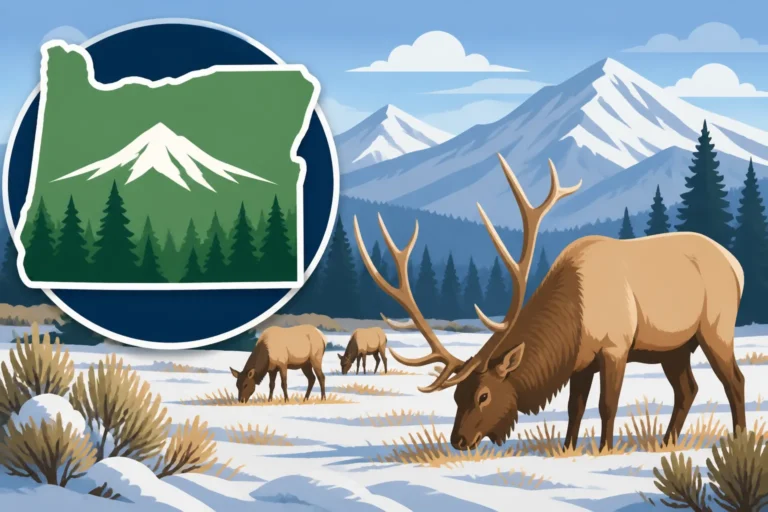
Winter elk conserve energy in deep snow, dropping to south-facing slopes and thermal cover, which shapes where they feed and where hunters should scout.
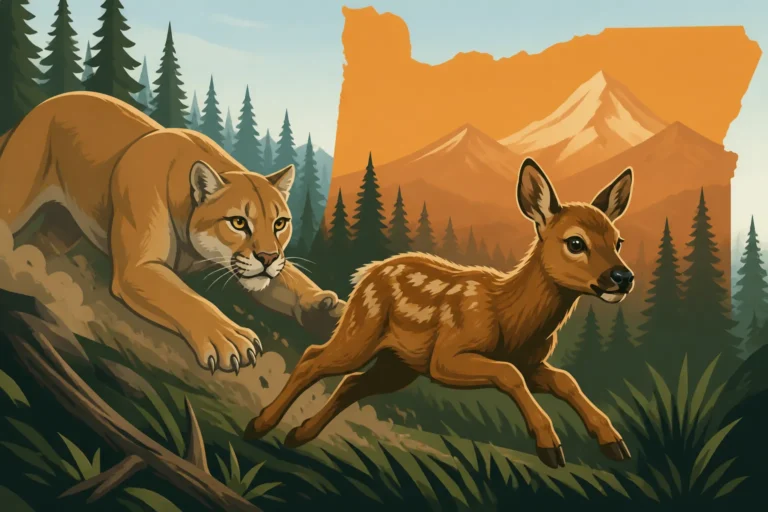
Cougar predation impacts Oregon elk calf survival during critical early weeks across diverse habitats and environmental stressors.
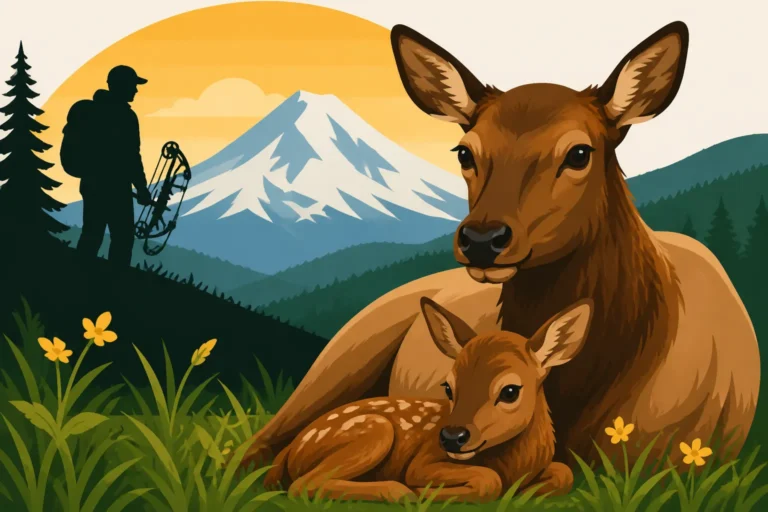
Oregon elk calving windows, gestation periods, and environmental factors influencing birth timing in late May and early June.
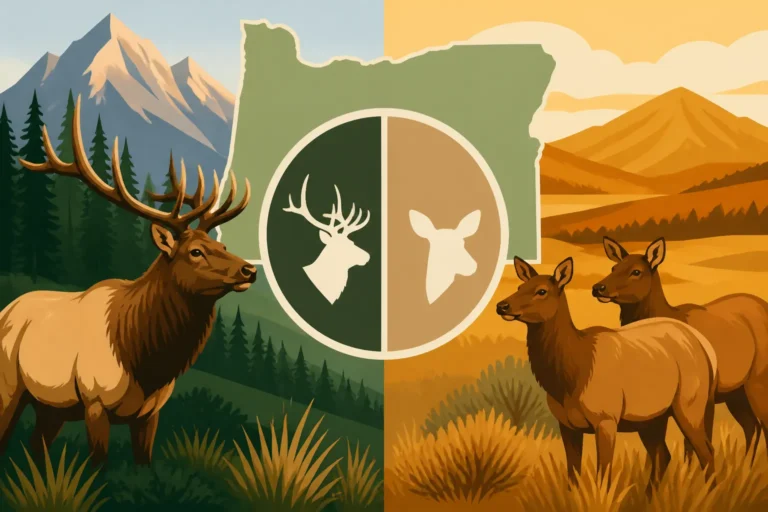
Bull-to-cow ratios in Oregon elk herds reveal population health and help hunters evaluate hunting opportunities and set realistic expectations.
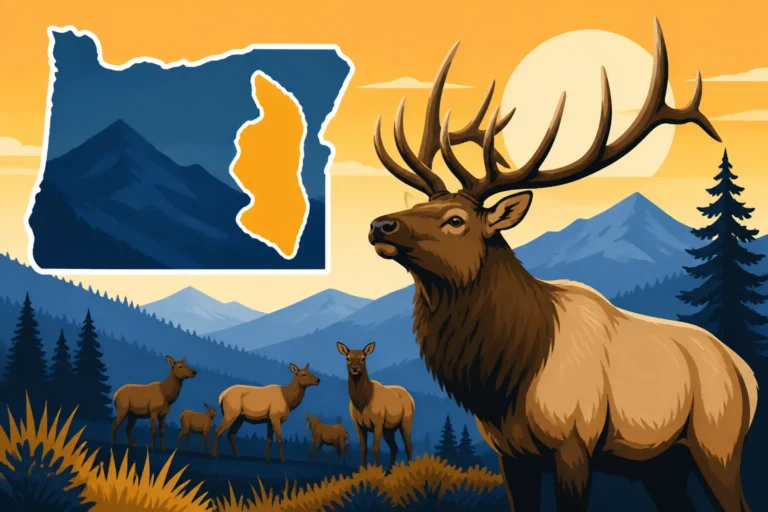
Elk population trends in Oregon’s Blue Mountains and factors influencing herd health help hunters adjust their strategies.
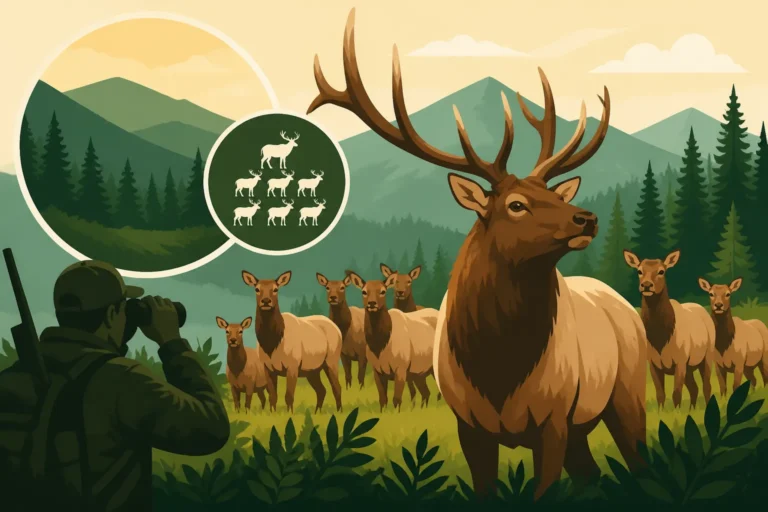
Roosevelt elk herd size in the Oregon Coast Range requires indirect population estimation methods because dense timber prevents accurate aerial counts.
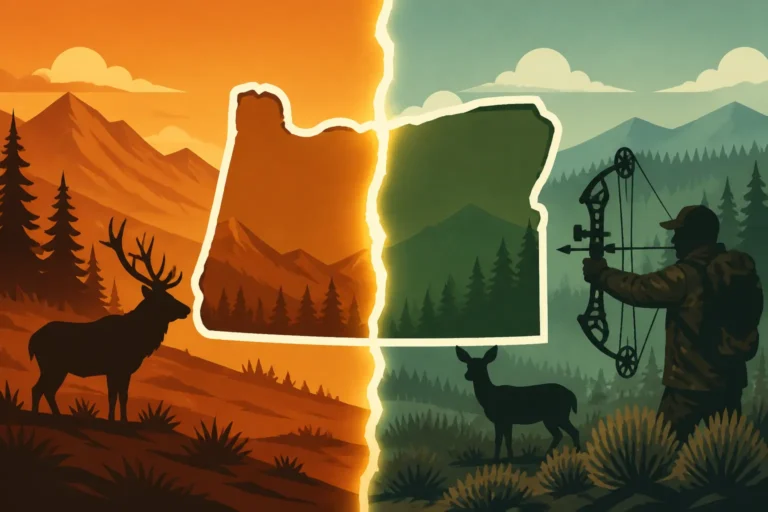
Highway 97 acts as an ecological boundary dividing Oregon into distinct habitats for Roosevelt and Rocky Mountain elk populations.
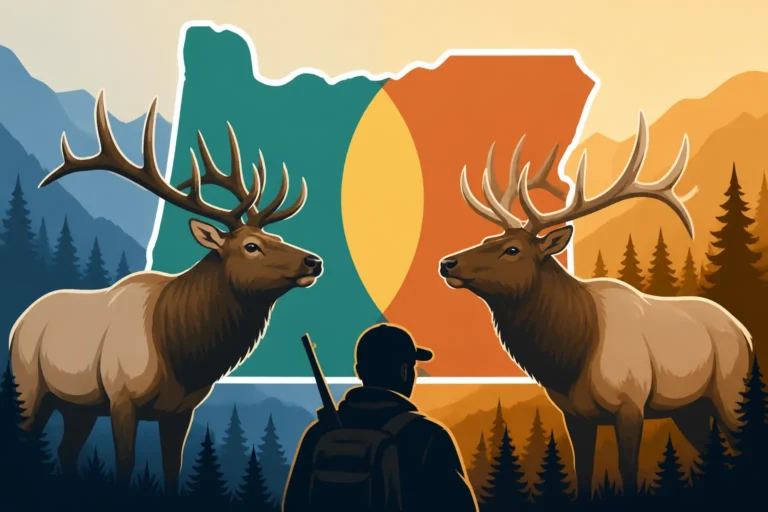
Oregon highway 97 divides Roosevelt and Rocky Mountain elk habitats, creating a transition zone where both subspecies overlap.
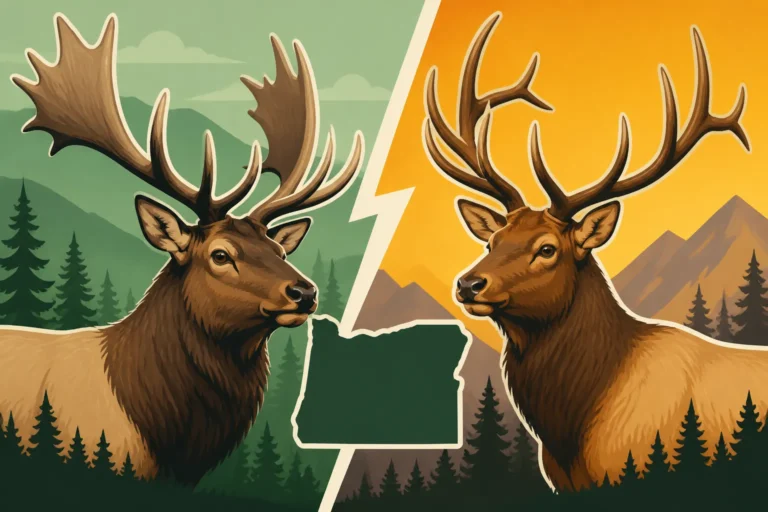
Roosevelt and Rocky Mountain elk antler scores, Boone and Crockett scoring nuances, and Oregon subspecies characteristics.
Roosevelt elk size and weight statistics, antler spread measurements, and the biological factors influencing their growth.