Elk Calf Survival and Cougar Predation
It's a familiar story for many of us who chase elk across Oregon's diverse landscapes: we head out, full of hope, only to find the herd numbers seem a bit thinner, or perhaps the calf-to-cow ratio isn't what we'd hoped. This often sparks conversations about what's really happening out there, and one of the most common topics that comes up is the impact of cougars on elk calf survival. Understanding this complex dynamic is crucial for anyone interested in the health of our elk herds, and this guide will dive deep into the factors influencing how many little ones make it to adulthood and the role our elusive mountain lions play.
The Pressures on Oregon's Young Elk: Understanding Calf Survival
The survival of elk calves is a cornerstone of a healthy, sustainable elk population. Without a consistent recruitment of new animals, even the largest herds can dwindle over time. It's not just about birth rates; it's about what happens in those critical first months of a calf's life, and frankly, it's a tough world out there for a newborn elk.
The Critical First Weeks: Vulnerability and Early Challenges
When a cow elk drops her calf, it's a moment of immense vulnerability, both for her and the newborn. For the first few days, sometimes even a week or two, the calf is largely immobile, relying entirely on its mother's protection and its natural camouflage. Its spotted coat helps it blend into dappled light, and its instinct is to lie perfectly still, even when a predator approaches. This strategy works remarkably well against many threats, but it's far from foolproof.
Think about the sheer number of things that can go wrong. A late-season snowstorm can hit, or an unseasonably cold snap can weaken a calf before it even has a chance to build up its strength. Sometimes, calves are born with health issues that make them less vigorous. The quality of the cow's nutrition during pregnancy also plays a huge role; a healthy, well-fed cow is more likely to give birth to a robust calf that has a better chance of surviving those crucial early days. If a calf is too weak to follow its mother effectively or doesn't have the energy to evade danger, its chances plummet.
Habitat's Role: Cover, Food, and Fawning Grounds
The choice of fawning ground is absolutely critical for a cow elk seeking to give her calf the best start. They look for areas with dense cover—thick timber, brushy draws, or even tall grasses—that provide concealment from aerial predators like eagles and ground-dwelling threats. Proximity to water and nutritious forage is also key, allowing the cow to quickly replenish her energy after calving and produce ample milk for her growing calf. Without good fawning habitat, calves are exposed and become easy targets.
A healthy habitat provides not just cover but also a rich tapestry of plants for both the cow and calf to browse as the calf grows. Overgrazed areas or landscapes fragmented by development can force cows to fawning grounds that are less than ideal, pushing them into areas where cover is sparse or food sources are distant. This can stress both the cow and calf, making them more susceptible to predation. When you're trying to piece together the puzzle of elk movements and fawn recruitment rates, platforms like GoHunt can be incredibly valuable for analyzing data overlays or mapping potential cougar habitat where fawning grounds might be compromised. Understanding where the Elk Numbers in Oregon's Blue Mountains are doing well, for example, often comes down to the quality of their fawning and wintering habitat.
Other Predators and Environmental Stressors
While cougars are a major focus, they are by no means the only threat to young elk. Black bears are opportunistic predators and will certainly take an elk calf if given the chance, especially in the spring when bears emerge from their dens and are hungry. Coyotes, too, can pose a threat, particularly to very young or weakened calves, often working in packs.
Beyond predators, environmental factors play a massive role. Harsh winters can deplete the physical reserves of pregnant cows, leading to weaker calves or higher mortality rates among newborns. Drought conditions can reduce the availability of forage and water, further stressing the animals. Disease outbreaks, while less common for individual calves, can also weaken entire herds, making all age classes, especially the young, more vulnerable. Think about how a late season deep snow can impact foraging for a cow elk, directly affecting her calf's early survival chances. These combined pressures illustrate why Elk Calf Survival and Predation in Oregon is a complex issue with many moving parts.
The Cougar's Shadow: Predation on Elk Calves
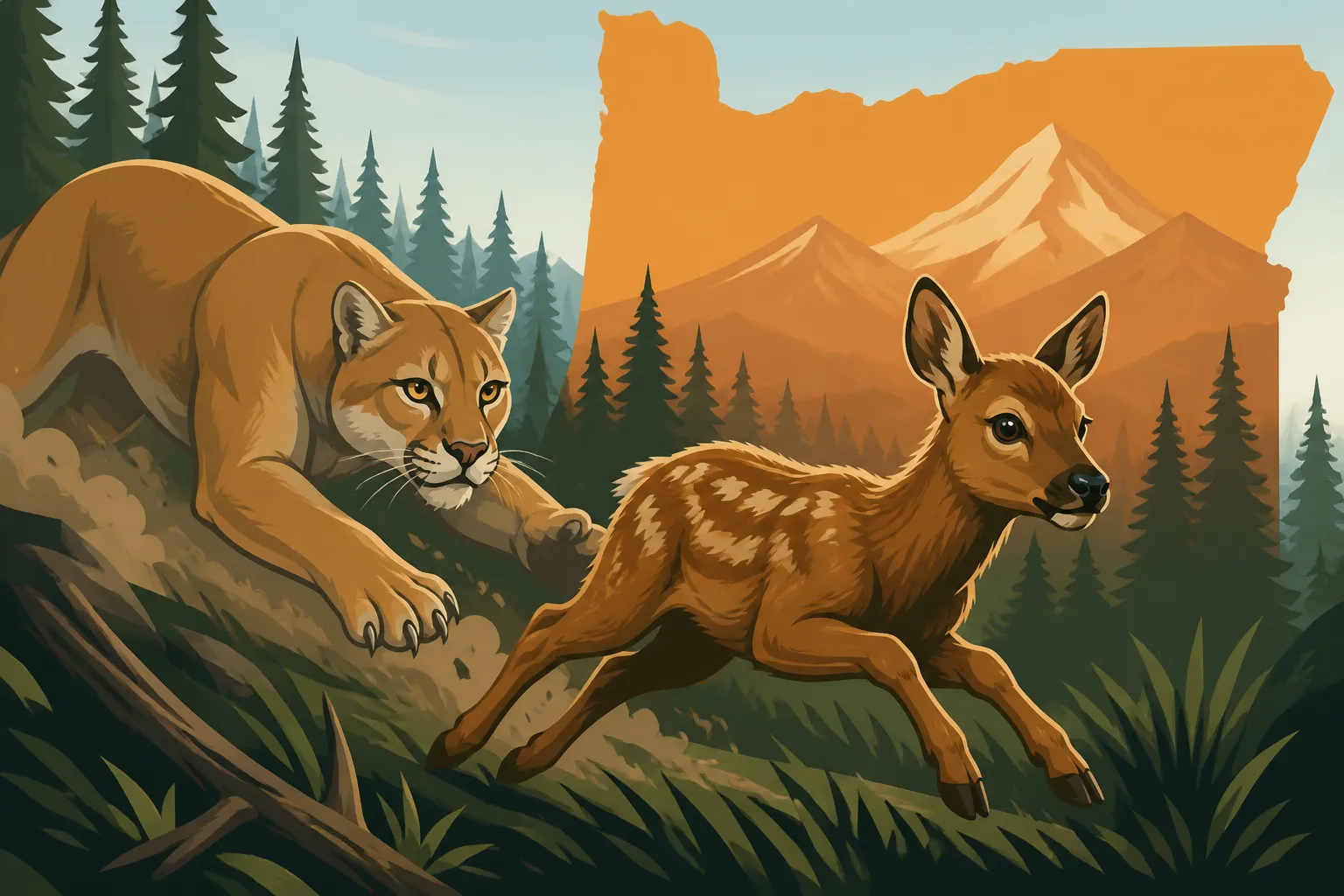
Cougars, or mountain lions, are incredibly efficient predators and an integral part of Oregon's ecosystem. Their stealth, power, and keen senses make them formidable hunters, and young elk, with their relative inexperience and vulnerability, can be a significant part of a cougar's diet.
How Cougars Hunt: Tactics and Preferences
Cougars are ambush predators, masters of stealth and surprise. They prefer to hunt alone, utilizing dense cover and topographical features to stalk their prey undetected. For elk calves, this often means a cougar will lie in wait along game trails, near watering holes, or in dense thickets where cows have hidden their young. They are incredibly patient, sometimes watching an area for hours, waiting for the opportune moment. Their powerful pounce and suffocating bite or neck snap are swift and decisive.
While cougars will take adult elk, especially older, weaker, or injured animals, calves represent an easier meal. They are smaller, less experienced, and lack the full defensive capabilities of a mature elk. This preference means that when elk calf numbers are high, cougars can readily take advantage, and the availability of these vulnerable young animals can directly influence Cougar Territory Size and Movement as they concentrate in areas with abundant prey. It's simply an easier energy return for the effort expended, a classic predator-prey dynamic.
Identifying Predation Impacts: Separating Fact from Anecdote
It's easy to jump to conclusions when you see fewer calves in the field, or hear stories of cougar sightings near elk herds. However, understanding the true impact of cougar predation requires careful scientific study. Wildlife biologists employ methods like radio-collaring elk calves shortly after birth to monitor their movements and ultimate fate. When a collared calf dies, researchers can investigate the cause, often finding definitive signs of cougar predation, distinguishing it from other causes like disease or other predators.
These studies often reveal that while cougars do take a significant number of calves, it's rarely the sole factor in a herd's decline. Often, predation pressure intensifies when other factors have already weakened the calves. For instance, if a particularly harsh winter means cows are giving birth to less healthy calves, these vulnerable individuals are far more likely to fall prey to a cougar. It's a reinforcing cycle. This is where hunters can play a role in observation, though the scientific data collected by wildlife agencies through methods like How ODFW Counts Big Game provides the most reliable information.
The Balance of Nature: When Predation Becomes a Concern
In a healthy ecosystem, predation is a natural and necessary part of the cycle. Cougars help to cull the weakest and sickest animals, strengthening the overall genetic health of the herd. They also prevent overgrazing by keeping elk populations in check, which benefits the entire habitat. The challenge arises when this natural balance is disrupted, and predation rates climb beyond what the elk population can sustain.
Several scenarios can lead to this imbalance. A severe decline in habitat quality, for example, might mean fewer safe fawning grounds, making calves universally more vulnerable. Unusually high cougar densities in certain areas, sometimes due to a lack of other prey species, can also lead to increased predation on elk calves. It's a delicate equilibrium, and a sustained drop in calf recruitment year after year is a red flag that something might be amiss in the broader ecosystem. This is why discussions around Oregon Cougar Population Estimates and their impact on game species are so important to state wildlife managers.
Managing the Ecosystem: ODFW Efforts and Hunter Contributions
Oregon's wildlife managers work tirelessly to monitor both elk and cougar populations, aiming for a balance that supports healthy herds while also maintaining a robust predator population. This isn't just about counting animals; it's about understanding the complex interactions within the ecosystem.
Monitoring Elk and Cougar Populations
The Oregon Department of Fish and Wildlife (ODFW) employs a variety of techniques to keep tabs on both elk and cougars. For elk, aerial surveys are common, helping biologists estimate herd sizes and composition, including calf-to-cow ratios. They also monitor herd health indicators and habitat quality. For cougars, population estimates are trickier due to their elusive nature. Techniques often involve scat analysis, track surveys, and, in some cases, remote camera trapping or genetic sampling to identify individual animals.
These monitoring efforts are crucial for understanding trends. If calf survival rates are consistently low, it triggers further investigation into the potential causes, which may include increased cougar predation. By tracking these numbers, ODFW can make informed decisions about hunting seasons, tag allocations, and habitat improvement projects designed to bolster elk populations. When looking at the data for your hunt unit, resources like GoHunt can often compile this public data, giving you insights into herd health and potential predator impacts. Understanding these reports helps shed light on topics like Oregon Elk Herd Numbers by Region.
Hunter Involvement: Reporting and Responsible Practices
As hunters, we are often the eyes and ears on the ground, spending countless hours in elk country. Our observations, when shared responsibly, can contribute to the larger picture. While anecdotal observations alone aren't scientific data, consistent reports from multiple hunters about low calf numbers or frequent cougar sightings in certain areas can prompt wildlife managers to investigate further.
Beyond reporting, responsible hunting practices are paramount. This includes adhering to all regulations, participating in harvest reporting (which helps ODFW gather crucial data), and being mindful of our impact on the landscape. For example, knowing the rules around Cougar Hunting While Deer Hunting on the Same Trip means you're aware of the potential for unexpected encounters and how to act legally. Being educated about game species and their habitat, perhaps even using E-Scouting Oregon Units With Satellite Imagery to understand fawning areas, enhances our respect for the animals and the ecosystems we hunt in.
Balancing Priorities: Elk Herds, Predators, and Human Expectation
The conversation about cougar predation on elk calves often becomes emotionally charged. Hunters want to see thriving elk herds and have successful hunts. Non-hunters often value the presence of apex predators in the ecosystem. ODFW's job is to manage these competing interests while maintaining ecological integrity. This means sometimes making tough decisions that don't please everyone.
It's a constant balancing act between ensuring robust big game populations for hunting and wildlife viewing, and allowing natural predation to occur. Habitat management, such as restoring crucial winter ranges or improving fawning cover, can sometimes alleviate predation pressure by providing elk with better places to hide their young or by increasing the overall health of the herd. This holistic approach recognizes that every part of the ecosystem is interconnected, and solutions are rarely simple or one-dimensional. The health of our Roosevelt Elk in Western Oregon or Rocky Mountain Elk in Eastern Oregon ultimately depends on this complex balance.
Factors Influencing Elk Calf Survival and Cougar Predation
Understanding the many elements at play is crucial to grasping the full picture of elk calf survival.
| Factor | Description | Cougar Predation Influence |
|---|---|---|
| Birth Timing | Calves born too early or late in the season are generally more vulnerable. | Cougars learn and exploit predictable fawning periods, focusing hunting efforts during peak vulnerability. |
| Fawning Habitat | Dense cover, nutritious forage, and proximity to water are ideal for hiding. | Poor quality habitat (lack of cover) makes calves easier targets for cougars, increasing their detection rate. |
| Maternal Health | Healthy cows produce more robust calves and can defend them more effectively. | Weak calves are less evasive and physically unable to escape a cougar attack; weak cows may abandon or be less vigilant. |
| Environmental Stress | Harsh winters, prolonged drought, or disease can weaken calves and cows. | Compromised calves, already weakened by environmental factors, become significantly more susceptible to cougar predation. |
| Other Predators | Bears, coyotes, and wolves also prey on calves; adds to overall pressure. | Cougars contribute to the cumulative predation pressure. High numbers of other predators can leave fewer calves for cougars, or force cougars to rely more heavily on elk calves if other prey is scarce. |
| Human Disturbance | Recreational activity, timber harvest, poaching, road access. | Can push elk into less optimal, higher-risk fawning grounds, increasing calf vulnerability to cougars and other threats. |
Disclaimer
This article is for general informational purposes only and does not constitute professional advice. Laws, prices and regulations vary by location and change over time. Consult a qualified professional for guidance on your specific situation.