When Oregon Elk Calves Are Born
There's nothing quite like the sight of a newborn elk calf, all wobbly legs and innocent eyes, hidden away in a patch of thick cover. For hunters and wildlife enthusiasts alike, understanding when Oregon elk calves are born isn't just a matter of curiosity; it's vital for appreciating the delicate balance of our ecosystems, making ethical decisions in the field, and even enhancing your scouting for future seasons. This guide will walk you through the annual cycle of elk calving in our beloved state, covering the peak birthing windows, the critical factors that influence them, and why this knowledge makes you a more informed and responsible presence in the backcountry.
The Rhythm of Nature: Understanding Elk Calving Season in Oregon
Oregon's wild places truly come alive in the spring, and for our majestic elk, this season is all about new life. The calving period is a critical time for elk herds, marking the continuation of their lineage and setting the stage for the coming year's population dynamics. It's a complex dance influenced by biology, environment, and the subtle rhythms of our diverse landscapes.
Peak Calving Windows Across the State
Generally speaking, you can expect the vast majority of Oregon's elk calves to hit the ground between late May and early June. This isn't a hard and fast rule, of course, as nature rarely adheres to a strict calendar, but it provides a good baseline for understanding the general timeframe. Most elk cows have a gestation period of about 240 to 262 days. If you backtrack from that May-June window, it puts the breeding season (the rut) squarely in September and early October – which, for any elk hunter, is probably a familiar soundscape of bugles echoing through the mountains!
During this peak window, cow elk will typically seek out secluded, protected areas to give birth. Think dense timber patches, thickets of brush, or remote pockets of high grass. These spots offer crucial cover from predators and the elements, providing a safe nursery for the vulnerable newborns. It’s a time of intense focus for the cows, who become fiercely protective of their new arrivals.
Factors Influencing Calving Timing
While late May to early June is the general rule, a variety of environmental factors can cause slight shifts in when those little hooves first touch the earth. These aren't just minor adjustments; they can have significant impacts on calf survival rates for that year.
- Elevation and Green-Up: Higher elevations, especially in eastern Oregon's mountains, experience a later spring thaw and a delayed "green-up" of forage. This means that elk in these areas might calve a little later than their counterparts in lower, more temperate zones, simply because the nutritional resources they need to support a healthy pregnancy and milk production arrive later.
- Weather Patterns: A particularly harsh or prolonged winter can delay calving. If cows are stressed and have poor body condition due to deep snow and limited food, their bodies may naturally delay conception or, if already pregnant, potentially delay the birth by a few days to ensure they and the calf have the best chance of survival. Conversely, an unusually mild spring with early forage could potentially bring calving forward slightly, though this is less common.
- Herd Health and Nutrition: The overall health and nutritional status of the cow herd play a huge role. Well-fed, healthy cows are more likely to conceive early in the rut and carry their calves to term successfully within the optimal window. Herds experiencing stress from disease, overpopulation, or poor habitat quality might see later or more spread-out calving periods, and potentially weaker calves. This is part of the broader picture of Elk Calf Survival and Predation in Oregon, where a healthy start is crucial.
Roosevelt Versus Rocky Mountain Elk Calving Differences
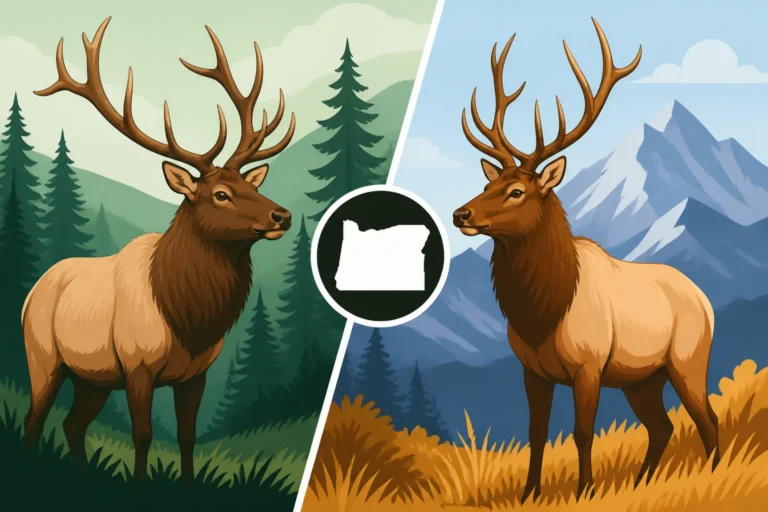
Oregon is blessed with two distinct subspecies of elk: the larger, darker Roosevelt elk of the western rainforests and coastal mountains, and the slightly smaller but impressive Rocky Mountain elk inhabiting the drier, more open country east of the Cascades. While their general calving windows overlap considerably, there can be subtle differences influenced by their vastly different habitats.
Roosevelt elk, found in areas like the Coast Range and the western slopes of the Cascades, often calve in dense, wet timber. The abundant cover and generally milder, more consistent spring weather might lead to a more condensed calving period once the ideal conditions arrive. Their habitat is rich in forage, meaning cows usually have excellent nutritional support. You can read more about How Roosevelt and Rocky Mountain Elk Differ in their overall characteristics.
Rocky Mountain elk, on the other hand, roam the more extreme environments of eastern Oregon, from the sagebrush plains to the high Wallowa Mountains. Here, spring weather can be more volatile, with late snowfalls or sudden temperature drops. As mentioned, higher elevations will naturally see later green-up. This variability can sometimes result in a slightly more extended or later calving period for Rocky Mountain elk in certain eastern units, as cows wait for stable conditions and abundant forage. Hunters using tools like GoHunt often pay close attention to elevation and historical weather data in specific units to anticipate these subtle shifts.
The Vulnerable First Weeks: Calf Survival and Predation
Those first few weeks of an elk calf's life are truly a gauntlet. They are incredibly vulnerable, and their survival is a testament to natural selection, their mother's fierce protection, and a bit of luck. Understanding this period is crucial for appreciating the challenges these animals face.
Hiding and Early Development
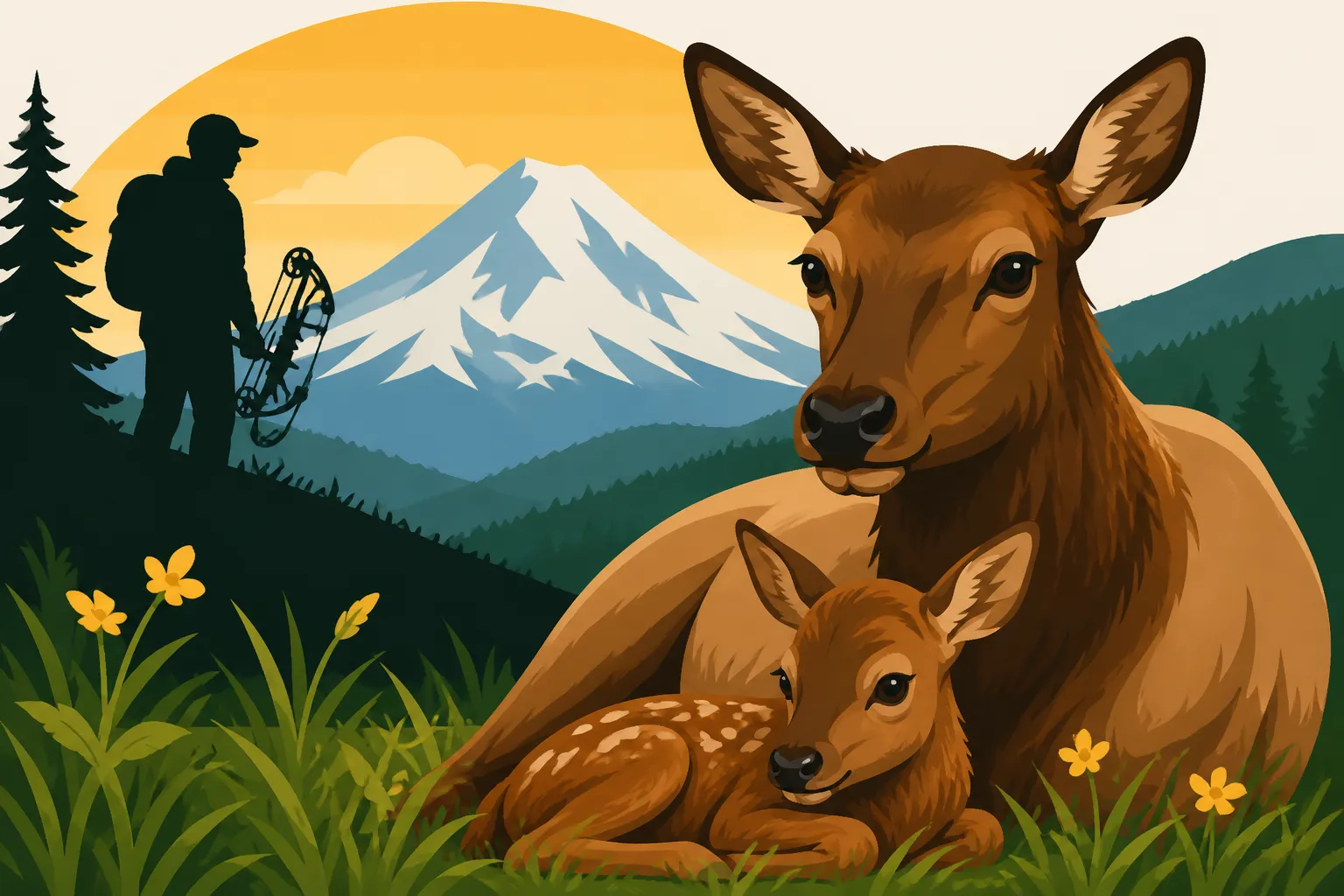
When an elk calf is born, it's a marvel of evolution. The calves are born with a spotted coat, which provides excellent camouflage against the dappled sunlight and shadows of their hiding spots. More remarkably, they are born with very little scent for their first few days, a crucial defense mechanism against predators. The cow will often lick the calf clean of any birthing fluids and consume the placenta to minimize scent cues that might attract scavengers or predators.
For the first week or two, calves spend most of their time lying still, hidden in dense vegetation. The cow will keep her distance, sometimes grazing nearby, sometimes out of sight, only returning periodically to nurse her calf. This strategy is genius: if a predator stumbles upon the calf, the cow isn't there to draw attention to herself, and if the predator is pursuing the cow, it might miss the hidden calf. The calf's instinct is to freeze, and its camouflage and lack of scent are its primary defenses. This is a critical time when you might stumble upon a calf in the woods and think it's abandoned – it almost certainly isn't. The best thing to do is quietly back away and leave it undisturbed.
Common Predators and Their Impact
Elk calves are a primary food source for many of Oregon's top predators, and their numbers can significantly impact calf survival rates year to year. It's a brutal but natural part of the ecosystem.
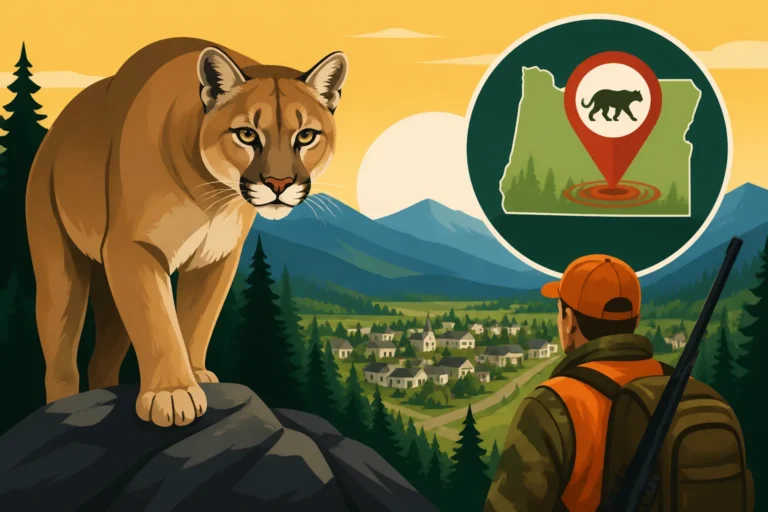
- Cougars: Our stealthy mountain lions are incredibly efficient predators, and young elk calves are a relatively easy meal compared to a full-grown bull or cow. Cougars are known to stalk calving grounds, making the most of the abundance of vulnerable newborns. This can have a notable Cougar Prey and Deer Herd Impact, especially where cougar populations are robust.
- Black Bears: Oregon's black bears are opportunistic omnivores, and while they don't exclusively hunt calves, a newborn elk is certainly on their menu if discovered. Bears emerging from hibernation in the spring are often ravenous and will readily capitalize on any available food source. Understanding the Bear Diet Through the Oregon Seasons helps illustrate how varied their food sources are, including vulnerable young animals.
- Coyotes: While less capable of taking down a large, healthy calf than a cougar or bear, coyotes are always a threat, especially to weaker or smaller calves, or if they hunt in packs.
- Wolves: In areas of eastern Oregon where wolf populations are established, they also exert significant pressure on elk calves. Wolves are highly social and effective predators, and their presence can dramatically influence Wolf Impact on Elk Behaviour, including how and where elk choose to calve.
Mother Elk Strategies for Protection
Despite the heavy predation pressure, cow elk are incredibly dedicated mothers. Their strategies go beyond just hiding their newborns.
Initially, as mentioned, isolation is key. A cow will keep her calf tucked away, minimizing her own presence near the hiding spot. However, as calves gain strength and mobility, typically after a couple of weeks, they begin to join larger "nursery herds" or groups of cows and their calves. There's safety in numbers, as more eyes and ears mean a better chance of detecting predators. These nursery groups are often led by older, experienced cows who act as sentinels.
If a predator is detected, these cow groups can become surprisingly aggressive, banding together to try and run off threats. While a single cow might not be able to defend against a cougar, a determined group can make it a much tougher proposition. This communal defense significantly improves the survival odds for individual calves once they are strong enough to keep up with the group.
Why Knowing Calving Season Matters for Hunters
Beyond simply appreciating the natural world, understanding when Oregon elk calves are born holds significant implications for hunters. It can inform your approach to scouting, ethical practices, and even influence how you interpret herd dynamics and game movements.
Ethical Considerations and Hunting Practices
For any ethical hunter, minimizing negative impact on the herd is paramount. Knowing when calves are born helps ensure you don't inadvertently create an orphaned calf situation.
- Avoiding Orphaned Calves: While most elk hunts happen well after the peak calving season, early archery seasons in late August and September can sometimes overlap with very late-born calves or, more commonly, with cows that are still lactating and heavily invested in their calves. Taking a cow during this period, especially if you're not sure if she has a calf at heel, could leave a young calf vulnerable. While calves can survive without their mothers after a few months, taking a lactating cow in early season is generally something ethical hunters try to avoid. It’s a good practice to observe the animal, looking for any signs of a calf nearby or if she's clearly still suckling a youngster, before making the decision to shoot.
- Understanding Antler Development: Knowing the calving cycle also helps you understand the bigger picture of herd health, which directly relates to bull antler development. A robust calving season with high calf survival contributes to a healthy population pyramid, ensuring a future supply of younger animals that can mature into impressive bulls. You can dive deeper into Antler Growth and Nutrition to see how herd health and forage quality connect.
Scouting and Herd Dynamics
The calving season can indirectly influence your scouting strategy, even if you're not hunting in spring. Elk behavior, habitat use, and herd composition are all shaped by this annual event.
- Identifying Calving Grounds: Through extensive e-scouting with tools like GoHunt, and on-the-ground exploration in the off-season, you can often identify areas that seem ideal for calving: dense, secluded patches of cover near water and good forage. While these areas might not hold animals during your fall hunt, understanding their importance reveals critical habitat and potential travel corridors. Elk will often move from calving grounds to summer ranges and then to rutting grounds, providing a roadmap for their annual movements.
- Post-Calving Congregation: After the initial hiding phase, cow/calf groups will often congregate into larger herds for increased protection and social interaction. This creates specific summer range patterns that can be valuable to observe. Where do these large groups spend their summer? Are they in high-elevation basins or lush valleys? Knowing this can give you clues for your fall hunts, as elk often don't move drastically far from their summer haunts until later in the season. Learning how to identify these areas using tools like E-Scouting Oregon Units With Satellite Imagery can give you a real edge.
Season Timing and Calf Vulnerability
Oregon's hunting seasons are carefully structured by wildlife managers, taking into account many factors, including the life cycle of big game animals. Calving plays a role in these decisions.
- Early Archery Seasons: As mentioned, the earliest elk hunts, like those during Oregon Archery Season Dates for Deer and Elk, usually begin in late August or early September. By this time, most calves are strong and weaned, significantly reducing the risk of orphaning. However, it's still a period where cows are highly invested in their young, often keeping them close.
- Late Season Rifle Hunts: For later seasons, such as the Oregon Roosevelt Elk Rifle Seasons in November, the calves are much more independent, though still part of the cow/calf groups. By then, the focus shifts more to herd movement due to weather, forage availability, and the tail end of the rut's impact. Understanding the earlier calving cycle simply adds another layer to your appreciation of why these seasons are timed as they are, balancing opportunity with conservation.
Table: Oregon Elk Calving Overview
| Elk Subspecies | General Calving Window | Peak Months | Key Influencing Factors | Early Calf Behavior |
|---|---|---|---|---|
| Roosevelt Elk | Late May – Early June | May / Early June | Abundant western Oregon forage, milder spring weather. | Hides in dense coastal timber and brush, scentless. |
| Rocky Mountain Elk | Late May – Mid-June | May / Mid-June | Eastern Oregon elevation, variable spring weather, green-up. | Hides in juniper, sage, or timber, relies on camouflage. |
Knowing when Oregon elk calves are born is more than just a piece of trivia. It's a foundational element of understanding elk biology, herd health, and the intricate web of life in Oregon's wilderness. For hunters, it's a vital piece of information that promotes ethical choices, enhances scouting strategies, and ultimately makes you a more knowledgeable and responsible steward of our wildlife resources. So next time you're out in the woods in spring, keep an eye out (from a respectful distance!) for those wobbly newcomers, and appreciate the miracle of new life unfolding in our beautiful state.
Disclaimer
This article is for general informational purposes only and does not constitute professional advice. Laws, prices and regulations vary by location and change over time. Consult a qualified professional for guidance on your specific situation.