Blacktail Deer Life Span
It's natural to wonder just how long a blacktail deer truly lives in the wild. We see these incredible animals across Oregon, from the dense coastal rainforests to the mixed-conifer forests of the Cascades, and often, hunters are curious about the lifespan of the deer they pursue. The reality is, while a blacktail could live a decade or more under perfect circumstances, their actual life in the rugged Oregon wilderness is often far shorter, cut by the relentless gauntlet of predators, harsh weather, disease, and, yes, hunting pressure. This guide will delve into the typical life span of a Columbian blacktail deer, exploring the myriad factors that influence their longevity and offering insights into what helps some survive longer than others.
The Natural Arc of a Blacktail Deer's Life
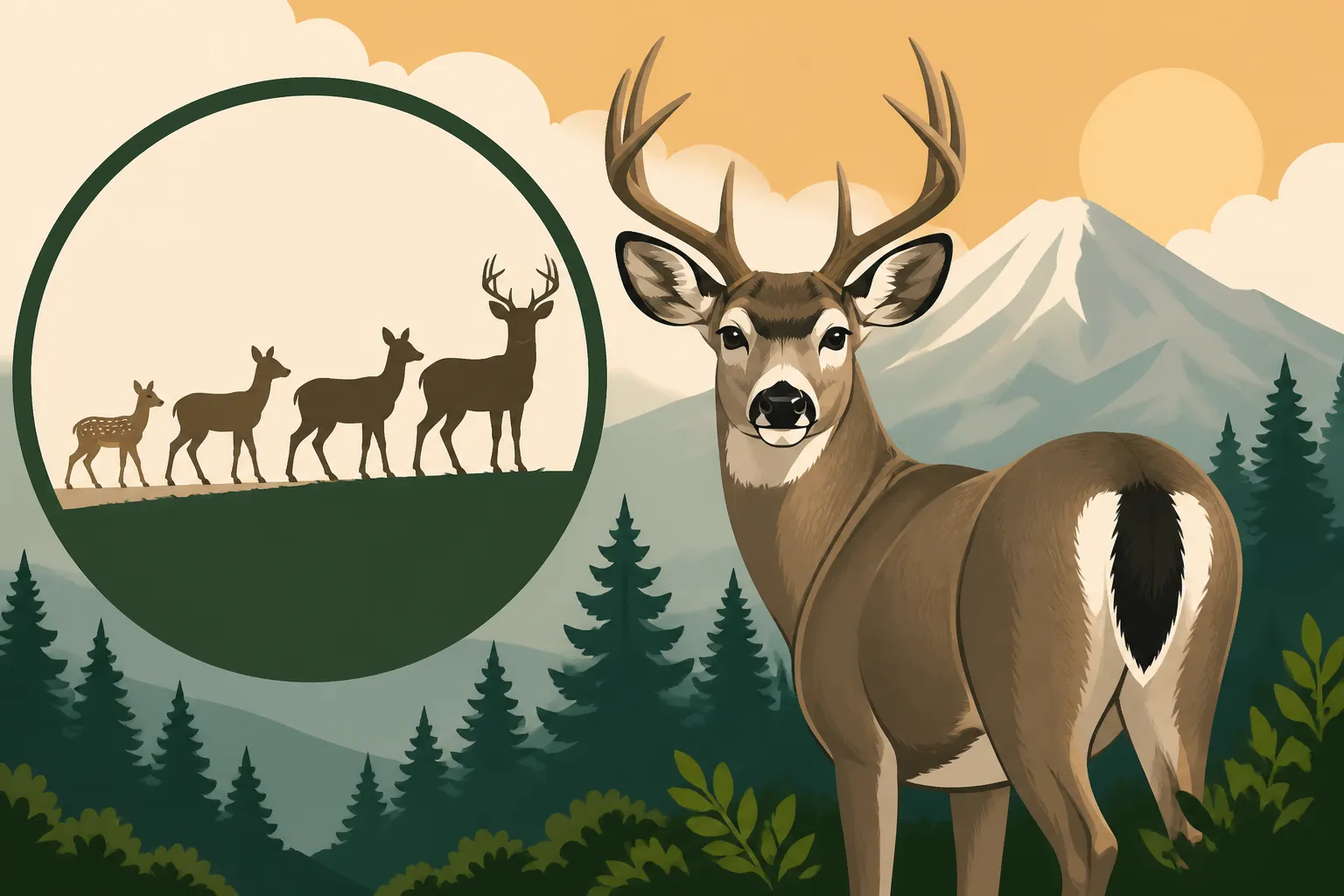
When we talk about the natural life cycle of a blacktail deer, we're really looking at their biological potential – how long they could live if everything went their way. It's a journey filled with incredible growth, peak vitality, and eventually, the slow decline into old age. For a blacktail, this journey is almost always cut short by the harsh realities of their environment, but understanding the ideal gives us a baseline.
Fawn to Yearling: The Perilous First Year
The moment a blacktail fawn hits the ground, its life is a desperate race for survival. Born usually in late spring or early summer, these tiny, spotted bundles of vulnerability are immediately on high alert. Their primary defense is camouflage and stillness, relying on their mother to keep them hidden and safe. The first few weeks are especially critical; they are easy prey for a host of predators. Coyotes, bobcats, and even black bears will readily take a fawn if given the opportunity. In some areas, even a cougar might snatch a fawn.
Beyond predators, the elements play a cruel hand. A particularly cold, wet spring can lead to hypothermia, and a lack of adequate nutrition for the doe can mean weaker fawns. As they grow, they learn to navigate the dense underbrush that defines so much of their western Oregon habitat, but they remain inexperienced and often less wary than their elders. Many fawns simply don't make it to their first birthday, falling victim to predation, accident, or disease. It's a brutal reality that keeps deer populations in check, but it also means that the yearlings you see are already survivors, having overcome the toughest hurdle in their young lives.
Mature Deer: Prime Years and Peak Health
If a blacktail survives its fawn and yearling years, it enters its prime, typically between two and six or seven years old. This is when bucks will develop their most impressive antlers – reaching their peak Blacktail Buck Antler Size – and does will be at their most fertile and successful in raising fawns. During these years, deer are generally at their physical peak. They've learned the terrain, understand escape routes, and have developed a keen sense of self-preservation. Their bodies are robust, capable of handling the rigors of the rut, navigating challenging weather, and evading most threats.
These are the deer that are truly thriving within their environment. They know the best feeding areas in the Blacktail Deer Habitat in Oregon Clearcuts, the safest bedding cover, and reliable water sources. Their senses are sharp, and their experience guides their movements. A mature doe, for instance, might successfully raise multiple fawns over these years, contributing significantly to the herd's stability. A mature buck, having navigated several rut seasons, understands how to challenge rivals and find receptive does, though this intense period also takes a massive toll on their physical condition, burning through fat reserves and leaving them vulnerable as winter approaches.
Senior Deer: The Fading Years
Beyond seven or eight years, a blacktail deer is considered senior. While it's rare to find a blacktail that lives much longer than 10-12 years in the wild, it does happen. At this stage, their physical prowess begins to wane. Their teeth, vital for processing tough forage, start to wear down, making it harder for them to maintain adequate nutrition. Their antlers, for bucks, might decline in mass or points, a phenomenon often referred to as "going downhill." Their reflexes might not be as sharp, and their ability to escape predators or withstand severe weather diminishes.
For senior deer, survival becomes a daily struggle against increasing odds. They might spend more time in dense cover, conserve energy, and rely on their accumulated wisdom to stay alive. A harsh winter, a severe drought, or an increased presence of predators can quickly take its toll on an older animal that no longer possesses the vigor of its prime. These are the deer that truly exemplify resilience, having beaten the odds for many seasons. While their contributions to the gene pool might be less significant than during their prime, their very existence is a testament to their incredible survival skills.
Factors Impacting Blacktail Deer Longevity in Oregon
The theoretical lifespan of a blacktail is an interesting thought, but the practical reality in Oregon is that many factors conspire to shorten it dramatically. It’s a tough life out there, and our blacktails face a constant barrage of challenges that test their resilience every single day.
Predation and Environmental Pressures
Predation is undoubtedly one of the most significant factors in limiting the lifespan of blacktail deer, especially for fawns and older, weaker animals. Cougars, as the apex predators in much of Oregon's blacktail country, exert consistent pressure. A cougar needs to eat, and deer are a primary food source. While a healthy, prime-age buck or doe is a formidable challenge, fawns are easy targets, and older, less agile deer can quickly become a cougar's next meal. The constant threat of a stalking cat means deer are always on edge, burning energy and often sacrificing prime feeding times for security. We often discuss Cougar Prey and Deer Herd Impact because it's such a critical dynamic.
Beyond cougars, coyotes are always a concern, particularly for fawns. Black bears, especially during lean periods, will also prey on fawns. The sheer volume of these predators in Oregon's diverse landscapes creates an environment where vigilance is paramount for a blacktail's survival.
Environmental pressures add another layer of challenge. Oregon's weather can be notoriously unpredictable. Harsh, prolonged winters, though less common in the mild Coast Range, can bring deep snow and freezing temperatures to higher elevations and eastern portions of blacktail range, making forage inaccessible and draining deer of their energy reserves. Summers can bring drought and wildfires, destroying habitat and forcing deer to move into unfamiliar or less productive areas. Smoke from wildfires can also impact visibility and air quality, adding stress to already challenged animals. These events, whether acute or prolonged, weaken deer, making them more susceptible to disease, starvation, and predation, shortening their overall lifespan.
Disease, Nutrition, and Habitat Quality
Disease is an invisible killer that can significantly reduce blacktail deer populations and individual lifespans. While Oregon has been fortunate to largely avoid some of the widespread deer diseases seen in other parts of the country, localized outbreaks can still occur. Hair Loss Syndrome, for example, is a condition that has impacted some blacktail herds in western Oregon, leaving deer with patchy coats, vulnerable to cold and parasites. This condition weakens them, often leading to a premature death. Other parasites, like lungworms or liver flukes, can also take a toll, especially on animals already stressed by poor nutrition or environmental conditions.
Nutrition, directly tied to habitat quality, is fundamental to a deer's health and longevity. Blacktail deer thrive on a diverse diet of forbs, browse, and fungi, depending on the season and location. A healthy habitat provides consistent access to these varied food sources, allowing deer to build fat reserves, maintain strong immune systems, and grow robust antlers. However, habitat degradation, whether from clearcutting practices that are not followed by good regeneration, extensive human development, or large-scale wildfires, can reduce the availability of quality forage.
When deer are forced to subsist on poor nutrition for extended periods, they become weaker, more prone to disease, and less capable of surviving harsh conditions or escaping predators. This is particularly true during late winter and early spring when natural forage is scarce. The ability of a doe to successfully raise fawns is also heavily dependent on her nutritional state. Healthy habitat, therefore, isn't just about providing cover; it's about providing the nutritional backbone for a healthy, long-lived deer population. Understanding the Blacktail Deer Density in the Coast Range often correlates directly to the quality and quantity of available forage.
Hunting Pressure and Management
Hunting is another significant factor in the life span of blacktail deer, though it's important to view it through the lens of modern wildlife management. In Oregon, blacktail hunting is a highly regulated activity, with seasons, bag limits, and specific rules designed to maintain healthy deer populations. For many bucks, a hunter's tag brings their life to an end far sooner than old age or natural causes ever would. This is particularly true for mature bucks, which are often the target of hunters seeking a trophy or quality meat.
However, regulated hunting isn't necessarily a negative for the overall health of the herd. In many cases, it acts as a form of population management, helping to keep deer numbers in balance with their habitat. Removing a certain number of animals, especially bucks, can prevent overpopulation, reduce competition for food, and potentially even reduce the spread of disease within a herd. It also often targets the healthier, more robust animals, leaving behind those that might be less fit, allowing their genes to continue.
Wildlife managers, through organizations like Oregon Department of Fish and Wildlife (ODFW), use data on deer populations, habitat conditions, and hunter harvest rates to set tag numbers and season structures. Their goal is to ensure sustainable hunting opportunities while ensuring the long-term health and viability of the blacktail resource. For instance, when analyzing harvest reports, ODFW can get a sense of the age structure of harvested bucks, which informs future season setting. Hunters themselves can play a role in this by understanding concepts like Antler Point Restrictions and Herd Age and making ethical choices in the field.
It's also worth noting that non-hunting-related human activities impact deer longevity. Roadkill is a tragically common cause of death for deer, especially in areas where urban sprawl meets wildland. Development reduces habitat, pushing deer into smaller, more fragmented areas where they might be more exposed to traffic or human-wildlife conflicts.
Recognizing Age in the Field and Why It Matters
As hunters and wildlife enthusiasts, understanding the age of a blacktail deer in the field can be incredibly insightful. It helps us appreciate the journey that animal has undertaken and allows us to make more informed decisions, whether for conservation or ethical hunting. Identifying an older buck or an experienced doe isn't always easy, but there are tell-tale signs.
Physical Indicators of Age
For bucks, antlers are often the first thing people look at, but they can be misleading. While a young buck typically has smaller antlers and a mature buck often carries the largest racks, antlers don't always reliably indicate exact age, especially in the later years. A truly old buck might have a "regressing" rack, with less mass or fewer points than he sported in his prime. A key indicator of age in bucks is often their body structure:
- Neck and Shoulder Mass: Younger bucks tend to have a more slender neck that blends smoothly into their shoulders. Mature bucks, especially during the rut, will develop a thick, muscular neck and chest that stands out, appearing disproportionately large compared to the rest of their body.
- Back and Belly Sag: A younger deer will typically have a relatively straight backline and a taut belly. Older deer, particularly mature does that have raised many fawns, might show a slight sag in their back and a more pronounced potbelly.
- Facial Features: Older deer often have longer snouts and a more defined, almost "Roman" nose, compared to the more rounded, fawn-like face of a younger animal. Around their eyes and muzzle, you might see more graying, especially in late-season.
- Behavioral Cues: Older deer often move with more deliberate caution. They are less prone to youthful exuberance and more likely to test the wind, scan their surroundings, and wait before moving into the open. This wisdom is a hard-won advantage in their struggle for survival.
For a deeper dive into the nuances of assessing a buck, consider our article on Scoring a Blacktail Buck which often involves looking at overall characteristics, not just antler points.
Ethical Considerations and Management Goals
Understanding the life span and age structure of blacktail deer ties directly into ethical hunting and sound wildlife management. An ethical hunter aims to make informed decisions in the field, which can include consciously selecting for mature animals, or passing on younger ones to allow them to reach their full potential. This doesn't mean every hunter must only target the oldest deer, but having the knowledge to identify age allows for that choice.
From a management perspective, knowing the average lifespan and the factors affecting it helps wildlife agencies set quotas and seasons that ensure a healthy age distribution within the herd. For example, if data shows that too many young bucks are being harvested, management might adjust regulations to promote the survival of more age classes, such as through antler point restrictions. The goal is often to maintain a balanced herd with a good representation of fawns, yearlings, and mature animals, as this promotes genetic diversity and resilience against environmental challenges. For hunters, making a clean, ethical shot and knowing about Shot Placement on a Quartering Bull (or a blacktail buck) ensures minimal suffering and respect for the animal.
Using Resources like GoHunt for Understanding Unit Dynamics
For hunters, especially those new to a unit or those looking to expand their knowledge, resources like GoHunt can be invaluable. These platforms often compile extensive data on specific hunting units, including harvest statistics, success rates, and even historical information that can indirectly inform your understanding of deer populations and their potential longevity in that specific area. By analyzing trends, you might gain insights into predation rates, habitat conditions, and how management strategies are impacting the deer over time.
For instance, GoHunt might show higher harvest rates for specific age classes in certain units, or provide aerial imagery that helps you identify key winter range or prime bedding areas that contribute to deer survival. This kind of detailed information, combined with on-the-ground scouting, can help you paint a clearer picture of the challenges and opportunities for blacktail deer in any given part of Oregon. Whether you're planning a trip to the Coast Range or looking at the Hunting the Willamette Valley Open Fields Properties, using these tools can help you understand the landscape the deer call home.
Understanding the blacktail deer's life span isn't just about a number; it's about appreciating the incredible journey these animals undertake. From the vulnerable fawn to the wise old buck, each stage is a testament to their adaptability and resilience in the face of Oregon's wild landscapes. As hunters and conservationists, our role is to understand these dynamics, respect the animals, and contribute to their continued well-being for generations to come.
Disclaimer
This article is for general informational purposes only and does not constitute professional advice. Laws, prices and regulations vary by location and change over time. Consult a qualified professional for guidance on your specific situation.