Deer Meat Yield From a Blacktail
It's a common question, one that every hunter who values the incredible table fare of wild game asks: "How much actual meat will I get from this animal?" When you're dreaming of venison steaks and roasts from an Oregon blacktail, you want a realistic expectation of what you'll put in the freezer. This guide aims to break down the journey from a blacktail deer in the forest to neatly wrapped packages of meat, giving you a solid understanding of the yield you can expect.
Understanding Blacktail Deer Anatomy and Live Weight
Before we can talk about boneless meat yield, we first need to understand the animal itself. Blacktail deer, specifically the Columbian blacktail found here in Oregon, are not as large as their mule deer cousins or the majestic Rocky Mountain elk. This fact alone sets a different expectation for the freezer filling.
Average Live Weight of a Blacktail Buck and Doe
A mature blacktail buck in Oregon typically ranges from 120 to 200 pounds live weight, though some exceptional animals, especially in prime habitat like parts of the Coast Range, might push a bit heavier. Does are generally smaller, often weighing in at 80 to 120 pounds live weight. These aren't precise figures, of course; they're averages. Think about it like people – some are naturally bigger boned, some carry more muscle, and genetics play a role. A yearling buck might only be 90-100 pounds, while an older, dominant buck could easily top 180 pounds.
The regional differences can be subtle but important. A buck from the lush, food-rich clearcuts of the northern Coast Range might be heavier than one from drier, more sparse areas further south or inland, even within what we consider blacktail country. The age of the animal is also a huge factor; a young, growing deer will weigh less than a fully mature adult. It's a spectrum, and understanding this variation helps set proper expectations right from the start.
Factors Influencing Live Weight
Many elements contribute to a blacktail's live weight. The quality of their habitat is paramount; deer living in areas with abundant forage, good cover, and consistent water sources will naturally be healthier and heavier. Think about areas with a mosaic of young clearcuts providing browse and mature timber for shelter—these are often prime spots for robust deer. This is why understanding Blacktail Deer Habitat in Oregon Clearcuts can be so important not just for finding deer, but for finding healthy ones.
The time of year also has a significant impact. Bucks, especially, will be at their heaviest just before the rut begins in late fall. They've spent the summer and early fall putting on fat reserves. Once the rut kicks in, they expend an immense amount of energy chasing does and fighting rivals, often eating very little. A buck harvested in the peak or late stages of the rut might be noticeably lighter than one taken a month earlier. Does, too, can fluctuate in weight, especially if they are pregnant or lactating. Nutrition is key; if a deer herd is struggling with poor forage or disease like Hair Loss Syndrome, their overall body condition and weight will reflect that.
From Live Weight to Field Dressed Weight
Once a blacktail is down, the first crucial step is field dressing. This isn't just about reducing weight for the pack out; it's absolutely vital for meat quality and cooling. Many hunters underestimate how much weight is shed at this stage.
The Importance of Field Dressing
Field dressing, for those new to it, involves removing the internal organs (viscera) as quickly as possible after the animal is dispatched. This process serves several critical functions. First and foremost, it allows the carcass to cool down rapidly. A deer's body heat, especially after exertion, can quickly spoil meat if not dissipated, particularly in warmer early-season weather. Think about hunting in September or October; even if the air is cool, that internal heat is trapped. Secondly, it removes the gut pile, which can harbor bacteria that will taint the meat if ruptured or left too long.
For those hunting in remote areas, or if you're lucky enough to drop a deer a long way from a road, field dressing significantly lightens the load. Removing the entrails can reduce the animal's weight by a substantial amount, making it much easier to drag, carry, or pack out. Some hunters opt for the "gutless method" in challenging terrain, which involves skinning and boning out the animal in place, often leaving the guts completely undisturbed. While often discussed for larger game like elk, the principles apply to deer as well, and you can learn more about similar techniques in articles like Gutless Method on a Bull Elk. The primary goal, regardless of method, is to get that carcass cooling down.
Estimating Field Dressed Weight
So, how much does field dressing reduce the weight? Generally, you can expect a reduction of about 20% to 30% of the animal's live weight once it's field dressed. This percentage varies depending on how thoroughly the animal is gutted and what else might be removed (e.g., lungs, heart, liver if you choose to keep them). For an average 150-pound blacktail buck, that means a field-dressed weight of roughly 105 to 120 pounds. A 100-pound doe would be closer to 70-80 pounds.
It's a significant drop, and it’s why hunters often refer to field-dressed weight when discussing the size of their harvest. This is the weight you'll contend with if you're dragging it out whole or taking it to a local game processor. Keeping the hide on at this stage is common, as it helps protect the meat from dirt, insects, and drying out, especially if you're transporting it. For hunters who rely on resources like GoHunt to plan their expeditions, understanding these weight reductions helps in planning recovery and transport logistics.
From Field Dressed Weight to Boneless Meat Yield
The field-dressed weight is a good start, but it's not what fills your dinner plates. The next step, butchering, is where a lot more weight is shed as bone, hide, and excessive trim are removed, leading to your final boneless meat yield.
The Butchering Process and Its Impact on Yield
Butchering is where the magic happens, turning a field-dressed carcass into palatable cuts of meat. During this process, several things are removed:
- The hide: This is a substantial part of the original weight.
- The head and lower legs: These contain little edible meat for most hunters.
- Bone: Rib cages, spine, leg bones, and skull are all discarded.
- Excess fat, gristle, and silver skin: While some fat adds flavor, too much can go rancid quickly or detract from the taste, especially deer tallow. Silver skin and gristle are tough and inedible.
The skill of the butcher, whether it's a professional or yourself at home, makes a real difference in the final yield. A meticulous butcher will salvage every possible ounce of usable meat, while a less experienced one might leave a good amount on the bone or trim too aggressively. Choosing between boneless cuts (steaks, roasts, stew meat) and bone-in cuts (like bone-in chops or roasts, though less common for blacktail) also affects the weight you take home, even if the actual edible portion is similar. You can dive deeper into this process with guides like Butchering Your Own Deer at Home.
Typical Boneless Meat Yield Percentages for Blacktail
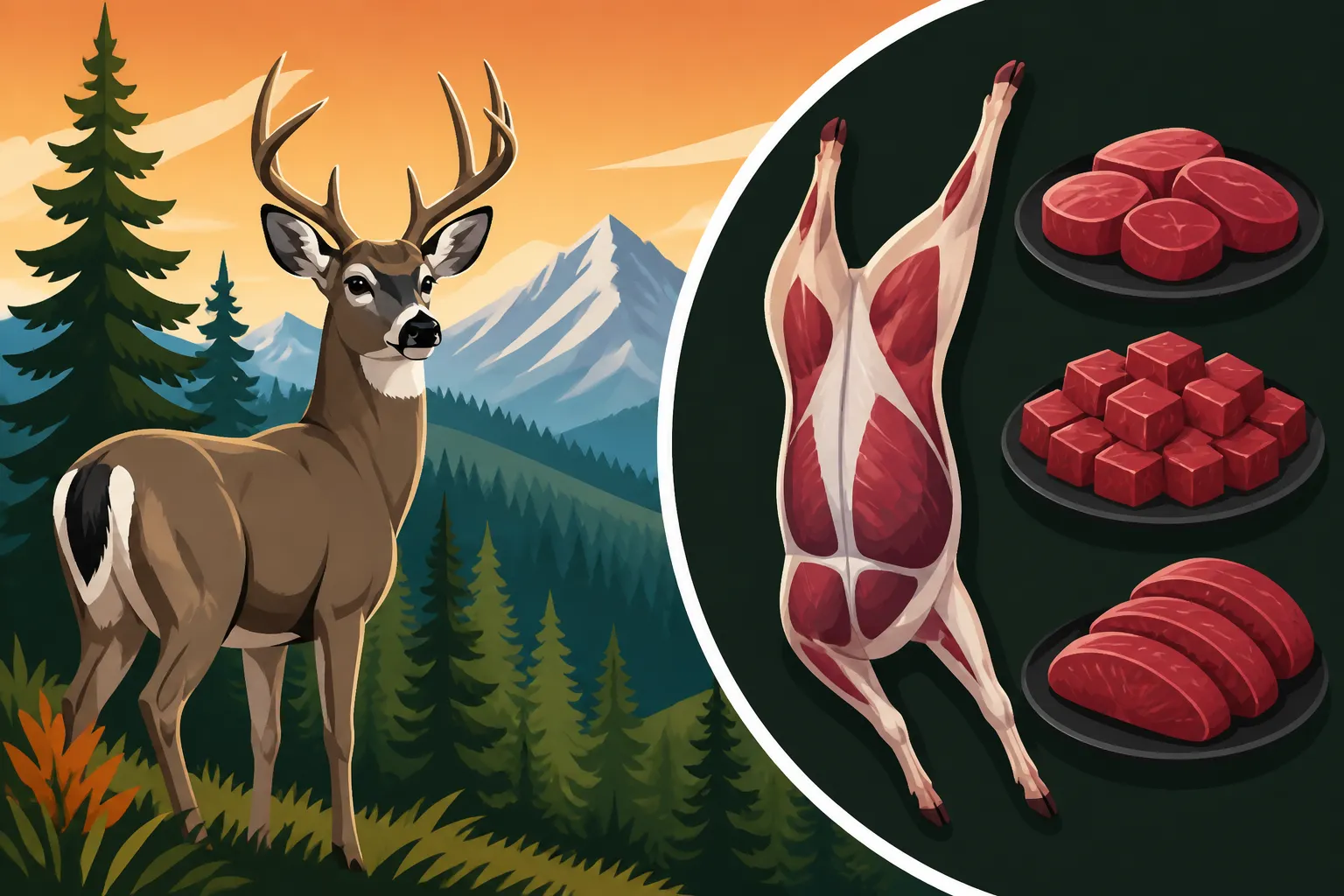
When all is said and done, and you've got your beautiful packages of venison ready for the freezer, what kind of percentage are we talking about? For blacktail deer, a realistic boneless meat yield is generally between 40% and 50% of the animal's live weight, or roughly 60% to 70% of its field-dressed weight.
Let's put that into perspective with our average 150-pound live weight buck:
- Live Weight: 150 lbs
- Field Dressed Weight (approx. 25% reduction): 112.5 lbs
- Boneless Meat Yield (approx. 45% of live weight): 67.5 lbs
For a 100-pound live weight doe:
- Live Weight: 100 lbs
- Field Dressed Weight (approx. 25% reduction): 75 lbs
- Boneless Meat Yield (approx. 45% of live weight): 45 lbs
These numbers represent what you'll actually eat, free from bone and excessive trim. It's a significant drop from the live weight, but it’s lean, organic protein. When considering your hunt, especially if you use services like GoHunt to scout and plan, knowing these realistic yields helps manage expectations for your freezer stock.
Maximizing Your Blacktail Meat Yield
Getting the most meat from your blacktail isn't just about luck; it's about good practices from shot to freezer.
- Shot Placement: A clean, ethical shot that anchors the animal quickly and avoids major muscle groups (like the shoulders or hindquarters) will preserve more meat. While a good rifle helps, understanding Rifle Choice for Oregon Elk and Deer is secondary to shot placement.
- Immediate Field Dressing: As discussed, getting the entrails out quickly is non-negotiable for cooling and hygiene.
- Rapid Cooling: After field dressing, get the carcass cooled down as fast as possible. This means avoiding direct sunlight, hanging it in the shade, or even packing the cavity with ice if temperatures are warm. Learning techniques like those described in Getting Meat Out Before It Spoils is crucial, especially during early-season hunts.
- Cleanliness: Keep the meat clean from dirt, hair, and stomach contents. Use clean knives and surfaces.
- Professional Butchering (or DIY Skill): If you're not confident in your butchering skills, a good professional processor is worth every penny. They are efficient and experienced at maximizing yield. If you plan to DIY, invest time in learning proper techniques. Grinding and Packaging Wild Game can help you turn less desirable cuts into excellent ground meat or sausage.
- Aging: Depending on conditions and personal preference, aging deer meat for a few days can improve tenderness and flavor. This often involves keeping the field-dressed carcass in a cool, controlled environment. You can explore this further with resources on Aging Game Meat in a Spare Fridge.
Every little bit of care you put in will translate into more delicious venison in your freezer.
Practical Examples and a Comparative Table
To truly grasp the concept of meat yield, let's walk through some hypothetical blacktail deer scenarios and then summarize them in a handy table. This helps visualize the progression from live animal to packaged meat.
Hypothetical Scenarios for Different Blacktail Sizes
Scenario 1: Small Blacktail Doe (Yearling)
You're hunting the edge of a timber patch in the Coast Range and take a smaller, perhaps yearling, doe.
- Live Weight: Let's estimate 90 pounds.
- Field Dressed Weight: After field dressing, removing approximately 25% (22.5 lbs), you're looking at a field-dressed weight of about 67.5 pounds. This is still a decent drag!
- Boneless Meat Yield: Taking about 45% of the original live weight (40.5 lbs), you'll end up with roughly 38-42 pounds of boneless meat. That's still a good amount for the freezer, enough for many meals.
Scenario 2: Average Blacktail Buck
You've harvested a solid, mature three-point buck that you estimated to be around 160 pounds live weight. Perhaps you judged him while he was moving through an old clearcut, a scenario you might explore further with Reading Clearcut Edges for Blacktail Bucks.
- Live Weight: 160 pounds.
- Field Dressed Weight: Assuming a 25% reduction (40 lbs), your field-dressed weight is about 120 pounds. You might need some help packing this out or a good game cart!
- Boneless Meat Yield: At 45% of live weight (72 lbs), you're bringing home between 68-75 pounds of high-quality venison. This is a very satisfying haul.
Scenario 3: Large Mature Blacktail Buck
This is the big one, an older, heavy-bodied blacktail buck, perhaps taken just before the peak of Blacktail Rut Timing in Western Oregon, when he's at his heaviest. You might have even thought about Scoring a Blacktail Buck as you admired him.
- Live Weight: Let's say a robust 200 pounds.
- Field Dressed Weight: A 25% reduction (50 lbs) leaves you with a field-dressed weight of 150 pounds. This is serious work to get out of the woods!
- Boneless Meat Yield: With a 45% yield of live weight (90 lbs), you're looking at an impressive 85-95 pounds of boneless meat. This buck will keep your family fed for quite a while.
Meat Yield Comparison Table
Here's a table summarizing these hypothetical yields, illustrating the progression from live weight to what actually goes into your freezer. These are approximations, of course, but they provide a very realistic picture.
| Blacktail Size | Live Weight (Approx.) | Field Dressed Weight (Approx. 75% of Live) | Boneless Meat Yield (Approx. 45% of Live) |
|---|---|---|---|
| Small Doe/Yearling | 90 lbs | 67.5 lbs | 40.5 lbs |
| Average Buck | 160 lbs | 120 lbs | 72 lbs |
| Large Mature Buck | 200 lbs | 150 lbs | 90 lbs |
As you can see, the numbers underscore that while blacktails are smaller than their eastern Oregon mule deer counterparts, even an average buck provides a substantial amount of delicious, healthy meat.
Beyond the Pounds: The Value of Blacktail Venison
While the poundage is important for practical purposes, the true value of blacktail venison extends far beyond mere weight. It's about the quality, the experience, and the connection to your food source.
The Quality and Culinary Versatility of Blacktail Meat
Blacktail venison is renowned for its lean, fine-grained texture and rich, earthy flavor. Unlike farm-raised meats, wild venison often has a unique taste profile influenced by the deer's natural diet of browse, forbs, and acorns. It's incredibly healthy, low in fat and cholesterol, and packed with protein. Many hunters agree that a well-cared-for blacktail carcass yields some of the finest game meat available.
The culinary versatility is endless. The prime cuts, like backstraps and tenderloins, are fantastic simply seared or grilled. Roasts from the hindquarters are perfect for slow cooking. The shoulder meat, neck meat, and trimmings are excellent for grinding into burger, making sausages, or stewing. You can create everything from gourmet medallions to hearty chili. It's a true nose-to-tail experience that celebrates the entire harvest.
Planning Your Harvest Around Meat Needs
When you head into the woods, especially for species like blacktail where opportunities can be fleeting, like when Still-Hunting Blacktails in Wet Oregon Coastal Brush, it's easy to get caught up in the thrill of the hunt. However, a responsible hunter also considers the post-harvest logistics. Thinking about the meat yield ties directly into planning. Do you have adequate cooler space? Is your vehicle ready to transport a field-dressed carcass? Do you have a butcher lined up, or are you prepared to process it yourself at home?
For many, the meat itself is the primary driver for hunting, making these considerations paramount. The satisfaction of filling your freezer with wild game, knowing exactly where it came from and how it was handled, is immense. Resources like GoHunt can help you scout and plan your hunt effectively, ensuring you're prepared for every step, including the critical process of getting that venison from the forest to your table. Whether it's a small doe or a heavy buck, the bounty of a blacktail provides a profound connection to nature and a sustainable food source. The amount of meat you get isn't just a number; it's a testament to a successful hunt and a full freezer.
Disclaimer
This article is for general informational purposes only and does not constitute professional advice. Laws, prices and regulations vary by location and change over time. Consult a qualified professional for guidance on your specific situation.