Black Bear Weight in the Coast Range
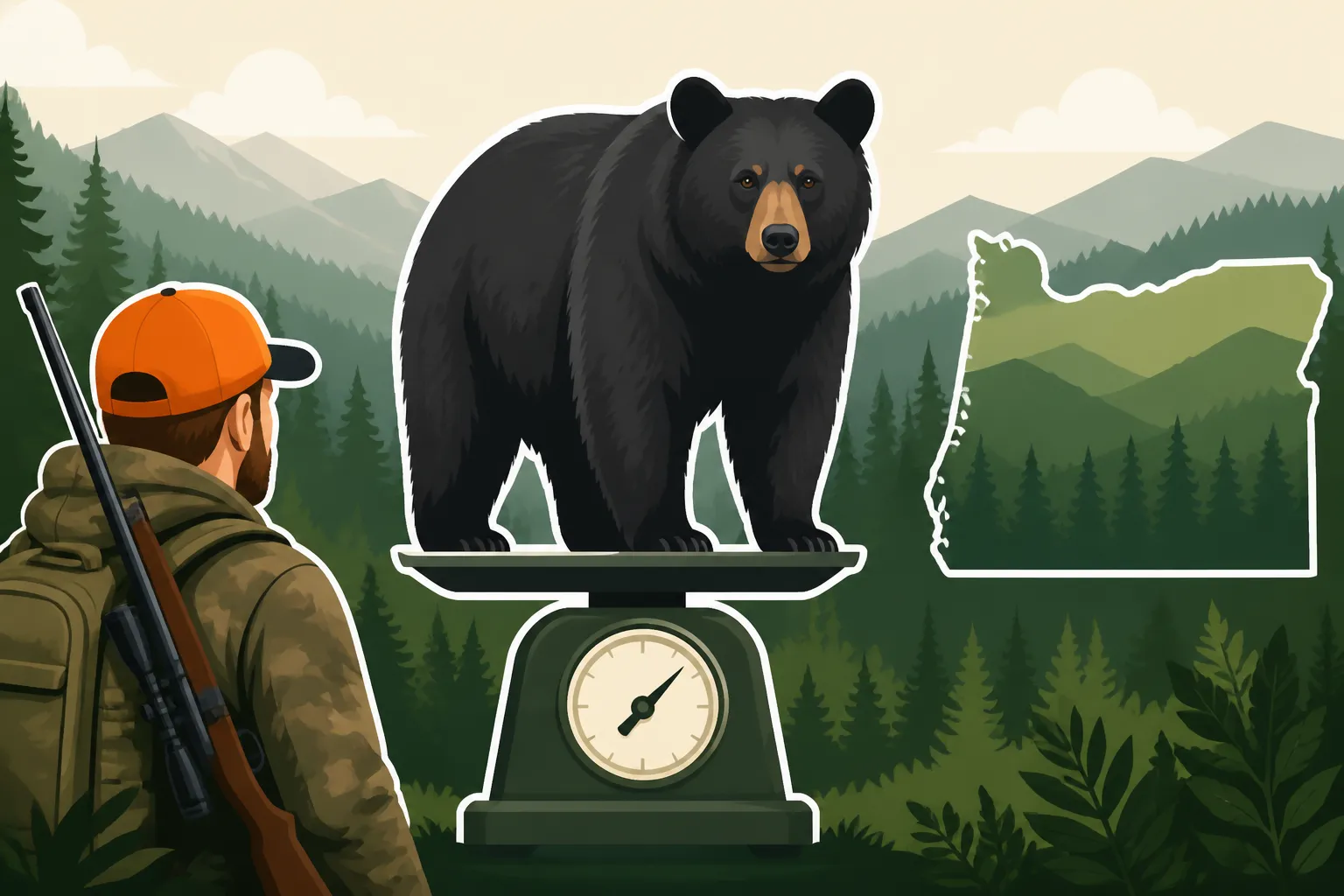
One of the most exciting — and often humbling — aspects of hunting black bears in Oregon's Coast Range is trying to figure out just how big that animal truly is. It's easy to spot a bear and think you have a giant on your hands, only to realize later that judging size and weight in the field is a whole different ballgame. This guide will dive deep into what influences black bear weights in the Coast Range, what you can realistically expect to encounter, and how to sharpen your judgment skills before you ever pull the trigger.
Factors Influencing Black Bear Weight in the Coast Range
It’s never as simple as "a bear weighs X pounds." Just like us, bears have a lot of variables that affect their size and bulk. When you're out in the dense timber and clearcuts of the Oregon Coast Range, trying to get a read on a black bear can be a real challenge because these factors are constantly at play. Understanding them helps you set realistic expectations and, frankly, appreciate the impressive resilience of these animals.
Seasonal Fluctuations and Diet
The seasons are probably the single biggest determinant of a black bear's weight, especially here in the Coast Range where food sources shift dramatically throughout the year. Bears are incredible creatures when it comes to preparing for winter, packing on as much fat as possible.
In the spring, when bears first emerge from their dens, they're often at their leanest. They've just spent months burning through fat reserves, and while they're hungry, prime food sources are just beginning to appear. Think about it: they're scavenging for winter-killed animals, munching on emerging green grasses, skunk cabbage, and tender shoots. This is a time of recovery, not rapid weight gain. A bear you see in April or May might look quite lanky compared to its fall counterpart, even if it's the same individual. Their metabolism is kicking back into gear, but they're still in a calorie deficit phase.
As summer progresses into fall, the Coast Range becomes a veritable buffet. Berries like huckleberries, salmonberries, and blackberries ripen, providing huge caloric boosts. Acorns and other mast crops start dropping. Bears are also opportunistic feeders, and they’ll take advantage of carrion or even young deer and elk if the opportunity arises. This period, from late summer through fall, is when bears truly pile on the pounds. They're trying to create a thick layer of fat, sometimes several inches deep, to sustain them through hibernation. A boar that looked average in April can transform into a massive, barrel-chested animal by October or November. This dramatic change is why hunters often target the fall season for larger bears, especially those focused on meat yield or a particularly robust specimen. You'll notice their bellies almost dragging the ground, and their neck and shoulder areas will be visibly thicker. This is prime time for them to be Spot-and-Stalk Spring Bear on Oregon's Green Slopes This is also where you might find information on Spring Bear Hunting Timing by Elevation.
Age and Sex Differences
Just like with deer and elk, an older bear is generally a larger bear. A cub might only weigh 10-20 pounds when it emerges from the den, and yearlings will still be quite small, perhaps 50-100 pounds. These young bears are growing rapidly, but they haven't reached their full potential.
Mature boars (males) are typically significantly larger and heavier than sows (females) of the same age. Boars can continue to grow and put on weight for many years, often reaching their peak size between 8 and 12 years old, sometimes even older. They have larger frames and, especially during the fall, carry much more muscle and fat. This distinction is crucial for hunters aiming for a larger animal, as Judging a Boar From a Sow at Distance can be incredibly tricky in the field. Sows, especially those with cubs, often prioritize putting on enough fat to sustain themselves and their offspring through the winter, rather than bulking up to the same extent as a lone boar. Their energy is diverted to reproduction and cub rearing. A lone sow might get quite large, but generally, a mature boar will outweigh her considerably. Understanding these subtle differences is key to accurately assessing a bear when you're glassing a distant clearcut.
Habitat and Genetics
The Coast Range itself plays a significant role in bear size. This region is a lush, temperate rainforest environment with abundant food sources. Compared to bears in more arid, high desert regions of Oregon, Coast Range bears generally have better access to consistent nutrition, which supports larger body sizes. The dense timber provides excellent cover, allowing bears to feel secure while foraging extensively. This rich habitat means they don't have to expend as much energy traveling long distances to find food, leaving more calories to convert into body mass.
Genetics also play an undeniable role. While you can't see a bear's genetic blueprint in the field, certain bloodlines or regional populations might naturally trend towards larger or smaller sizes due to generations of adaptation and available resources. It's less about individual genetics and more about the overall health and vitality of the local population. When a population has good access to food and relatively low stress, they tend to express their full genetic potential for growth. Conversely, in areas with poor food availability or high bear densities, individual bears might not reach their maximum potential size. This habitat quality is part of why the Coast Range is known for producing some truly impressive black bears.
Average Black Bear Weights in the Oregon Coast Range
So, what are we actually talking about when we discuss "big" Coast Range bears? Let's get down to some realistic numbers. It's important to remember that these are averages and outliers certainly exist. There's always that one bear that breaks the mold!
Typical Weights for Mature Bears
For a mature black bear in the Oregon Coast Range, you can generally expect a wide range, primarily due to the seasonal and sex differences we just talked about.
- Adult Sows (Females): A healthy adult sow in the Coast Range will often weigh between 150 to 250 pounds. In prime feeding conditions during the late fall, some larger sows might tip the scales closer to 300 pounds. These are generally older, dominant females who have successfully raised multiple litters.
- Adult Boars (Males): This is where the numbers really start to climb. Mature boars typically range from 250 to 400 pounds. The truly impressive specimens, the giants of the Coast Range, can easily surpass 450 pounds, with some exceptional individuals reportedly exceeding 500 or even 600 pounds, particularly in the prime berry and mast crop seasons. These bears are often older, very experienced animals that have managed to avoid hunters and other dangers for many years. When you hear stories of monster bears, they almost invariably refer to these old, heavy boars, often taken in the fall. For a hunter using tools like GoHunt, understanding typical size ranges can help in evaluating the potential quality of a unit for trophy bears.
What Constitutes a "Trophy" Weight?
The term "trophy" is subjective, of course. For many, simply taking a bear is a trophy. But if we're talking about size, then a bear that pushes the upper limits of the typical range is often considered a trophy.
For a sow, hitting the 250-300 pound mark in the Coast Range is definitely a large, mature animal and a significant trophy. For boars, many hunters would consider anything over 350 pounds to be a substantial trophy bear. That 400+ pound mark is where you're truly getting into the realm of a fantastic, exceptionally large Coast Range black bear. These bears have lived long, successfully navigated their environment, and represent a significant accomplishment for any hunter. The sheer bulk of a bear this size is astonishing, and packing one out can be a monumental effort. Hunters often share stories about these exceptional animals, highlighting their immense fat layers and dense muscle mass.
Regional Comparisons Within Oregon
While this guide focuses on the Coast Range, it's helpful to briefly consider other parts of Oregon. Black bear populations across Oregon demonstrate varying average weights. The Coast Range and Cascade Mountains generally support larger bears due to the abundant rainfall and rich vegetation, leading to a consistently high-calorie diet.
In contrast, bears in drier regions like parts of Eastern Oregon's high desert, while still healthy, might average slightly smaller weights simply because their food sources can be more scattered or less calorically dense, depending on the year. For instance, bears inhabiting sagebrush country or areas with limited water might not have the same access to lush berry patches or abundant mast crops. However, even in Eastern Oregon, specific areas with excellent forage can produce very large bears. The key takeaway is that the Coast Range offers prime habitat for bears to reach significant sizes, making it a highly desirable destination for hunters seeking a truly impressive animal. This makes researching Black Bear Populations Across Oregon and their distribution even more important.
Estimating Bear Weight in the Field
This is perhaps the trickiest part of bear hunting in the Coast Range. Bears don't stand still on a scale, and their fur can be incredibly deceptive. Many a hunter has walked up to their "giant" bear only to realize it's significantly smaller than they estimated. Don't worry, it happens to the best of us! The dense vegetation and undulating terrain of the Coast Range further complicate this.
Challenges of Field Judging
The primary challenge in judging a bear's weight in the field stems from several factors. Firstly, their fur is thick and can make them appear much larger than they are, especially when ruffled or wet. This "fur coat" effect is a common trap for new and experienced hunters alike. Secondly, bears have short legs and a long body, which can distort perceptions of their height and length, especially when they are moving through brush or standing on uneven ground. A bear standing on a slight incline can look much taller than it is on flat ground.
Furthermore, bears can look very different from various angles. A bear broadside might look robust, but the same bear facing away can appear slender. The lighting conditions also play a huge role. Early morning or late evening light can cast shadows that exaggerate size, while harsh midday light can flatten their appearance. The best way to combat these challenges is to observe the bear for an extended period, if possible, from multiple angles, and look for specific physical indicators rather than just overall bulk. This patient observation is key to accurate judgment.
Key Indicators to Look For
Instead of just looking at the overall "bigness," savvy bear hunters focus on specific characteristics that are better indicators of age and weight.
- Body Shape and Proportions: Look for a bear that is "wide" rather than just "tall." A large, mature boar will have a substantial, blocky head, a thick neck, and broad shoulders that flow smoothly into a deep, barrel-chested body. Their belly will often appear to hang low, especially in the fall. Younger bears tend to have more slender necks, narrower shoulders, and their legs might look longer in proportion to their body. The overall impression should be one of "mass" rather than just length.
- Head Size and Ear Position: This is a classic trick. On a large, mature bear, their ears will appear relatively small in proportion to their head. The head itself will look thick and blocky, almost like a football. On a younger bear, their ears will look much larger and more prominent, often appearing to stick out more from the side of their head. This ratio of ear size to head size is one of the most reliable indicators of age and, by extension, potential weight.
- Leg Thickness: The legs of a truly large bear will appear thick and sturdy, almost columnar. Younger bears tend to have more slender, "gangly" looking legs. Pay attention to the thickness of their ankles and the overall robustness of their limbs.
- Sway Back: This isn't always present, but some older, very heavy bears, particularly boars, will develop a slight sway in their back due to their considerable weight. If you see a pronounced sway, you're likely looking at a very old and large bear.
- Behavior: Older, larger bears tend to move more deliberately and confidently. They might appear less skittish and more focused on foraging. Younger bears, especially yearlings or sub-adults, are often more playful, erratic, and nervous. Observing these behavioral cues, coupled with physical indicators, can paint a clearer picture of the bear's maturity.
Using Reference Points
Whenever possible, try to find a reference point to help judge size. If the bear is near a tree, a bush, or even a rock, compare its size to that object. For example, if you know a certain type of shrub is typically three feet tall, and the bear's back is well above it, that gives you a much better visual estimate than just looking at the bear in isolation.
Many hunters will also use their rifle scope or binoculars to gauge. If a bear's body completely fills a certain portion of your optics at a known distance, you can develop a mental database over time to help judge. Some advanced hunters even mark their optics with small, non-permanent markers to create a quick reference scale. The more you practice looking for these indicators and comparing them to known objects, the better your field-judging skills will become. Resources like GoHunt can provide maps that show timber density, which can help anticipate how much cover a bear might be using, affecting your ability to get a clear view.
Tips for a Successful Bear Hunt in the Oregon Coast Range
Hunting black bears in the Coast Range is an incredibly rewarding experience, offering a unique blend of challenging terrain and the thrill of pursuing a formidable big game animal. Beyond just judging weight, there are several things you can do to increase your chances of success.
Scouting and Understanding Bear Behavior
Effective scouting is paramount when hunting bears in the dense environments of the Coast Range. Bears are creatures of habit, and understanding their movement patterns, preferred feeding areas, and bedding sites can significantly improve your odds. Start by looking for sign: scat, claw marks on trees, overturned rocks or logs where they've dug for grubs, and trails through dense brush. Pay close attention to areas with abundant natural food sources, like berry patches in late summer and fall, or active clearcuts with new growth in the spring.
Bears often utilize riparian corridors for travel and feeding, especially in dry periods when water sources are critical. E-Scouting Oregon Units With Satellite Imagery can be incredibly helpful for identifying these features, as well as clearcuts, old logging roads, and natural funnels that bears might use. In the spring, focus on green-up slopes where new vegetation is emerging. In the fall, switch your focus to areas rich in berries and mast crops. Bears are most active during dawn and dusk, but in dense timber, they might be active throughout the day, especially if they feel secure. Setting up trail cameras can give you invaluable insight into what bears are in an area, their size, and their patterns, provided you follow Trail Camera Rules on Oregon Public Land.
Gear and Preparation for the Coast Range
The Coast Range is known for its wet, often unforgiving weather and dense, steep terrain. Proper gear isn't just a comfort; it's a necessity for safety and success. Rain gear that actually stays dry is non-negotiable. Look for high-quality, durable waterproof-breathable fabrics that can withstand prolonged exposure to rain and brush. Layering is key, as temperatures can fluctuate wildly, and you'll often be working up a sweat while hiking, only to cool down rapidly when sitting still.
Footwear should be waterproof, offer excellent ankle support, and have aggressive treads for navigating slick, muddy slopes and uneven ground. Consider boots specifically designed for wet, mountainous environments. Optics, including good binoculars and a spotting scope, are essential for picking apart distant clearcuts and judging bears. A reliable backpack to carry your essentials, game bags for packing out meat, and a first-aid kit are also critical. Because of the density of the terrain, tracking an injured bear can be incredibly difficult, so practicing Shot Placement on a Bull at Close Range or any large animal is vital. A good understanding of Rain Gear That Actually Stays Dry is crucial for these hunts.
Ethical Hunting Practices
Responsible hunting extends beyond simply following regulations. It encompasses ethical behavior, respect for the animal, and conservation. Always ensure you have a clear, ethical shot. In the Coast Range, this often means waiting for a bear to present itself in an open lane, free of obscuring brush. A wounded bear in thick cover is notoriously difficult to recover, leading to potential loss of the animal and a heartbreaking experience.
When you're fortunate enough to harvest a bear, make every effort to recover the meat. In Oregon, salvaging all edible meat from a bear is typically required. Learning the "gutless method" can be incredibly efficient for breaking down a bear in the field, especially if you're hunting alone or in remote areas. Remember to properly tag your bear immediately after harvest and fulfill all mandatory harvest reporting requirements. Utilizing resources like GoHunt or other state wildlife agency sites can help ensure you're up-to-date on all regulations and reporting procedures, helping you be a responsible steward of Oregon's black bear population.
Table of Estimated Black Bear Weights in the Oregon Coast Range
Understanding typical weights can help you gauge the size of the animal you're seeing in the field. Remember, these are averages, and individual bears can certainly fall outside these ranges based on age, genetics, and local food availability.
| Category | Spring (Lean Season) | Fall (Peak Bulk) | Key Characteristics |
|---|---|---|---|
| Adult Sows | 120-200 lbs | 150-250 lbs | Generally smaller frame, thinner neck, more pronounced ears relative to head. Focus on survival and cub rearing. |
| Adult Boars | 200-350 lbs | 250-450 lbs | Larger, blockier head, thick neck, broad shoulders, deep chest. Ears appear small relative to head. Can exceed 500+ lbs. |
| Yearlings (1-2 yrs) | 50-100 lbs | 70-150 lbs | Slender, lanky, often with a "teenage" appearance. Ears very prominent. Still growing rapidly. |
| Cubs (<1 yr) | 10-40 lbs | 20-60 lbs | Smallest, always with a sow. Never target cubs. |
This table provides a general idea, but experience in the field is truly the best teacher for accurately judging black bear weight in the diverse landscapes of the Oregon Coast Range.
Disclaimer
This article is for general informational purposes only and does not constitute professional advice. Laws, prices and regulations vary by location and change over time. Consult a qualified professional for guidance on your specific situation.