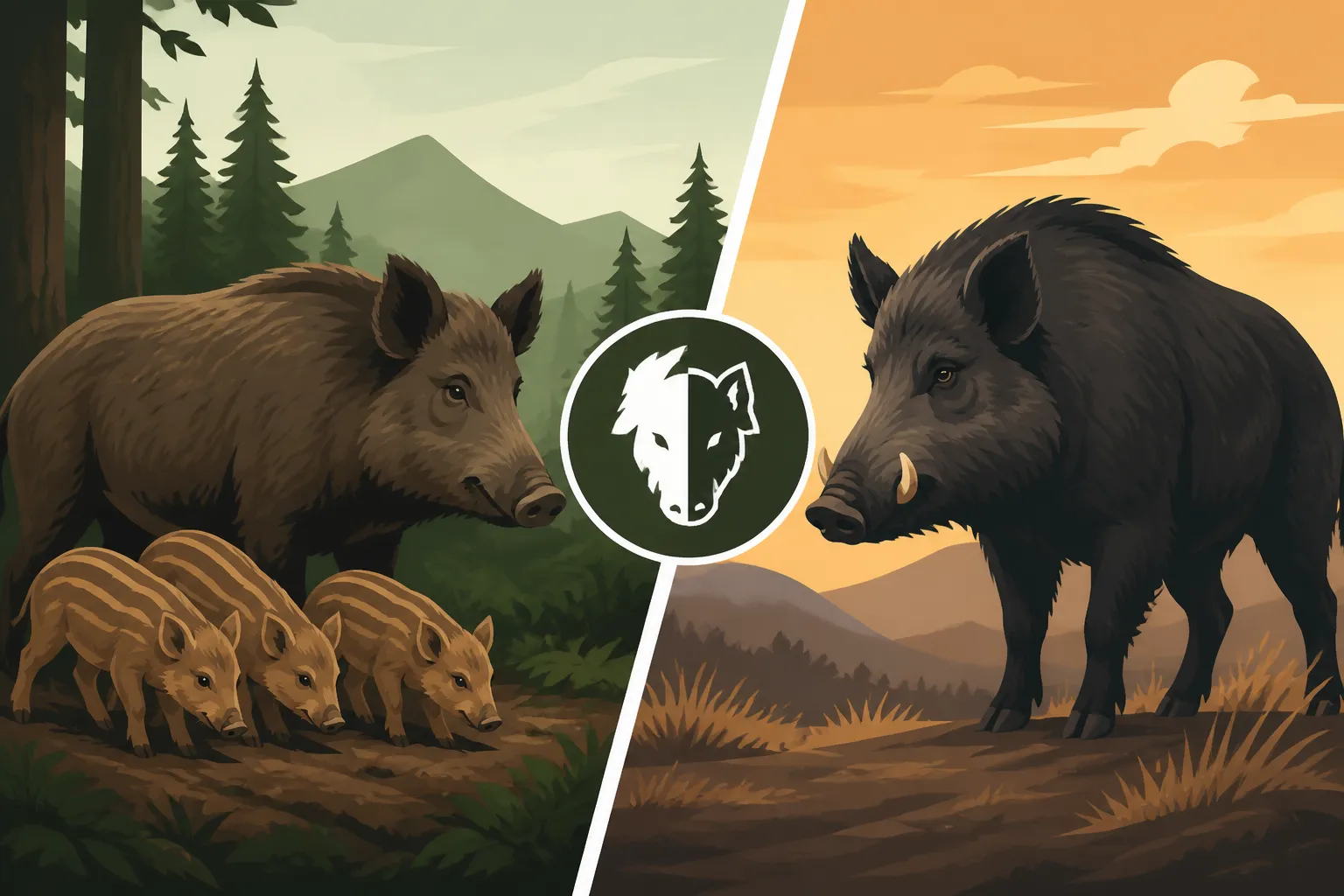
Telling a Sow With Cubs From a Lone Boar
The thrill of spotting a bear in the dense Oregon timber or across an open hillside is undeniable, but it often comes with a significant challenge: making a quick, ethical, and legal identification. It's incredibly frustrating to have an animal in your crosshairs, only to second-guess yourself about whether it's a lone boar or a sow with dependent cubs, which are off-limits. This guide will walk you through the critical distinctions, helping you confidently determine what you're looking at so you can make informed decisions in the field.
Why Accurately Identifying Bears Matters in Oregon
Hunting bear in Oregon isn't just about finding an animal; it's deeply rooted in responsibility and adherence to wildlife management principles. The Oregon Department of Fish and Wildlife (ODFW) has clear regulations, and for good reason. Misidentifying a bear can lead to severe consequences, both for you as a hunter and for the bear population.
Ethical and Legal Responsibilities
First and foremost, it's a matter of ethics. No responsible hunter wants to inadvertently orphan cubs. ODFW regulations strictly prohibit the take of a sow with dependent cubs. A "dependent cub" is generally considered any bear less than one year old. These young bears rely entirely on their mother for survival, learning essential skills like foraging, avoiding predators, and finding dens. Removing the sow means an almost certain death sentence for her offspring. Beyond the moral imperative, violating this rule carries significant legal penalties, including hefty fines, loss of hunting privileges, and even jail time. It's not a risk worth taking, and it certainly isn't in the spirit of ethical hunting. Hunters are the first line of conservation, and protecting future generations of bears by ensuring sows and their cubs thrive is a key part of that role.
The Challenge of Field Identification
Now, let's be realistic: telling a sow from a boar, especially when cubs are nearby but not immediately visible, can be incredibly difficult. Bears, particularly black bears common in Oregon, can vary wildly in size, even within the same sex and age class. A large, mature sow might be bigger than a young boar. Lighting conditions, dense cover, distance, and even the angle at which you view the bear can all play tricks on your eyes. Imagine you're Spotting Bears on Green-Up Slopes after a long hike; the sun might be at your back, creating harsh shadows, or a momentary cloud cover could obscure details. Hunters often grapple with the anxiety of making a snap judgment, fearing both missing a legal bear and, more importantly, making an illegal take. It's a real pressure point, and understanding the nuances is your best defense against regret.
Key Indicators for Distinguishing Sows with Cubs from Lone Boars
While there's no single foolproof sign visible 100% of the time, combining several observational cues will significantly increase your chances of making a correct identification. Patience and careful observation are your most valuable tools here.
Body Shape and Size
Generally speaking, adult boars tend to be larger and more heavily muscled than sows of similar age. However, this is where the nuance comes in. A mature sow can still be quite substantial, and a young boar might be smaller than a really big sow.
- Boar Characteristics: Look for a generally heavier, blockier build. Boars often have a broader head, a thicker neck that blends more seamlessly into their shoulders, and a more pronounced "hump" of muscle over their shoulders. Their movements tend to be more deliberate and purposeful, often appearing powerful and dominant as they navigate the terrain. They carry themselves with a certain bulk, and their stride reflects that weight. When trying to determine Judging Bear Size Without a Reference, focus on these relative proportions rather than trying to guess an absolute weight.
- Sow Characteristics: Sows are typically more streamlined, often appearing leaner or more delicate, especially in the head and neck. While they can be robust, their overall frame is usually less massive than a mature boar. Their head might appear more triangular, and their neck can seem more distinct from their shoulders. When moving, they might seem a bit more agile or less ponderous than a large boar. Remember, a sow that has just come out of the den or is heavily pregnant might have a different appearance than one that has been actively feeding through spring and summer.
Behavior and Movement Patterns
This is often the most reliable set of indicators, as it involves prolonged observation. Bears are complex animals, and their behavior tells a story.
- Sow with Cubs: The presence of cubs is, of course, the definitive sign. Cubs are small, often appearing disproportionately small compared to the sow. They will almost always be in close proximity to their mother, frequently trailing behind her, playing, wrestling with each other, or even nursing. A sow with cubs will exhibit highly protective and attentive behavior. She'll frequently glance back, sniff the air nervously, or stop to wait for her cubs to catch up. Their movements might be more erratic, stopping and starting as the cubs explore or rest. You might also hear faint vocalizations from the cubs – whines, chirps, or huffs. Even if you only see one cub, assume there are more hidden nearby. Always scan the surrounding area meticulously with your optics for any small, dark shapes moving in the shadows or brush. Many hunters have made mistakes because a cub was momentarily out of sight behind a log or in thick undergrowth. It's always best to be patient and observe for at least 15-20 minutes, if possible.
- Lone Boar: A lone boar will typically move with fewer interruptions and without constantly checking its surroundings for offspring. Their behavior is generally more solitary, focused on feeding, traveling, or scent-marking. While they are still wary animals and will react to threats, they won't have the constant, almost anxious vigilance of a mother bear. If a bear appears to be traveling alone and its behavior is consistent with a solitary animal, it strengthens the case for it being a lone boar. However, never assume a bear is alone without a thorough check of the area. Some tools, like the satellite imagery on GoHunt, can help you scout potential denning or feeding areas in advance, giving you a better understanding of where sows might be.
Head and Ear Shape
While subtle, these features can offer additional clues, especially when combined with body shape and behavior.
- Boar: Boars tend to have a wider, rounder, and more blocky head. Their ears might appear smaller in proportion to the overall size of their head, often set a bit wider apart.
- Sow: Sows typically have a more triangular or refined head shape. Their ears often look larger and more prominent relative to their head size, sometimes appearing closer together. These visual cues are most helpful at closer ranges and in good light, where fine details can be discerned.
Scrotum/Penis Sheath (for Boars)
This is the most definitive physical sign of a boar, but it's also often the hardest to see. A mature boar will have a visible scrotum or a distinct penis sheath located between its hind legs. This is usually only visible when the bear is standing or moving in a way that exposes its underside, and even then, dense fur can obscure it. If you can clearly see this anatomical feature, you can be 100% confident it's a boar. However, because it's so difficult to spot reliably, it should be considered a bonus confirmation rather than a primary identification method. You'll likely rely on the other indicators much more frequently.
Practical Tips for Field Identification in Oregon's Diverse Terrain
Hunting in Oregon means dealing with everything from the dense rainforests of the Coast Range to the open sagebrush plains of the high desert. Each environment presents its own challenges for bear identification.
Utilize Optics and Patience
No matter where you're hunting bears in Oregon, high-quality optics are non-negotiable. Forget about making a definitive identification with just your naked eye or even low-power binoculars. Invest in a good pair of 10x or 12x binoculars and, ideally, a spotting scope. These allow you to pick apart details from a safe distance without disturbing the animal. When you spot a bear, immediately get on your glass and settle in. As we discussed, a momentary glimpse isn't enough. You need to spend time, sometimes 20 minutes or more, watching the bear. Does it move erratically? Does it pause to sniff the air or look behind it? Does it glance towards a specific patch of brush? These subtle movements can indicate the presence of cubs that are hidden from immediate view.
Consider the varied terrain: in the thick, wet coastal timber, visibility can be extremely limited, making long-range observation impossible. Here, your best bet is careful still-hunting and listening for subtle sounds that might indicate movement or cub chatter. In more open areas, like when hunting in Eastern Oregon, you might have the advantage of distance, but heat shimmer can distort images. Regardless of the environment, patience is paramount. Sometimes, the most ethical decision is simply to let the bear walk if you can't be 100% sure. Resources like GoHunt can help you e-scout and understand the topography of your chosen unit, which can inform your strategy for using optics effectively.
Look for Multiple Confirmation Signs
Never rely on a single piece of information when identifying a bear. A bear's size can be misleading, as can a fleeting glimpse of behavior. Always try to gather as much evidence as possible. Did you see a relatively large bear? Now, observe its movement: is it solitary, or does it repeatedly check behind itself? Can you make out any head shape characteristics? Are there any vocalizations?
Think of it like building a case: the more corroborating evidence you have, the stronger your conclusion. If a bear seems large, moves deliberately, has a blocky head, and shows no signs of cubs after 20 minutes of observation, you're building a strong case for it being a lone boar. Conversely, if it's smaller, moves nervously, frequently pauses, and is in an area known for Black Bear Populations Across Oregon that often hold cubs, proceed with extreme caution. Remember, cubs can be tiny and very well camouflaged. They might be resting while the sow feeds, only to emerge later. Understanding typical Spring Bear Hunting Timing by Elevation can also give you clues, as sows emerge from dens with cubs during specific periods.
When in Doubt, Pass
This is the golden rule, and it's the most important piece of advice anyone can give you. If you have even a shadow of a doubt about whether a bear is a sow with cubs, do not take the shot. The regret and potential legal repercussions of taking a sow with dependent cubs far outweigh the satisfaction of filling your tag. There will always be another bear, another season, another opportunity. Oregon has healthy bear populations, and a missed opportunity is always better than a tragic mistake.
This principle is deeply embedded in the ethical framework of hunting. It's not about being "soft"; it's about being responsible, respectful, and committed to sustainable wildlife management. Your decision in the field impacts not just that individual animal, but potentially the local bear population and the public perception of hunters.
Remember that Why Oregon Bear Hunters Cannot Use Bait means you'll be relying on natural encounters, which often happen quickly. This makes calm, careful identification even more critical.
Here's a quick reference table to help summarize these key points:
| Feature | Lone Boar (Generally) | Sow with Cubs (Generally) |
|---|---|---|
| Body Size | Larger, heavier, more muscled | Smaller, leaner, more agile |
| Head Shape | Broader, blockier, ears appear smaller | More triangular, refined, ears appear larger |
| Neck | Thicker, blends into shoulders seamlessly | More distinct, often appears thinner |
| Shoulders | Often a noticeable "hump" of muscle | Less prominent hump |
| Movement | Deliberate, purposeful, often solitary | Erratic, protective, stops to check on cubs, watchful |
| Behavior | Focused on feeding/travel, less nervous | Highly attentive, scans surroundings, waits for cubs |
| Cubs Present | No cubs present | Cubs (small, playful) will be nearby, often hidden |
| Genitalia (if visible) | Scrotum/penis sheath visible between hind legs | Not visible |
| Vocalizations | Generally quiet | Cubs may make whines, chirps, huffs |
Final decision-making in the field often comes down to a gut feeling combined with careful observation. Don't let the excitement of the moment override your ethical judgment.
Disclaimer
Please remember that hunting regulations, seasons, and access rules can change frequently. Always consult the most current Oregon Department of Fish and Wildlife (ODFW) regulations and hunt pamphlets before heading into the field. This guide provides general information and should not be considered a substitute for official ODFW publications or hunter education courses. Safety should always be your top priority.