Finding Mule Deer in Juniper Draws
It's incredibly frustrating, isn't it? You've spent countless hours studying maps, maybe driven miles of dusty Oregon roads, only to find yourself staring at an endless sea of juniper trees, wondering where on earth a mule deer could possibly be hiding. That dense, often thorny cover looks impenetrable, and trying to navigate it blindly feels like a fool's errand. This guide is all about demystifying those juniper draws, helping you understand why mule deer love them, and, most importantly, giving you the practical strategies to find and hunt bucks effectively in this challenging yet rewarding terrain.
Understanding Juniper Draws as Mule Deer Habitat
Juniper draws, often found in the high desert and arid regions of Eastern Oregon, are far more than just thorny thickets; they are vital arteries for mule deer. These gnarled, often ancient trees provide a complex ecosystem offering everything a mule deer needs to thrive, especially when other forage or cover sources are scarce. Ignoring them means overlooking some of the best potential buck country out there.
Why Mule Deer Choose Juniper Draws
Mule deer, unlike their blacktail cousins who prefer dense coastal timber, are creatures of the open sagebrush and scattered forests. However, even these open-country dwellers need refuge, and juniper draws are their preferred sanctuaries. These draws, often carved out by ancient water flows, concentrate moisture and nutrients, allowing the junipers to grow taller and denser than the surrounding landscape. This creates a microclimate that offers significant advantages to deer.
Firstly, the dense canopy and interlocking branches of juniper provide exceptional thermal cover. In the scorching Eastern Oregon summers, deer can escape the relentless sun and find cooler temperatures within the shade of the junipers. Conversely, during bitter winter storms, these draws offer protection from harsh winds and heavy snow, acting like natural shelters. This is crucial for their survival, especially for fawns and older animals. Secondly, juniper trees themselves provide a consistent food source. While deer prefer a varied diet, juniper berries and browse can be an emergency food source during lean times, especially in late winter when other vegetation is scarce. Finally, and perhaps most importantly for hunters, the dense structure of juniper offers unparalleled security cover. A buck can literally disappear within a few yards of thick juniper, making it incredibly difficult for predators—or hunters—to spot them. They feel safe bedding down here, knowing they can melt away into the shadows if threatened.
Seasonal Use of Juniper Draws
Mule deer don't use juniper draws uniformly throughout the year; their patterns shift dramatically with the seasons, dictated by food availability, breeding cycles, and weather. Understanding these seasonal changes is key to predicting where and when you'll find them.
In the spring, as new growth emerges, deer might utilize the edges of juniper draws, feeding on fresh forbs and grasses that benefit from the moisture trapped within the draw. However, as summer progresses and the open country dries out, the draws become increasingly critical. This is when you'll find bucks spending their entire day bedded deep within the thickest junipers, only emerging at first and last light to feed in the adjacent sage flats or agricultural fields. The cool, shaded interiors are their refuge from the oppressive heat and biting insects. You can learn more about how deer distribute themselves in relation to seasons by reading about the Summer Versus Winter Deer Distribution. As fall approaches and hunting season begins, this pattern often holds. During the rut, however, bucks will become more active, venturing further from cover to seek out does. While the does might still frequent the safety of the draws, the bucks will be ranging more widely, though they will often use the draws as travel corridors or staging areas between feeding and breeding grounds. Come winter, especially during heavy snowfalls, juniper draws become even more critical as part of the broader Mule Deer Winter Range in Eastern Oregon. The shelter and limited browse offered by the junipers can be a lifeline when other areas are buried in snow, concentrating deer in these areas.
Scouting Strategies for Juniper Draws
Successfully hunting mule deer in juniper draws begins long before you ever step foot in the field with your rifle or bow. Effective scouting, both digital and on-the-ground, is paramount to unraveling the secrets these draws hold and narrowing down vast tracts of country into manageable, huntable areas. Without a solid scouting plan, you're essentially looking for a needle in a haystack, and that's a quick way to burn out both your energy and your enthusiasm.
E-Scouting Before You Go
In this modern age, technology is your best friend when it comes to breaking down the vastness of Oregon's mule deer country. Before you pack your bags, spend significant time poring over satellite imagery and topo maps from the comfort of your home. Platforms like GoHunt are invaluable for this task, offering detailed layers that can highlight potential hotspots and save you countless hours of unproductive hiking.
Start by identifying the major juniper concentrations in your chosen unit. Look for areas where juniper stands are noticeably denser or more extensive than the surrounding sagebrush. Pay close attention to draws that snake through larger expanses of open country, especially those that connect to known feeding areas, water sources, or rimrock formations. These draws often serve as travel corridors or daytime bedding sanctuaries. With GoHunt's high-resolution satellite imagery, you can often zoom in close enough to distinguish between sparse, scattered junipers and true impenetrable thickets. Mark these dense pockets on your map, noting any discernible game trails, small openings, or breaks in the canopy that might offer a shooting lane or a vantage point. Look for finger ridges or smaller draws that feed into the main juniper system; these can be subtle travel routes that deer use to move between different parts of the habitat. Additionally, use the topographic features to understand elevation changes within and around the draws. Steep, north-facing slopes often hold snow longer and offer cooler bedding in summer, making them prime candidates. For a deeper dive into how to leverage digital tools, check out our guide on E-Scouting Oregon Units With Satellite Imagery.
Boots-on-the-Ground Reconnaissance
While digital scouting is a fantastic starting point, there's no substitute for getting your boots on the ground. The real world always looks different than a two-dimensional map, and physical reconnaissance reveals critical details that satellites simply can't capture. This is where you confirm your e-scouting hypotheses and gather fresh intelligence.
When you're out there, focus on finding actual sign of deer activity. Look for tracks, scat, rub lines, and most importantly, beds. Mule deer beds in juniper draws are often tucked deep into the densest cover, providing maximum concealment. Look for flattened areas of grass or duff, sometimes with a depression, and often surrounded by broken juniper branches where a deer has pushed its way in. Pay close attention to the edges of the draws, especially where they meet open sagebrush or small clearings; these are often transition zones where deer will feed or stage before moving into thicker cover. Follow any discernible game trails, as these will show you the deer's preferred routes. Some trails will be heavily used, indicating consistent travel. Also, actively search for fresh droppings and tracks. The freshness of the sign will tell you if deer are currently using the area. If you find old sign but no fresh activity, it might indicate that deer have moved on or are using a different part of the draw. Don't be afraid to penetrate the thicker sections, as this is where the biggest bucks often hide. Even if it's slow-going, look for "tunnels" through the brush—these are often used by deer to navigate the dense cover. Another crucial element to look for are Water Sources That Hold Deer in Dry Country, as these will concentrate activity, especially in early season.
Hunting Techniques for Juniper Draws
Once you've done your homework and identified promising juniper draws, it's time to put on your hunter hat. Hunting these areas demands a different approach than glassing vast open country. It requires patience, keen observation, and a willingness to move slowly and deliberately. The "spot and stalk" might turn into a "still-hunt and peek" when dealing with these dense havens.
Still-Hunting Through the Junipers
Still-hunting is perhaps the most effective method for extracting a reclusive buck from the heart of a juniper draw. This isn't about covering miles; it's about covering feet, inches even, with extreme stealth and attention to detail. The goal is to move so slowly and quietly that you essentially become a part of the landscape, allowing you to spot a deer before it spots you.
Begin by moving into the wind or with a favorable crosswind, always paying attention to thermals. In juniper country, thermals can be tricky, often swirling within the draws themselves, so a smoke checker or puff bottle is your best friend. Take a few steps, then stop and stand absolutely still, often for several minutes. During this pause, use your binoculars to meticulously scan every piece of cover, every shadow, and every opening, no matter how small. Look for horizontal lines (a deer's back), contrasting colors (patches of hide against the juniper), or the telltale glint of an antler. Often, you'll only catch a small piece of a deer – an ear flick, a patch of hide, or a leg. The key is to distinguish these subtle clues from the natural chaos of the junipers. When you move, do so with purpose, placing each foot carefully to avoid snapping twigs or rustling dry leaves. Use the junipers themselves to break up your silhouette, moving from one piece of cover to the next. Avoid walking on top of ridges or in the bottom of draws where your scent might funnel; instead, try to traverse the middle slopes, where you can peek into the draws below and scan the slopes above. This methodical approach is physically and mentally demanding, but it's often the only way to catch a mature buck off guard in his sanctuary.
Glassing Strategy in Juniper Country
While still-hunting gets you deep into the cover, strategic glassing from a distance can be incredibly productive, especially at first and last light or on sunny days when deer seek shade. This technique involves finding a high vantage point overlooking promising juniper draws and using high-quality optics to systematically pick apart the cover.
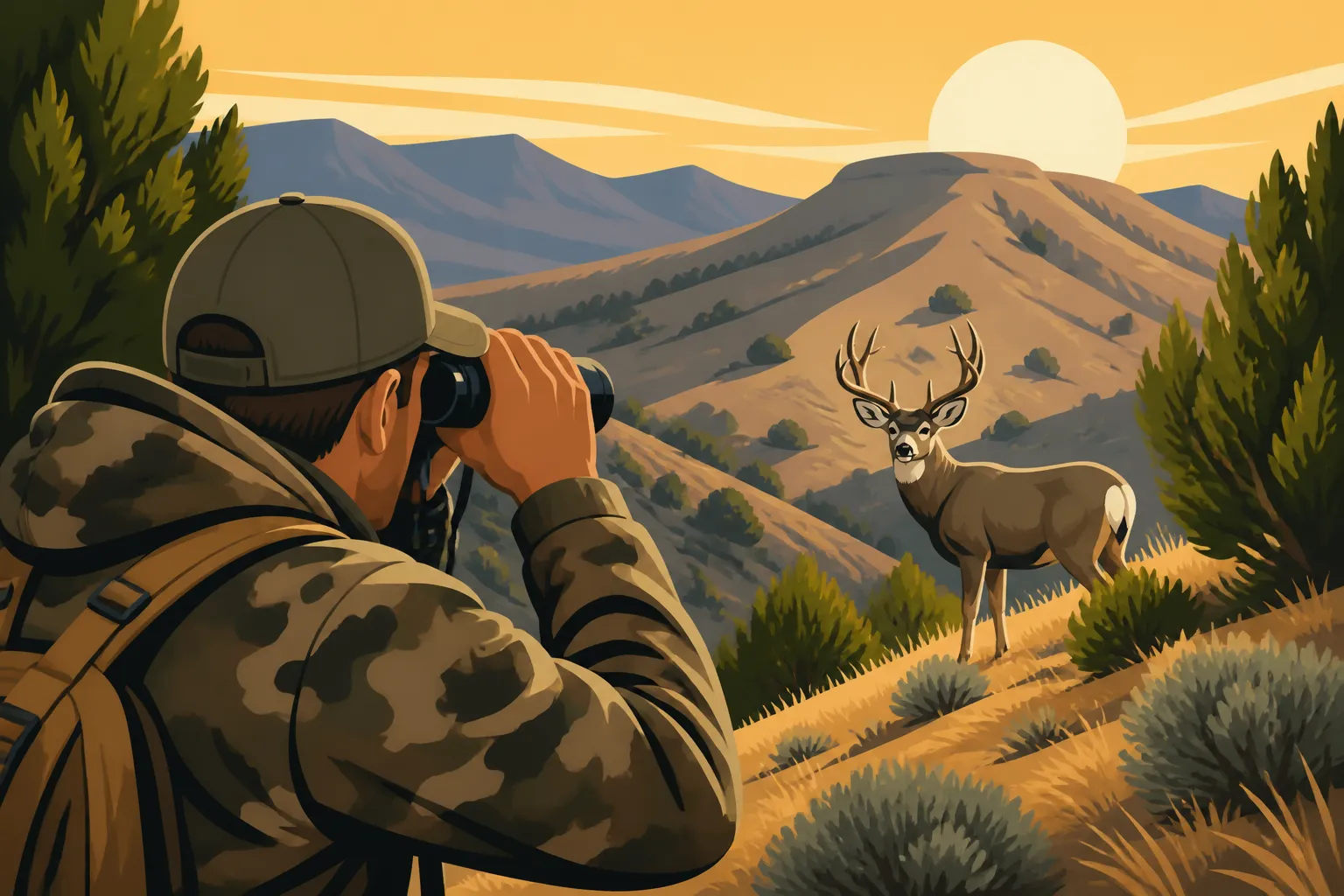
Set yourself up on a ridge, knoll, or rimrock that offers an unobstructed view of multiple draws or a significant section of a large one. The earlier you're there before sunrise, the better, as deer are often moving out of the junipers to feed or just beginning to bed down. Once settled, begin a slow, methodical grid search with your binoculars. Don't just scan; instead, break the landscape into small, manageable sections and examine each one thoroughly. Look for subtle movements, a flash of white rump, or the distinct shape of an antler tines among the branches. Pay extra attention to the shaded sides of the draws, the transitions where junipers meet sagebrush, and any small openings or clearings within the dense growth. These are prime spots for deer to appear. When the sun gets higher, deer will seek the deepest shade, making them incredibly difficult to spot. This is where a high-quality spotting scope can make a difference, allowing you to scrutinize every dark patch for signs of a bedded animal. Many hunters utilize tools like GoHunt's mapping features even in the field, marking potential bedding areas or travel routes they've identified from their glassing perch. Remember, mule deer are masters of camouflage; often, you won't see the whole animal, but rather just a small, unusual detail that reveals its presence. Read our guide on Glassing Rimrock at First Light for more tips on effective glassing.
Using Wind and Thermals to Your Advantage
In the challenging terrain of juniper draws, mastering wind and thermals isn't just a good idea; it's absolutely critical for success. Mule deer possess an incredible sense of smell, and a single whiff of human scent can send a wary buck vanishing into the thickets before you even know he's there. Ignoring the wind is a surefire way to educate every deer in the county.
Always approach a juniper draw from downwind. This sounds simple, but in broken terrain, wind can swirl unpredictably, especially within the draws themselves. Carry a wind checker (a small bottle of powder or milkweed fluff works great) and use it constantly. Before entering any section of the draw, or moving over a ridge, check the wind direction repeatedly. As the day progresses, thermals will shift. In the mornings, cold air drains down into the draws, meaning your scent will travel downhill. As the sun rises and warms the earth, thermals reverse, carrying your scent uphill. This creates a challenging scenario, requiring you to adjust your approach throughout the day. For example, in the morning, you might want to hunt from the top down, keeping your scent from dropping into the draw. In the afternoon, you might hunt from the bottom up, with your scent rising away from the deer. Understanding these dynamics and constantly monitoring them will dictate your entry and exit routes, your still-hunting path, and where you choose to set up for glassing. It's a constant chess match against nature, and the mule deer are formidable opponents.
Essential Gear for Hunting Juniper Draws
Hunting in juniper draws presents a unique set of challenges that demand specific gear choices. This isn't wide-open sagebrush country where long-range optics and light trekking gear might suffice. Here, you'll be navigating dense, thorny brush, dealing with fickle winds, and often making quick, close-range decisions. Having the right tools for the job can significantly impact your comfort, effectiveness, and ultimately, your success.
Optics for Tight Cover and Openings
Your choice of optics for hunting juniper draws needs to strike a balance between powerful magnification for distant glassing and a wide field of view for navigating close-quarters cover. It's a fine line, but one worth getting right.
For your primary binoculars, a 10×42 or 12×50 power is generally ideal. This provides enough magnification to pick apart distant junipers and scout open areas, while still offering a wide enough field of view for quick target acquisition if a deer bolts from close range. Invest in high-quality glass. In the low light of dawn and dusk, or when peering into deep shadows, superior light transmission and edge-to-edge clarity make a huge difference in spotting those subtle deer details. Consider a brand known for durability, as they'll take a beating in the rough juniper. While a spotting scope isn't always practical for constant still-hunting, it's invaluable if you plan to spend time glassing from a distant ridge into multiple draws. A 15-45x or 20-60x scope will allow you to really pick apart shaded slopes for bedded deer you might otherwise miss. Just be mindful of its weight and bulk if you're covering serious ground. Remember, a good rangefinder is also crucial. Shots can appear closer or further than they are in undulating terrain, and knowing your exact distance is paramount, especially if a quick shot presents itself. For more advice on choosing the right glass for different environments, take a look at Optics for Dark Timber Versus Open Sage.
Footwear and Clothing for Rough Terrain
The terrain in juniper draws is unforgiving. Expect thorns, uneven ground, loose rocks, and often steep, broken slopes. Your footwear and clothing need to be robust, quiet, and comfortable enough to withstand hours of methodical, slow movement.
Start with your boots. You need sturdy, high-ankle boots that provide excellent support and traction. Look for boots with stiff soles to protect your feet from sharp rocks and junipers underfoot, and a durable, waterproof exterior. Brands like Kenetrek, Schnee's, or Crispi are popular among Western hunters for good reason; they're built for this kind of abuse. Break them in well before your hunt – a blister in juniper country can ruin a trip. For clothing, quietness is key. Avoid noisy fabrics like stiff nylon or anything that "swishes" as you walk. Softshell or fleece materials are often a good choice, as they are relatively quiet and offer decent protection. Layers are essential for managing temperature fluctuations typical in Eastern Oregon. A good base layer, an insulating mid-layer, and a quiet, thorn-resistant outer layer are critical. While "thorn-resistant" doesn't mean "thorn-proof," look for durable canvas or tightly woven fabrics that can stand up to constant brushing against juniper branches. Consider a pair of gaiters to protect your lower legs and keep debris out of your boots, and don't forget tough, leather gloves to protect your hands when pushing through brush. If you're hunting in particularly wet conditions, especially early in the season, you might want to consider Boots for Wet Coastal Hunting even in the desert, as some draws can be surprisingly damp.
Key Indicators of Mule Deer Activity in Juniper Draws
When you're out there, knowing what specific signs to look for can significantly increase your chances of finding deer. It’s not just about seeing a deer; it’s about reading the landscape like a book.
| Sign of Activity | What to Look For | What It Tells You |
|---|---|---|
| Tracks | Fresh, clear hoof prints in soft earth, dust, or snow. Look for size and distinct dewclaw marks. | Recent travel, preferred routes, size of deer. Wider, deeper prints indicate a larger, heavier animal. If you see signs like Tracking Bucks in Fresh Eastern Oregon Snow, you're in the right place. |
| Scat (Droppings) | Piles of cylindrical pellets, varying in moisture and consistency. | Fresh, moist, dark pellets indicate very recent activity (within hours). Drier, lighter pellets indicate older sign. Abundant scat suggests a feeding or bedding area. |
| Beds | Oval-shaped depressions in grass, dirt, or snow, often tucked into dense cover. | Where deer are resting and feeling secure. Fresh beds may still be warm or have flattened vegetation that hasn't sprung back. Look for associated fresh scat or hair. |
| Rub Lines | Bark rubbed off small trees or juniper branches, often at deer-shoulder height. | Indicates the presence of bucks, especially during pre-rut and rut phases when they're shedding velvet and marking territory. More rubs equal more bucks. |
| Browsing | Clipped leaves, twigs, or bark on preferred forage plants (sagebrush, juniper, bitterbrush). | Deer are actively feeding in the area. Look for fresh, jagged breaks (deer lack upper incisors) versus clean cuts from rodents or rabbits. Heavy browsing shows consistent use. |
| Game Trails | Worn paths through vegetation, especially into and out of dense juniper pockets. | Preferred travel corridors between bedding, feeding, and water. Heavily used trails with fresh tracks are prime. |
| Visuals | Subtle movements, horizontal lines, ear flick, glint of antler, contrasting color. | The ultimate sign! Often, you'll only see a small part. Patience and sharp eyes are crucial. Remember to look through the junipers, not just at them. |
Disclaimer
Hunting is an inherently dangerous activity. Always prioritize safety, follow all local, state, and federal regulations, and obtain proper licenses and tags. The information provided in this guide is for informational purposes only and should not be considered a substitute for professional instruction, thorough research, or personal experience. Always be aware of your surroundings, practice ethical hunting, and respect private property. The author and publisher are not responsible for any accidents, injuries, or legal infractions incurred while using this information.