How Close You Can Get in Coastal Timber
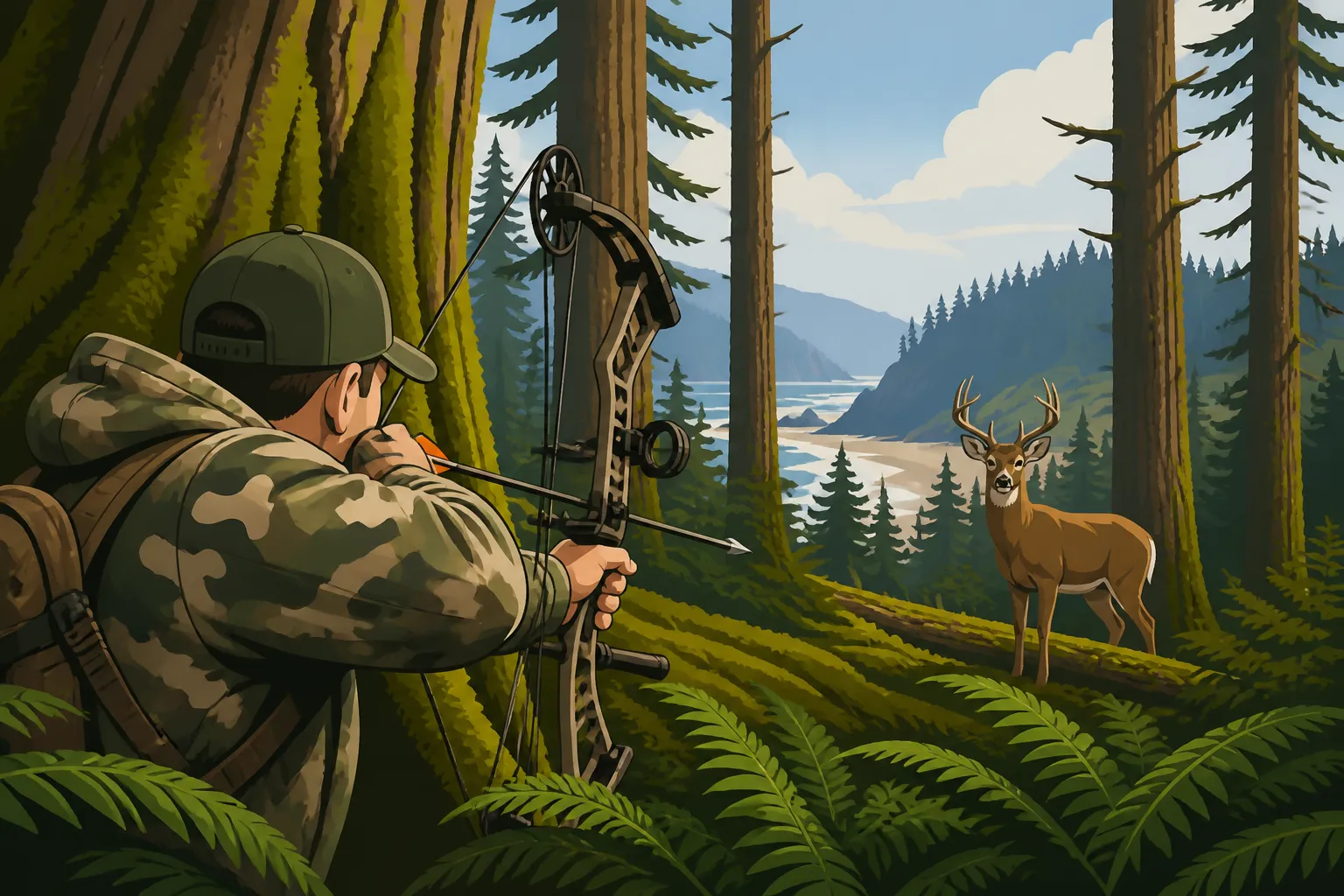
There’s nothing quite like the rush of hunting Oregon’s coastal timber. It’s a dense, emerald maze, often wet, where visibility shrinks to mere yards, and the game seems to materialize from thin air. Many hunters find themselves utterly frustrated, spooking animals they never saw coming, or hearing a magnificent bull disappear into the gloom. This guide is dedicated to helping you master the art of closing the distance in these challenging environments, transforming frustration into successful, close-range encounters with Roosevelt elk and blacktail deer.
The Unique Challenges of Oregon's Coastal Timber
Hunting in Oregon's coastal timber is a beast all its own. Forget those wide-open Western hunts you see on TV; here, it’s a game of inches, patience, and acute sensory awareness. The very environment that shelters our big game also conspires to make a hunter's life incredibly difficult.
Understanding the Habitat and Game Behavior
When you step into the coastal timber, you're entering a "green tunnel" of epic proportions. We're talking about incredibly dense undergrowth, often a suffocating mix of sword fern, salal, huckleberry, and young conifer saplings. In places, this understory can be shoulder-high, making walking akin to swimming through thick soup. Visibility can be shockingly limited – frequently less than 20-30 yards, and sometimes even less than 10. You literally can't see the forest for the trees, or more accurately, for the brush.
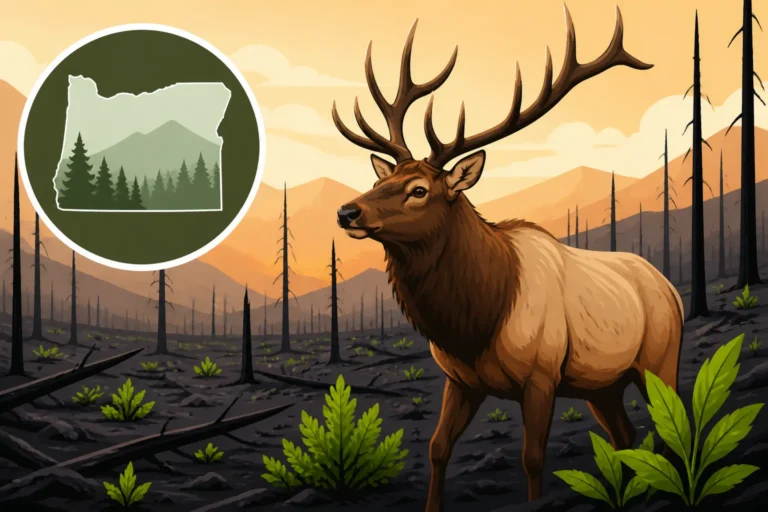
This environment plays directly into the strengths of the animals that call it home, primarily Roosevelt elk and Columbian blacktail deer. These creatures are masters of stealth. Their coats provide excellent camouflage against the dark, wet timber. Their hearing is phenomenal, capable of picking up the faintest snap of a twig from a surprising distance. And their reliance on scent to detect danger is paramount; the constant moisture in the air can sometimes work in your favor by grounding your scent, but a sudden shift in wind can be catastrophic. The truth is, it's not you, it's the jungle you're hunting in, and these animals are perfectly evolved for it.
Sensory Overload and Silent Movement
The coastal timber isn't just visually challenging; it's a cacophony of natural sounds. There’s the constant drip of moisture from the canopy, the rustling of leaves and ferns, the snap of hidden twigs underfoot, and often the whisper or roar of the wind. As a hunter, your primary goal is to blend into this symphony of sound, not to disrupt it. Every step you take has the potential to give you away.
Mitigating your noise is critical. This means choosing soft-soled boots with good grip, ensuring your clothing is made of quiet fabrics like fleece or wool, and meticulously packing your backpack so nothing rattles or clanks. The act of moving itself must become a meditation. You're not walking; you're flowing through the forest. Lift your feet, don't drag them. Test each step before committing your full weight. And crucially, move only when the wind or rain provides a natural curtain of sound. Using the natural environment to your advantage, such as moving during a stiff breeze or light rain, can greatly mask your approach. Pay close attention to the overall advice in Still-Hunting Speed in Wet Brush for a deeper dive into this vital technique.
Strategies for Closing the Distance on Coastal Elk and Deer
Success in tight timber often comes down to how effectively you can bridge the gap between spotting an animal and getting a shot. This requires a combination of patience, acute observation, and a willingness to adapt your hunting style to the immediate surroundings.
Still-Hunting in the Green Tunnel
Still-hunting is perhaps the most effective method for navigating dense coastal timber. It’s an approach where you literally "hunt with your eyes, not your feet." This means moving at an incredibly slow, deliberate pace, pausing frequently to observe your surroundings with intense focus. Think of it as a five-step process: take a slow, quiet step; pause; meticulously look at every detail; listen intently; then slowly scan the entire area again.
Your eyes become your primary tool. Instead of looking for an entire animal, which rarely happens in this cover, you're looking for pieces: a horizontal line in a predominantly vertical world (a back or belly), an ear flick, a patch of hide, the curve of an antler, or the glint of an eye. Break up the cover with your vision. Don’t just glance; stare. Use your binoculars, even at close range, to pick apart shadows and identify shapes. This focused scanning can reveal an animal that was perfectly camouflaged just seconds before. When you are still-hunting, the slower you go, the faster you will find game.
Reading Sign and Anticipating Movement
Even if you don't immediately see an animal, the timber is usually littered with clues that tell a story. Learning to read fresh sign is paramount. This includes tracks, droppings, rubs (from bucks or bulls), and beds. In the perpetually damp coastal environment, differentiating fresh sign from old is a skill that comes with practice. Look for tracks that haven't been washed out by recent rain, droppings that are shiny or still steaming in the cold air, and fresh rubs with sap still oozing.
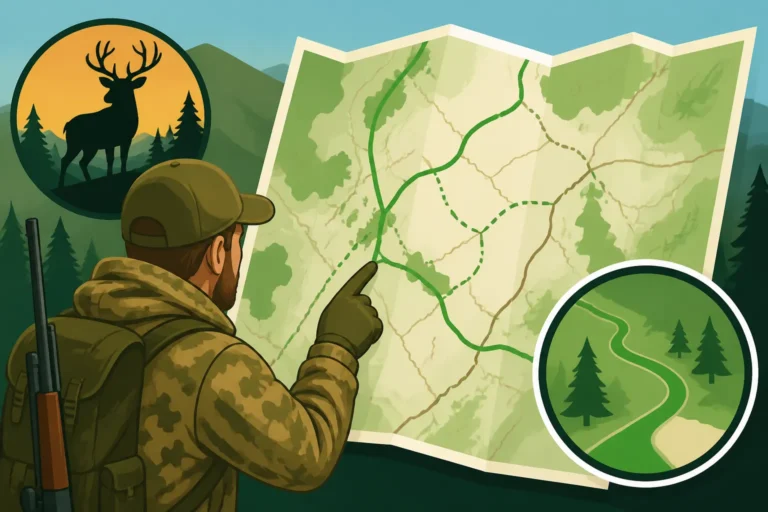
Understanding what "fresh" truly means in this moist climate helps you assess if an animal is nearby. For example, a track with sharp, crisp edges that isn't waterlogged is a good indicator of recent passage. By piecing together these clues, you can start to anticipate where an animal might be headed or where it might be bedded. Using mapping applications like those offered by GoHunt can aid in this by helping you identify likely bedding areas, south-facing slopes, or natural travel corridors even before you put boots on the ground. Understanding how to interpret what you see is a key part of Reading Clearcut Edges for Blacktail Bucks, and similar principles apply to timber. This allows you to set up for an ambush or begin a more focused stalk.
The Art of the Setup and Patient Waiting
When you do spot or hear game in close quarters, the next few moments are critical. Your first instinct might be to rush, but often the best move is to freeze, assess the situation, and then plan your next move. Can you quietly move to a better shooting position? Is there a natural lane through the brush that the animal might step into? Use the natural cover to your advantage, whether it's a cluster of huckleberry bushes or a downed log, to break up your outline and keep you concealed.
Patience often pays off. Rather than forcing a shot, wait for the animal to take another step, or even bed down, to offer a clearer, ethical shot opportunity. This is especially true for bowhunters, where a clear path for the arrow is non-negotiable. The "last 50 yards" is often the most critical phase of any stalk, requiring extreme discipline and minimal movement. Sometimes, the best setup is just to get still and let the animal come to you, or wait for it to expose itself. The strategies for Setting Up a Caller and Shooter on a Bull also apply here, even if you’re not calling—positioning yourself and anticipating the animal’s movement for the shot.
Practical Tips for Maximizing Your Close-Range Opportunities
Beyond the general strategies, fine-tuning your gear and practice routines can give you a significant edge when hunting in the tight confines of coastal timber. Every little detail can contribute to your ability to get close and make a successful shot.
Gear Considerations for Stealth and Success
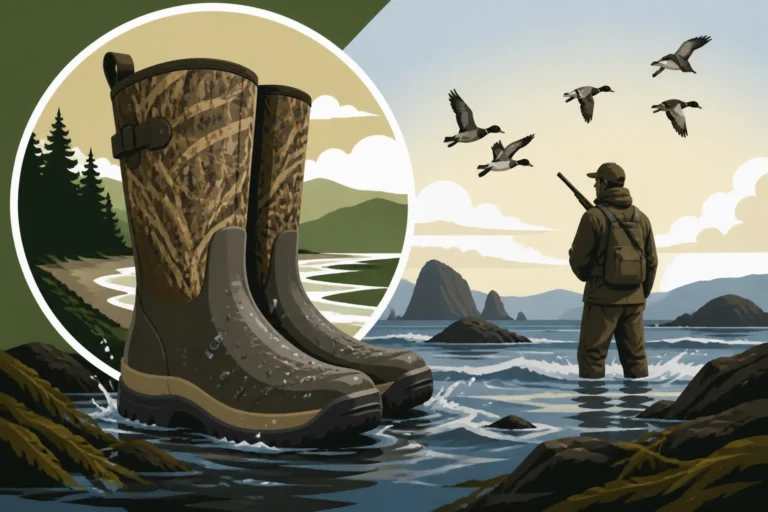
The right gear can make or break your close-range success in dense timber. Firstly, quiet clothing is non-negotiable. Opt for materials like soft fleece, wool, or brushed synthetics that don't make a swishing sound as you move. Layering is crucial for managing the often-damp and fluctuating temperatures of the coast. For your feet, choose quiet boots with excellent grip for slippery terrain, but ensure they don't squeak or crunch excessively. Check out a detailed guide on Boots for Wet Coastal Hunting for specific recommendations.
When it comes to your weapon, a shorter rifle or bow can be a distinct advantage. A shorter barrel or axle-to-axle bow is less likely to snag on branches as you navigate thick brush. For bowhunters, consider broadhead choice for heavy bone, as ethical shots may present at awkward angles or through smaller windows. While long-range optics might seem overkill, a good pair of compact binoculars and a rangefinder are still invaluable. The binoculars help you pick apart the details of dense cover, and a rangefinder can confirm exact distances for those critical close shots, especially in steep or varied terrain. Your pack should also be silent, with quiet zippers and nothing loose to clang around. Remember, Archery Setup for Wet Oregon Timber often involves waterproofing and silent components. Don't forget quality Rain Gear That Actually Stays Dry—being comfortable and quiet in the rain is a game-changer.
Practicing Your Close-Range Shot
It's easy to practice shooting at targets in an open field, but coastal timber demands a different kind of practice. You need to simulate the conditions you'll encounter. Set up targets behind brush, forcing yourself to find small shooting lanes. Practice shooting from awkward positions – kneeling, sitting, or even leaning – as these are often the only stances available when an animal pops up close.
Understand your weapon's trajectory at very close ranges, as some bows or rifles can shoot slightly high or low at 10-20 yards compared to longer distances. Mental preparation is just as important. The sudden appearance of a large bull elk or a trophy blacktail buck at spitting distance can trigger extreme "buck fever." Visualize these scenarios, practice your breathing, and commit to knowing your ethical shot distance. A thorough understanding of Shot Placement on a Bull at Close Range is non-negotiable, even more so when the shot window is tiny. Remember, you might only get one chance, and it will likely be close and fast.
Environmental Factors and Timing Your Stalk
The environment isn't just a challenge; it's also your ally. Rain and wind are natural sound dampeners. A gentle drizzle can mask your footsteps, while a stiff breeze can carry your scent away and cover the subtle sounds of your approach. Fog and mist also reduce visibility for the animal, not just for you, often making them less wary. Time your movements with these conditions. If a strong gust of wind blows through, move then. If a heavy rain squall starts, use it as a window to advance.
Early mornings and late evenings are prime times for game movement, but they also bring low light, which can reduce visibility even further in the already dark timber. Using GoHunt's satellite imagery and weather overlays can help you identify high-probability areas and predict how weather patterns might influence animal behavior. This kind of pre-hunt E-scouting can identify potential bedding areas, feeding zones, and natural funnels within the timber, giving you an advantage before you even step foot in the woods. Pay attention to how Hunting Blacktails in Fog and Drizzle can influence your success. Finally, remember that Physical Training for an Oregon Elk Hunt is crucial, as moving slowly and deliberately over tough terrain for hours is physically demanding.
| Factor | Impact on Close-Range Hunting in Coastal Timber | Mitigation Strategy |
|---|---|---|
| Dense Vegetation | Extremely limited visibility (10-30 yards), physical barrier. | Still-hunt slowly, use binoculars to pick apart cover, focus on "pieces" of an animal. |
| Constant Moisture | Dampens sound of footsteps, but can make footing slippery; affects scent dispersal. | Wear quiet, waterproof boots; move during rain or wind; utilize scent control. |
| Sound of Wind/Rain | Can mask hunter's sounds, but also animal sounds; limits hunter's hearing. | Time movements with natural sound bursts; pause frequently to listen intently during lulls. |
| Low Light (Early/Late) | Reduces visual detection for both hunter and game; increases stealth. | Use high-quality optics; hunt slowly and rely more on sound/scent. |
| Scent Dispersal | Swirling thermals in canyons, unpredictable wind shifts. | Hunt into the wind, use thermals to your advantage (rising in AM, falling in PM). |
| Steep Terrain | Difficult footing, awkward shooting angles, increased noise. | Practice steep-angle shots; wear boots with excellent grip; use trekking poles for stability. |
Disclaimer
Hunting is an inherently dangerous activity. Always prioritize safety, follow all local and state regulations, and ensure you have the necessary training and permits before heading into the field. This guide provides informational content only and does not substitute for professional instruction or adherence to hunting laws.