Getting to Camp From Portland
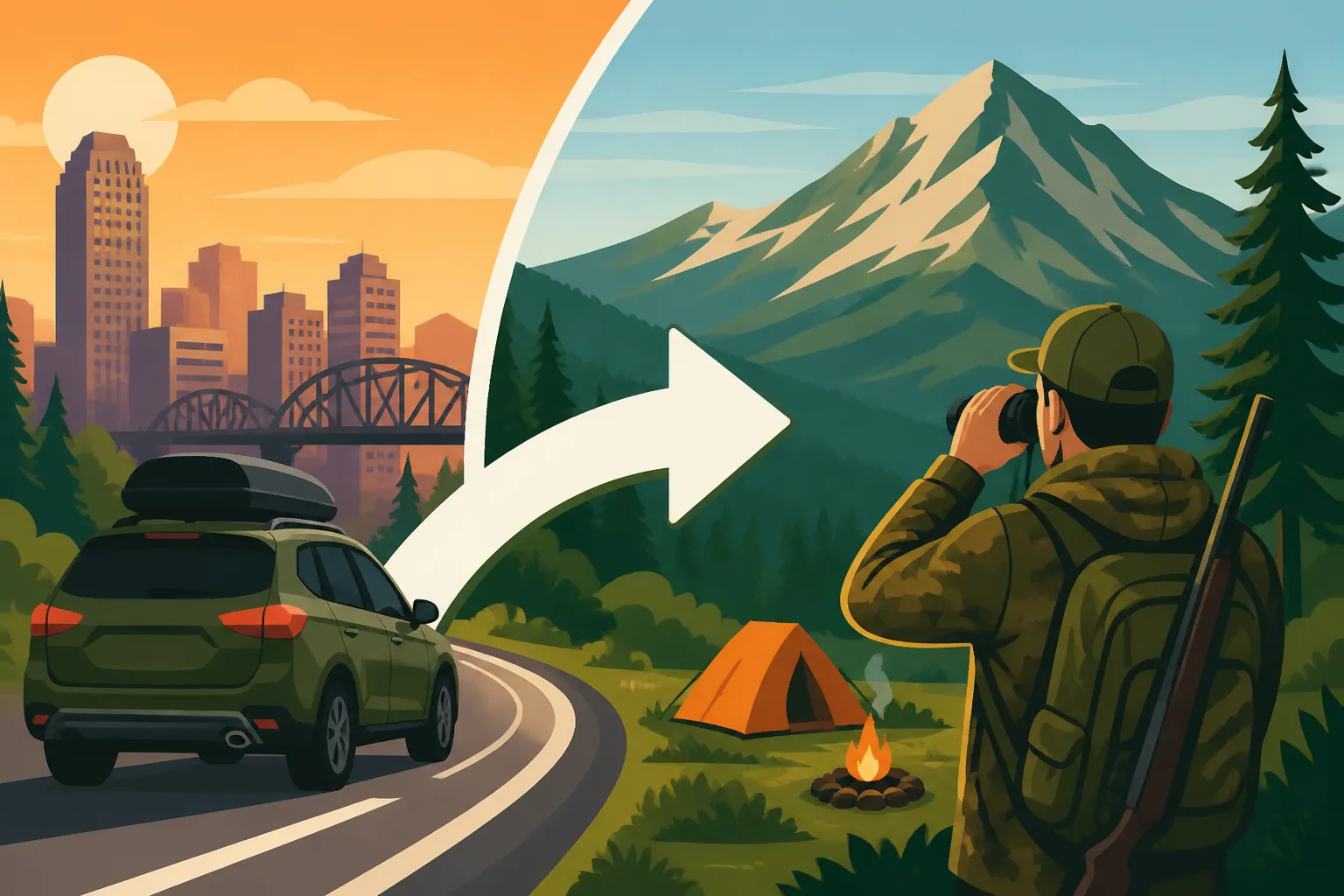
Leaving the hustle and bustle of Portland for the tranquility, and sometimes challenge, of Oregon's hunting grounds is a journey many of us eagerly anticipate each season. But for anyone who's ever tried to get from the city to a remote trailhead, you know it's not always as simple as hitting "navigate" on your phone. This guide will walk you through the practicalities of planning your travel from the Rose City to your chosen hunting camp, helping you anticipate the unique challenges and prepare for a smoother trip.
Planning Your Route from Portland
Starting your hunting adventure from Portland means you're at a crossroads of Oregon's incredibly diverse landscapes. You're never too far from some hunting opportunity, but "close" can still mean a multi-hour drive, especially when heading to the more remote corners where big game truly thrives. Thinking about your route isn't just about mileage; it's about anticipating terrain, services, and how the seasons impact your travel.
Understanding Oregon's Diverse Hunting Regions
Oregon is geographically split down the middle by the Cascade Mountains, creating two vastly different worlds for hunters, both accessible from Portland. Heading west, you're looking at the Coast Range and the western slopes of the Cascades, which are a mosaic of dense, wet timber, deep canyons, and private logging land. This is prime territory for Roosevelt elk and Columbian blacktail deer. Travel here often involves navigating winding, narrow paved roads that quickly turn to gravel logging roads, often with limited cell service. You might think "it's close," but a 100-mile drive can easily take three hours or more when you're off the main highways.
Swing your vehicle east over the Cascades, and you enter a different universe entirely: the high desert, rimrock, and vast national forests like the Ochocos, Blues, and Wallowas. This is the domain of Rocky Mountain elk and Oregon mule deer. The driving distances are often much greater to reach these areas, sometimes pushing 5-8 hours or more to get to the trailhead. While the main highways are generally faster, once you turn off towards your specific unit, you'll encounter extensive networks of dirt and gravel roads, many of which can be heavily impacted by weather. Understanding this fundamental east-west divide helps you mentally prepare for the type of driving and logistical demands ahead. For instance, a hunt in the Wallowa Unit Elk Access in Oregon will be a very different journey than one in the Wilson Unit Elk Country.
Mapping Tools and Resources
Gone are the days when a paper map and a prayer were your only companions. Today's digital mapping tools are indispensable for planning your journey from Portland. Apps like OnX Hunt, Gaia GPS, and even Google Maps can be invaluable. Use them not just for navigation, but for pre-trip scouting. Zoom in on your planned route, looking for potential fuel stops, small towns with groceries, or even pull-offs that might serve as a discreet overnight parking spot if your drive is truly epic. Pay close attention to the base layers, especially satellite imagery, to get a feel for the terrain around roads. Are you driving through dense timber where downed trees could be an issue, or wide-open sagebrush where dust might obscure vision?
Beyond simple routing, these tools help you identify land ownership, which is critical for understanding where you can drive, camp, and, of course, hunt. Many units will have a mix of national forest, BLM, and private timber lands. If you're looking at private ground access, make sure you've done your homework on permit systems or sought permission well in advance. Some outfitters listed on platforms like BookYourHunt often provide detailed instructions or even shuttle services, but for the DIY hunter, your map is your lifeline. Don't forget to download offline maps for your entire route and target area before you lose cell signal – a common occurrence once you leave the I-5 or I-84 corridors. E-Scouting Oregon Units With Satellite Imagery can save you a lot of grief by identifying potential obstacles before you even leave your driveway.
Considering Time of Year and Weather
Oregon's weather patterns are not to be underestimated, and they play a huge role in travel from Portland to hunting camp. Early archery seasons in August and September, particularly for Eastern Oregon mule deer or Rocky Mountain elk, often mean hot, dry conditions. While this might sound pleasant, it also brings extreme fire danger, which can lead to road closures, unit closures, or restricted access to national forests. Always check the Oregon Department of Forestry (ODF) and Forest Service websites for current fire restrictions and closures before you go. Smoke from wildfires, even distant ones, can severely impact visibility and air quality on your drive and in camp.
Later rifle seasons, especially November elk seasons in the Coast Range or eastern Oregon, bring entirely different challenges. Rain, snow, and ice become major factors. Mountain passes like Santiam (Hwy 20), McKenzie (Hwy 126), or Cabbage Hill (I-84 near Pendleton) can require chains, even for 4×4 vehicles. Backcountry roads can quickly turn into mud pits or become impassable with snow. A simple gravel road on a sunny day can be a tire-sucking nightmare after a few days of coastal rain. Always check trip check.com for current road conditions, chain requirements, and pass statuses. You might need to adjust your route or even delay your departure if a major storm hits. Checking Oregon Road Closures Before You Go is a non-negotiable step for any serious hunter.
Modes of Transportation and Their Considerations
Deciding how you'll get from Portland to your hunting camp is just as important as deciding where you're going. Each mode of transport has its own set of pros and cons, especially when you consider the varied terrain and distances involved in Oregon hunting.
Driving Your Own Vehicle
For many Oregon hunters, driving their own truck or SUV is the default choice, and for good reason. The sheer flexibility and cargo capacity are hard to beat. You can load up all your gear, your hunting partners, and even a cooler full of snacks and ice for the trip home. This self-reliance is a huge advantage, particularly when you're heading to remote public lands that don't have regular shuttle services. You also have the peace of mind knowing your vehicle's history and capabilities.
However, driving your own vehicle means putting significant wear and tear on it. Those long stretches of gravel roads, sharp turns, and potential potholes can be hard on tires, suspension, and paint. Fuel costs can add up quickly, especially with today's fluctuating prices, so budgeting for several tanks of gas is essential. Before you leave Portland, ensure your vehicle is in top mechanical condition. Check tires (including your spare!), brakes, fluid levels, and lights. A 4×4 vehicle is almost a necessity for many Oregon hunting units, particularly during wet weather or if you plan to access more remote trailheads. Getting stuck miles from pavement, out of cell service, is a quick way to turn an anticipated hunt into a nightmare. Consider a basic recovery kit: tow strap, shovel, jumper cables. Even a relatively short trip down a Reading Green Roads on an Oregon Travel Management Map can become an ordeal if you're not prepared for muddy conditions.
Rental Vehicles for Hunting Trips
Renting a vehicle for your hunting trip, especially if your personal ride isn't suited for rough terrain or long distances, can be a smart move. The main advantage is that you spare your own vehicle the abuse of logging roads and backcountry travel. Many rental companies offer trucks or SUVs with 4×4 capabilities, which can be invaluable. This can also be a good option if you're flying into Portland from out of state and need ground transportation to your hunting area.
However, rental vehicles come with their own set of considerations. Cost is a big one; daily rates can add up, and mileage limits or additional fees for driving on unpaved roads can apply. Always read the rental agreement carefully. Some companies explicitly prohibit off-road travel, which could put you in a bind if your hunting unit requires it. If you're a non-resident or looking for a very specific type of hunting experience, some booking platforms like BookYourHunt or planning tools like GoHunt might offer resources or partner with local outfitters who can assist with transportation logistics, either as part of a guided package or through recommendations for local rental options more amenable to hunting use. Remember, securing firearms and ammunition in a rental vehicle still requires adherence to all state and federal laws. Don't assume a rental gives you a pass on proper gun transport.
Flying into Regional Airports
While most hunters based in Portland will drive, flying into regional airports is a common strategy for hunters coming from further afield, or for Portlanders heading to very distant Eastern Oregon units. Instead of driving 8+ hours across the state, you might consider flying from Portland (PDX) to smaller hubs like Redmond (RDM) for Central Oregon hunts, Pendleton (PDT) for the Blue Mountains, or even Boise (BOI) if your unit is near the Idaho border. This cuts down on driving time significantly and can be more comfortable.
The catch, of course, is the added complexity of air travel with hunting gear. Firearms must be declared, unloaded, and transported in locked, hard-sided cases. Ammunition must be in original packaging or suitable containers. Always check the specific airline's policies well in advance, as they can vary. Once you land at a regional airport, you'll still need ground transportation, which usually means renting a vehicle (see the previous section). Coordinating this can be tricky, especially if you need a specific type of vehicle like a 4×4 truck. The cost of flights, baggage fees for gear, and vehicle rental need to be weighed against the time saved and wear and tear on your own vehicle. For truly remote multi-day camps where you're packing in deep, a regional flight followed by a sturdy rental and then perhaps a stock service arranged via an outfitter could be the most efficient, albeit expensive, approach. Horse and Llama Packing Into Oregon Backcountry is an entirely separate logistical challenge, but getting to the trailhead often begins with a regional flight for many.
Logistics for Gear and Supplies
Getting yourself to camp is one thing, but getting all your hunting gear and supplies there, safely and efficiently, is another challenge entirely. From the moment you leave Portland, you need to think about how everything is packed, stored, and accounted for.
Packing Smart for the Road Trip
A well-packed vehicle makes a huge difference, especially on long drives from Portland to a remote camp. Start by making a comprehensive gear list and check it twice. Organize items by category: camp gear, hunting clothes, food, cooking supplies, optics, etc. Use durable plastic totes or duffel bags to keep things organized and protected from dust or moisture. Soft-sided bags can be easier to fit into odd spaces, but plastic totes offer better protection.
Secure everything properly. Unsecured items can shift, become damaged, or even create hazards during sudden stops or on rough roads. Use tie-downs, cargo nets, or even simply arrange heavier items at the bottom and lighter items on top to prevent shifting. This is especially important for firearms, which should be stored legally and securely. Rifle Choice for Oregon Elk and Deer is a discussion for another day, but whatever you choose, make sure it's packed to prevent damage. Don't forget a small, easily accessible bag with essentials for your drive, like snacks, water, a first-aid kit, and maps.
Fuel, Food, and Overnight Stays
Driving from Portland means you'll pass through areas with varying levels of services. Western Oregon has more towns and gas stations, but once you cross the Cascades into the high desert or national forests, services become sparse. Plan your fuel stops strategically. Don't wait until your tank is nearly empty, especially when you see a small town with a gas station, as it might be the last one for 100 miles. Carrying an extra 5-gallon fuel can is a wise precaution for those deep backcountry trips, giving you peace of mind when exploring Ochoco Unit Roads and Closures or the expansive Steens Mountain Hunting Country.
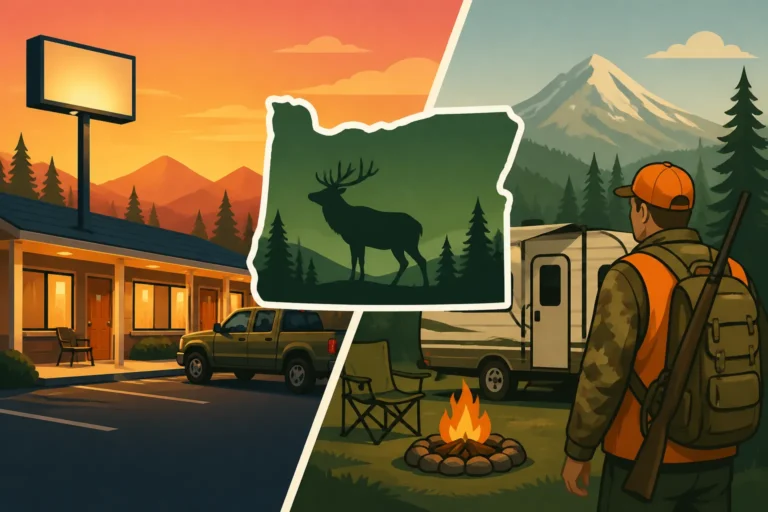
For food, consider packing a cooler with drinks and easy-to-eat snacks for the drive, and then planning your main camp food separately. Many small towns en route will have grocery stores, but selection might be limited compared to Portland. If your drive is truly epic—say, to the Wallowas or far southeast Oregon—consider an overnight stay. This breaks up the monotony, allows you to arrive refreshed, and can prevent driver fatigue. Research small motels or even dispersed camping options along your route. You might be able to find a pull-off on BLM land or a small campground that accepts late arrivals. Many hunters will stage near their unit the night before opening day to hit the ground running.
Securing Firearms and Ammunition for Travel
Transporting firearms from Portland to your hunting grounds requires strict adherence to Oregon laws and common-sense safety. Firearms must be unloaded. For vehicle transport, they should be either enclosed in a case, placed in plain view (not concealed), or stored in a locked compartment. Ammunition should be stored separately, ideally in its original box or a secure container, and not readily accessible.
If you're using a pickup truck, a locked toolbox or gun case in the bed is usually sufficient. In an SUV or car, a locked case in the trunk or cargo area is best. The goal is to prevent accidental discharge and to keep your firearms from being easily accessed or stolen. It's also a good idea to ensure your hunting license and tags are easily accessible but secure, not buried under a pile of gear. Familiarize yourself with all Oregon Hunter Education Requirements which includes understanding transport laws. Always double-check current regulations, as they can sometimes change or have specific nuances for different firearm types.
Anticipating Challenges and Staying Prepared
Even the most meticulous planning can't account for every variable, especially when you're headed into Oregon's diverse and often wild hunting landscapes. Anticipating potential challenges and having a plan B (or C) is crucial for a successful and safe trip from Portland.
Road Conditions and Forest Service Gates
Leaving the paved highways around Portland for the unpaved roads of hunting country is where the real adventure often begins. These roads, whether they're U.S. Forest Service roads, BLM routes, or private timber company access roads, can range from well-maintained gravel to treacherous, rutted tracks. Rain can turn dry, dusty roads into slick mud, while snow can make them impassable. Always anticipate conditions to be worse than you expect.
Moreover, many public lands, and especially private timberlands, utilize gates. Some are always open during hunting season, others are seasonally closed, and some require special permits or keys from timber companies. You might encounter a locked gate that forces a significant detour, or worse, completely blocks your planned access. Always check ODFW's online mapping tools and any specific timber company websites for gate information. For national forests, check the local Ranger District's website for road and gate status updates. Some Travel Management Areas (TMAs) have strict rules about motorized access, so understanding where you can and cannot drive is paramount. Where Motorized Travel Is Banned in a TMA is information you need before you drive down that road.
Communication Gaps
The moment you leave the immediate Portland metro area, and certainly once you enter the mountainous or high desert regions, reliable cell phone service becomes a luxury, not a guarantee. This can be frustrating but also dangerous. Trying to call for help, check weather updates, or even just let loved ones know you're okay can be impossible.
Invest in a satellite communication device (like a Garmin InReach or a Zoleo) if you plan on venturing into truly remote areas. These devices allow you to send and receive texts via satellite, share your location, and most importantly, trigger an SOS call to emergency services if needed. At a minimum, consider a good quality two-way radio for communicating with hunting partners within your group, especially if you plan to split up. Always let someone back home know your detailed travel plans and estimated return time. Leaving a Trip Plan With Someone at Home is a critical safety measure.
Emergency Preparedness
A hunting trip from Portland into Oregon's backcountry is an expedition, not just a drive. Your vehicle and your person should be equipped for emergencies. Beyond your hunting gear, carry a well-stocked emergency kit in your vehicle. This should include:
- Extra water and food: Enough for at least 2-3 days beyond your planned trip.
- Warm clothing/blankets: Even in warmer seasons, temperatures can drop rapidly, especially at elevation.
- First-aid kit: A comprehensive one, including bandages, antiseptic, pain relievers, and any personal medications. First Aid Kit Items for a Remote Hunt should be tailored to your trip's remoteness.
- Tools: Basic vehicle repair tools, tire repair kit, air compressor, jumper cables, tow strap, shovel, axe or saw for clearing small downed trees.
- Navigation: Paper maps of your route and hunting area, a compass, and a headlamp with extra batteries, even if you have digital devices.
- Fire starter: Waterproof matches, lighter, or fire steel.
- Signaling devices: Whistle, signal mirror.
Remember, once you're out of cell service, you are your own first responder. Having the means to address minor issues can prevent them from escalating into major emergencies. Being prepared means you can focus on the hunt, knowing you've done what you can to mitigate risks.
| Aspect of Travel | Western Oregon (e.g., Coast Range) | Eastern Oregon (e.g., Blue Mountains) |
|---|---|---|
| Distance from Portland | 1.5 – 4 hours typically | 4 – 8+ hours typically |
| Road Type | Winding paved, steep gravel, private logging roads | Straighter paved, extensive dirt/gravel Forest Service/BLM roads |
| Terrain | Dense, wet timber, steep canyons | High desert, rimrock, open forests, mountains |
| Weather Impact (Fall/Winter) | Heavy rain, mud, localized snow (passes) | Snow, ice, extreme cold, high winds, some passes |
| Cell Service | Spotty, often non-existent in drainages | Generally better on main highways, very spotty in remote areas |
| Fuel Stops | More frequent, but can be limited off main routes | Less frequent, plan carefully |
| Vehicle Type Recommended | High clearance 4×4, good tires | High clearance 4×4, good tires, possibly chains for passes |
| Game Species | Roosevelt Elk, Blacktail Deer, Bear, Cougar | Rocky Mountain Elk, Mule Deer, Pronghorn, Bear, Cougar |
Disclaimer
This article is for general informational purposes only and does not constitute professional advice. Laws, prices and regulations vary by location and change over time. Consult a qualified professional for guidance on your specific situation.