Rifle Choice for Oregon Elk and Deer
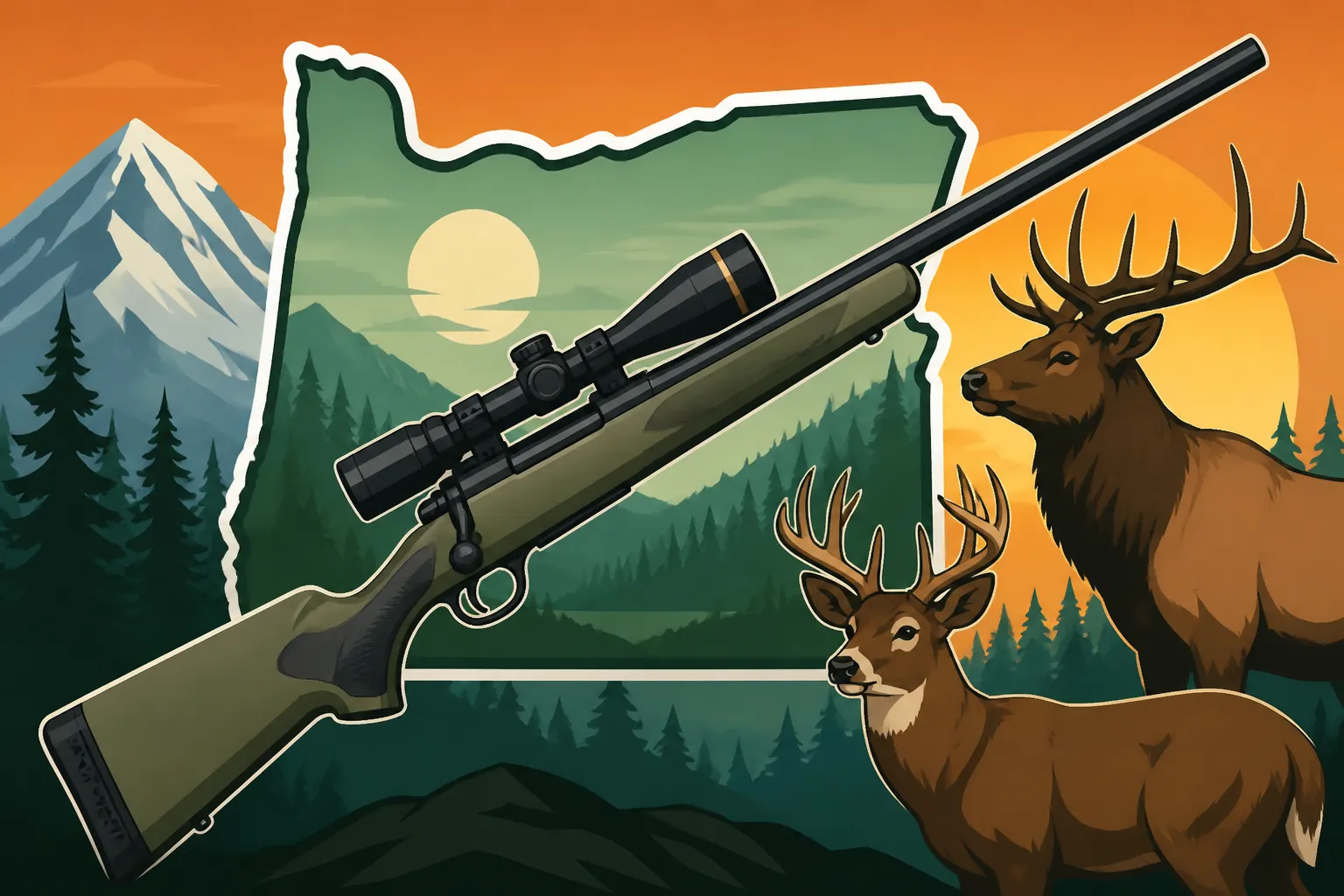
Choosing the right rifle for hunting Oregon's diverse landscape and game can feel like a daunting task, especially when you're faced with everything from the dense, wet coastal timber to the vast, open sagebrush plains of Eastern Oregon. It’s a common frustration, trying to balance stopping power for a bull elk with a lighter touch for a blacktail buck, all while considering varying shot distances and terrain. This guide is here to break down the complexities, helping you understand the crucial factors that go into selecting a rifle that will serve you well, whether you're chasing mule deer in the high desert or Roosevelt elk in the deep woods.
Understanding Oregon's Diverse Hunting Environments
Oregon is a state of incredible contrasts, and these geographical differences play a massive role in dictating the optimal rifle choice for hunters. What works beautifully for a 500-yard shot across an Eastern Oregon canyon might be entirely impractical for a 50-yard encounter in a dense Western Oregon clearcut. It's not just about the animal; it's about where and how you'll be pursuing them.
Western Oregon: Dense Timber and Close Encounters
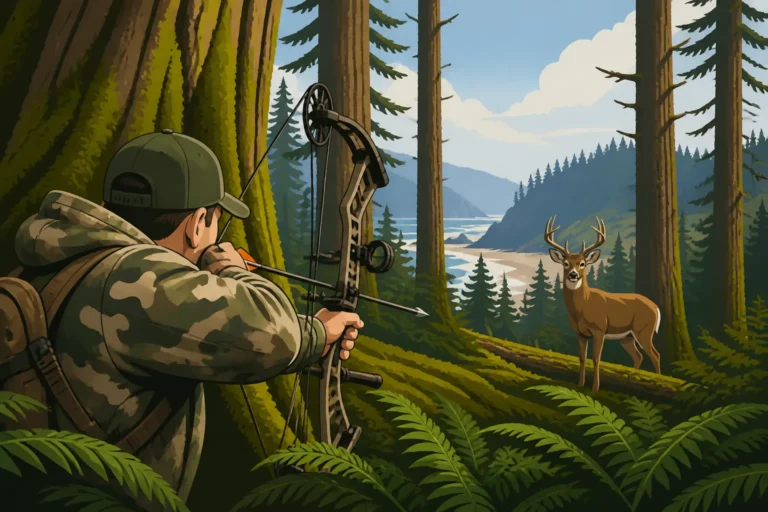
When you're hunting in Western Oregon, whether it's the Coast Range or the western slopes of the Cascades, you're primarily dealing with thick, often wet, timber. Visibility is typically limited, and shots are almost always at much closer ranges. Think heavy brush, steep slopes, and the kind of cover where an animal can vanish in a heartbeat. This is the domain of the Roosevelt elk and the Columbian blacktail deer.
In these environments, bullet penetration, quick handling, and moderate recoil are often prioritized over extreme long-range accuracy. You might find yourself still-hunting through thickets, or making a quick shot as a deer slips through a small opening. A rifle that's too heavy or cumbersome can be a real hindrance when you're navigating blowdowns and dense undergrowth. Moreover, understanding how to adjust your approach for these close-quarter situations is paramount, as detailed in articles like Still-Hunting Blacktails in Wet Oregon Coastal Brush.
Eastern Oregon: Open Country and Long-Range Shots
Eastern Oregon presents an entirely different challenge. Here, you'll find vast expanses of sagebrush, juniper forests, rimrock canyons, and open agricultural fields. Mule deer and Rocky Mountain elk roam these areas, and typical shot distances can stretch from 200 yards to well beyond 400 or even 500 yards. The terrain often allows for glassing for long periods, as described in Glassing Eastern Oregon Rimrock for Mule Deer, and meticulous range estimation becomes critical.
For this type of hunting, a rifle and caliber capable of flat trajectories and precise accuracy at extended distances are highly valued. Wind drift becomes a significant factor, and heavier bullets often buck the wind better. You'll want a rifle that can consistently group shots tightly at longer ranges, paired with optics that can handle the magnification and light transmission needed for spotting and shooting across canyons. The physical demands of traversing this open, often rocky country, also mean that while a heavier rifle might offer more stability for long shots, you still want something manageable to carry over miles.
Key Factors in Choosing Your Rifle Caliber
Selecting the right caliber is perhaps the most important decision you'll make when picking a hunting rifle. It needs to be effective for the game you're pursuing, comfortable for you to shoot accurately, and suitable for the conditions you'll encounter. There's no single "best" caliber, but rather a balance of ballistic performance, recoil, and availability.
Bullet Energy and Stopping Power
When we talk about stopping power, we're really talking about the energy a bullet delivers to the target. For larger animals like elk, you need a cartridge that can penetrate deep and reliably damage vital organs. This generally means a heavier bullet moving at a good velocity. For deer, while still requiring ethical killing power, the demands are less extreme.
For example, a .30-06 Springfield, often considered the gold standard for versatility, delivers excellent energy for elk out to reasonable distances, and is more than enough for any deer in Oregon. Compare that to a .243 Winchester, which is fantastic for deer but might be considered marginal for elk, especially at longer ranges or if shot placement isn't perfect. The ethical hunter always strives for a clean kill, and having enough bullet energy to ensure that, even if an unexpected bone is hit, is crucial. This is why careful consideration of Shot Placement on a Bull at Close Range is important regardless of caliber.
Recoil Management and Accuracy
Recoil is the kick you feel when a rifle fires. While some hunters can handle heavy recoil, excessive kick can lead to flinching, poor shooting habits, and reduced accuracy, especially during practice. A rifle you can shoot comfortably and consistently is always more effective than a more powerful one you dread shooting.
For many hunters, cartridges in the .270 Winchester, .308 Winchester, or 6.5 Creedmoor range offer a manageable balance of power and recoil. These are often great choices for deer and, with proper bullet selection, can be perfectly adequate for elk. If you step up to magnum calibers like .300 Winchester Magnum or 7mm Remington Magnum, you gain significant power and range, but you also take on more recoil. If you opt for a magnum, consider adding a muzzle brake or choosing a rifle with a good recoil pad to make practice more enjoyable and effective. Remember, a well-placed shot from a moderately powerful rifle is always superior to a poorly placed shot from a cannon.
Bullet Construction and Availability
Modern bullet technology has come a long way, offering various constructions designed for different purposes. For tough-skinned animals like elk, you'll want bullets designed for controlled expansion and deep penetration, such as bonded bullets, monolithic copper bullets, or those with heavy jackets. Brands like Barnes TSX, Nosler AccuBond, Hornady ELD-X, and Federal Terminal Ascent are popular choices that perform well on big game.
Bullet availability and cost are also practical considerations. Popular calibers like .30-06, .308, .270, and 6.5 Creedmoor are almost universally available, often in a wide range of bullet types and at reasonable prices. More obscure or specialized calibers might be harder to find, especially in hunting camps or remote areas, and can be more expensive. It's always a good idea to stock up on your preferred hunting ammunition before the season, and certainly before heading into the backcountry for a hunt like those described in Multi-Day Camps in Oregon's Roadless Country. Checking current inventory at local shops like Bi-Mart or Sportsman's Warehouse well in advance can prevent last-minute scrambles.
Popular Rifle Calibers for Oregon Deer
Oregon is home to both Columbian blacktail deer in the west and mule deer in the east, and while they differ in habitat and size, many of the same calibers are excellent choices for both. The key is often finding a balance between sufficient power and minimal meat damage.
Versatile Choices for Western and Eastern Deer
For blacktail deer in the dense coastal forests or mule deer in the high desert, cartridges like the .270 Winchester, .308 Winchester, and 6.5 Creedmoor stand out as highly effective and popular choices. The .270 Winchester has long been a favorite, known for its flat trajectory and solid performance on deer-sized game. It offers a good balance of recoil and power, making it comfortable for most shooters to handle accurately. With bullets typically ranging from 130 to 150 grains, it provides ample energy for clean kills out to practical hunting distances.
The .308 Winchester is another incredibly versatile option, renowned for its accuracy and efficiency in a compact cartridge. It's available in a vast array of bullet weights, from 150 to 180 grains, allowing hunters to tailor their load to specific conditions or even use it for elk with appropriate bullets. Its moderate recoil and excellent terminal ballistics make it a superb all-around deer cartridge for both close-range timber shots and longer open-country engagements. Many hunters appreciate the .308's performance in shorter barrel rifles, which can be a real plus when navigating thick brush.
The 6.5 Creedmoor has surged in popularity in recent years, and for good reason. Its inherently accurate design, mild recoil, and excellent ballistic coefficients make it an outstanding choice for deer, particularly in Eastern Oregon where longer shots are common. While it typically uses lighter bullets (120-147 grains), these bullets are often very efficient, retaining energy and resisting wind drift exceptionally well. For deer, it's more than enough, and its low recoil helps shooters maintain accuracy, making it a favorite among new hunters and those sensitive to kick. It also performs well in a variety of rifle platforms, from lightweight mountain rifles to heavier precision setups.
Specific Considerations for Blacktail and Mule Deer
When targeting blacktail deer in Western Oregon, shot distances are often short, typically under 150 yards. Here, a quick-handling rifle in a caliber like .30-30 Winchester, .35 Remington, or even a .44 Magnum lever-action can be incredibly effective, though these are more specialized choices. These calibers deliver significant energy at close range and are designed for rapid follow-up shots if needed. However, their ballistic performance drops off quickly at longer distances, making them less suitable for mule deer in open country.
For mule deer, which often require shots over 200 yards in Eastern Oregon's expansive landscapes, flat-shooting cartridges are preferred. Beyond the 6.5 Creedmoor and .270 Winchester, calibers like the 7mm-08 Remington or .280 Remington can also be excellent. The 7mm-08 offers slightly heavier bullet options than the 6.5 Creedmoor with similar mild recoil, providing a bit more punch. The .280 Remington, essentially a .270 case necked up to accept 7mm bullets, provides a fantastic blend of flat trajectory, good energy, and moderate recoil, making it a very capable long-range deer cartridge.
When considering hunting mule deer, utilizing resources like GoHunt's mapping and filtering tools can help you identify units with specific terrain features, which in turn might influence your rifle choice. For example, if you're looking at units known for extensive rimrock where long shots are common, a flatter-shooting caliber becomes even more critical.
Effective Rifle Calibers for Oregon Elk
Elk are large, tough animals, and choosing a rifle caliber for them requires a focus on energy, penetration, and the ability to handle potentially longer shot distances, especially for Rocky Mountain elk. Ethical hunting demands that you use a rifle capable of a clean, swift kill.
Top Choices for Roosevelt and Rocky Mountain Elk
For both Roosevelt elk in Western Oregon's dense timber and Rocky Mountain elk in the more open Eastern Oregon units, calibers like the .30-06 Springfield, .300 Winchester Magnum, and 7mm Remington Magnum are consistently excellent choices. These cartridges have proven their effectiveness on elk for generations.
The .30-06 Springfield is arguably the most classic and versatile elk cartridge in North America. With a wide range of bullet weights, typically from 165 to 200 grains for elk, it delivers tremendous energy and deep penetration. While it might not be the flattest shooting magnum, it is perfectly capable of ethical kills on elk out to 300-400 yards with proper bullet selection and shooter proficiency. Its moderate recoil (compared to magnum options) and widespread availability make it an enduring favorite, often recommended as a great all-around choice if you only own one elk rifle. This caliber can be a strong contender for those hunting Oregon Elk Hunting Tactics for the November Rifle Seasons.
For hunters seeking more reach and impact, especially in the vastness of Eastern Oregon, the .300 Winchester Magnum and 7mm Remington Magnum shine. The .300 Win Mag is a powerhouse, launching heavy bullets (180-200 grains) at high velocities, resulting in a flat trajectory and immense energy delivery. This makes it an outstanding choice for those long shots across canyons that are common when Glassing Sage and Juniper for Eastern Oregon Mule Deer, or elk. Its main drawback is increased recoil, which some shooters find challenging.
The 7mm Remington Magnum offers a similar performance profile to the .300 Win Mag, but with a slightly smaller bullet diameter (7mm vs. 7.62mm). It's known for its very flat trajectory and excellent ballistic coefficient, particularly with 150-175 grain bullets. Many hunters find the recoil of the 7mm Rem Mag to be a bit more manageable than the .300 Win Mag, while still providing more than enough power and range for elk across Oregon. Both the .300 Win Mag and 7mm Rem Mag truly excel at extending ethical shooting distances, but they demand a commitment to practice to master their recoil.
Considerations for Versatility (Deer and Elk)
If you're like many Oregon hunters who pursue both deer and elk, you might be looking for a single rifle that can do it all. While a dedicated deer rifle or elk rifle can be optimized for each, some calibers strike a great balance.
| Caliber | Typical Bullet Weights (grains) | Energy at 300 yards (approx. ft-lbs)* | Recoil (relative) | Ideal Use |
|---|---|---|---|---|
| Deer-Focused | ||||
| .243 Winchester | 80-100 | 1200-1400 | Light | Deer, varmints, youth |
| 6.5 Creedmoor | 120-147 | 1600-1800 | Moderate-Light | Deer, smaller elk, long-range precision |
| .270 Winchester | 130-150 | 1800-2000 | Moderate | Deer, good for elk with proper bullets |
| .308 Winchester | 150-180 | 1800-2200 | Moderate | Deer, good for elk with proper bullets, versatile |
| Elk-Focused (also good for deer) | ||||
| .30-06 Springfield | 165-200 | 2200-2600 | Moderate-Heavy | Elk, Moose, Bear, all deer, highly versatile |
| 7mm Rem Magnum | 150-175 | 2600-3000 | Heavy | Elk, long-range deer, excellent trajectory |
| .300 Win Magnum | 180-200 | 2800-3200 | Heavy | Elk, Moose, long-range deer, high energy |
*Note: These figures are approximate and can vary significantly based on specific bullet type, barrel length, and load data. They serve as a general comparison.
As you can see, the .30-06 Springfield and .308 Winchester stand out as excellent crossover cartridges. A .30-06, loaded with 150-grain bullets, is perfectly adequate for deer, and can be loaded with 180-grain or heavier bullets for elk. Similarly, a .308 Winchester with 150-grain bullets handles deer beautifully and can tackle elk with well-constructed 165 or 180-grain bullets. For those who hunt both species primarily in Western Oregon's closer quarters, even a .35 Whelen, though less common, can be a potent choice for its heavy-hitting, close-range power on elk and deer.
However, if you predominantly hunt Eastern Oregon's expansive units and prioritize long-range capability, one of the magnum cartridges might be worth the extra recoil. But always remember, the most powerful rifle in the world won't make up for a lack of practice. Spend time on the range, get comfortable with your chosen rifle, and know your effective range under hunting conditions.
Rifle Action Types and Their Advantages
Beyond caliber, the rifle's action type profoundly influences its feel, reliability, and speed of follow-up shots. Each action has its proponents, and understanding their characteristics will help you choose what best fits your hunting style in Oregon.
Bolt-Action Rifles: Precision and Reliability
Bolt-action rifles are, without a doubt, the most popular choice for big game hunting in Oregon, and across the globe. Their design allows for incredible inherent accuracy, thanks to a strong, rigid action that securely locks the cartridge in place. This rigidity minimizes flex and movement during firing, leading to consistent bullet placement.
Manufacturers like Remington (Model 700), Savage (Axis, 110 series), Browning (X-Bolt, A-Bolt), and Tikka (T3x) all produce excellent bolt-action rifles that are widely used by Oregon hunters. They are known for their reliability in various weather conditions, which is crucial for those wet days chasing Roosevelt elk in the Coast Range or dusty, windy conditions for mule deer in the high desert. Bolt actions also typically offer a wide range of aftermarket customization, from triggers to stocks, allowing hunters to fine-tune their rifle. While they might not offer the fastest follow-up shot, the vast majority of ethical big game shots are taken with a single, well-placed round.
Lever-Action and Semi-Automatic Rifles: Speed and Tradition
While less common for long-range Eastern Oregon hunting, lever-action rifles hold a special place for many hunters, particularly in Western Oregon's timber. Their classic design offers rapid follow-up shots, which can be an advantage in close-quarters hunting where animals can move quickly.
Many lever-actions, like those from Marlin or Winchester, are chambered in traditional "woods calibers" such as .30-30 Winchester, .35 Remington, or even pistol calibers like .44 Magnum or .45-70 Government. These cartridges are excellent for deer and even black bear at shorter ranges, providing plenty of stopping power without excessive over-penetration. For blacktail hunting in the Coast Range where shots are often 100 yards or less, a handy lever-action can be a fantastic tool. However, their lower velocity and rainbow trajectory make them less suitable for the open country of Eastern Oregon.
Semi-automatic rifles, such as AR-10 platform rifles, are legal for hunting in Oregon, provided they meet specific magazine capacity and other regulatory requirements. While popular for their fast follow-up shots and often modular design, they are not as commonly seen for big game hunting as bolt actions. They can be chambered in common calibers like .308 Winchester or 6.5 Creedmoor, offering versatility. However, some hunters prefer the classic aesthetics and often lighter weight of traditional bolt or lever actions for trekking through the wilderness, as when Packing Out an Elk in Oregon's Wilderness Units.
Optics and Accessories for Oregon Hunting Rifles
Having the perfect rifle and caliber is only part of the equation; your optics and accessories are equally critical for success in Oregon's diverse hunting scenarios. A top-tier rifle with mediocre optics is often less effective than a mid-range rifle with excellent glass.
Scope Selection for Different Terrains
Your rifle scope is your window to the game, and its features should align with your hunting environment. For Western Oregon's dark timber and close-range shots, a scope with a wide field of view and excellent low-light gathering capabilities is paramount. A 1.5-6×42 or 2-7×33 scope might be ideal, offering enough magnification for precise shots without sacrificing the ability to quickly acquire a target in dense cover. A clear, illuminated reticle can also be a significant advantage in deep shadows. You want to prioritize light transmission over extreme magnification in these environments, much like when selecting Optics for Dark Timber Versus Open Sage.
Conversely, for Eastern Oregon's open country and longer shots, higher magnification is often desirable. A 3-9×40, 4-12×40, or even a 4-16×50 scope provides the necessary detail for precise aiming at extended distances. Turrets with clear adjustments for bullet drop compensation are also highly beneficial, allowing you to dial in your shot for various ranges. Brands like Leupold, Vortex, and Swarovski offer robust, reliable scopes that can withstand the rigors of an Oregon hunting season. No matter the terrain, choosing a scope that is durable, fogproof, and waterproof is non-negotiable for Oregon's often unpredictable weather.
Bipods, Slings, and Rangefinders
Beyond the scope, several accessories can significantly enhance your rifle's performance and your overall hunting experience.
- Bipods: For Eastern Oregon hunting where prone or supported shooting positions are common for long shots, a quality bipod (like those from Harris or Atlas) is almost essential. It provides a stable shooting platform, vastly improving accuracy, especially when you're shooting across expansive terrain. For quick deployment, a bipod that attaches easily to a sling swivel stud or an ARCA rail is ideal.
- Slings: A comfortable and durable sling is critical for carrying your rifle through Oregon's often rugged terrain. Whether you're hiking up steep hillsides or navigating through thick brush, a good sling distributes the weight and keeps your hands free. Brands like Butler Creek, Viking Tactics, or those made from sturdy leather are popular choices. Ensure it's adjustable and doesn't slip on your shoulder.
- Rangefinders: In any Oregon hunting scenario where shots might exceed 100-150 yards, a reliable laser rangefinder is an absolute must-have. Estimating distances accurately is incredibly difficult, especially in broken or unfamiliar terrain. A rangefinder removes the guesswork, allowing you to make precise adjustments for bullet drop. For steep country, models with angle compensation are particularly valuable. This is especially true when considering Rangefinders in Steep Country.
- Ammunition Holders: Whether it's a buttstock shell holder or a small pouch on your belt, having spare ammunition readily accessible is always a good idea. This ensures you're prepared for quick follow-up shots or if you need to reload in a hurry.
- Cleaning Supplies: Oregon weather, especially in the western parts, can be brutal on firearms. Keeping a small cleaning kit, or at least a bore snake and some oil, in your pack can prevent rust and ensure your rifle performs when it counts. A quick wipe-down and re-oiling after a wet day in the field can save your rifle from corrosion.
Investing in quality optics and accessories is just as important as the rifle itself. They complete your system, allowing you to maximize your chosen rifle's potential and ensure you're prepared for whatever Oregon's hunting season throws your way. Using tools like GoHunt to research units and see elevation changes and cover can help you anticipate the kind of ranges and conditions you'll face, further informing your gear choices.
Final Thoughts on Rifle Selection
Choosing the "perfect" rifle for Oregon elk and deer hunting really boils down to self-awareness and understanding the specific conditions of your hunt. There's no single answer, but rather a spectrum of excellent choices that prioritize different aspects of performance.
If you're primarily hunting blacktail deer in Western Oregon's dense timber, a nimble rifle in a caliber like .308 Winchester or .270 Winchester, topped with a lower-power variable scope, will serve you exceptionally well. It’s about quick target acquisition and maneuverability in tight spaces.
For mule deer and Rocky Mountain elk in Eastern Oregon's expansive country, where long-range shots are more common, a flatter-shooting caliber like a 6.5 Creedmoor, .270 Winchester, 7mm Remington Magnum, or .300 Winchester Magnum, paired with a higher-magnification scope and a bipod, will give you the confidence to make those challenging shots.
And for the hunter who wants one rifle to do it all, the venerable .30-06 Springfield or the versatile .308 Winchester, with careful bullet selection, remains hard to beat for their ability to ethically take both deer and elk across the state.
Ultimately, the most important factor isn't the ballistic chart or the brand name, but your proficiency with the rifle. Practice, practice, practice. Know your rifle's capabilities, understand its limitations, and become intimately familiar with its point of impact at various distances. This commitment to skill development is what truly makes a rifle an effective tool in the field, ensuring ethical and successful hunts year after year in Oregon.
Disclaimer
The information provided in this article is for general guidance and informational purposes only. Hunting regulations, seasons, and requirements can change frequently. Always consult the most current Oregon Department of Fish and Wildlife (ODFW) regulations and speak with local authorities before making any hunting plans or equipment decisions. Hunter safety is paramount; always follow safe firearm handling practices and be aware of your surroundings.