Fire Season Closures on Oregon Timber Land
There's nothing quite as frustrating as meticulously planning an Oregon hunt, poring over maps, scouting remote timber tracts, and building up anticipation, only to drive hours to your chosen spot and find a "CLOSED DUE TO EXTREME FIRE DANGER" sign slapped on the gate. It's a gut punch that every hunter in our state has likely experienced, turning dreams of bugling elk or a quiet blacktail stalk into a wasted trip. This guide aims to help you understand why these closures happen on Oregon timber land and, more importantly, how to navigate them so you can still find productive hunting grounds.
The Frustration of Fire Season Closures on Oregon Timber Land
Oregon's landscapes, especially those rich in dense timber, are beautiful but also incredibly prone to wildfire, particularly during the late summer and early fall when many of our big game seasons kick off. This reality means that timber companies, both large industrial operations and smaller private landowners, are forced to make tough decisions about access. Their primary concern is fire prevention and, frankly, liability. An accidental spark from a vehicle, a poorly extinguished campfire, or even a hot exhaust pipe could ignite thousands of acres, leading to catastrophic losses of timber resources, wildlife habitat, and even homes.
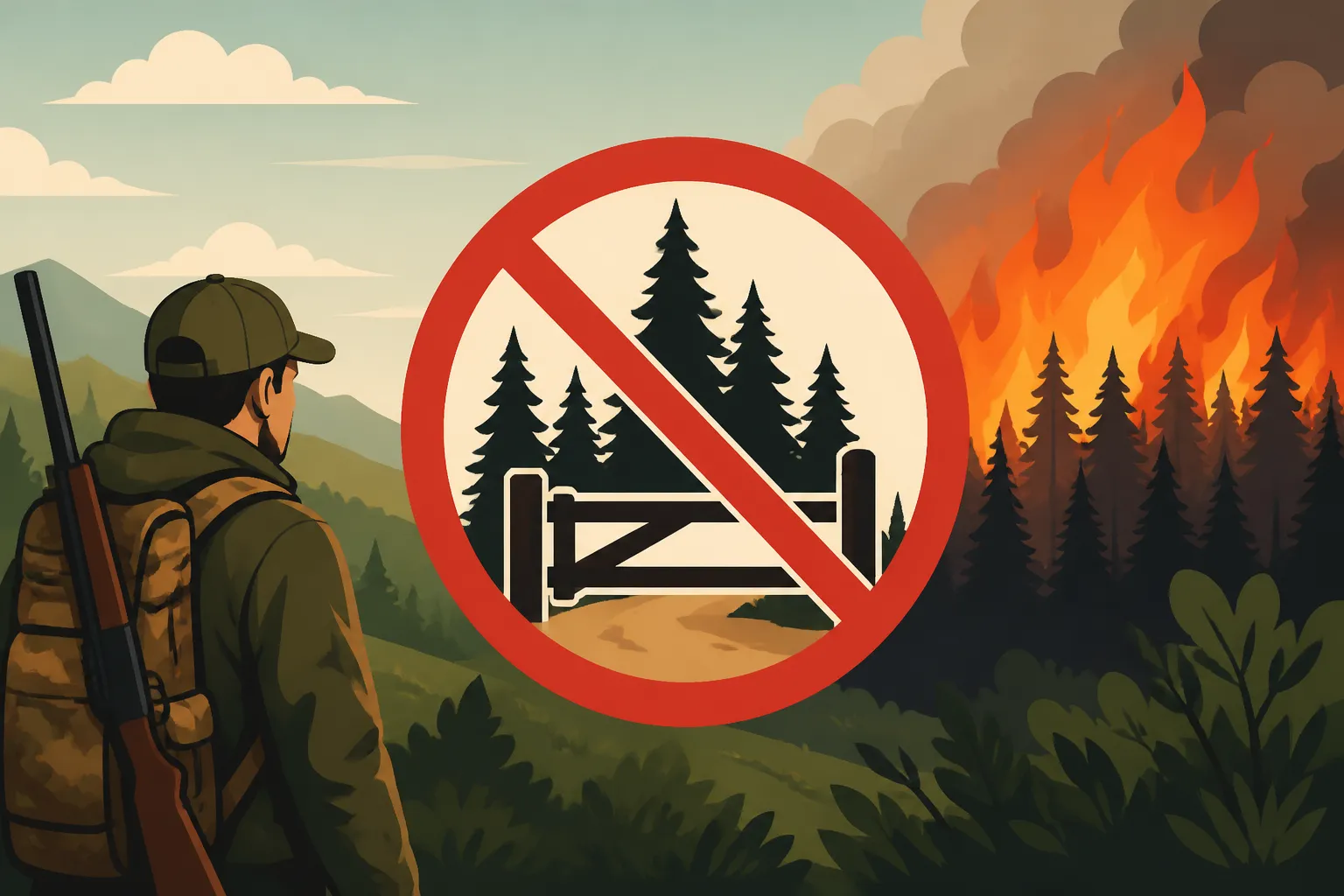
Imagine getting up at 3 AM, driving three hours to your favorite elk hunting spot in the Coast Range, only to find a sturdy steel gate across the logging road that was wide open just weeks before. You checked the general ODFW regulations, you confirmed the season, but you completely forgot about the timber company's rules. You're left sitting there, coffee getting cold, watching the sun rise over the very ridge you wanted to be on, feeling a mix of anger and disappointment. This isn't just an inconvenience; it can completely derail a hunt you've planned for months, costing you time, gas, and vacation days. It’s a common scenario, and it’s why understanding these closures is so crucial for Oregon hunters.
Timber companies also have active logging operations going on. When fire danger is high, they often pull their crews out of the woods for safety reasons. Closing the gates isn't just about preventing new fires, but also about protecting their own personnel and equipment from an existing fire, or from the dangers that can arise when fire conditions are extreme, like falling snags or rapid fire spread.
Understanding How Fire Season Closures Work
The world of fire season closures can feel like a tangled web, with different agencies, land types, and restriction levels all playing a part. It's not always a simple "open or closed" situation. Understanding the nuances can help you predict and plan.
Different Levels of Fire Restrictions and Their Impact
Oregon utilizes a system of Industrial Fire Precaution Levels (IFPLs) and Public Use Restrictions (PURs), often set by the Oregon Department of Forestry (ODF) or federal agencies like the Forest Service and BLM. These levels dictate what activities are allowed on various lands.
- IFPL Levels: These go from I to IV, increasing in severity. At IFPL I, things are fairly normal. By IFPL III, industrial operations are often curtailed, and public access might start to be restricted or require specific permits. At IFPL IV, it's typically a complete shutdown – no industrial activity, no public entry, essentially a full closure.
- Public Use Restrictions (PURs): These generally apply to the public and dictate things like campfires (often banned early in the season), smoking (restricted to cleared areas or vehicles), motor vehicle use (staying on paved or graveled roads), and internal combustion engines (spark arrestors required, time of day restrictions).
Timber companies, while often aligning with ODF or federal land management agencies, can also implement their own, sometimes stricter, closure policies. They are managing a valuable resource, and they often lean towards caution. A large company like Weyerhaeuser or Hancock will have specific rules for their lands, which might differ slightly from a smaller private timber holding or even adjacent public land. It's like planning a trip and realizing each county has its own set of rules, even if they share state highways. This patchwork of regulations is one of the biggest challenges for hunters.
Who Makes the Call: Agencies and Private Landowners
The decision to close timber land isn't arbitrary. It's based on a complex interplay of factors:
- Weather Forecasts: High temperatures, low humidity, and strong winds are red flags.
- Fuel Moisture: How dry are the grasses, brush, and timber? This is measured constantly.
- Existing Fires: Are there already uncontained fires in the region that could spread?
- State and Federal Regulations: ODF, US Forest Service, and BLM all have protocols for escalating fire restrictions.
- Company Policy and Risk Assessment: Private timber companies often have their own internal risk assessments, which might lead them to close lands even if state or federal agencies haven't reached the highest restriction levels yet. They might prioritize their active logging operations, or consider the access roads on their property particularly vulnerable.
It's important to remember that a gate closure on private timber land might not mean the adjacent national forest land is also closed, and vice-versa. Always check the specific land manager for the area you plan to hunt. You might find that Hunting Private Timber Land With a Permit involves different rules than hunting on federal ground right next door.
How to Check for Current Closures Before You Go
Forewarned is forearmed, especially during fire season. The last thing you want is to be caught off guard. Integrating closure checks into your pre-hunt routine is essential.
Essential Resources for Real-Time Updates
There's no single magic bullet for checking all closures, but a combination of resources will give you the most accurate picture:
- Oregon Department of Forestry (ODF) Website: ODF maintains statewide fire incident maps and lists public use restrictions by protection district. This is your first stop for understanding the general fire danger and any broad prohibitions on campfires or vehicle use.
- Federal Land Agency Websites: If you're hunting on National Forest or BLM land, check their specific district websites. For instance, the Deschutes National Forest or Bureau of Land Management (BLM) Prineville District will post local alerts and road closures. These can often be found by searching for the specific forest or district's "fire information" or "recreation alerts" page.
- Timber Company Websites/Hotlines: This is probably the most critical resource for private timber land. Major companies like Weyerhaeuser, Hancock Forest Management, and other smaller regional timber companies often have dedicated sections on their websites or even recorded hotlines that provide daily updates on recreational access and fire-related closures. These are the folks who own the gates you'll be driving up to, so their word is final. Always check their specific rules regarding Timber Company Access Fees and Gates in Oregon. Some may require a permit to enter even when not closed for fire.
- Local Ranger Districts/Field Offices: Don't underestimate the power of a phone call. A quick call to the local ODF office, Forest Service ranger district, or BLM field office can often yield the most up-to-date information, especially for localized closures that might not make it to a main website immediately.
- Mapping Applications: Tools like onX Hunt are incredibly valuable for understanding land ownership. You can clearly see where private timber company land begins and public land ends. While onX Hunt often shows general closures or alerts, it's still best to cross-reference with the landowner's official channels. However, knowing who owns the land helps you know whose website to check. GoHunt is another excellent resource that compiles various hunting regulations and land access information, which can sometimes include high-level fire closure updates.
It's a good habit to check these resources not just a week before your hunt, but again the day before, or even the morning of, your departure. Fire conditions can change rapidly, and closures can be implemented or lifted with very short notice.
The Importance of "Just Before You Go"
I can't stress this enough: check immediately before you leave. I've known guys who planned an elaborate three-day backcountry elk hunt, packed everything but the kitchen sink, and spent weeks scouting, only to discover the entire unit had gone to IFPL IV the night before, locking them out of their planned access point. Fire season conditions can swing drastically with a shift in wind or a sudden heatwave. A light rain shower might temporarily ease restrictions, only for them to snap back into place when the sun comes out again. Being proactive and verifying your access just prior to heading out can save you immense frustration and wasted effort.
Navigating Closures and Finding Alternative Access
So, you've done your due diligence, and darn it, your prime hunting spot on private timber land is closed due. Now what? Don't despair; it doesn't always mean your hunt is over.
Adapting Your Hunt Plan
The first step is always to have a Plan B, and even a Plan C, especially if you're hunting during the hotter, drier months.
- Public Land Alternatives: This is often your best bet. While public lands like National Forests and BLM areas also implement fire restrictions, they might not be as stringent as some private timber operations. Or, perhaps only certain activities are restricted, allowing walk-in access even if motorized travel is limited. Use your mapping apps like onX Hunt to identify adjacent public parcels that might still be accessible. Look for areas away from actively managed timberlands if fire risk is high. Sometimes, shifting a few miles can make all the difference.
- Different Private Timber Properties: If you were planning on one specific timber company's land, check others in the area. While major players often move in lockstep during extreme conditions, some smaller private landowners might have different policies or less vulnerable properties. This is a long shot, but worth checking.
- Walk-In Only Gates: Some private timber companies, even during periods of elevated fire danger, might keep their lands open to foot traffic while closing them to motorized vehicles. This is usually communicated clearly on their access maps or websites. Be aware that these "walk-in" opportunities can change rapidly. If you see a Walk-In Only Gates on Industrial Timber sign, it means no vehicles beyond that point, but you can still access the land on foot. However, during the most extreme fire conditions (IFPL IV), even walk-in access might be completely prohibited. Always confirm the current status before assuming you can enter.
Rules About Motorized Versus Foot Travel
During fire season, it's common for timber companies and public land managers to restrict motorized access before they prohibit foot traffic. This is because vehicles pose a greater spark risk and can travel deeper into remote areas quickly.
- Motorized Travel Restrictions: These often dictate that vehicles can only be driven on paved or graveled roads, not on unimproved dirt spurs or logging roads. In some cases, all motorized travel might be banned. Pay close attention to signs, as violating these rules can lead to hefty fines and, more importantly, put everyone at risk. Even if a road looks fine, if it's not designated for motorized use during fire season, stay off it.
- Foot Travel: Generally, foot travel is the last thing to be restricted. If you're physically capable and willing to hike, you might still find opportunities even when the gates are locked to vehicles. This is where fitness and good boots truly pay off. Remember to still practice extreme fire caution: no campfires, no smoking except in vehicles on paved roads, and be incredibly mindful of any heat sources.
Always carry a detailed map (digital and paper) that shows land ownership and roads. Use it in conjunction with your phone to pinpoint where you are and where you can legally go. Don't rely solely on cell signal, as it's often non-existent in the remote timberlands. Knowing your unit boundaries and access points is critical. E-Scouting Burns and Clearcuts From Satellite can help you find alternative routes and access points from home before you ever leave.
Here’s a quick overview of how different land types typically handle fire season closures:
| Land Type | Typical Fire Closure Authority | Common Communication Channels | Usual Flexibility (Higher Fire Danger) |
|---|---|---|---|
| National Forest | US Forest Service | Forest Website, Ranger District Office, Signs | Restricted vehicle access, some walk-in |
| BLM Lands | Bureau of Land Management | BLM Website, Field Office, Signs | Restricted vehicle access, some walk-in |
| Oregon State Forests | Oregon Department of Forestry | ODF Website, Local District Offices, Signs | Restricted vehicle access, some walk-in |
| Large Industrial Timber | Company Specific | Company Website, Hotline, Access Maps, Gate Signs | Often full closure, sometimes walk-in |
| Small Private Timber | Landowner Specific | Posted Signs, Direct Communication (if known) | Varies wildly, often full closure |
It can feel overwhelming to keep track of it all, but with tools like onX Hunt, you can overlay land ownership and then cross-reference with the respective websites or hotlines. This is often the most efficient way to get up-to-the-minute information. Remember, fire season is dynamic, so Checking Oregon Fire Closures Before the Season repeatedly is never a bad idea. Knowing Oregon's 300-Foot Rule Beside an Open Road and Where Motorized Travel Is Banned in a TMA will also help you stay legal and safe. Even if your preferred timber property is closed, there are often other hunting areas available if you're willing to put in a little extra scouting time and adapt your plans. Just don't forget your fire safety essentials when you head out!
Disclaimer
This article is for general informational purposes only and does not constitute professional advice. Laws, prices and regulations vary by location and change over time. Consult a qualified professional for guidance on your specific situation.