Green Flag Properties on the Oregon Hunting Map
Finding good hunting ground in Oregon can feel like trying to solve a complicated riddle, especially when public land access is becoming more competitive and private timber companies sometimes lock gates without notice. It's a real challenge to know where you can legally and ethically pursue game without constantly worrying about trespassing or running into unexpected closures. This guide is here to shed light on a fantastic resource: Green Flag properties on the Oregon hunting map, explaining what they are and how to make the most of these invaluable access points.
Understanding Oregon's Access and Habitat Program
Oregon hunters often face a complex landscape of public and private land, with access rules that can change by the season, or even by the day. It’s enough to make your head spin, trying to figure out where you can legally chase that elk or deer. This is precisely where the Oregon Department of Fish and Wildlife's (ODFW) Access and Habitat Program steps in, acting as a crucial bridge between landowners and hunters. This program is truly a game-changer, addressing the very real pain point of diminishing access and ensuring there are still places for us to pursue our passion.
The Philosophy Behind "Green Flag" Access
The core philosophy behind the Access and Habitat Program, and by extension, the "Green Flag" properties, is quite simple: foster cooperation. Many landowners, from large timber companies to small family farms, have land that holds valuable wildlife habitat. They might be open to hunting access, but they also have legitimate concerns about property damage, liability, or simply managing who is on their land. The A&H program, funded by a surcharge on hunting licenses and big game tags, works to alleviate these concerns by providing incentives and assistance to landowners who open their properties for public hunting. It’s a handshake agreement, where landowners get support (like funding for fence repairs, weed control, or even increased security patrols) and hunters gain much-needed access. This means less friction, more opportunities, and ultimately, a healthier hunting culture across the state. It's a testament to what can be achieved when different groups work together for a common goal, making hunting accessible for more folks. You can dive deeper into the program itself by checking out Oregon's Access and Habitat Program Lands.
How the Program Benefits Hunters
For us hunters, the benefits of Green Flag properties are immediate and significant. Think about all those frustrating times you've driven past prime looking habitat on private land, wishing you had a way to get in there. The Access and Habitat Program turns many of those "wish-I-coulds" into "here-you-cans." It opens up vast tracts of land that would otherwise be completely off-limits, expanding our hunting horizons beyond just federal or state public lands, which are often heavily pressured. This means more square miles of country to explore, often with less competition than the most popular national forest or BLM tracts. These properties can provide diverse hunting opportunities, from chasing blacktail deer in coastal timber to finding mule deer on agricultural fringes in Eastern Oregon. It’s a lifeline for those of us who prioritize diverse experiences and want to avoid the crowds that sometimes plague traditional public land spots. Plus, it encourages responsible land stewardship, ensuring these areas remain viable for wildlife and hunting for years to come, a win-win for everyone involved.
What Exactly are Green Flag Properties?
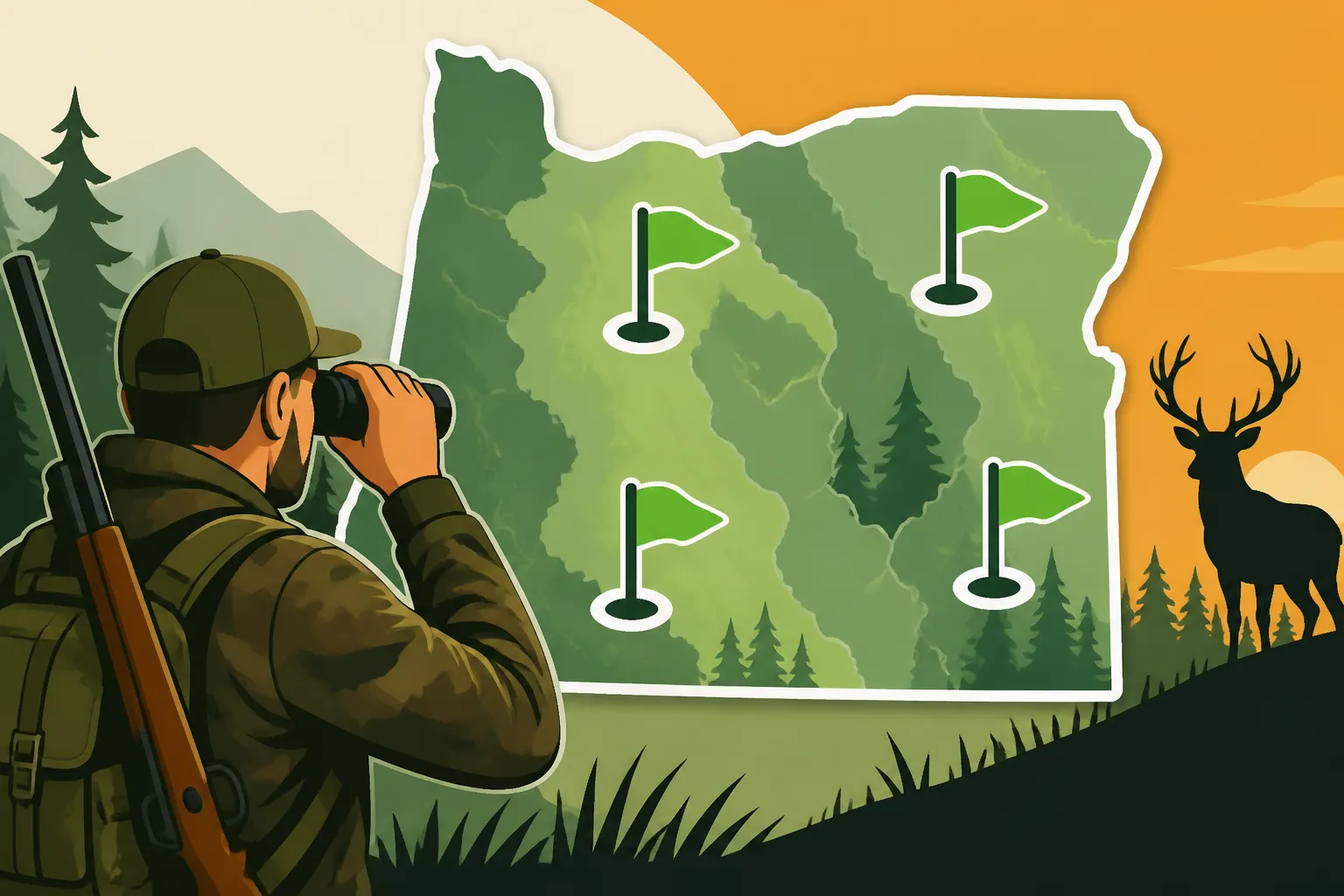
When you’re looking at an Oregon hunting map, especially one from ODFW or a digital mapping app, you’ll notice various ways land access is designated. Among these, the "Green Flag" stands out as a beacon of opportunity. It's a simple, intuitive symbol that quickly tells you, "Hey, this is land where you can likely hunt with relatively straightforward access, often without needing to ask specific permission beforehand." But understanding the nuances of what this means is key to making the most of it and avoiding any misunderstandings.
Distinguishing Green Flags from Other Access Types
It’s easy to get confused with all the different access designations on a map, but Green Flag properties have their own distinct characteristics. They aren't the same as "Yellow Flag" or "By-Permission" properties, where you typically must contact a landowner or specific gatekeeper before stepping foot on the land, even if it's part of the A&H program. With Yellow Flag properties, the emphasis is heavily on direct communication, making sure you adhere to very specific entry and exit protocols that are negotiated directly with the landowner. You can learn more about finding these types of properties by reading Oregon Open Fields Properties and How to Find Them or Asking Permission on Oregon By-Permission Land.
Green Flags, on the other hand, generally indicate walk-in access is encouraged or permitted under general program rules, without the need for individual hunter-to-landowner contact for each visit. While some Green Flag areas might have specific rules posted at access points, the general expectation is that you can just show up and hunt, provided you follow all posted regulations. They're typically open during established hunting seasons and offer a more consistent, less bureaucratic path to getting boots on the ground. This difference in access mechanism is what truly sets them apart and makes them such a valuable resource for hunters who don't have the time or ability to make extensive personal contacts for every hunt.
Types of Land Included in the Green Flag Program
The beauty of the Green Flag program lies in its diversity. These aren't just one type of landscape; they represent a wide array of private lands opened up to hunting. You’ll find Green Flag designations on vast tracts of industrial timberland, often owned by companies like Weyerhaeuser or Hancock, which might otherwise be gated off or require paid permits. Instead, through their partnership with the A&H program, these timber companies provide free public walk-in access to some of their properties. This is a huge win for hunters, as Hunting Private Timber Land With a Permit can sometimes involve fees or limited entry windows.
Beyond timber, Green Flags can also appear on agricultural lands, such as private ranches or farms, particularly those participating in programs like Open Fields, which aim to mitigate wildlife damage (like geese feeding on crops). Imagine rolling foothills, vast sagebrush flats, or dense conifer forests – all potentially available as Green Flag properties. These areas might be critical winter range for deer, prime nesting habitat for turkeys, or hold fantastic elk country. The variety means you can find different game species and hunting environments, offering something for almost every type of hunter. It truly expands the playing field and ensures that private land, often some of the most productive, isn't entirely off-limits.
Navigating and Utilizing Green Flag Properties on the Map
Knowing what Green Flag properties are is only half the battle; the real trick is knowing how to find them and understand their specific nuances before you head out. In today's hunting world, digital tools have become absolutely essential for this, transforming how we scout and prepare for hunts.
Using Digital Mapping Tools (onX Hunt, GoHunt)
Gone are the days of relying solely on paper maps and vague directions. Modern digital mapping applications like onX Hunt and GoHunt have revolutionized how we interact with hunting maps, and they are absolutely indispensable when it comes to identifying Green Flag properties. These apps often layer ODFW access data directly onto their maps, highlighting Green Flag areas with distinct colors or symbols.
When you're using an app like onX Hunt, for example, you can toggle on specific layers that show public land, private land, and crucially, designated access programs. Many Green Flag properties will show up clearly, often with a specific boundary and sometimes even notes about specific rules or permitted activities. Before you plan your trip, spend time "e-scouting" using these tools. You can zoom in, look for potential access points, identify terrain features, and even note possible bedding areas or travel corridors. GoHunt, another excellent resource, often provides detailed unit breakdowns that can highlight these A&H opportunities, giving you a comprehensive overview of a unit's access potential. Remember, these digital tools are constantly updated, so you're getting the most current information available, which is critical in an environment where access can change. For a deeper dive into scouting, check out E-Scouting Oregon Units With Satellite Imagery.
Key Information to Look For Before You Go
Even with a Green Flag designation, it's never wise to just blindly drive up to a property and assume anything goes. There's always crucial information you need to dig into beforehand to ensure a successful and respectful hunt.
First, always check the specific property details. While Green Flag generally means walk-in access, some properties might have designated parking areas, specific walk-in gates, or even limited seasons or species that apply only to that parcel. These details are often found in the hunt regulations pamphlet, on the ODFW website's Access and Habitat section, or directly within your mapping app if the layer is robust enough. Don't assume that because one Green Flag property allows year-round predator hunting, another will too.
Second, pay close attention to dates. Some Green Flag access might only be available during specific hunting seasons for certain game, or it could be closed during sensitive times like spring calving or fire season. Always cross-reference the property's access dates with your planned hunt dates.
Third, look for any posted rules at the actual physical access points. Sometimes, conditions can change, or there are hyper-local rules (e.g., "no camping," "foot traffic only past this point," "open daylight hours only") that might not be prominently displayed on every digital map. These signs are the final authority when you're on the ground. Ignoring them can jeopardize future access for all hunters, which is the last thing any of us want. Being a responsible hunter means doing your homework, both digitally and on-site. When you're in an area with a lot of designated motor vehicle routes, it's also a good idea to refresh your memory on Reading a Travel Management Area Map Before You Drive.
Rules, Regulations, and Etiquette for Green Flag Lands
Hunting on Green Flag properties is a privilege, not an inherent right. These lands are offered to us through the generosity of private landowners and the hard work of the Access and Habitat Program. To ensure these opportunities continue for generations to come, it's absolutely paramount that we, as hunters, adhere not only to the letter of the law but also to a strong code of ethics and courtesy.
Common Rules on Green Flag Properties
While specific rules can vary by property, there are several common threads you'll find woven through most Green Flag designations. One of the most frequent is the "walk-in access only" rule. This means leaving your vehicle at a designated parking area and proceeding on foot. It’s a common misconception that all private timberlands allow vehicle access, but many A&H parcels are designed to minimize disturbance and vehicle traffic. Respecting this means no driving off established roads, no using ATVs or side-by-sides unless explicitly permitted, and certainly no driving through closed gates, even if they appear unlocked or easily circumvented. Remember, those gates aren't just to keep vehicles out; they're often there to protect sensitive habitat or active logging operations.
Another frequent regulation concerns camping. Many Green Flag properties, particularly those on private timber or agricultural land, do not permit overnight camping. You're typically expected to enter, hunt, and exit within daylight hours. If you plan a multi-day hunt, you'll need to arrange camping off-site, perhaps on adjacent public land if permitted. Waste disposal is also a huge one: pack it in, pack it out. This isn't just a suggestion; it's a critical component of maintaining landowner goodwill. Leaving trash, spent casings, or even food scraps can quickly lead to access being revoked. It really boils down to treating someone else's property better than you would your own, and that's a high bar.
| Access Type | Description | Hunter Responsibility | Examples | Typical Use |
|---|---|---|---|---|
| Green Flag (A&H) | Public walk-in access on private land, often without prior contact. Posted rules apply. | Follow all posted rules, walk-in only, no litter, respect property. | Timberlands, agricultural fields, ranch lands in A&H program. | Deer, elk, bear, upland bird hunting during open seasons. |
| Yellow Flag (A&H) | "By-Permission" access on private land. Requires contact with landowner/manager before hunting. | Obtain explicit permission, adhere to specific instructions (entry, exit). | Ranch properties, farms where direct contact is managed. | Specialized hunts, damage control hunts, less crowded opportunities. |
| Private Timber (Permit) | Private timber land requiring purchase of a permit (daily, seasonal, gate key) for access. | Purchase permit, follow company rules, know road status (open/closed). | Weyerhaeuser, Hancock, other industrial timberlands (not A&H Green Flag). | Vehicle access often allowed, varies by permit/company. |
| Public Land (State/Fed) | State forests, national forests, BLM lands. Generally open to hunting unless otherwise posted. | Know unit boundaries, follow state/federal regulations, dispersed camping. | Siuslaw National Forest, Ochoco National Forest, BLM lands. | General hunting, backcountry trips, multi-day excursions. |
Maintaining Access: Hunter Responsibility and Ethical Behavior
The future of Green Flag properties, and indeed many other hunting opportunities, rests squarely on the shoulders of every hunter who steps foot on them. This isn't just about following rules; it's about being an ambassador for our sport. One of the biggest ways to ensure continued access is to report any violations you witness. If you see someone breaking rules, littering, or driving where they shouldn't, documenting it (discreetly, if possible) and reporting it to ODFW or the landowner is crucial. This helps demonstrate that hunters are responsible stewards, not just users, of these lands.
Beyond reporting, it's about common courtesy. Leave gates exactly as you found them – if it was closed, close it. If it was open, leave it open. Respect property boundaries, even if they aren't marked with a fence, and certainly do not trespass onto adjacent private land that isn't part of the Green Flag program. Park courteously, not blocking gates or access roads. Be mindful of others, whether they are other hunters, hikers, or landowners. It is this collective responsibility, this commitment to ethical behavior and respect, that builds trust with landowners and ensures that the Green Flag program can continue to expand and thrive. Without it, these valuable opportunities could slowly disappear, and that would be a tremendous loss for the Oregon hunting community. Your efforts in being a thoughtful and responsible hunter directly influence the opportunities available for everyone, including future generations. You can also educate yourself on proper trail camera usage if you plan to use them on these lands by reviewing Trail Camera Rules on Oregon Public Land.
Green Flag properties are an incredible asset for Oregon hunters, offering invaluable access to diverse landscapes that might otherwise be locked up. By understanding what they are, how to find them using modern tools like onX Hunt and GoHunt, and by diligently adhering to both the rules and the spirit of ethical hunting, we can collectively ensure these opportunities remain plentiful. These lands represent a partnership, and it's our responsibility to uphold our end of the bargain, securing a richer hunting future for all.
Disclaimer
This article is for general informational purposes only and does not constitute professional advice. Laws, prices and regulations vary by location and change over time. Consult a qualified professional for guidance on your specific situation.