What Causes Elk Hoof Disease
The sight of an elk limping, with overgrown or misshapen hooves, is incredibly distressing for anyone who cares about wildlife. It's a stark reminder that even the most robust animals can fall victim to debilitating diseases that affect their very ability to survive. When you're out in the field, whether hunting or just observing, seeing an animal struggling makes you wonder what on earth is going on. This guide will dive deep into what causes elk hoof disease, often referred to as Treponeme-Associated Hoof Disease (TAHD), exploring its origins, its impact on elk populations, and what we, as stewards of Oregon's natural resources, can do to understand and mitigate its effects.
Understanding Treponeme-Associated Hoof Disease (TAHD)
Treponeme-Associated Hoof Disease, or TAHD, is a pretty intimidating name for a condition that has been causing serious concern among wildlife managers and hunters alike, particularly here in Oregon. It’s not just a minor irritation for the elk; it's a profound health issue that can lead to significant suffering and even death. When you hear about elk hoof disease, it’s usually TAHD being discussed, as it’s the primary culprit behind the severe hoof lesions we've been seeing.
What TAHD Looks Like on an Elk
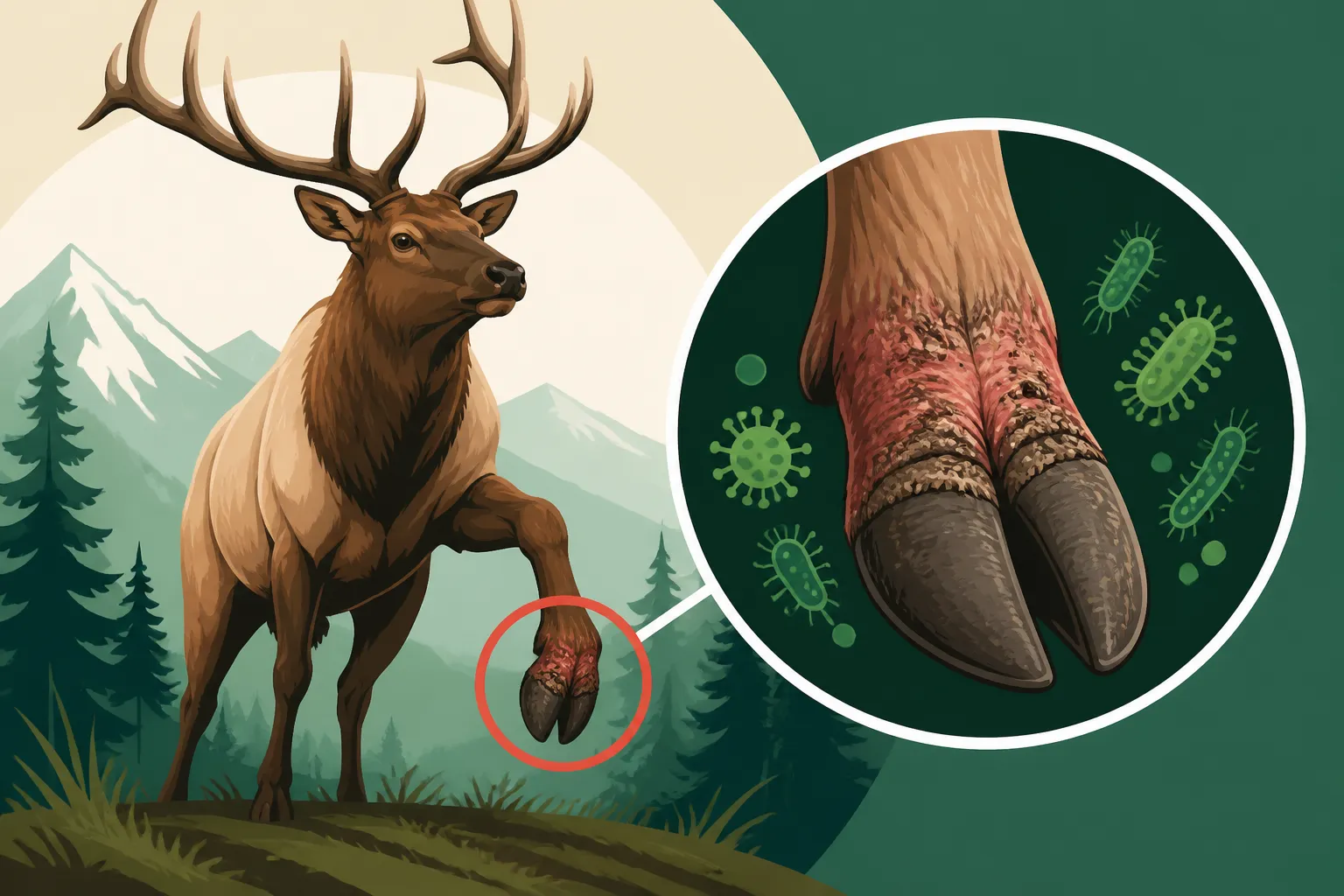
Imagine seeing an elk with hooves that look more like misshapen clubs than the clean, sharp implements they need for navigating rough terrain. That's often what TAHD presents as. The disease specifically targets the tissues of the hoof, causing them to become inflamed, eroded, and eventually deformed. You might notice an animal favoring a leg, or exhibiting an abnormal gait, often described as a "rocking horse" walk as they try to shift weight off their painful hooves.
The initial signs are subtle, perhaps just some slight redness or swelling around the coronary band – the area where the hair meets the hoof. But left unchecked, the condition progresses. The hoof walls can separate, allowing dirt and debris to enter, leading to secondary bacterial infections that smell quite foul. In severe cases, the entire hoof capsule can slough off, leaving the underlying bone exposed, which is excruciating and often fatal. Hunters are often the first to observe these symptoms, especially during seasons like Oregon Roosevelt Elk Rifle Seasons in November when more eyes are in the timber.
How TAHD Affects Elk Mobility and Survival
The impact of TAHD on an elk’s life is devastating. Their hooves are their primary interface with the world – essential for everything from foraging and escaping predators to breeding and navigating the steep, broken country that is typical elk habitat. When their hooves are compromised, all these vital functions become incredibly difficult, if not impossible. An elk suffering from TAHD will move slowly, struggle to climb or descend steep slopes, and find it hard to outrun a cougar or even a coyote. This makes them highly vulnerable to predation.
Furthermore, the constant pain and physical stress of the disease can weaken their immune system, making them more susceptible to other illnesses. Feeding becomes a chore, leading to weight loss and malnourishment, especially during harsh winters when every calorie counts. For cows, the stress can impact their ability to successfully carry a calf to term or produce enough milk, affecting Elk Calf Survival and Predation in Oregon. The overall health of the herd can decline, and in areas with high prevalence, the disease can seriously impact local Oregon Elk Herd Numbers by Region. It's a cascade of negative effects that underscores the seriousness of this disease.
The Microscopic Culprit: Treponema Bacteria
At the heart of TAHD is a group of spiral-shaped bacteria known as Treponema. These aren't just any bacteria; they're very similar to the bacteria that cause digital dermatitis in cattle, a painful hoof condition familiar to dairy farmers. The Treponema bacteria invade the sensitive tissues of the elk's hoof, causing inflammation and breakdown. It’s important to understand that it’s not just one type of Treponema at play, but usually a complex of different Treponema species working together, often with other opportunistic bacteria, to create the severe lesions we see.
The exact pathway of infection isn't fully understood for elk, but it's believed the bacteria enter through small abrasions or weakened areas in the hoof tissue, possibly exacerbated by environmental conditions. Once inside, they proliferate, causing the characteristic damage. Research into these specific bacteria has been a cornerstone of understanding Elk Hoof Disease in Western Oregon, trying to pinpoint how they establish themselves and what conditions allow them to thrive and spread within elk populations. This complex bacterial interaction makes finding a simple cure or prevention strategy incredibly challenging.
Environmental and Herd Factors Contributing to TAHD Spread
While the Treponema bacteria are the direct cause, it's the interplay of environmental conditions and elk herd dynamics that really fuels the spread and severity of TAHD. It's rarely just one factor, but a perfect storm of circumstances that allows this debilitating disease to take hold and persist in an area. Understanding these contributing elements is key to grasping why some regions are hit harder than others.
The Role of Wet, Soft Ground in Bacterial Transmission
Think about walking through perpetually wet, muddy ground. Your own feet would eventually soften and become vulnerable, right? The same principle applies to elk. Prolonged exposure to wet, soft ground is a significant factor in TAHD transmission. This environment not only softens the elk's hooves, making them more susceptible to injury and bacterial invasion, but it also creates ideal conditions for the Treponema bacteria to survive and be shed into the environment.
When an infected elk walks through a muddy wallow, a marshy meadow, or a stream crossing, it can shed bacteria. Another elk passing through the same area, especially if its hooves are softened and abraded, can then pick up the infection. This cycle is particularly problematic in the lush, wet forests of western Oregon, where conditions can remain damp for much of the year, creating persistent "hot zones" for disease transmission. Areas with heavy rainfall and poor drainage, common in regions where you find Roosevelt Elk in Western Oregon, are particularly vulnerable to this environmental contribution.
High Elk Densities and Disease Amplification
Just like any contagious disease, TAHD tends to spread more rapidly and persist longer in areas where elk densities are high. More elk in a smaller area means more opportunities for direct contact, and more importantly, more contaminated ground. Imagine a popular feeding ground or a well-used game trail; if one elk is infected, the likelihood of others picking up the bacteria increases dramatically with higher traffic.
When you have a large concentration of animals, they are constantly shedding bacteria into the environment, and others are constantly exposed. This "amplification" effect means that even if only a few animals are initially infected, the disease can quickly become endemic within the herd. This is why wildlife managers pay close attention to herd numbers and distribution when addressing disease concerns. Overpopulation, or even just localized concentrations of elk due to specific habitat features, can inadvertently create perfect conditions for TAHD to flourish.
Potential Co-factors and Stressors
TAHD isn't always a standalone issue; it often thrives when elk are already stressed or compromised by other factors. Think of it like this: a healthy elk might be able to fight off an initial bacterial exposure, but an elk that is already dealing with nutritional deficiencies, harsh weather, or other parasites might not be so lucky. Stressors reduce an animal's immune response, making them more vulnerable to infection and less able to recover.
These co-factors can include:
- Poor Nutrition: A lack of high-quality forage can weaken an elk, making it less resilient to disease.
- Harsh Winters: Extended periods of cold weather and deep snow require more energy, putting physiological stress on the animals.
- Other Diseases or Parasites: A concurrent infection or heavy parasite load can further compromise an elk's immune system.
- Predator Pressure: Constant vigilance against predators, like those found when Hunting Near a Wolf Pack Territory, can also be a chronic stressor that weakens an individual over time.
It's a complex web. For instance, a bull elk that expends significant energy during the rut and then faces a tough winter might be more susceptible to TAHD. Understanding these synergistic effects is crucial for developing holistic management strategies for elk health. GoHunt, with its mapping tools, allows hunters to identify potential stress points like high-traffic areas or limited forage, indirectly helping to understand where elk might be more vulnerable.
Oregon's Response to Elk Hoof Disease and Hunter Involvement
Here in Oregon, wildlife officials and researchers have been actively engaged in trying to understand and manage TAHD for years. It’s a challenging problem with no easy answers, but a lot of dedicated effort goes into monitoring, researching, and educating the public. As hunters and outdoor enthusiasts, we play a vital role in this ongoing effort.
ODFW's Monitoring and Research Efforts
The Oregon Department of Fish and Wildlife (ODFW) has been at the forefront of monitoring TAHD. They collect data from reported cases, conduct field surveys, and collaborate with veterinary labs to analyze affected hooves. This research aims to understand the prevalence, geographic spread, and specific bacterial strains involved. They are constantly looking for patterns – which herds are most affected, what environmental conditions coincide with outbreaks, and whether certain elk age classes or sexes are more vulnerable.
This extensive monitoring falls under broader Oregon Wildlife Disease Surveillance efforts. Researchers are exploring potential treatment options, though treating free-ranging wild animals is incredibly difficult, and largely impractical for a widespread disease. The focus often shifts to understanding how habitat management or herd density adjustments might mitigate the spread. They also study Oregon's 2026 Mule Deer Hunt Area Changes and similar large-scale shifts to see if changes in habitat use by one species might inadvertently affect others, or how disease might factor into future management decisions.
How Hunters Can Help: Reporting Sick Animals
One of the most important ways hunters and outdoor recreationists can contribute is by being the eyes and ears in the field. If you encounter an elk with signs of hoof disease – limping, overgrown, broken, or abnormal hooves – it's crucial to report it. ODFW relies heavily on these public reports to track the disease and understand its distribution.
Here’s how you can help:
- Document: If possible, take clear photos or videos of the affected elk, especially its hooves. Note the exact location (GPS coordinates are best), date, and time of the sighting.
- Observe: Note the animal’s behavior. Is it limping severely? Is it isolated from the herd? Does it appear emaciated?
- Report: Contact your local ODFW office or use their online reporting system. The more detailed your report, the more helpful it is. Reporting a Sick Animal to ODFW is an easy, direct action that makes a real difference.
Every report helps ODFW build a more complete picture of the disease's impact and spread across the state. Your observations can provide critical data points that wildlife biologists might not otherwise obtain.
Carcass Handling and Preventing Further Spread
If you are fortunate enough to harvest an elk, and upon field dressing you discover signs of hoof disease, it's natural to have questions. First, understand that TAHD primarily affects the hooves and lower legs; it doesn't generally pose a risk to human health through meat consumption. However, proper handling is still very important for preventing further environmental spread and ensuring the quality of your harvest.
Here are some guidelines:
- Inspect Carefully: Before and during field dressing, inspect the hooves. If they show severe signs of TAHD, consider what you will do with the lower leg portion.
- Minimize Environmental Contamination: Try to leave affected hooves and lower leg bones in the field, as close to the harvest site as legally allowed, to prevent transporting the bacteria to new areas. Never take diseased hooves home and then discard them elsewhere.
- Cleanliness is Key: Use gloves and thoroughly clean and disinfect all tools and boots after handling an affected animal. This includes your pack frame, knife, and anything else that came into contact with the carcass.
- Check Regulations: Always consult current ODFW regulations regarding carcass transport, especially in areas with known disease issues. There are often specific rules regarding CWD Carcass Transport Rules which, while for a different disease, highlight the importance of careful transport to prevent spread.
It's also a good idea to discuss any concerns with your meat processor. While the meat is generally safe to consume, ensuring proper hygiene throughout the butchering process is always paramount. Knowing the health of the animal you're taking home is part of being a responsible hunter. Services like GoHunt can provide updated regulatory information relevant to specific units, which can include disease-related guidelines if they are officially announced.
| Aspect | Description | Impact on Elk | Hunter's Role |
|---|---|---|---|
| Cause | Treponema bacteria, often with co-infectors. | Direct damage, inflammation, erosion, and deformation of hoof tissues. | Awareness, proper carcass handling. |
| Appearance | Overgrown, misshapen, sloughing hooves; visible lameness. | Severe pain, difficulty walking, foraging, and escaping predators. | Report sightings, document symptoms, provide location details. |
| Environmental Factor | Wet, muddy conditions. | Softens hooves, provides ideal environment for bacterial survival and transmission. | Be aware of high-risk areas; minimize tracking contaminated material to new zones. |
| Herd Factor | High elk densities. | Increases transmission rate, amplifies spread within the herd. | Understand local herd dynamics, support ODFW management efforts. |
| Overall Impact | Reduced mobility, increased predation risk, malnutrition, lower survival. | Weakens individual elk, can impact herd health and population numbers over time. | Participate in surveillance, practice responsible hunting and carcass disposal. |
Disclaimer
This article is for general informational purposes only and does not constitute professional advice. Laws, prices and regulations vary by location and change over time. Consult a qualified professional for guidance on your specific situation.