Edge Cover Blacktails Bed In
Blacktail deer bedding areas in Western Oregon transition zones provide security from predators through dense edge cover.
Close the distance.
Archery, muzzleloader, and firearm techniques — calling, stand placement, still-hunting, spot-and-stalk, and the weapon rules that change at the state line.
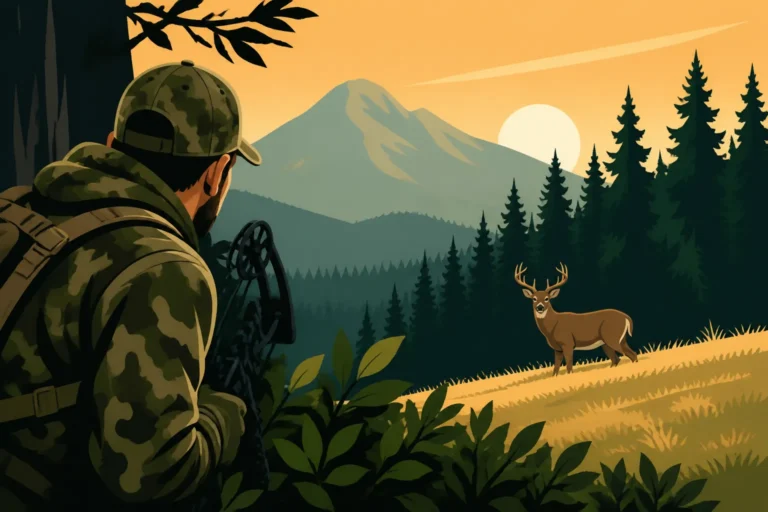
Blacktail deer bedding areas in Western Oregon transition zones provide security from predators through dense edge cover.
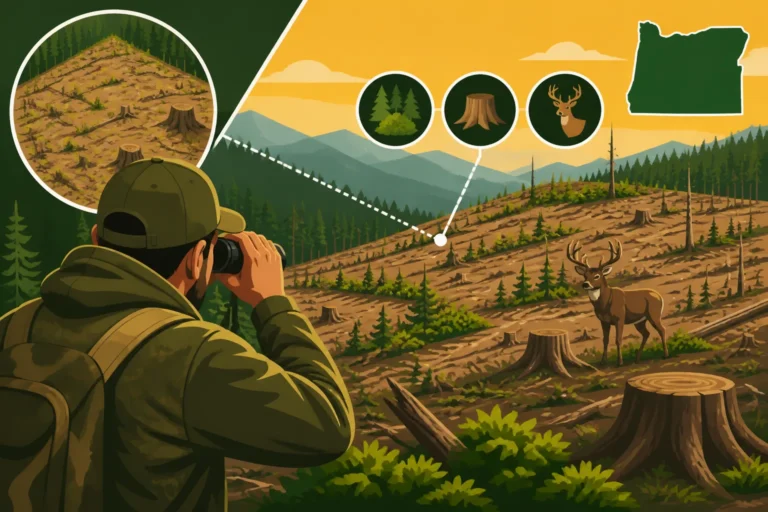
Blacktail deer hunting in Oregon coastal clearcuts explains buck behavior and how to read regenerating vegetation signs.
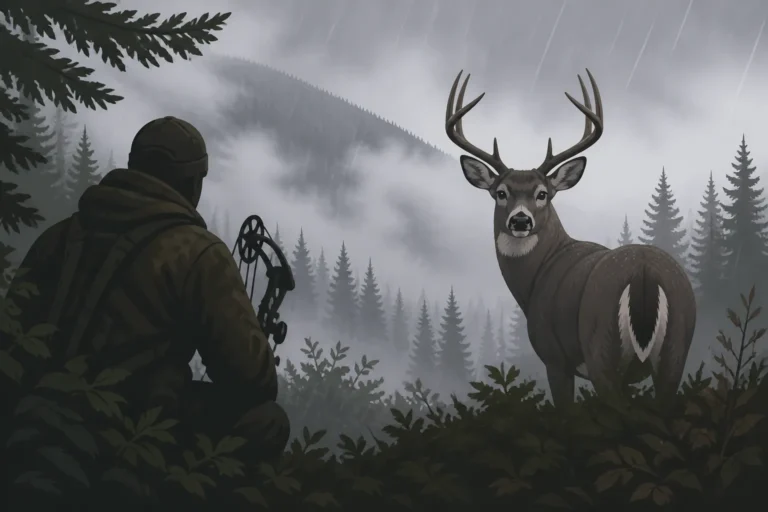
Oregon blacktail deer behavior in fog and drizzle, featuring proven strategies for locating deer in dense timber bedding areas.
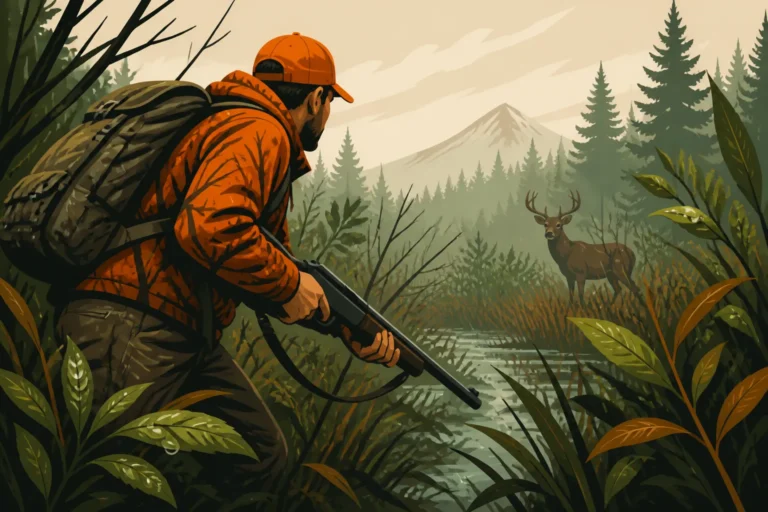
Oregon still-hunting speed in wet brush requires deliberate, slow movement to spot blacktail deer and Roosevelt elk before they hear footsteps.
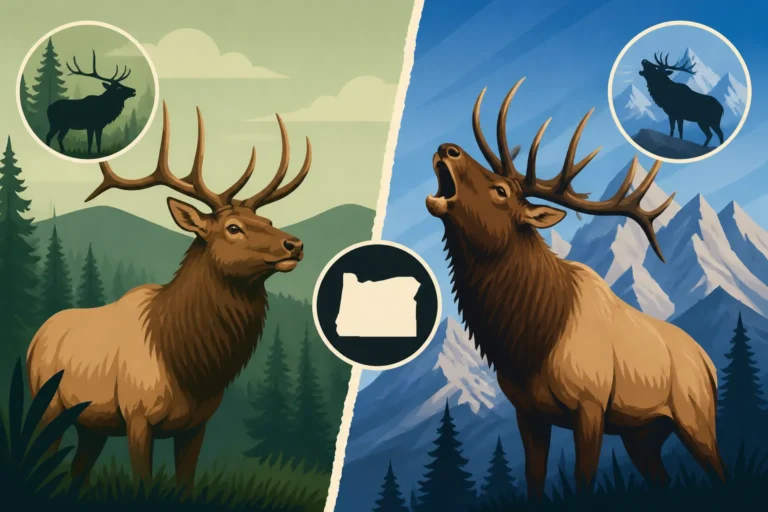
Roosevelt elk bugle less than Rocky Mountain elk because dense western Oregon rainforests absorb sound and limit travel.
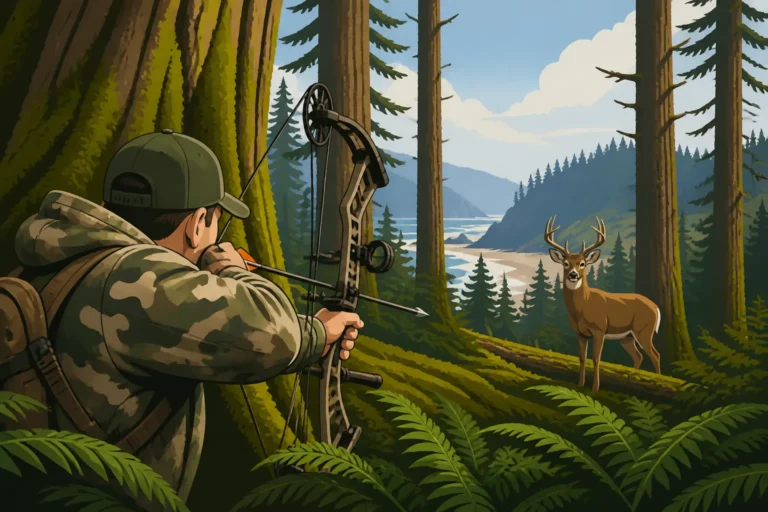
Oregon coastal timber hunting strategies explain how hunters can close the distance on Roosevelt elk and blacktail deer.
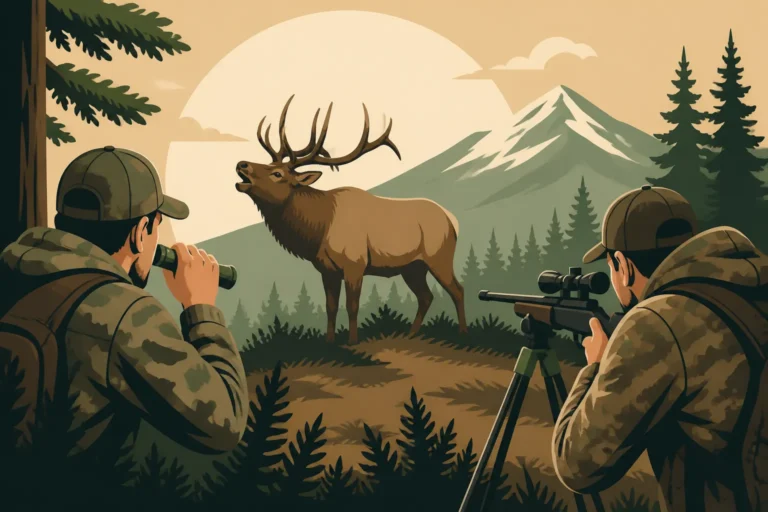
Oregon elk hunting teamwork strategies explain how a caller and a shooter divide labor to position a bull for a clean shot.

Aggressive cow calling techniques and estrus whines help hunters pull a stubborn herd bull away from his protective harem of cows.
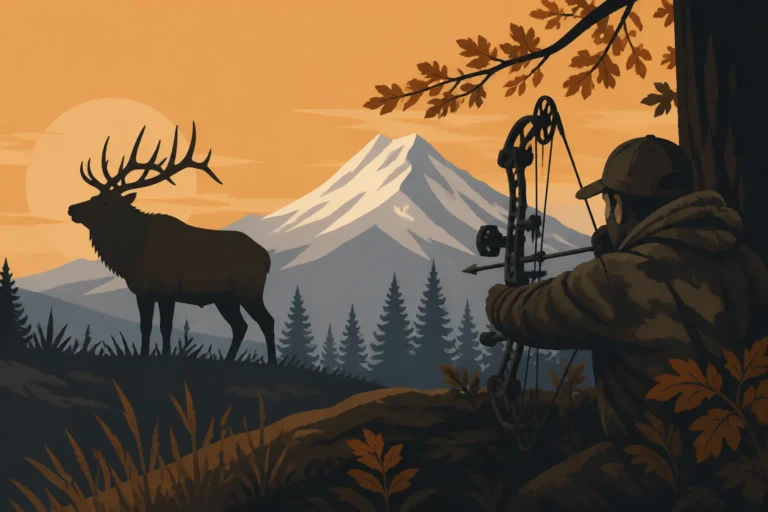
Oregon archery elk hunters learn why exhausted bulls go quiet in September and how adapting strategies brings late season success.
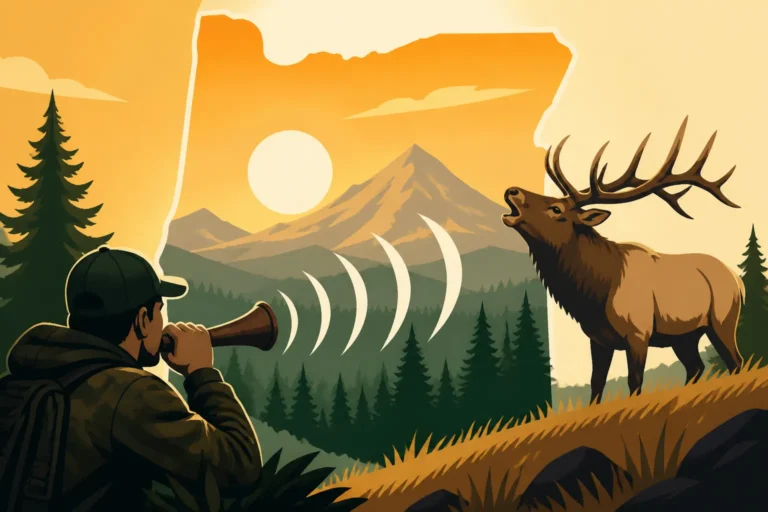
In early September bulls are shifting out of summer groups before the full rut, so archery hunters need calling tuned to that transitional behavior.