Summer Versus Winter Deer Distribution
Oregon deer distribution shifts between high summer ranges and lower winter ranges due to food availability and weather.
Know what you’re after.
Big game, small game, upland birds, and waterfowl — identification, behavior, rut and migration timing, and how each species moves through the season.
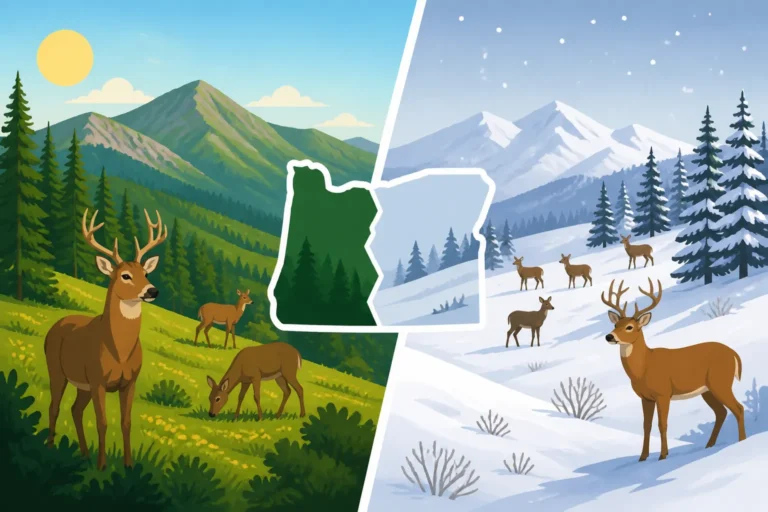
Oregon deer distribution shifts between high summer ranges and lower winter ranges due to food availability and weather.
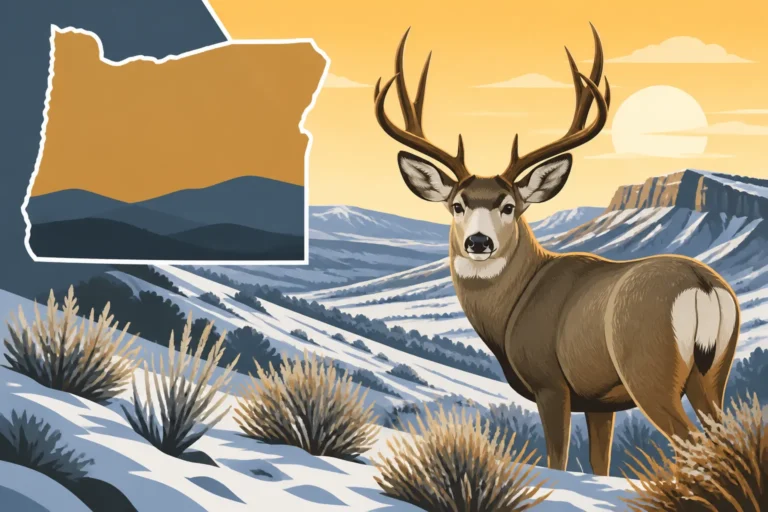
Eastern Oregon mule deer winter range characteristics, migration patterns, and weather impacts determine seasonal animal movements.
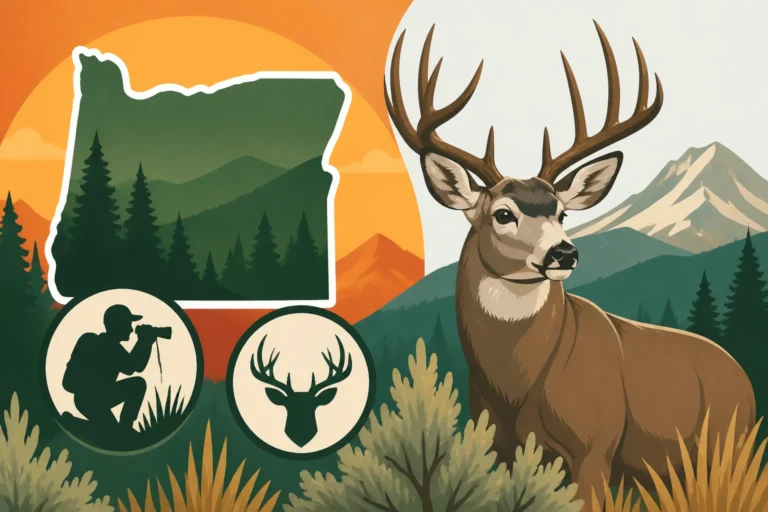
Oregon’s 2024 Mule Deer Plan explains population decline causes, including habitat loss, predators, and severe weather across the state.
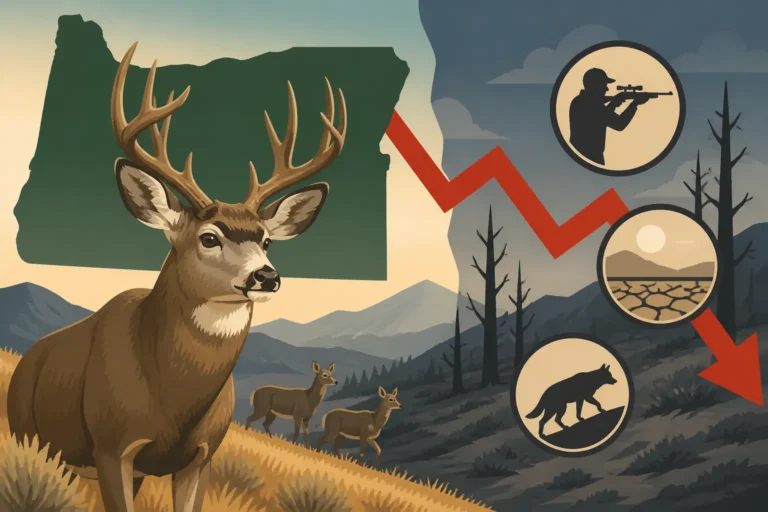
Oregon mule deer populations dropping from historical highs of 200,000 to 100,000 due to habitat loss and juniper forest encroachment.
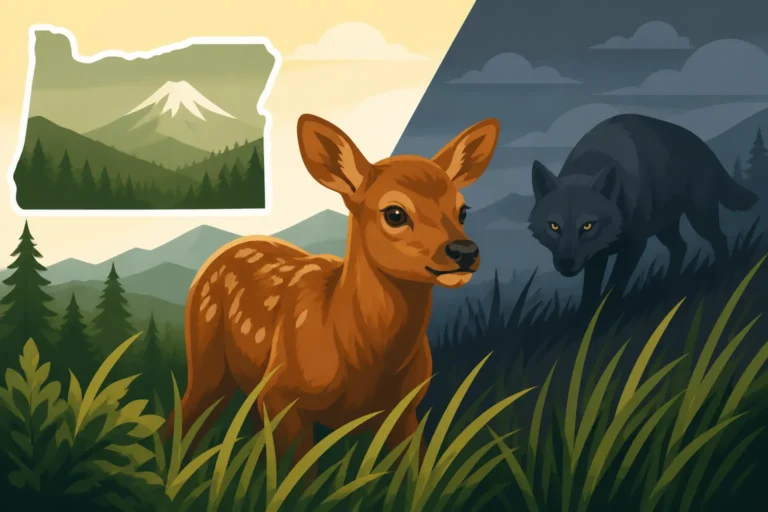
Oregon elk calf survival rates, birth timing, nutritional stress, and predation impacts in diverse western and eastern landscapes.
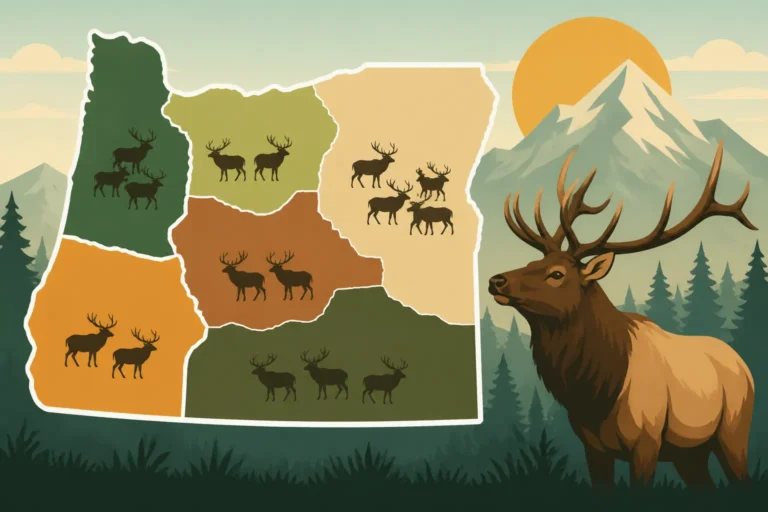
Oregon elk herd numbers by region and subspecies, including ODFW aerial surveys and Roosevelt elk populations in the Coast Range.
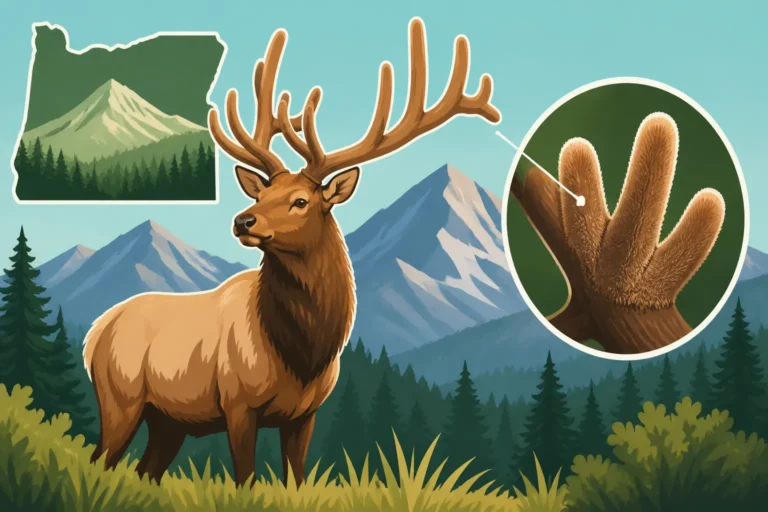
Rocky Mountain bull elk antler growth in Oregon relies on hormones, seasonal changes, nutrition, and mineral deposition.
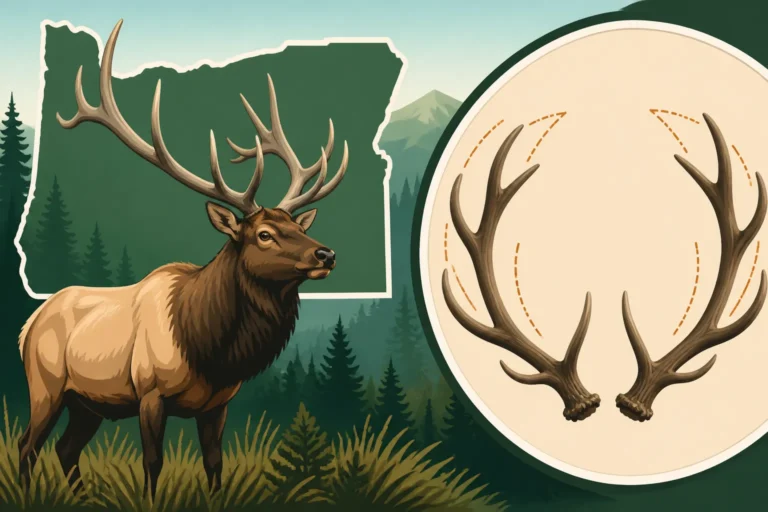
Roosevelt bull elk body mass reaching over one thousand pounds and distinctive antler shape help hunters identify massive animals in Oregon.
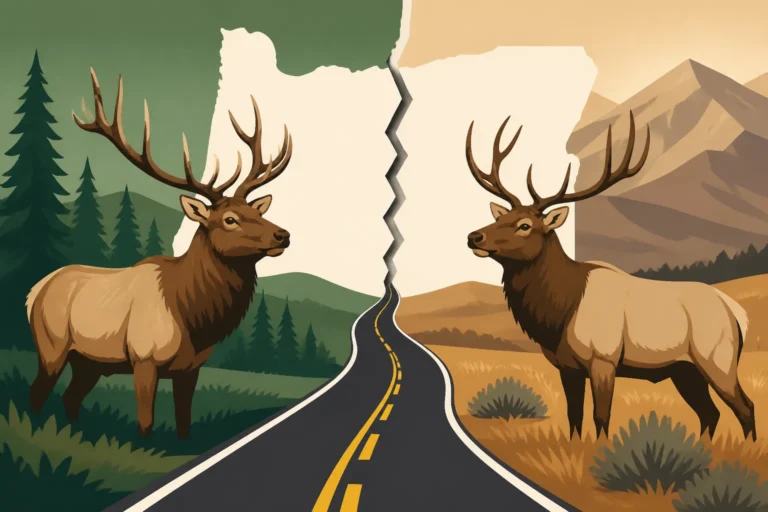
Highway 97 splits Oregon into two distinct elk subspecies territories, dividing western Roosevelt elk from eastern Rocky Mountain elk.
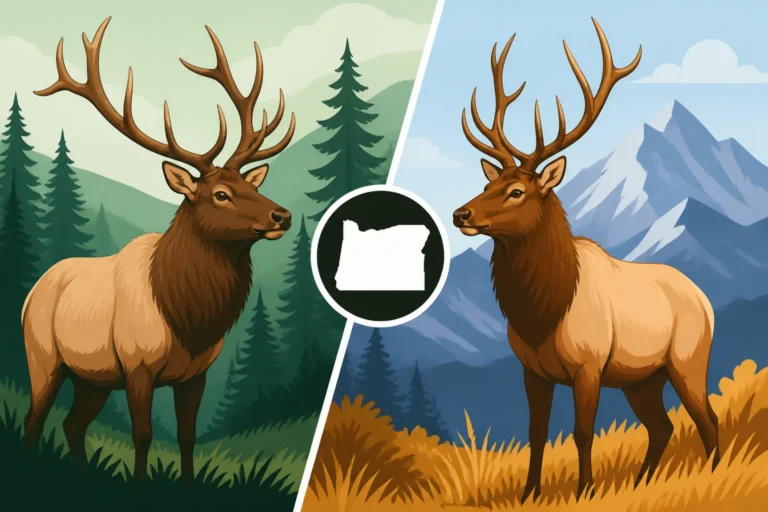
Oregon elk subspecies and their geographic divide along Highway 97 explain habitat differences between Roosevelt and Rocky Mountain herds.