Where Oregon Wolves Are Established
The return of wolves to Oregon has certainly been a topic of intense discussion and curiosity for many years, especially for those of us who spend time in the woods. Whether you're a hunter, a rancher, or just someone who enjoys Oregon's wild places, knowing where these apex predators are establishing territories is incredibly important for understanding our changing landscape and adapting our outdoor practices. This guide will walk you through the current distribution of wolf packs across the state, giving you a clearer picture of where they call home.
Understanding Oregon's Wolf Recovery
The journey of wolves back into Oregon is a fascinating story of natural dispersal and careful management, one that has unfolded over decades. It's not a sudden event, but rather a gradual re-establishment of a species that was once completely eradicated from the landscape. For many generations, the idea of a wild wolf pack roaming Oregon’s forests was simply a distant memory, a chapter in history books. Now, it's a living, breathing reality, impacting everything from local ecosystems to the strategies of big game hunters.
A Brief History of Wolf Reintroduction and Natural Return
Wolves, specifically the gray wolf (Canis lupus), were once native to Oregon but were systematically hunted, trapped, and poisoned to extinction in the state by the mid-20th century. The last known wolf in Oregon was killed in 1947. For over half a century, the wilderness was silent of their howls. However, that began to change in the early 2000s. The reintroduction of wolves into central Idaho and Yellowstone National Park in the mid-1990s was a critical turning point. As those populations grew, individual wolves naturally began to disperse, seeking new territories. It was these dispersing wolves that eventually found their way back into Oregon. The first confirmed breeding pair, the Imnaha Pack, was identified in Wallowa County in 2008, marking a monumental milestone in Oregon's conservation history. This wasn't a reintroduction effort by Oregon itself, but rather a natural recolonization from neighboring states, highlighting the resilience of these animals and the interconnectedness of landscapes across the West.
The Oregon Wolf Management Plan
With wolves returning, the state recognized the need for a comprehensive framework to manage their presence. This led to the development and evolution of the Oregon Wolf Management Plan. This isn't just a static document; it's a dynamic strategy that aims to balance wolf conservation with the social and economic needs of rural communities, particularly livestock producers and hunters. The plan outlines a phased approach to wolf management, with different rules and actions applied as the wolf population grows and spreads. For instance, in the early phases, the emphasis is heavily on conservation and protection, with strict rules against any lethal take. As the population expands and reaches certain metrics, the management strategies shift to allow for more flexibility, including provisions for addressing conflicts with livestock through non-lethal methods and, as a last resort, lethal removal of problem wolves under very specific circumstances. This phased approach acknowledges that coexistence is a journey, not a destination, requiring ongoing adaptation and community engagement. The plan also delineates different management zones, which play a crucial role in how wolf activity is monitored and managed across the state.
Geographic Distribution: Where Wolves Call Home
When we talk about where Oregon wolves are established, we're really talking about a dynamic map, constantly shifting as packs grow, disperse, and establish new territories. While wolves are slowly spreading throughout the state, their strongholds remain primarily in specific regions. Understanding these areas is key for anyone who spends time in Oregon's forests and rangelands. It’s not just about knowing that they’re here, but where and why those areas are favored.
Eastern Oregon: The Cradle of Wolf Re-establishment
Eastern Oregon has truly been the epicenter of wolf recovery in the state. The vast, rugged landscapes of the Blue Mountains and Wallowa Mountains provided the ideal initial habitat for dispersing wolves from Idaho. These areas offer everything a wolf pack needs: expansive wilderness, sparse human population density, and, most importantly, abundant prey.
The Wallowa-Whitman National Forest and surrounding private lands in northeastern Oregon, particularly around Wallowa County, were home to the first established packs like the Imnaha. This region continues to be a core area of wolf activity, with multiple packs and breeding pairs. Hunters pursuing Rocky Mountain Elk in Eastern Oregon or Oregon Mule Deer and the Herd Range Decline in units like Imnaha, Wenaha, or Sled Springs are highly likely to encounter wolf sign or even glimpse a wolf. Further south, into the Starkey Experimental Forest and other parts of the Blue Mountains, pack territories have also become well-established, such as the Wenaha and Walla Walla packs. These areas are characterized by vast timber, deep canyons, and remote country that provides both cover and ample game. The high desert regions, while seemingly less hospitable, also host packs, particularly in areas with good cover and reliable water sources, making places like the southern Malheur National Forest important wolf habitat. When you’re planning a hunt in these eastern units, especially using tools like GoHunt to scout public lands, it’s wise to factor in potential wolf presence and its effects on game animal behavior.
Western Oregon's Expanding Territories
While Eastern Oregon saw the initial wave of wolf re-establishment, the story of Western Oregon is one of slower but steady expansion. The physical barrier of the Cascade Range, coupled with higher human population density and different habitat characteristics, initially slowed the westward movement. However, wolves are adaptable, and the Cascade Mountains now host several established packs.
These packs, such as the Rogue Pack in the southwest Cascades or the Indigo Pack, signify the wolf's gradual push across the state. This expansion means that hunters targeting Roosevelt Elk in Western Oregon or Columbian Blacktail Deer of Western Oregon in units like Rogue, Indigo, or McKenzie might increasingly find themselves in areas where wolves roam. The dense, wet timber of the Cascades offers different challenges and opportunities for wolves compared to the more open country of the east. While the number of established packs in Western Oregon is still significantly lower than in the east, the trend is clearly towards continued expansion. Dispersing individuals are constantly seeking out new, unoccupied territories, and it's only a matter of time before more established packs solidify their presence across the entire Cascade range and potentially even further west into the Coast Range foothills where Oregon Black Bears in the Coast Range and Cascades and Cougars in Oregon After the Hound Ban are already prevalent predators.
Key Indicators of Wolf Presence
So, how do you know if you're in an established wolf territory? Beyond looking at maps, there are tangible signs on the ground. Tracks are often the most obvious indicator. Wolf tracks are typically larger than those of coyotes or even large domestic dogs, often measuring 4-5 inches long, and they tend to follow a straighter line. Scat, often containing hair and bone fragments of their prey, is another strong indicator, especially if found on game trails or at trail intersections.
Howling is perhaps the most iconic sign, though hearing it can be rare and often occurs at dawn or dusk. Unfortunately, a less pleasant but undeniable sign can be a cached carcass or the remains of a fresh kill. Wolves are efficient predators, and while they may move on, they often return to kills or leave characteristic signs of their feeding. For hunters, understanding how game animals react is also crucial. Elk and deer in wolf country can be warier, more scattered, and more prone to moving between bedding and feeding areas quickly. Tools available through platforms like GoHunt that allow you to layer public land maps with reported wolf sightings or pack territories can offer a significant advantage in identifying areas with a higher likelihood of wolf presence. Paying attention to news reports from the Oregon Department of Fish and Wildlife (ODFW) regarding new pack confirmations or dispersal events is also essential for staying informed.
Wolf Management Zones and Their Significance
Oregon's approach to wolf management isn't a one-size-fits-all model. Recognizing the varying ecological and social landscapes across the state, the Oregon Wolf Management Plan divides the state into distinct zones. These zones dictate different strategies and protocols for how wolves are managed, especially concerning conflicts with human activities like ranching. For anyone living or recreating in Oregon, especially hunters and landowners, understanding these zones is critical to comprehending current wolf management actions.
Wolf Management Zones Explained
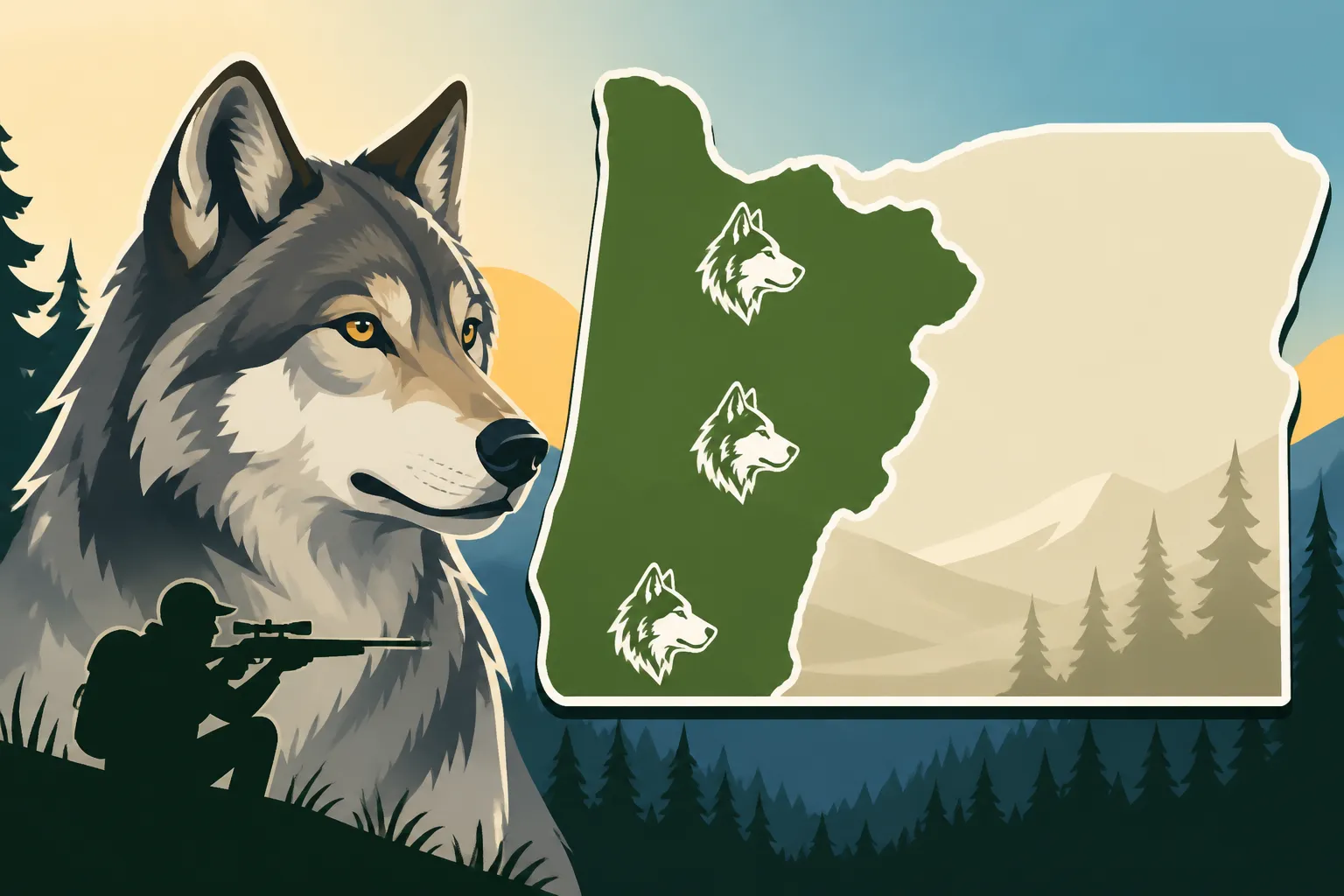
The primary distinction in Oregon's wolf management is between the "East Zone" and the "West Zone," broadly divided by Highway 97 running north-south through the state. The East Zone, encompassing much of Eastern Oregon, is where most of Oregon's established wolf packs reside and where the population has reached more significant recovery metrics. Consequently, the management strategies in the East Zone are more flexible, allowing for increased intervention in chronic livestock depredation cases after extensive non-lethal deterrents have been exhausted. This might include lethal removal options under strict ODFW oversight, though it's always a measure of last resort.
In contrast, the West Zone, covering the Cascade Mountains and Western Oregon, is currently in an earlier phase of wolf recovery. Pack establishment here is more recent and less widespread, leading to a stronger emphasis on wolf conservation and protection. Lethal removal of wolves in the West Zone is extremely rare and only considered under the most severe and documented cases of depredation after all other non-lethal avenues have been exhausted without success. For hunters, knowing which zone you are in impacts not just how wolves are managed, but also how you might observe game behavior. The presence of wolves can undoubtedly influence Elk Behavior After a Wildfire or Mule Deer Fawn Recruitment Rates, prompting game animals to be more vigilant and move differently than in areas without apex predators. Staying updated on ODFW maps, which can often be cross-referenced with your Oregon's Wildlife Management Units and New Hunt Areas and Eastern Oregon Hunting Units and Access data through a platform like GoHunt, is invaluable for understanding the specific regulations and active pack territories in your hunting area.
Impact on Hunting and Wildlife
The return of wolves undeniably impacts wildlife dynamics, and consequently, hunting strategies. Wolves are natural predators of elk and deer, and their presence can alter how these prey species utilize the landscape. Hunters often report that elk and deer in wolf country can become more dispersed, more wary, and more prone to using dense cover or rugged terrain to avoid predation. This means a shift in tactics from hunting in areas without significant wolf pressure.
For example, traditional calling setups for elk might need to be adjusted, as elk might be more hesitant to respond if they perceive a predator nearby. Calling Bull Elk During Oregon's Archery Season or using Cow Calling Versus Bugling in Heavy Timber could require more subtle approaches or different timing. You might find elk moving more frequently or holding tighter to thick timber, making them harder to spot-and-stalk. Deer might similarly become less predictable, moving through different drainages and staying in thicker cover during daylight hours. This doesn't necessarily mean fewer hunting opportunities, but rather a need for hunters to adapt. It encourages more focused scouting, deeper penetration into wilderness areas like those in Oregon's Travel Management Areas Explained or Oregon's Hells Canyon Wilderness Trailheads, and a keen eye for subtle changes in game behavior. Understanding these dynamics is crucial, and tools like the mapping features on GoHunt can help you overlay wolf pack territories with habitat maps to better plan your hunting strategy, considering how wolf activity might influence game movement.
Factors Influencing Wolf Establishment and Movement
The spread and establishment of wolf packs in Oregon isn't random. It's a complex interplay of environmental factors, prey availability, and human interactions. Understanding these influences can offer valuable insight into where new packs might emerge and how existing ones behave, providing a more complete picture of "Where Oregon Wolves Are Established."
Habitat and Prey Availability
At the heart of wolf establishment is the availability of suitable habitat and a robust prey base. Wolves are carnivores, and their survival hinges on access to ungulates like elk and deer. Areas with healthy populations of these animals, combined with large tracts of undeveloped, wild country, are prime candidates for wolf colonization. The extensive national forests and BLM lands in Eastern Oregon, with their thriving herds of Rocky Mountain Elk in Eastern Oregon and Oregon Mule Deer and the Herd Range Decline, provided the initial perfect conditions. These vast areas offer not just food, but also the solitude and secure denning sites wolves require to successfully raise pups.
The ruggedness of the terrain also plays a significant role. Steep canyons, dense timber, and remote mountain ranges offer excellent cover for wolves to hunt, travel, and avoid human disturbance. This is why you see continued establishment in places like the Blue Mountains and the Cascades – areas that provide both the necessary cover and the prey. As wolves expand into Western Oregon, they are seeking out similar characteristics, albeit with the dominant prey shifting to Roosevelt Elk in Western Oregon and Columbian Blacktail Deer of Western Oregon. The ongoing health of these prey populations is directly linked to the potential for further wolf expansion and the long-term viability of established packs. Hunters often utilize detailed maps from sources such as GoHunt to identify prime big game habitat, and these same indicators can often point to potential wolf activity.
Human Presence and Conflict Avoidance
Wolves are incredibly intelligent and, for the most part, tend to avoid humans. Their establishment patterns often reflect this avoidance. They thrive in areas with minimal road density, low human population numbers, and limited livestock grazing. This is why the first packs formed in the most remote corners of Eastern Oregon, far from major population centers and intensive agricultural operations. However, as populations grow and young wolves disperse, they inevitably encounter human-dominated landscapes, leading to potential conflicts.
The Oregon Wolf Management Plan is largely designed to mitigate these conflicts, particularly those involving livestock depredation. Ranchers in wolf country employ various non-lethal deterrents, from range riders and guard dogs to fladry and specialized fencing, to protect their herds. These efforts are crucial for fostering coexistence and preventing situations that could lead to lethal control actions. For hunters, knowing that wolves generally avoid high-traffic areas means that if you're seeking wolves, you're likely heading into more remote, challenging terrain. Conversely, if you're trying to hunt game that might be displaced by wolves, understanding areas of higher wolf density can help you anticipate where game animals might seek refuge from predation pressure.
Dispersal Patterns
The expansion of Oregon's wolf population isn't solely driven by existing packs growing within their territories; a significant part of it comes from dispersal. As young wolves reach maturity, typically around one to two years old, they often leave their natal pack to seek out new territories, find a mate, and establish their own breeding pair. This natural behavior is what has allowed wolves to gradually spread from their initial strongholds in Eastern Oregon across the state. These dispersing wolves can travel hundreds of miles, covering vast distances and crossing diverse landscapes, including significant mountain ranges and even agricultural areas, often unnoticed.
This dispersal is why packs eventually appeared in the Cascades, far from the Wallowas. A lone wolf might travel for months, searching for unoccupied habitat and a mate. When two dispersing wolves meet in a suitable area, they can form a new pair, establish a territory, and begin a new pack. This ongoing process means that the map of "where Oregon wolves are established" is constantly evolving. A unit that had no confirmed pack activity last year might have a new breeding pair this year. Staying current with ODFW reports, which detail new pack confirmations and wolf sightings, is essential for any outdoor enthusiast. Programs like Oregon Wildlife Disease Surveillance also help monitor the health of the wolf population, which is crucial for understanding these dispersal and establishment trends. The dynamics of Predator Prey Balance in Oregon Units are always shifting, and the constant movement and establishment of wolves is a prime example of this natural evolution.
Wolf Distribution Across Oregon
To give you a clearer snapshot of where Oregon's wolves are most active, here’s a table summarizing key characteristics of wolf presence in the East and West zones. This provides a general overview, but always remember that wolf activity is dynamic and can change rapidly.
| Characteristic | Eastern Oregon (East Zone) | Western Oregon (West Zone) |
|---|---|---|
| Primary Establishment | Initial and more robust pack formation | Slower, more recent, and scattered establishment |
| Core Habitats | Wallowa & Blue Mountains, NE Oregon high desert | Cascade Range (e.g., Rogue, Indigo areas) |
| Dominant Prey | Rocky Mountain Elk, Mule Deer | Roosevelt Elk, Blacktail Deer |
| Pack Density | Higher, more concentrated packs | Lower, more solitary individuals or nascent packs |
| Management Focus | Coexistence, conflict resolution (lethal options under strict criteria for depredation) | Conservation, non-lethal deterrents (lethal options extremely rare and tightly controlled) |
| Typical Pack Names | Imnaha, Wenaha, Walla Walla, Desolation, Heppner | Rogue, Indigo, Gearhart Mountain, White River |
| Long-Term Trend | Continued growth and dispersal | Gradual expansion and establishment |
This information helps frame the current situation, but for the most up-to-date details, consulting ODFW's official wolf program pages and engaging with resources like those found on GoHunt is always recommended. Keeping an eye on annual reports and press releases will provide the most current understanding of Oregon Wolf Pack Numbers and their specific locations.
Disclaimer
This article is for general informational purposes only and does not constitute professional advice. Laws, prices and regulations vary by location and change over time. Consult a qualified professional for guidance on your specific situation.