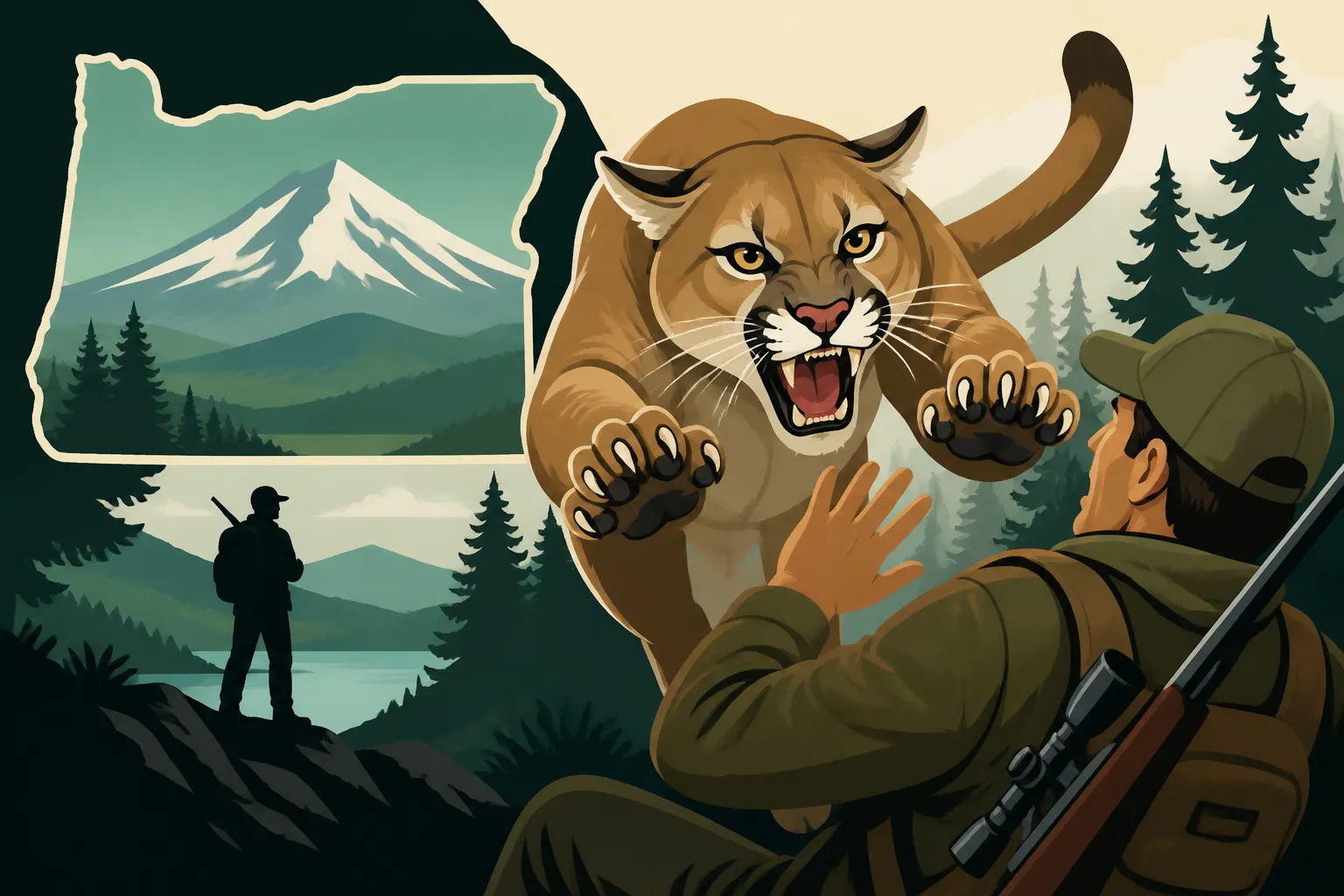
Cougar Attacks on People in Oregon
The thought of a cougar attack is, for many of us who spend time in Oregon's wild places, a deep-seated, primal fear. We know they're out there, silent and elusive, sharing our hunting grounds and hiking trails. While actual attacks on people are incredibly rare, the possibility lingers, creating a natural anxiety that can affect how we feel about venturing into dense timber or quiet canyons. This guide is here to shed some light on the reality of cougar encounters, help you understand their behavior, and equip you with practical strategies to prevent incidents and respond effectively if the unthinkable happens.
Understanding Cougar Behavior and Why Attacks Happen
Cougars, also known as mountain lions or pumas, are apex predators—powerful, intelligent, and highly adapted to their environments. They are generally shy and reclusive, preferring to avoid human contact. Most of the time, when we're walking through the Oregon woods, a cougar probably knows we're there long before we ever catch a glimpse of them, and they've already moved on. However, understanding their natural instincts can help us grasp why the rare attack might occur.
Natural Predatory Instincts and Prey Drive
Cougars are natural hunters, designed to stalk, ambush, and kill their prey. Their primary diet consists of deer, particularly mule deer and blacktail deer, but they will also pursue elk, smaller mammals, and even domestic livestock if the opportunity arises. This inherent predatory drive means they are constantly assessing their surroundings for potential meals. When a cougar does attack a human, it's often because they've misidentified the person as prey, or less commonly, because they feel threatened. This can happen particularly with children or individuals who appear small or are crouching, mimicking the behavior of a natural prey animal.
Think about a time you've been still-hunting in dense brush; you're moving slowly, perhaps stopping to glass, maybe even wearing earth-toned clothing. To a cougar, these actions could, in very rare circumstances, trigger their predatory response. It's not maliciousness; it's instinct. It’s important to remember that they aren't looking for a fight, but rather an easy meal, which is why understanding their hunting patterns, detailed in resources like Cougar Territory Size and Movement, can give you a better grasp of where and when they might be actively seeking food.
Habituation and Other Contributing Factors
While rare, cougars can become habituated to humans, especially if they regularly encounter people who leave food out or don't deter their presence. This can slowly erode their natural fear, making them bolder. A cougar that has lost its fear of humans is a far greater concern than a wild, unhabituated one. Other factors can contribute to an increased risk of encounter, such as declining natural prey populations, which might push a cougar to seek food in areas closer to human activity.
Young, inexperienced cougars, recently driven from their mother's territory, might also be more prone to taking risks or making mistakes in identifying prey. They're trying to establish their own hunting grounds and can be less cautious. While Oregon has a healthy Oregon Cougar Population Estimates, their numbers are managed to help reduce conflicts and maintain a balance within the ecosystem, but individual circumstances can always arise.
The Rarity and Reality of Cougar Attacks in Oregon
Let's get this straight: actual cougar attacks on people in Oregon are extremely rare. The odds of being attacked by a cougar are far lower than being struck by lightning, getting into a car accident on the way to your hunting spot, or even being injured by falling while hiking. However, because the consequences can be so severe, these incidents capture our attention and imagination.
The Low Incidence of Attacks
Over decades, the number of documented cougar attacks in Oregon can be counted on one or two hands. Most encounters are non-aggressive, with the cougar quickly retreating. The majority of conflicts involve domestic animals or livestock, which are much more common targets. This low incidence rate is a testament to the cougar's inherent avoidance of humans.
For example, a hunter spending weeks in the woods, or a trail runner hitting their favorite routes every day, will likely never see a cougar, let alone be involved in an encounter. That sense of unease we feel is often more about the unknown and the power of the animal than a realistic assessment of danger. However, being informed is key to maintaining both safety and peace of mind. Hunters, who spend more time in dense cougar habitat, often pick up on signs like Finding Cougar Tracks Without Hounds or kill sites, indicating presence, but rarely aggression towards people.
Factors in Documented Incidents
When attacks do happen, they often share certain characteristics. Children are disproportionately represented among victims, likely due to their smaller size and erratic movements which can mimic prey. Individuals who are alone, or those who turn and run, also present themselves as more vulnerable. The location often plays a role too, with many incidents occurring in areas where human development encroaches on wildlands, or in very remote backcountry where cougars are less accustomed to human presence.
It's not about being afraid to go into the woods, but about being smart and prepared. Knowing Why Oregon Cougar Hunters Cannot Use Hounds can also give you a glimpse into the behavior and challenges of locating these animals, further reinforcing their elusive nature and the rarity of direct confrontation.
How to Prevent a Cougar Encounter and Stay Safe
Prevention is always the best strategy when sharing the landscape with cougars. Many of these tips are just good general wilderness practices, but they are especially relevant in cougar country.
Traveling in Cougar Habitat
When you're out hiking, camping, or hunting in areas known to have cougars—which is essentially all of Oregon's wildlands—it's wise to take precautions. One of the simplest and most effective is to travel in groups. A group of people appears larger and less like prey. Make noise as you go; talk, sing, or carry a bell. This allows wildlife to hear you coming and gives them time to move away.
Avoid walking alone during dawn, dusk, and nighttime hours, as these are peak hunting times for cougars. If you're a hunter, getting to your stand before light or packing out after dark might be necessary, but be extra vigilant. Consider carrying a bright headlamp and making more noise than usual. Familiarize yourself with areas that hold higher cougar densities through resources like GoHunt's mapping tools, which can overlay habitat data, giving you a strategic advantage in knowing where to be most cautious.
Protecting Your Camp and Pets
If you're camping, whether it's a multi-day backcountry camp or a front-country campsite, secure your food and refuse. Never leave food scraps or garbage lying around. This attracts small animals, which in turn can attract larger predators like cougars. Store food in bear-resistant containers, hung from trees, or in your vehicle.
Keep your pets on a leash or safely confined in camp. A free-roaming dog, particularly a smaller one, can inadvertently lead a cougar back to your camp if it tries to chase or harass the cat. Remember that cats are opportunists; a barking dog might seem like a challenge, but a fleeing one looks like an easy meal. If you're planning on Multi-Day Camps in Oregon's Roadless Country, these precautions become even more critical due to the remoteness.
What to Do If You Encounter a Cougar
Even with all the precautions, an encounter can still happen. The most important thing is to remain calm and react appropriately. Your actions can significantly influence the outcome.
Initial Encounter: Stand Your Ground
If you see a cougar, especially one that doesn't immediately flee, your first instinct might be to run. Resist it. Running can trigger a cougar's chase instinct, turning you into perceived prey. Instead, face the animal, stand tall, and make yourself look as large as possible. Hold children or pets close.
Speak firmly and loudly. Shout, wave your arms, throw rocks or sticks. The goal is to convince the cougar that you are not prey and that you are a potential threat. Maintain eye contact. Slowly back away if you can, creating distance without turning your back or running. This is a critical moment where your behavior can dictate the outcome, much like learning how to respond when a bull goes quiet in When Bulls Go Quiet in Late Archery Season.
Defensive Actions During an Attack
In the extremely rare event that a cougar does attack, fight back with everything you have. Do not play dead. Protect your head and neck. Use any available object as a weapon—a knife, trekking poles, rocks, or even your bare hands. Kick, punch, and scream. Your goal is to convince the cougar that you are a formidable and dangerous opponent.
This is a life-or-death situation, and aggressive resistance is your best chance of survival. Remember, these animals are usually looking for an easy kill; if you prove to be too much effort, they will often retreat. After the attack, seek immediate medical attention, no matter how minor the injuries seem, and report the incident to authorities.
Post-Encounter and Reporting
Even if an encounter doesn't lead to an attack, report any aggressive or unusual cougar behavior to the Oregon Department of Fish and Wildlife (ODFW). This helps wildlife managers monitor populations, identify potential problem areas, and take appropriate action if a cougar becomes a danger to public safety. Your report contributes to a broader understanding of Cougar Population Estimates and helps ensure safety for everyone enjoying Oregon's outdoors.
| Scenario | What to DO | What NOT to DO |
|---|---|---|
| Preventing Encounters | Travel in groups, make noise, secure food, keep pets leashed | Walk alone at dawn/dusk, leave food out, let pets roam |
| If You See a Cougar | Stand tall, make noise, wave arms, maintain eye contact, slowly back away | Run away, crouch down, turn your back, approach the animal |
| During an Attack | Fight back aggressively, protect head/neck, use available weapons, scream | Play dead, surrender, curl into a ball |
| After Any Encounter | Seek medical attention if injured, report to ODFW | Keep it to yourself, ignore injuries |
Always remember that sharing the landscape with wildlife, especially predators like cougars, means taking responsibility for your own safety and understanding their world. Resources like GoHunt can provide excellent mapping and unit-specific information that can help you understand the terrain you're entering, improving your overall awareness. This knowledge empowers you to explore Oregon's incredible hunting and recreational opportunities with confidence, respecting the wildlife that calls it home.
Disclaimer
This article is for general informational purposes only and does not constitute professional advice. Laws, prices and regulations vary by location and change over time. Consult a qualified professional for guidance on your specific situation.