Mule Deer Migration Corridors in Oregon
The challenge of consistently finding mule deer in Oregon often boils down to understanding their elusive movements, especially when they're on the move between their seasonal ranges. It's a frustrating dance trying to predict where they'll be, and many hunters feel like they're always a step behind. This guide will pull back the curtain on mule deer migration corridors in Oregon, giving you the insights and strategies to anticipate their travel and put yourself in a better position for a successful hunt.
Understanding Oregon's Mule Deer Migration Patterns
Mule deer in Oregon are creatures of habit, driven by the changing seasons and the availability of food and shelter. While their exact routes can shift due to weather or disturbance, the underlying patterns of their migration are surprisingly consistent year after year. It's not just a random stroll; it's a critical annual journey between wintering grounds and summer ranges, and understanding this rhythm is key to becoming a more effective hunter.
The Seasonal Dance of Eastern Oregon Mule Deer
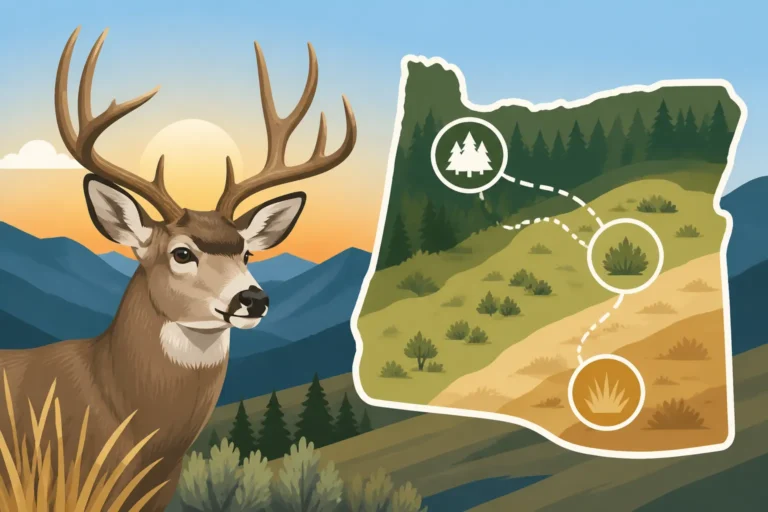
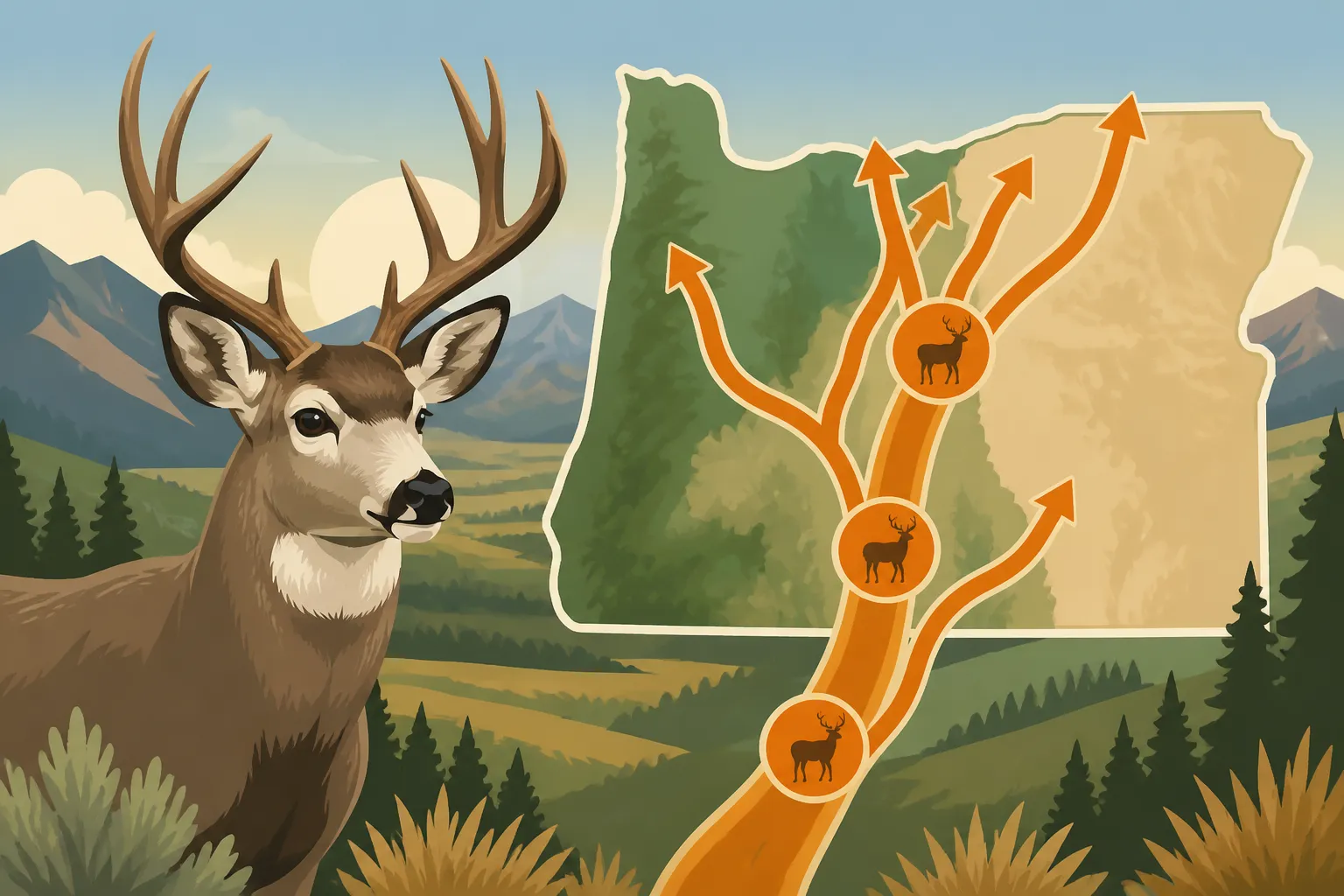
Eastern Oregon, with its vast sagebrush plains, juniper breaks, and scattered timber, is the primary stage for mule deer migration. As the high country, their summer range, begins to cool and receive its first dusting of snow, mule deer instinctively begin their descent to lower elevations. This movement isn't a sudden rush; it often happens in stages, with deer pausing in "stopover" habitats that offer temporary food and security. These stopover areas are absolutely crucial to identify, as they can hold deer for days or even weeks before the next push. The timing is influenced heavily by environmental cues—the first hard freeze, significant snowfall that covers forage, or persistent cold temperatures.
In spring, the cycle reverses. As snow melts in the high country and new green growth emerges, the deer start their upward trek. This spring migration is often less concentrated and more leisurely, as they spread out to take advantage of new feed. Knowing these broad seasonal movements is just the first step; the real challenge, and the real opportunity, lies in understanding the specific corridors they use. If you're looking to dive deeper into the overarching trends, checking out resources like "Why Oregon Mule Deer Numbers Are Falling" can give you a broader context on herd health and factors impacting these populations.
Factors Influencing Migration Routes
While instinct plays a huge role, a variety of factors can influence the specific routes mule deer choose and the timing of their migrations. Weather, particularly snow depth and duration, is a primary driver. A mild winter might see deer lingering longer on higher ground, while an early, heavy snowfall can push them down rapidly. Habitat quality along the route is another major influence. Years of wildfire or logging can alter historical paths, creating new forage opportunities or eliminating traditional cover. Human disturbance, whether from recreational users, development, or even hunting pressure, can also cause deer to deviate from their usual lines.
It's also worth noting that older, more experienced deer often lead these migrations, passing down knowledge of routes through generations. However, younger deer, especially bucks, might explore alternative, less established paths. Understanding these variables means you can't just rely on historical maps; you need to be prepared to adapt your strategy based on current conditions. For instance, you might find that while the main herd is pushed down by snow, a few savvy bucks are still holding tight in a sheltered pocket higher up, waiting for the last possible moment.
Identifying Key Migration Corridors and Bottlenecks
Once you grasp the general concept of mule deer migration, the next step is to pinpoint the actual pathways they use. These corridors aren't always wide-open trails; they can be subtle features on the landscape that funnel deer movement, often over many miles. Learning to identify these "funnels" and "bottlenecks" is like finding the secret highway system for deer.
Mapping Corridors with Technology
In today's hunting world, mapping technology is an indispensable tool for deciphering mule deer migration corridors. Satellite imagery, topographical maps, and public land ownership overlays can reveal patterns you'd never spot from the ground. Start by identifying known winter ranges (often lower elevation, south-facing slopes, or protected draws) and summer ranges (higher elevation timber, north-facing slopes, or alpine basins). Then, look for connective tissue:
- Ridgelines and draws: Deer often prefer to travel along natural contours that offer cover or an easy path.
- Timber fingers: Strips of trees extending into open country can act as vital cover for deer moving through exposed areas.
- Water sources: In arid Eastern Oregon, migration routes will often connect natural springs, creeks, or even man-made stock ponds.
- Natural passes and saddles: Low points in ridgelines are classic funnels where animals cross from one drainage to another.
- Breaks in natural barriers: Areas where cliffs, thick brush, or steep terrain become passable.
Platforms like GoHunt provide advanced mapping layers that can highlight historical animal movements, vegetation types, and crucial access points. Using these tools to e-scout an area well before you ever set foot in it allows you to overlay different pieces of information, like public and private land boundaries, and potential travel routes. This digital reconnaissance, often aided by features within GoHunt, is a massive time-saver and can reveal migration corridors that are otherwise invisible. It's a fantastic way to prepare for E-Scouting Oregon Units With Satellite Imagery.
Recognizing Bottlenecks and Stopover Points
While migration corridors guide deer over long distances, "bottlenecks" are specific, often smaller, points along those corridors where deer movement becomes highly concentrated. Think of them as choke points. These can be narrow canyons, specific saddles, a lone treeline crossing an open sage flat, or a sparse timber patch deer utilize for cover before crossing a large clearcut. Identifying these bottlenecks is gold for hunters because they offer predictable interception points.
Similarly, "stopover points" are specific habitats along the migration route where deer pause, sometimes for days or even weeks, to feed and rest. These might be sheltered basins with good forage, pockets of dense timber offering security, or benches on a hillside with south-facing exposure. These areas are not only crucial for the deer but provide excellent hunting opportunities, particularly during the shoulder seasons when deer are either beginning or ending their primary migration. Learning to read these signposts – heavy rubs, fresh tracks, and abundant droppings – will tell you if you've hit a stopover point. Understanding these subtle landscape features is a critical skill, whether you're actively searching for Glassing Sage and Juniper for Eastern Oregon Mule Deer or simply trying to get a read on current deer movements.
Here's a quick look at how various factors influence mule deer movement during migration:
| Factor | Influence on Migration Route | Hunter Takeaway |
|---|---|---|
| Snow Depth | Heavy snow pushes deer to lower elevations faster. | Focus lower during early, deep snow. |
| Forage Quality | Deer follow green-up in spring; seek varied feed in fall. | Identify areas with diverse plant life along predicted routes. |
| Topography | Utilize saddles, ridges, draws, and protected slopes. | Target natural funnels and breaks in terrain. |
| Cover | Seek timbered fingers, juniper stands, thick brush. | Hunt edges of cover, especially where it meets open areas. |
| Water | Routes often connect perennial water sources in dry country. | Locate springs and seeps; deer will pass by them. |
| Human Pressure | Deer may alter routes or move nocturnally to avoid disturbance. | Hunt remote areas or adapt to morning/evening movements. |
Hunting Strategies for Migratory Mule Deer
Hunting migratory mule deer requires a blend of foresight, patience, and adaptability. Unlike resident deer that might stay in a small home range, these animals are moving through, making traditional still-hunting or stand hunting more challenging unless you're precisely positioned on a corridor or bottleneck. The key is to intercept them, not necessarily to track them over vast distances.
Timing Your Hunt with Migration Phases
Understanding the general timing of mule deer migration is critical. Early season hunts (late August/September) might find deer still in their high-elevation summer ranges, scattered and often harder to locate. As October progresses into November, especially with the first significant cold fronts and snow, deer will begin their active migration to wintering grounds. This is often when you'll find higher concentrations of deer moving through specific corridors. However, it’s not always a single, continuous flow. Deer will often migrate in waves, with does and fawns sometimes moving ahead of the larger bucks, especially early on. Bucks, particularly mature ones, tend to hold out longer in higher country, often until the rut pushes them to seek does or extreme weather forces them down. This behavior can be particularly evident if you're targeting specific animals mentioned in topics like Tracking Bucks in Fresh Eastern Oregon Snow.
Late season hunts, often coinciding with the rut, can be phenomenal if you're positioned correctly. During the rut, bucks become less cautious and more focused on breeding, making them more vulnerable as they move through these corridors searching for does. However, by late season, many deer may have already reached their winter range, making those lower elevation areas the focus. Always check the specific hunt dates and regulations for your unit, as they are set to coincide with these natural movements and manage herd populations. Looking at resources like "Oregon Buck Deer General Season Dates" can give you an idea of when to plan your trip.
Ethical Hunting Near Migration Paths
Hunting near migration corridors and bottlenecks carries a significant ethical responsibility. Because deer can be concentrated in these areas, there's a higher potential for multiple animals to be present. It's paramount to exercise discipline and ensure clean, ethical shots. Avoid shooting into groups of deer, and always identify your target clearly before taking a shot. Furthermore, in some areas, specific "winter range closures" are implemented to protect deer during critical periods of stress, and these may directly overlap with migration corridors. Always be aware of and respect these closures; ignoring them isn't just illegal, it harms the very resource we cherish. You can find more information on these important restrictions in articles discussing Winter Range Closures That Affect Late Hunts.
The goal is to use your knowledge of migration corridors to ethically intercept a single animal, not to take advantage of concentrated numbers in a way that goes against fair chase principles. This means being mindful of your impact, minimizing disturbance to other animals, and ensuring rapid recovery of any harvested game. Responsible hunting helps maintain public support for our sport and ensures healthy mule deer populations for future generations in areas like the "Oregon Mule Deer and the Herd Range Decline."
Conservation Efforts and Hunter Responsibility
Understanding mule deer migration corridors isn't just about hunting strategy; it's also about conservation. These pathways are vital for the long-term health and survival of Oregon's mule deer populations, connecting critical habitats that might otherwise be fragmented by human development or natural barriers.
Protecting Essential Habitat
Migration corridors are more than just trails; they encompass a mosaic of essential habitats that mule deer rely on for foraging, resting, and cover during their arduous journeys. Protecting these habitats means safeguarding the entire ecosystem that supports the deer. This includes preventing habitat fragmentation from unchecked development, ensuring sustainable forestry practices that maintain diverse cover, and managing rangelands to provide high-quality forage without overgrazing. Land trusts and conservation groups often work to secure easements or purchase lands along known migration routes, creating protected pathways. As hunters, our license dollars contribute to these efforts, and our voices are important advocates for policies that prioritize wildlife habitat.
It's also about recognizing the interconnectedness of different areas. A healthy winter range is useless without a viable migration corridor to get there, and a productive summer range won't sustain deer if they can't access it. This holistic view is crucial for the future of mule deer in Oregon, particularly given current challenges to their populations. For instance, understanding the broader context of Oregon's 22 Mule Deer Herd Ranges and how they're managed is part of this larger conservation picture.
The Hunter's Role in Data Collection
As hunters, we are often the eyes and ears on the ground, witnessing mule deer movements firsthand. Our observations can be incredibly valuable for wildlife managers trying to understand and protect these species. When you submit your mandatory harvest reports, whether for a deer or other game, the information about the unit, general location, and condition of the animal helps build a larger dataset. This data is critical for assessing herd health, movement patterns, and the effectiveness of management strategies. Reporting your harvest accurately, including whether you filled your tag or not, contributes to a clearer picture for ODFW.
Beyond formal reporting, consider participating in citizen science initiatives or simply noting unusual observations. Did you see a large concentration of deer in an unexpected place during migration? Did you notice a new barrier or disturbance along a traditional corridor? Sharing these insights with local wildlife biologists can help them refine their understanding of these complex movements. We have a unique connection to the land and its wildlife, and leveraging that connection for conservation is a crucial part of being a responsible hunter.
Disclaimer
This article is for general informational purposes only and does not constitute professional advice. Laws, prices and regulations vary by location and change over time. Consult a qualified professional for guidance on your specific situation.