Oregon Cougar Season Length
If you've ever tried to make sense of Oregon's cougar hunting regulations, you're not alone if you've found yourself scratching your head. Unlike many other big game species with clear start and end dates, the "season length" for cougars in Oregon operates under a distinct and often confusing system. This guide will meticulously break down how Oregon manages its cougar hunts, from the year-round tag opportunity to the critical zone-specific quotas, helping you understand precisely when and where you can pursue these elusive predators.
Oregon's Unique Cougar Season: Understanding the Year-Round Opportunity with Quotas
One of the biggest misconceptions about cougar hunting in Oregon is that there's a traditional "season" with fixed opening and closing dates, much like deer or elk. That's just not how it works here, and understanding this fundamental difference is crucial before you even think about hitting the woods. The reality is far more dynamic, operating under a unique harvest quota system that dictates the actual window of opportunity within specific management zones.
The Ever-Present Tag, Until Quotas Are Met
In Oregon, hunters who purchase a cougar tag generally have the ability to hunt cougars year-round. This isn't a free-for-all, though; it's a "season" that's always open unless and until the harvest quota for a particular management unit is met. This means you could theoretically hunt for 365 days, but practically, many zones close much earlier due to quota fulfillment. It's a system designed to manage cougar populations effectively while still providing hunting opportunities, especially in areas where cougar numbers might be impacting other big game herds like deer and elk. This year-round availability, conditional on quotas, is a key aspect of Oregon Cougar Tag Rules and Quotas.
Why Oregon Uses a Quota System
Oregon’s approach to cougar management significantly changed after the voter-approved ban on hunting cougars with hounds in 1994. Without the traditional method of pursuit, ODFW (Oregon Department of Fish and Wildlife) moved to a system that allows for harvest while attempting to maintain healthy cougar populations and address depredation concerns. The quota system acts as a flexible ceiling. Rather than a set date, it ensures that harvest levels don't exceed sustainable limits within specific regions. This allows for continuous hunting pressure in areas needing management, while also protecting populations in others. It's a careful balancing act, and it's why hunters need to be hyper-aware of zone closures. If you're interested in the broader context, you can learn more about Cougars in Oregon After the Hound Ban.
Navigating Oregon's Cougar Management Zones and Quotas
Knowing that Oregon operates on a quota system is one thing; actually navigating it in practice is another. The state is divided into specific cougar management zones, each with its own pre-determined harvest quota. This means that while you might have a valid cougar tag in your pocket, if your chosen zone has met its quota and officially closed, you cannot hunt cougars there.
Understanding the Management Zone Map
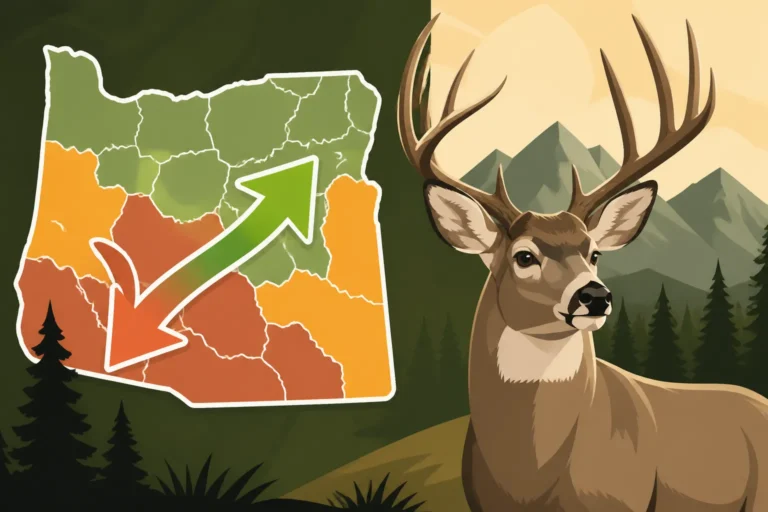
Oregon is broken down into various Cougar Management Zones. These zones often align with or encompass multiple ODFW Wildlife Management Units. Each zone has a specific target harvest number for the year, which is essentially its quota. For example, popular zones in the Coast Range or parts of Eastern Oregon will have different quotas based on local population estimates, habitat, and reported cougar activity. Before you head out, you need to know exactly which zone you'll be hunting in and what its current quota status is. Platforms like GoHunt often provide excellent mapping layers that can help you identify these zones and their boundaries clearly, making your pre-hunt planning much more efficient.
How Quotas Are Tracked and Announced
This is arguably the most critical part of Oregon cougar hunting. ODFW maintains a real-time (or near real-time) tracking system for cougar harvests. Every hunter who successfully takes a cougar is legally required to report it quickly – typically within 24 hours – to ODFW. This reporting allows the state to monitor the harvest against each zone's quota. Once the quota for a specific zone is met, ODFW will announce its closure. This closure is almost immediate, and it's published on the ODFW website, often with an exact date and time. It's the hunter's responsibility to check these updates regularly. Ignoring a zone closure can lead to serious violations. If you're wondering When an Oregon Cougar Zone Closes, always check the official ODFW website or a reputable hunting app like GoHunt right before and during your hunt.
The Importance of Staying Updated
Imagine spending days tracking a cat, finally getting an opportunity, only to realize the zone closed hours before. This scenario is preventable but highlights the necessity of constant vigilance. Before and during your hunt, especially if you're targeting a zone with active harvest, you must check the ODFW cougar harvest update page. Many dedicated cougar hunters keep an eye on this page multiple times a day. If you plan on hunting in a high-pressure zone, it's wise to have a backup plan or alternate zones in mind in case your primary area closes unexpectedly. You can also review general information about Oregon Cougar Zone Quotas to get a sense of historical harvest trends for different regions.
Oregon Cougar Management Zones & Quota Tracking Example (Illustrative)
| Cougar Management Zone (CMZ) | Approximate ODFW Units Covered | Annual Quota (Example) | Typical Harvest Trend | Notes |
|---|---|---|---|---|
| Coast Range North | Wilson, Trask, Saddle Mt. | 25-35 | Moderate-High | Often closes early in fall/winter. |
| Coast Range South | Alsea, Stott Mt., Siuslaw | 20-30 | Moderate | Can stay open longer than North. |
| Central Cascades | McKenzie, Santiam | 15-25 | Low-Moderate | Access can be challenging; later closures possible. |
| Southern Cascades | Rogue, Applegate | 10-20 | Low-Moderate | Variable harvest, less pressure. |
| Blue Mountains East | Imnaha, Sled Springs, Wallowa | 30-40 | High | Often closes quickly due to dedicated efforts. |
| Blue Mountains West | Starkey, Ukiah, Heppner | 20-30 | Moderate-High | Popular areas, check frequently. |
| High Desert | Wagontire, Warner, Whitehorse | 5-15 | Low | Sparsely populated, lower harvest. |
Note: The quota numbers in this table are illustrative examples. Actual quotas vary year to year and are subject to ODFW's management decisions. Always consult the official ODFW regulations and real-time harvest data for current information.
Securing Your Cougar Tag and Essential Regulations
Beyond understanding the peculiar "season" structure, there are several regulatory steps and details you need to be aware of when hunting cougars in Oregon. This includes how to acquire your tag, what the cost entails, and the crucial reporting requirements that keep the quota system running smoothly.
Purchasing Your Oregon Cougar Tag
To hunt cougars in Oregon, you'll first need a valid hunting license, and then you'll need to purchase a separate cougar tag. This tag is generally available over-the-counter and can be bought at any ODFW license agent, through the ODFW online licensing system, or at an ODFW office. The Oregon Cougar Tag Cost is relatively affordable for residents, making it an accessible opportunity for many hunters. Non-residents will, of course, face higher license and tag fees, which is standard for most big game across states. It's important to have your tag in possession before you go hunting. You cannot retroactively purchase a tag after harvesting an animal.
The Two-Tag Opportunity
Oregon allows hunters to purchase a second cougar tag under certain circumstances. If you successfully harvest a cougar on your first tag and that specific management zone is still open (meaning its quota hasn't been met), you can then purchase a second tag and continue hunting. This is a unique aspect and provides additional opportunity for those dedicated to cougar hunting. However, this second tag is still subject to the same zone-specific quotas. You can delve into more detail about Two Cougar Tags in One Oregon Year to understand the specific rules and limitations around this.
Mandatory Reporting: The Cornerstone of the Quota System
This cannot be stressed enough: mandatory reporting is absolutely critical for cougar hunting in Oregon. As mentioned earlier, the quota system relies entirely on accurate and timely reporting by hunters. If you harvest a cougar, you are required to report it to ODFW within a very short timeframe – typically 24 hours of harvest. This usually involves calling a specific ODFW number or reporting online and then presenting the carcass, or specific parts thereof (like the skull and hide), to an ODFW office for inspection and tagging within 10 days. This inspection is vital for data collection, age determination, and ensuring legal harvest. Failing to report your cougar could result in significant fines and loss of hunting privileges. Think of it as your direct contribution to responsible wildlife management; without it, the system breaks down.
Tactics for Hunting Cougar Without Hounds in Oregon
Hunting cougars in Oregon presents a unique challenge, primarily because hunting with hounds is prohibited. This means hunters must rely on different strategies, making it a much more difficult pursuit. It demands patience, keen observation skills, and a deep understanding of cougar behavior and habitat.
Understanding Cougar Behavior and Habitat
Cougars are incredibly elusive and wary. They are masters of ambush, preferring dense cover, rimrock, and areas with abundant prey. They are most active at dawn, dusk, and throughout the night. To successfully hunt them without dogs, you need to think like a cougar. Where would they travel? Where would they bed down? What are their preferred ambush points? Studying game trails, bedding areas, and fresh sign becomes paramount. Understanding Cougar Territory Size and Movement can give you an edge in predicting where a big tom might be traveling.
Oregon's diverse landscapes, from the thick coastal rainforests to the arid eastern sagebrush country, all hold cougars. In Western Oregon, look for cats in dense timber, clearcuts, and near elk and deer winter range. In Eastern Oregon, focus on rimrock country, juniper thickets, and draws near water sources that hold mule deer and other prey. E-scouting tools, including satellite imagery from platforms like GoHunt, can be invaluable for identifying potential travel corridors, ambush sites, and prime bedding areas before you even set foot in the field.
Scouting for Sign and Tracks
Since you can't rely on hounds to find a cougar, finding fresh sign is your best bet. Look for tracks along muddy roads, trails, and creek beds, especially after a rain or light snow. A cougar track is distinct: usually round, larger than a domestic dog's, and lacks claw marks (unless the cat is climbing). You might also find scat, scratch marks on trees (especially cedars in thick timber), or the remains of kills, which cougars often try to cover with debris. Learning to differentiate a cougar track from a dog's is a learned skill that can save you countless hours. For more on this, check out Identifying Cougar Tracks From Dog Tracks or Finding Cougar Tracks Without Hounds.
Still-Hunting and Calling Techniques
Still-hunting involves moving very slowly and deliberately through cougar country, pausing frequently to observe and listen. This is a highly effective, albeit challenging, method that requires immense patience. Focus on areas with good visibility into potential ambush spots or dense cover where a cougar might be resting.
Predator calling can also be highly effective for cougars. Calls that mimic a distressed prey animal, like a fawn in distress or a dying rabbit, can draw a curious or hungry cougar in. Setting up discreetly with the wind in your favor and calling intermittently can sometimes bring a cougar into range. It's crucial to be absolutely still and ready when calling, as a cougar can appear silently and quickly. There are many nuances to Cougar Calling Techniques That Work in Oregon, so research and practice are key. Remember, cougar hunting is a waiting game, and patience often pays off. Knowing How Long to Sit a Cougar Set is crucial for maximizing your chances.
Disclaimer
The information provided in this article is for general guidance only and is subject to change. Hunting regulations, season dates, and quotas in Oregon can be modified by the Oregon Department of Fish and Wildlife (ODFW) at any time. It is the hunter's sole responsibility to consult the most current official ODFW hunting regulations, proclamations, and real-time harvest updates before and during any hunting activity. Failure to comply with all applicable laws and regulations may result in penalties.