The 75/25 Split in Oregon’s Controlled Hunt Draw
Trying to understand Oregon's controlled hunt draw system can feel like deciphering ancient runes, especially when you hear about the "75/25 split." It's a source of confusion and often frustration for many hunters, making it tough to figure out how your hard-earned preference points actually work. This guide is here to break down this often-misunderstood aspect of the Oregon Department of Fish and Wildlife (ODFW) draw, helping you navigate the system with a clearer head and hopefully, better application strategies.
Understanding the Two Pools in Oregon's Draw
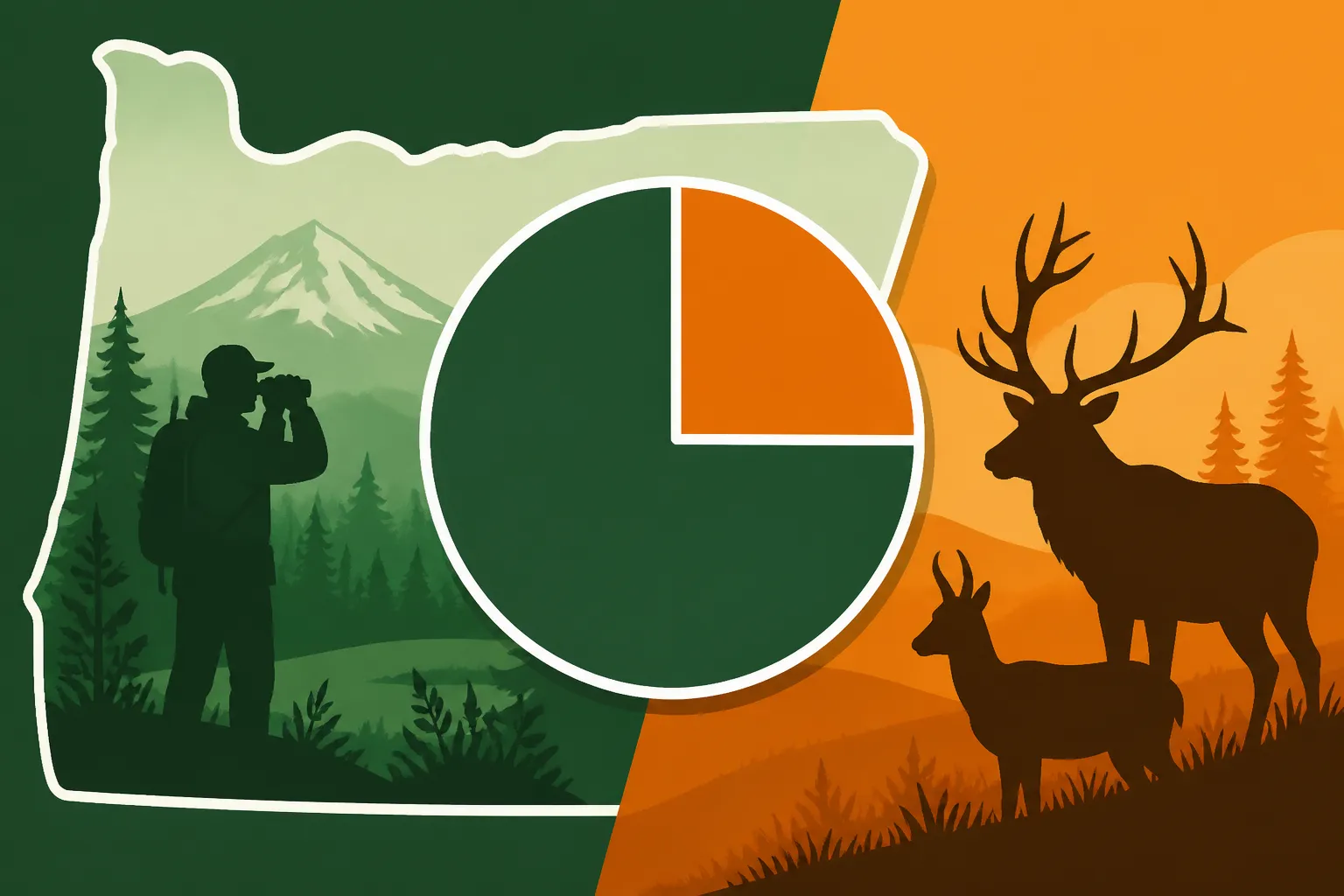
When you submit your application for an Oregon controlled hunt, it doesn't just go into one big pot. Instead, ODFW essentially divides the available tags for each hunt into two separate pools, and how your application is considered depends on which pool it falls into. This is the crux of the 75/25 split, and it's absolutely vital to grasp if you want to make informed decisions about your hunt choices. It’s a system designed to balance rewarding persistent applicants with providing a chance for everyone to draw a tag, even with zero points.
The Preference Point Pool (75%)
The larger portion of available tags, typically 75% for most controlled hunts, is allocated based on preference points. This is where your accumulated points truly shine. If you've been putting in for years without drawing a tag in a particular hunt series, building up those points, this is the pool that's designed to eventually pay off your dedication. Each year you apply and don't draw your first choice, you gain another preference point for that species. These points act as a numerical advantage, increasing your odds in this 75% pool.
When ODFW runs the draw, they start by looking at this 75% pool. Applications with the highest number of preference points for a given hunt are considered first. It's a straightforward ranking system: more points mean you get priority access to these tags. This mechanism is intended to reward those who have patiently waited and accumulated points, offering them a progressively better chance at drawing a coveted tag over time. It's the system's way of saying "thank you for your patience."
The Random Draw Pool (25%)
Now, this is where things get interesting for many hunters, especially those with fewer points or those just starting out. The remaining 25% of the tags for each controlled hunt are allocated through a completely random drawing, irrespective of how many preference points an applicant has. Yes, you read that right: your 15 points count for absolutely nothing in this particular quarter of the tags. This is often the source of much head-scratching and occasional frustration, especially when a new hunter draws a dream tag with zero points.
The idea behind this 25% random pool is to ensure that every hunter, regardless of their point total, always has a chance to draw a tag. It levels the playing field, if only for a fraction of the available tags. This means that a first-time applicant with zero points has the same statistical chance of drawing a tag from this 25% pool as someone with a lifetime of accumulated points. While the odds might still be slim for high-demand hunts, this system ensures that hope springs eternal for every applicant. For more detailed information on how all these applications work, check out our guide on how to apply for an Oregon controlled hunt.
Why Oregon Utilizes This System
It's easy to get frustrated with the draw system, especially when tags are scarce, but there's a thoughtful rationale behind Oregon's 75/25 split. The ODFW isn't just trying to make things complicated; they're attempting to balance competing interests and goals within the hunting community. It's a careful tightrope walk between fairness, opportunity, and rewarding long-term commitment.
Rewarding Loyalty and Persistence
One of the primary reasons for the 75% preference point pool is to acknowledge and reward hunters who have consistently applied for controlled hunts over many years. Many hunters dedicate decades to building points for specific, highly sought-after tags for species like big bull elk or trophy mule deer. Without a preference point system, drawing these tags would be a pure lottery every single year, potentially leaving many lifelong applicants perpetually empty-handed despite their commitment. This 75% pool ensures that those who have invested their time and application fees eventually see a return on that investment, offering a tangible benefit for their loyalty.
Think about it: if you've been putting in for a premier hunt unit for Oregon Mule Deer and the Herd Range Decline in Eastern Oregon for a decade, accumulating a significant number of points, you expect those points to mean something. This system delivers on that expectation by giving you a substantially higher probability of drawing one of those 75% of tags compared to someone with fewer points. It creates an incentive for hunters to stay engaged with the system and provides a clear pathway to eventually drawing those dream tags, even if the wait is long. It helps manage expectations and gives a predictable advantage to those with more points.
Providing Opportunity for New Hunters
While rewarding persistence is crucial, ODFW also recognizes the importance of welcoming new hunters and keeping the dream alive for those with fewer points. This is precisely where the 25% random draw pool comes into play. If 100% of tags were allocated solely on points, a new hunter or someone without many points would have virtually no chance of drawing a tag for popular hunts. This could be a significant deterrent, discouraging participation and potentially impacting the future of hunting. The random draw component ensures that a portion of tags is always accessible to everyone, regardless of their point status.
This means that even if you've only been applying for Oregon Controlled Hunt Draw Explained for a couple of years, or you're trying your luck for the very first time, you still have a legitimate, albeit often small, chance to draw. This keeps engagement high across all experience levels and prevents the draw from becoming an exclusive club for high-point holders. It democratizes a portion of the tags, offering that exciting possibility of an unexpected draw notification in June. It's a balance designed to keep the hunting community vibrant and inclusive.
How Your Application Interacts with the Split
Understanding the 75/25 split is one thing, but knowing how to leverage that knowledge in your actual application strategy is another. It directly influences how you should approach your first, second, and third choices, and even how you think about party applications. Getting this right can significantly impact your long-term success in drawing coveted Oregon tags.
Maximizing Your Preference Points
When you apply for a controlled hunt, your first choice is absolutely critical because this is the only choice that impacts your preference points. If you don't draw your first choice, you'll gain a point for that species. If you do draw your first choice, your points for that species are purged, and you start accumulating them again from zero next year. This is why understanding What Purges Your Oregon Preference Points is so important. For the 75% portion of the draw, your strategy should focus on building or using your points effectively.
For hunters with a significant number of points, it often makes sense to apply for the high-demand hunts you've been saving for as your first choice, because this is where your points have the most leverage. You're effectively banking on your high point total to get you one of those 75% of tags. Conversely, if you have very few points, applying for a high-demand hunt as your first choice might be a long shot in the 75% pool, but it still gets you into that 25% random draw. Using resources like GoHunt's draw odds tools can help you analyze how many points typically draw certain tags, allowing you to gauge your chances in the preference point pool more accurately.
The Role of First, Second, and Third Choices
Oregon's application system allows for up to three choices for each controlled hunt application, but it's vital to remember that only your first choice is considered for preference point accumulation and the point-based portion of the draw. Your second and third choices are only considered if tags remain after all first-choice applications have been processed, and critically, they are considered without regard to your preference points. This means your points are effectively ignored for your second and third choices.
This aspect of the draw has significant strategic implications. Many hunters with high points will use their first choice for their dream hunt, knowing their points will give them the best chance at the 75% pool. For their second and third choices, they might opt for hunts with higher draw odds or those they'd be happy to get without burning points. Similarly, a hunter with low points might still put a high-demand hunt as their first choice, hoping to get lucky in the 25% random draw and gain a point if unsuccessful, then use their second and third choices for more attainable hunts. Remember, the Oregon Controlled Hunt Application Fee is a small price to pay for the chance at these opportunities across your three choices.
Party Applications and Point Averaging
Applying as a party in Oregon's controlled hunt draw can be a great way to hunt with friends or family, but it introduces an important dynamic to the 75/25 split: point averaging. When a party applies together for a controlled hunt, ODFW averages the preference points of all members in that party to determine the party's point total for the draw. This averaged point total is then used for consideration in the 75% preference point pool.
This can be a double-edged sword. If you're a high-point hunter applying with a low-point partner, your combined average will be lower than your individual points, potentially reducing your chances in the 75% pool for a highly sought-after tag. Conversely, a low-point hunter applying with a high-point partner benefits from the higher average. In the 25% random draw pool, party applications are treated the same as individual applications; the averaged points don't matter, and it's simply another entry in the random lottery. Understanding Party Applications in the Oregon Draw is key to making sure your hunting group approaches the draw strategically, especially for popular hunts where every point counts.
Understanding Draw Odds with the 75/25 System
Deciphering draw odds in Oregon isn't just about looking at a single number; it's about understanding how that 75/25 split influences those numbers. This system creates unique scenarios that impact hunters with varying point totals, and recognizing these nuances can help you refine your application approach.
Impact on High-Demand Hunts
For highly coveted hunts — think those elusive big bull elk tags or limited entry mule deer hunts where only a handful of tags are available — the 75/25 split can dramatically influence your chances. In these scenarios, the 75% preference point pool often sees drawing odds that are heavily skewed towards hunters with the highest number of points. It's not uncommon for these hunts to require maximum, or near-maximum, points to draw a tag from this pool. This creates intense competition and means that "point creep," where the minimum points required to draw slowly increases each year, is very real, especially for premier units like those in the Blue Mountains.
However, the 25% random draw pool offers a glimmer of hope. Even if you have zero points, you still have a non-zero chance in this quarter of the tags. While the odds might be astronomically low for extremely popular hunts, it means that pure luck can sometimes prevail. This is why you occasionally hear stories of new hunters drawing tags that veterans have been accumulating points for years. It’s a frustrating reality for some, but a foundational promise for others. Analyzing Oregon Point Creep in Popular Units will give you a better idea of how tough it is to draw these tags based on historical data.
Strategies for Lower Point Hunters
If you're a lower-point hunter, the 75/25 split actually offers a couple of strategic avenues. First, you can embrace the random draw. Applying for your dream hunt as your first choice, even with low points, gives you an entry into that 25% lottery. You might not have the points to compete in the 75% pool, but you're in the game for the random tags. If you don't draw, you gain a point for next year, steadily increasing your future odds in the preference point pool.
Secondly, consider hunts that are less popular or have a higher number of available tags. These hunts often have more tags that trickle down into the second and third choice pools, and while points don't matter for these choices, your odds of drawing are generally higher simply because there's less competition. Don't overlook these "opportunity hunts" as a way to gain experience and put meat in the freezer while you build points for that trophy tag. Consulting the Oregon Draw Results in June when they are released can offer valuable insight into which hunts are truly point-heavy and which offer more random opportunities.
Tools to Analyze Draw Odds
Navigating the complexities of the 75/25 split and applying intelligently requires more than just guesswork. Thankfully, there are tools available that can help hunters analyze historical draw data and better understand their chances. Organizations like GoHunt provide comprehensive statistics, including draw odds for both the preference point pool and the random draw pool for various Oregon hunts. These resources often break down the number of points required to draw in previous years, giving you a clearer picture of the competition.
Using these tools, you can explore hypothetical scenarios: "If I apply for this hunt, what are my chances in the 75% pool with X points?" and "What are my chances in the 25% random pool?" This data-driven approach allows you to make more informed decisions when filling out your application, helping you decide whether to burn your points on a long shot or continue building them for a more guaranteed draw down the line. It's about turning complex data into actionable strategies for your How Many Points for a Top Oregon Elk Hunt or mule deer hunt.
Common Misconceptions and Frustrations
The 75/25 split, while designed with good intentions, often leads to misunderstandings and strong emotions among Oregon's hunting community. It’s a system that, on the surface, can seem contradictory, especially when your personal experience clashes with the theoretical framework. It’s important to address these common pain points directly.
"My Points Don't Matter!"
This is a common cry from hunters who have diligently accumulated a significant number of preference points over the years, only to see someone with zero points draw the same coveted tag. It feels incredibly unfair, almost like a slap in the face for their patience and commitment. The frustration is absolutely valid because, in that 25% random draw pool, their hard-earned points literally do not matter. This creates a psychological disconnect where the value of points feels diminished.
However, it's crucial to remember that your points do matter for the vast majority (75%) of the tags. While it stings to miss out on the random draw, your substantial point total provides a statistically superior advantage in the larger pool. If it weren't for the 75% split, drawing those premier tags would be a pure lottery every year, making it almost impossible for anyone to plan or strategize. So, while it feels like your points are sometimes ignored, they are still your strongest asset for securing most controlled tags. It’s a balancing act; a little frustration is the price paid for ensuring opportunities for all, but your points are still your golden ticket for the majority of allocations.
"The Random Draw is Unfair!"
On the flip side, some hunters, particularly those with a history of building points, view the 25% random draw as inherently unfair. They see it as rewarding pure luck over dedication and strategy. Why should someone who has never applied before have the same chance at a quarter of the tags as someone who has waited a decade? This sentiment is understandable, especially when a coveted tag that took years to draw is secured by a "rookie" applicant by sheer chance.
However, the random draw serves a vital purpose: it keeps the doors open for new participants and prevents the system from becoming so exclusive that new generations are locked out. Imagine if all tags were point-based; many aspiring hunters would give up before they even started, seeing no realistic path to drawing a desirable tag. The 25% random draw is a crucial mechanism for maintaining broad participation, fostering new hunters, and ensuring that there's always a chance for everyone. It injects an element of excitement and possibility into an otherwise highly structured system. It ensures that the hunting heritage can continue to thrive, bringing in fresh faces, even if it occasionally means a seasoned hunter misses out.
Future Changes and Considerations
Oregon's hunting regulations are not static; they evolve based on herd health, habitat conditions, and public input. Understanding potential shifts and staying informed is crucial for any hunter planning their strategy around the 75/25 split. Recent and upcoming changes, such as the Oregon's 2026 Mule Deer Hunt Area Changes, are a testament to this dynamic environment.
Potential Impacts on the Split
While the core 75/25 preference point/random draw split has been a consistent feature of Oregon's controlled hunt system for a while, the exact number of tags allocated to each hunt can and does change annually. Factors such as herd population estimates, winter severity, habitat quality, and even public feedback discussed at Oregon Commission Meetings on Hunting Rules can influence tag numbers. If ODFW decides to reduce tags for a specific hunt, it means fewer tags are available in both the 75% and 25% pools, making drawing even harder. Conversely, an increase in tags could slightly improve odds.
There's always the possibility that the ODFW could propose adjustments to the split itself, though this would likely be a significant policy change requiring extensive public discussion. Such a change would deeply impact how Oregon's preference points and draw odds work. For example, if the random draw portion were reduced, it would make points even more critical. If it were increased, it would favor new hunters more. Monitoring ODFW proposals and attending or reviewing commission meeting notes are the best ways to stay ahead of any potential shifts that could impact your long-term hunting strategy.
Staying Informed
The best defense against confusion and frustration is knowledge. ODFW is the primary source for all official regulations and updates regarding the controlled hunt draw. Each year, they release the Oregon Big Game Regulations, which details all hunt dates, rules, and application procedures. This pamphlet is your bible for the hunting season. Additionally, the ODFW website is regularly updated with news releases, draw results, and important deadlines, like the May 15 application deadline for controlled hunts.
Beyond official channels, various online forums, hunting communities, and platforms like GoHunt often compile and analyze draw data, offering valuable insights into trends and point requirements. Subscribing to ODFW newsletters or following their social media accounts can also help you stay current on emergency closures, in-season changes, or upcoming public meetings where potential rule changes are discussed. Being proactive in seeking out information ensures you're never caught off guard and can adapt your application strategy to the latest conditions and rules. The more informed you are, the better prepared you'll be to navigate the Oregon draw system successfully.
Disclaimer
Please remember that hunting regulations, seasons, and draw systems are subject to change. Always consult the most current Oregon Department of Fish and Wildlife (ODFW) regulations pamphlet and official ODFW website before planning any hunting activity. This guide provides general information and should not be considered a substitute for official ODFW publications or legal advice.